
Quick answer
An attacking creature with trample can assign excess combat damage through its blockers after lethal damage is assigned to all of them. Assignment checks toughness, marked damage, and relevant abilities, without assuming prevention or indestructible will make the damage harmless.
Trample changes assignment during an attack
Trample is useful because a small blocker does not necessarily absorb an entire large attack. A 7/7 without trample blocked by an ordinary 1/1 remains blocked and ordinarily deals its combat damage to blockers rather than to the defending player. With trample, that attacker can assign one damage to the 1/1 and the remaining six to the player it is attacking.
The attacker is still blocked. Trample does not erase the block or turn the creature into an unblocked attacker. It changes where combat damage may be assigned once the blockers have received lethal assignments. This distinction matters for abilities that care whether a creature is blocked or unblocked, and for later events such as a blocker leaving the battlefield.
Trample applies when the creature is attacking and assigning combat damage. It does not let a blocking creature send excess damage to the attacking player's life total. It also does not add damage to a fight effect or an activated damage ability. A 7/7 trampler fighting a 1/1 does not deal the remaining six damage to that creature's controller through trample.
The keyword does not increase power. A one power creature with trample can still be fully contained by a blocker requiring one damage. A large creature needs enough power beyond the relevant assignments to push damage through. For deckbuilding, this makes trample an evasion tool for existing power rather than a substitute for developing a meaningful attacker.
Work out lethal assignment before excess
For an ordinary blocker, lethal assignment begins with its toughness and damage already marked on it. A 6/6 trampler blocked by an undamaged 2/2 can assign two to the blocker and four to the defending player. It may also assign more than two to the blocker if its controller chooses. Trample permits excess assignment; it does not require maximizing damage to the player.
If that 2/2 already has one damage marked, only one more is ordinarily needed for lethal assignment, so the trampler can assign one to it and five through. The marked damage is still on the creature at that point. If the damage was removed earlier, it no longer helps the calculation. Work with the actual state when combat damage is assigned, not with damage that happened earlier and has already been cleared.
Damage from other creatures being assigned during the same combat damage step can count too. A creature able to block more than one attacker may face assignments from several attackers. You can account for the combined assigned damage when determining whether that blocker has received lethal assignment. This is a specific assignment rule, not permission to count an unrelated damage spell you hope to cast after combat damage.
Once assignment is made, damage is dealt as the combat damage step proceeds. There is no ordinary priority window between choosing combat damage assignments and dealing that damage. If a pump or prevention spell needs to change the situation, use it in the legal window before the step's damage action. Do not wait to see a completed assignment and then insert a spell before the assigned damage is dealt.
Multiple blockers under the current combat rules
A menace creature or a large trampler may attract several blockers. If a 7/7 trampler is blocked by a 2/2 and a 3/3, assigning two to the first and three to the second permits the remaining two to go through. Assigning too little to either blocker does not permit the excess assignment to the defending player. You must satisfy the relevant lethal requirement for every blocker.
Current combat damage rules do not use the old requirement to announce a damage assignment order for multiple blockers. You choose a legal assignment in the damage step. If you learned Magic with a first blocker, second blocker shortcut, do not enforce that obsolete ordering as a separate declaration. The trample requirement to assign lethal to all blockers before sending excess through still applies.
You may choose to distribute damage among blockers without assigning any to the player. Perhaps you want to damage particular creatures for an ability, or another effect makes the usual maximum player damage line undesirable. A legal assignment does not have to be the most aggressive one. Explain the actual numbers when the combat is important so the table can verify the requirements before moving on.
The defending player may also care which blockers survive a nonlethal distribution. Several small blockers can consume enough assigned damage to prevent excess, while one large blocker may be more efficient at preserving smaller utility creatures. Trample discourages cheap chump blocks, but it does not eliminate the tactical choice of committing multiple creatures to stop a meaningful amount of damage.
| Attacker and blockers | One legal assignment | Damage through before prevention |
|---|---|---|
| 6/6 trample versus 2/2 | Two to blocker, four to player | Four |
| 6/6 trample versus 2/2 with one damage marked | One to blocker, five to player | Five |
| 7/7 trample versus 2/2 and 3/3 | Two and three to blockers, two to player | Two |
| 5/5 deathtouch trample versus 8/8 | One to blocker, four to player | Four |
| Blocked 5/5 trample with no blocker remaining | Five to attacked player | Five |
Deathtouch, protection, and indestructible
Deathtouch makes one assigned damage count as lethal for a creature during combat damage assignment. A 5/5 with deathtouch and trample blocked by an 8/8 can assign one to that blocker and four to the defending player. With two blockers, one assigned to each can leave three through, provided no other relevant constraints change the calculation. The damage still must actually be dealt for deathtouch's destruction consequence.
Protection does not require the attacker to assign extra damage to overcome prevention. A green 6/6 trampler blocked by a 2/2 with protection from green can assign two to that blocker and four through. Protection may prevent the two damage to the blocker, leaving it alive. That does not invalidate the assignment already made or pull the four damage back from the player.
Indestructible likewise does not demand an infinite assignment. A normal 6/6 trampler can assign two to an undamaged indestructible 2/2 and four through. A deathtouch trampler can often assign one to an indestructible blocker and the rest through. The blocker survives the attempted destruction, but trample checks lethal assignment without requiring that the damage will actually destroy it.
These interactions are easiest when separated into three actions: assign damage, deal damage with applicable prevention or replacement effects, then apply state based actions. A blocker surviving the third action does not prove the first action was illegal. Read the deathtouch guide and indestructible guide if the same creature has several of these abilities.
When the blocker disappears after blocking
After a legal block, an attacker remains blocked even if every blocker later leaves combat. Without trample, that often means it deals no combat damage to the defending player. With trample, if no creatures are blocking it when damage is assigned, it can assign its damage through as though all blockers have received lethal assignment. Removing the blocker can therefore improve a trample attack rather than stopping it.
Consider a 5/5 trampler blocked by a 1/1 token. Before combat damage, the defending player sacrifices the token for another effect. When the damage step arrives, the attacker is still blocked but has no remaining blockers. It can assign all five damage to the defending player. The sacrifice may have gained resources or triggered an ability, but it did not turn the token into a complete five damage shield.
Removing the attacker itself before damage prevents that attacker from dealing its combat damage. Removing trample before damage can change whether a blocked creature may assign through. Increasing a remaining blocker's toughness can consume more of the attacker's assignment. Those are different defensive actions with different costs and timing. Choose the one that changes the particular combat rather than assuming every removal of a combatant has the same result.
An effect that removes a creature from combat also needs its exact text read. A creature merely becoming tapped after being declared an attacker does not automatically leave combat, and an untapped blocker is not required to remain untapped to deal damage once legally blocking. Use actual combat status rather than physical card orientation as your test for whether the assignment still happens.
First strike, double strike, and commander damage
First strike and double strike can produce two combat damage steps. Trample assignments are evaluated in the relevant step using the battlefield at that time. A double strike trampler may assign lethal damage to blockers in the first step and have a much clearer route in the second step after those blockers die. The second step is not simply a copy of the first assignment.
For example, a 5/5 double strike trampler blocked by a normal 2/2 can assign two to the blocker and three to the player in the first damage step. If the blocker dies and the attacker survives, the attacker can assign five to the player in the normal damage step. That produces eight damage through in this simplified example. Opponents have a priority window between steps and can change the outcome.
A commander dealing combat damage to a player through trample contributes to the twenty one damage loss condition for that same commander. Damage assigned to blockers does not. Commander damage is tracked per commander, and life gain does not erase it. A noncommander carrying the same Equipment does not create commander damage merely because the Equipment is central to a Voltron strategy.
Damage prevention, removal, and changed power between steps can alter the total. Do not announce lethal commander damage based only on the attacker's power before blockers. Show the assignment in each step and distinguish life total damage from the cumulative commander total. The first strike and double strike guide explains why a blocked creature without trample has a very different second step.
Planeswalkers and battles are the attacked objects
A creature with ordinary trample attacking a planeswalker assigns excess through blockers to that planeswalker. It does not automatically send additional excess beyond the planeswalker's loyalty to the player. If your 8/8 trampler attacks a planeswalker with two loyalty and is unblocked, ordinary trample does not turn six of that damage into damage to the controller. The attacked object matters.
Trample over planeswalkers is a distinct variant that specifically permits further excess after the required assignments to blockers and the attacked planeswalker. Do not grant that variant to every creature that merely has trample. If a card uses the longer wording, read its rule and actual board carefully. It can produce player damage in situations where ordinary trample cannot.
Ordinary trample attacking a battle similarly concerns the object actually attacked rather than granting a general ability to redirect excess to the battle's protector. A battle has its own combat and defeat rules. Its presence does not change ordinary trample into a choice to attack one thing and damage a different player. Declare the intended attacked object before considering blocker assignments.
If the attacked planeswalker leaves combat, an attacker without trample over planeswalkers does not simply become an attacker against its controller. This limit can make sacrificing or removing your own planeswalker a different defensive decision from sacrificing a blocker. It is an unusual line, but it reinforces the same lesson: blockers disappearing and the attacked object disappearing are separate events with separate rules.
Choose trample support that fits your mana and board
Garruk's Uprising combines trample support with a draw plan tied to large creatures. That can be a useful fit for a deck already casting creatures of sufficient power. It is less useful when most of the list consists of small utility creatures. Read the draw conditions separately instead of treating a trample enchantment as guaranteed card advantage in any green deck.
Rancor puts power and trample on one creature and has a return to hand trigger under its stated condition. It can support a focused attacker efficiently, but an Aura spell still targets and can be answered before attachment. Brawn grants trample from the graveyard only while its condition involving a Forest is satisfied. A graveyard plan must be able to put it there and keep a qualifying land rather than simply include it in the list.
Nylea, God of the Hunt and Kessig Wolf Run offer different kinds of support. Nylea grants trample to your other creatures and has its own devotion and activation considerations. Wolf Run is a land that can grant a temporary power increase and trample, but using it needs the required colored and generic mana. Several colorless utility lands can weaken a multicolor opening hand even when their late abilities look attractive.
Build your deck and create a free account to save the trample package you want to test. Compare an attack into a token, a high toughness blocker, and a protected blocker. Use the deck building checklist to keep evasion support balanced with draw and interaction. Trample should make your existing threats useful, not consume all the slots that produce those threats.
Different trample support plans
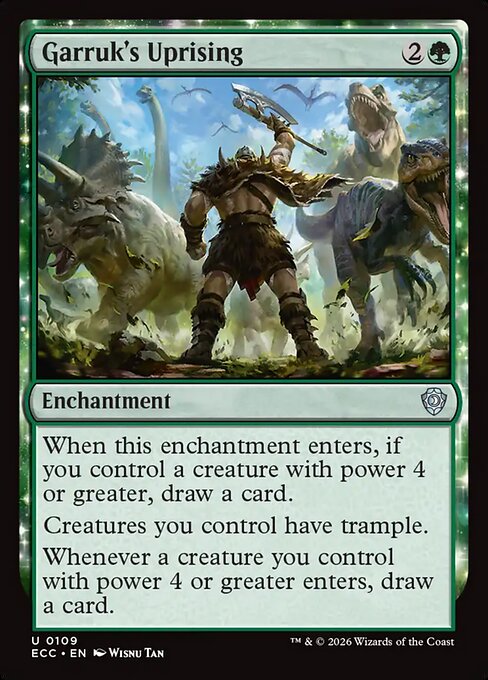
Garruk's Uprising
Large creature support
Connects evasion to a draw condition that the creature package must actually satisfy.
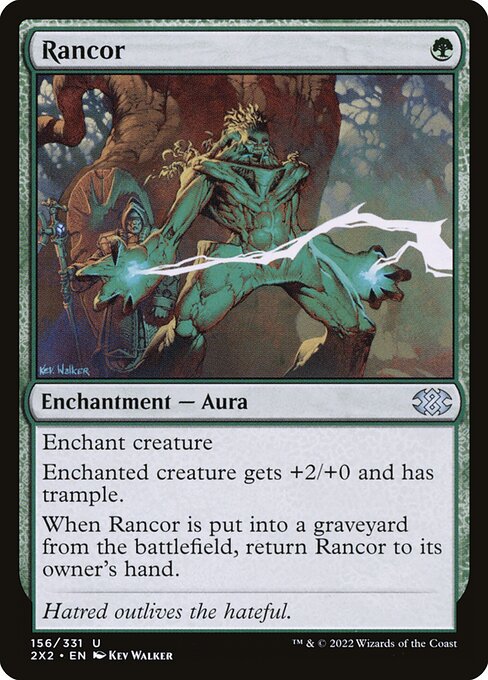
Rancor
One attacker
An Aura with power and trample, plus a specific graveyard return trigger.

Brawn
Graveyard support
Needs to be in your graveyard and needs a Forest under your control.

Nylea, God of the Hunt
Other creature support
Read the distinction between Nylea and the other creatures she helps.

Kessig Wolf Run
Land activation
Needs real activation mana and should be counted as a colorless land source.
Trample questions
Build your deck
Put these choices into a Commander list. Create a free account to save your deck and keep tuning it with Deckcipher.
FAQ
Does trample work while blocking?
No. Ordinary trample changes an attacking creature's combat damage assignment. A blocking creature does not send spare damage to the attacking player through trample. The ability also does not apply to fight damage or a creature's noncombat damage ability.
Can I send damage through an indestructible blocker?
Yes, after satisfying the lethal assignment rules. Indestructible does not require enough assigned damage to actually destroy the blocker. Toughness and relevant marked or assigned damage still matter, and deathtouch can change the lethal assignment amount to one.
What if my opponent sacrifices the blocker?
The attacker remains blocked. If it has trample and no blockers remain when damage is assigned, it can assign through under trample's rule. Without trample or another relevant effect, a blocked attacker does not simply become unblocked and damage the player.
Does protection absorb all trample damage?
No. Assign lethal damage while ignoring effects that will prevent the damage. A two toughness blocker with protection normally requires two assigned damage from an ordinary attacker, and excess can go through. The assigned blocker damage may then be prevented without changing that earlier legal assignment.
Does double strike automatically double damage to the player?
No. Evaluate each damage step separately. Blockers, removal, prevention, and changed power can all alter the result. Trample can let a surviving attacker assign more through after blockers die in the first step, but opponents can act between those steps.
Does ordinary trample spill past a planeswalker?
It does not send excess beyond the attacked planeswalker to its controller. Trample over planeswalkers is a distinct variant with that permission. Ordinary trample only allows the relevant assignment through blockers to the object the creature is attacking.