
Build the mana base for the spells you need to cast first
Choose a provisional land count, identify your early colored requirements, then build enough untapped sources and fixing to support those turns. Count dual lands toward each color they can produce, but remember that one land still supplies only one mana at a time. Add utility lands after the essential colors work.
A deck can have thirty-seven lands and still be unable to play Magic on schedule. The failure might be a missing third land, the wrong color on turn two, or a hand full of lands that all enter tapped. Those problems need different fixes. Buying a stronger spell does not help if it stays in your hand. A good mana base is the part of the deck that lets the interesting cards show up to the game.
Audit four separate questions
Start with a land count, then test the assumptions
For an ordinary casual midrange deck, thirty-seven or thirty-eight lands is a reasonable starting experiment. That is a building choice, not an official rule or a promise of smooth draws. A low curve, reliable cheap card selection, or unusual commander can justify changing it. A costly commander, repeated land drops, or mana-hungry activated abilities can push the other way. The Commander land-count guide explores that quantity decision; the next steps here handle colors and timing.
Keep actual lands, playable modal land faces, and ramp separate while planning. A two-mana ramp spell cannot rescue a one-land hand unless you first find a way to cast it. A modal double-faced card with a playable land back face may help your land total, but choosing that land means you do not also have the spell. Do not treat ten ramp cards as ten interchangeable extra lands. Their costs, colors, timing, and vulnerability all change which hands they can support.
Identify the failure before changing the mana base
| What happens | Likely question | Useful first adjustment |
|---|---|---|
| You keep missing your third land | Are there enough dependable land cards and early draw? | Review land count before adding expensive ramp. |
| You have lands but cannot cast green ramp | Can the opening lands produce green early? | Shift early sources toward green. |
| You have the colors but fall a turn behind | How often do key lands enter tapped? | Replace a weak tapped land or change the early sequence. |
| You cast the commander but cannot protect it | Does the plan budget an extra mana? | Support the full turn rather than only the commander cost. |
| A wipe strands your hand | Did all useful mana come from creatures or artifacts? | Review permanent land development and recovery. |
Give the first three turns more weight than the color pie
Total mana symbols are a helpful rough description, but they do not tell you when each color matters. Imagine a green-blue-red deck with many expensive red threats and cheap green ramp. Dividing basics equally, or following the overall red symbol share, can leave you unable to start the game. You may need green on turn one, another colored source for ramp on turn two, and red only after that ramp resolves. The order of demands matters as much as their totals.
Write your intended opening in plain language. For example: play a green source, cast green ramp on turn two, and have blue available before passing turn three. Then inspect whether the lands in an actual seven-card hand can do that. If your important early spell costs two blue, record two blue, not merely blue access. One flexible land cannot pay two different colored symbols for the same spell. Repeated symbols are where a mana base that looks balanced often starts to stumble.
- Mark the earliest turn you want to cast your commander and its exact colored cost.
- Mark cheap ramp or setup that must happen before that turn.
- Mark interaction you want to keep available while developing.
- Separate early requirements from expensive cards you expect to cast much later.
- Revisit the plan when you change the commander, ramp package, or number of cheap colored spells.
Count colored sources without inventing extra mana
Command Tower in a green-blue deck counts as a source of green and as a source of blue. That is useful overlap, and color-source totals can legitimately add up to more than your number of lands. It still produces one mana when tapped. A hand containing it and a Forest can pay green-green or green-blue, but not blue-blue. When a calculator reports plenty of sources, inspect the combinations needed for the spells that keep getting stuck.
Separate unconditional sources from conditional ones. Exotic Orchard depends on the lands opponents control, so it cannot be assumed to provide every color in every opening hand. A land that can search for a basic is useful only while the appropriate basic remains in the library. A mana creature can add a color after you cast it and can tap it, but it is not a land that pays for itself on turn one. A source count describes access under assumptions; it is not an exact simulation of all those conditions.
What familiar fixing lands actually provide

Command Tower
Unconditional identity fixing
In a multicolor Commander deck it supplies one chosen color in your commander's identity each time you tap it.

Exotic Orchard
Opponent-dependent colors
Check the opposing lands before relying on it for a specific color. It is flexible in many pods, but its range is not guaranteed.

Yavimaya Coast
Untapped green or blue
You can pay one life for a colored mana or tap it for colorless without damage. Useful when the turn-two play matters.

Breeding Pool
Typed green-blue land
Its Forest and Island types support certain land searches. Paying two life gives you the option of immediate use.
Treat tapped lands as a timing cost you can measure
A tapped dual can be a sensible inclusion when it buys needed fixing and you can place it on a quiet turn. The problem appears when too many quiet turns are required. If turn two belongs to ramp and turn three belongs to a commander, your second and third lands cannot both force you to wait. Ask which turn can absorb the delay. A land that is fine on turn one can be a poor draw when you need the fifth mana to survive.
Do not turn this into a blanket ban on tapped lands or a demand for expensive lands. A slower five-color deck and a two-color deck with several one-mana spells have different tolerances. Start by cutting the tapped land with the weakest reason to be there. If its small bonus rarely affects a game, an untapped basic may improve the turns that actually matter. If removing it breaks color access, find a different fixing solution or accept that the deck must sequence more slowly.
Conditional lands deserve their own check. Some become reliable once other lands are in play, yet fail in a two-land opening. Others are strong early and become awkward later. Counting all of them as always untapped hides those different failures. The Mana Base Calculator separates tapped and conditionally tapped lands and shows early color information. Use that report to find cards worth inspecting, then check their actual conditions against your opening hands.
Make land searches and their targets work together
Green ramp is useful fixing only if the library has the right legal targets. Nature's Lore searches for a Forest card, which can include a nonbasic with that land type. Farseek searches for a Plains, Island, Swamp, or Mountain card and specifically puts the result onto the battlefield tapped. It cannot find a basic Forest, but it can find Breeding Pool because that card is an Island as well as a Forest. The distinction is in the type line, not the colors printed in the art.
Ramp and fixing are separate jobs

Nature's Lore
Find a Forest card
The spell itself does not require the land to enter tapped. The chosen land's own entry condition still applies, including a shock land's life payment.

Farseek
Find specified land types
It can find eligible typed nonbasics, but the fetched land enters tapped regardless of paying a shock land's life option.

Evolving Wilds
Trade for a basic land
It fixes by finding a basic tapped. Keep enough appropriate basics in the library and account for the delayed mana.
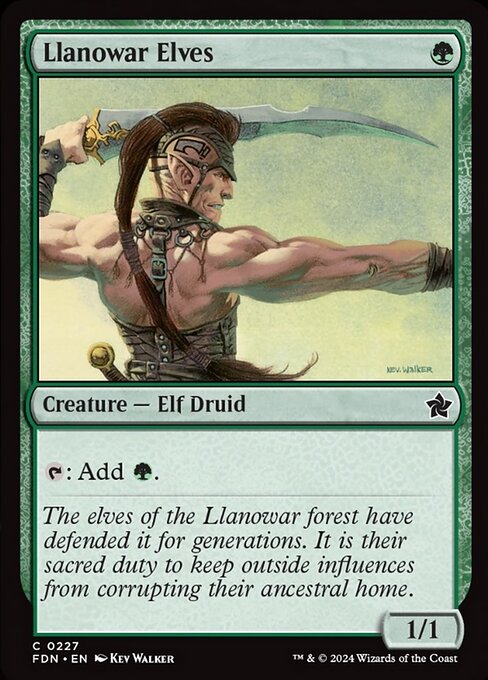
Llanowar Elves
Early green acceleration
It needs green to cast and usually cannot tap the turn it enters. It accelerates later turns rather than fixing an opening hand without green.
Before finalizing the list, lay the search cards beside their possible targets. A ramp spell that looks flexible can become narrow after two earlier searches remove the only basic of a splash color. Conversely, a typed dual can give several searches a useful shared target. You do not need a premium target package to build a functioning deck. You do need the cards in your list to agree about what can be found and when that mana becomes usable.
Build a budget mana base from priorities, not land cycles
Begin with basics and the fixing that directly serves your early turns. In two colors, untapped basics can do much of the work while a few flexible lands smooth the overlap. In three or more colors, you often need more overlap, more deliberate sequencing, or a narrower set of early color demands. Buying one copy of every recognizable land cycle can leave you with an inconsistent collection of conditions. Build toward the requirements you wrote down first.
For a green-blue midrange shell, suppose your initial plan has thirty-seven land slots and you want green ramp on turn two. Build the early green foundation first, then make sure your blue requirements still have enough independent sources. Add a utility land only after checking what colored source it displaces. This is intentionally not a universal thirty-seven-card shopping list: a deck full of double-blue spells cannot borrow the same basics split as one whose blue cards all cost a single blue.
When upgrading, solve the bottleneck you can name. If one extra untapped green source turns several awkward hands into functioning ones, that may be more valuable than an additional splash-color dual you rarely need early. Compare the current price of each option when shopping, but do not confuse price with a source's job. A basic can be the correct card. A costly utility land can still be the reason a hand fails to cast its first spell.
Conditional repairs for a green-blue mana base
| If this is the weak slot | Consider this change | Improvement and cost |
|---|---|---|
| A redundant colorless utility land when you miss early green | Replace it with a Forest | Adds unconditional untapped green, but removes that utility ability. |
| A Forest when Command Tower is absent | Replace it with Command Tower | Preserves untapped green and adds blue access; loses a basic and the Forest type. |
| A weak always-tapped green-blue land | Replace it with Yavimaya Coast if its local price fits | Keeps both colors available without waiting, but colored mana costs life and you give up the old bonus. |
| An Island while blue is already adequate but early green fails | Replace it with a Forest | Shifts one source toward green; double-blue spells become harder, so retest them. |
Let utility lands earn the colored source they replace
A colorless utility land is a spell-like benefit attached to a land slot, but it does not automatically pay your colored costs. In a mono-color deck, that trade can be easy. In a three-color deck that wants a double-colored spell early, it can be expensive. Ask when you actually activate the utility ability, how much mana you give up to use it, and whether the deck already has another way to achieve the same result. A land with a clever ability is not free because it avoids a nonland slot.
Specialized primers show why exceptions exist. The referenced land-focused deck uses an unusually large land package because lands themselves are central resources and effects. That is an argument for matching the mana base to the engine, not a reason to transplant its land count into an ordinary midrange deck. The same applies to very low land counts in fast competitive decks. Their card velocity and acceleration are part of the explanation; the number alone is incomplete.
Test hands for castable turns, not attractive land totals
Draw several sample hands and write the first three turns before deciding whether you would keep. Track missing land drops, missing colors, and forced tapped-land delays separately. When a hand fails, change one land in the hypothetical and see which failure disappears. If replacing a colorless land with a Forest fixes several sequences, you have a different problem from a deck that needs another land of any kind. The Commander opening-hand guide adds the next decision: whether those lands support a hand worth keeping.
Use the Mana Curve Analyzer to find what the mana is being asked to cast; the mana-curve guide explains how to interpret competing costs. Then use the Mulligan Calculator for land-count scenarios, remembering that color and sequencing still need your attention. A calculator can help quantify a clearly defined question. It cannot rescue an undefined one such as whether a hand is good while the commander turn, needed colors, and acceptable tempo are left unstated.
Audit the mana you actually play
Inspect land count, early color access, tapped lands, and fixing before choosing the next upgrade.
FAQ
How many lands should a Commander mana base have?
Thirty-seven or thirty-eight is a practical initial experiment for many casual midrange lists. Change it for the curve, commander, card draw, ramp, and repeated land needs. Keep actual land cards separate from conditional acceleration when judging whether opening hands work.
Should I divide basic lands equally between my colors?
Only if the deck's demands support that split. Early ramp, repeated colored symbols, and your commander's casting turn can make one color more urgent than the overall card count suggests. Start with those turns, then use total symbols as a secondary check.
Does a dual land count as two colored sources?
It counts toward each color it can produce when measuring access. It still represents one land and normally produces one mana per tap. Two overlapping source totals do not guarantee you can pay two same-colored symbols in a particular hand.
Can Farseek find Breeding Pool?
Yes. Breeding Pool has the Island land type, which Farseek can find. It enters tapped from Farseek. Nature's Lore can also find it through its Forest type, but the land's own entry condition determines whether you must pay life for it to enter untapped.
Are tapped lands bad in Commander?
They have a tempo cost. A few may fit your budget, fixing needs, or strategy, especially when you can play them on otherwise quiet turns. Repeated delays become a problem when the deck needs to spend all its mana on consecutive early turns.
Can ramp replace lands one for one?
No. Ramp spells need to be drawn, cast, and sometimes survive before they supply mana. A two-mana ramp card cannot pay for itself from a one-land start. Evaluate the openings and costs before using a broad lands-plus-ramp total.
Sources and further reading
- Reid Duke: Building a Mana Base. Primary explanation or rules reference.
- Magic Commander format and deck construction. Primary explanation or rules reference.
- Nature's Lore Oracle text. Check the current card text and printing.
- Farseek Oracle text. Check the current card text and printing.
- Community mana-base tutorial and early source discussion. Player questions and table experiences, used as context rather than rules authority.
- 56 Lands: a land-focused deck primer. A specific deck example, not a universal template.