

Quick answer
A budget Elf deck works when cheap creatures become both mana and useful cards, then a clear finisher converts that resource advantage into a win. Preserve draw, interaction, and recovery alongside creature density. Decide whether the commander supplies mana or the final combat payoff before buying upgrades.
Choose the command zone job before the Elf package
Marwyn, the Nurturer grows when another Elf enters under your control and taps for green mana equal to her power. She provides a central mana engine. That makes inexpensive Elves and useful power increases relevant, but it also means the list needs something productive to do with the mana. A hand full of accelerants can deploy quickly and still run out of meaningful actions.
Ezuri, Renegade Leader instead offers a repeatable team combat pump and a regeneration ability for another Elf. He gives a wide board a route through blockers without requiring a premium finisher in hand. The rest of the deck must supply bodies, enough mana for the activation, and cards to sustain the board. His regeneration text does not make him or every Elf immune to every wipe.
These commanders support related but different budget decisions. Marwyn wants a useful hand after the first burst of mana. Ezuri wants a board worth pumping and the resources to activate. A list built solely around untapping Marwyn is not the same experience as a creature combat Elf deck. Choose whether compact loops belong in the plan and describe that choice before a game.
Mono green lets you begin with many basic Forests. That keeps the mana base functional without buying expensive multicolor fixing. Utility lands still carry costs in colored requirements and opening hand speed. Do not cut a large number of lands just because the creature suite contains mana abilities. Those creatures need to be cast first and are vulnerable to the same sweepers that remove your attackers.
Build the early game from useful inexpensive bodies
Llanowar Elves and Elvish Mystic accelerate a later turn if they survive and can use their tap abilities. They also contribute Elf bodies for later payoffs. A turn one mana creature can help cast a three mana commander on turn two with the second land. That line needs the actual green source, the creature in hand, and the second land; it is not a default start supplied by the archetype's name.
Elvish Visionary provides a small body and a card on entry. It can keep a creature chain moving, add an Elf for other effects, and trigger Marwyn if she is already present. It does not create extra cards beyond replacing itself through that one entry without another interaction. The body may still be useful for a later team pump, which makes the card's several small contributions fit the plan.
Dwynen's Elite can make another Elf token when its condition is met. It needs another Elf, so casting it into an empty board is different from following a turn one mana creature. Keep the condition true when the triggered ability needs it. The token can help a count or future attack, but it normally cannot use a tap symbol ability granted to it immediately without satisfying the relevant control requirement or haste.
Avoid spending the whole creature budget on lords and expensive payoffs. The early bodies establish the board those cards expect. A low cost Elf that supplies mana, a card, or another body can be more useful than a large Elf that only becomes impressive when you were already ahead. Price the actual roles you need rather than purchasing a collector's list of famous creatures.
Keep the mana engines distinct
Priest of Titania taps for green based on the number of Elves on the battlefield, including opponents' Elves. Elvish Archdruid's mana ability counts Elves you control, and its separate bonus improves your other Elf creatures. These are not identical counts. A mirror matchup can change the Priest's production without changing your Archdruid's production the same way.
Marwyn uses her power. A counter, an anthem, or a temporary power increase can change her output. A board of several Elves does not automatically mean the same number of mana if Marwyn entered after those bodies and has not grown from their entries. Conversely, a power boost can produce useful mana without adding another Elf. Work out the actual permanent and effect sequence.
These are mana abilities when they meet the usual rules, so they do not use the stack like Krenko's token activation. You do not announce an activation and then give opponents a normal response window before the mana appears. Opponents can act earlier at legal opportunities, and they can respond to a pump spell intended to improve the later mana. Plan your own power changes before activating when they need to affect production.
Mana creatures also have summoning sickness restrictions on their tap symbol abilities. A new Archdruid or Marwyn cannot normally make mana immediately just because the other Elves have been on the battlefield for several turns. The haste guide explains that control history. Distinguish the older creatures funding the turn from the new engine waiting for its next opportunity.
| Card | What determines its mana or value | Budget construction consequence |
|---|---|---|
| Llanowar Elves | One green from its tap ability | Cheap early acceleration with creature removal risk |
| Priest of Titania | All Elves on the battlefield | Opposing Elves can change output |
| Elvish Archdruid | Elves you control | Needs your own creature count and time to activate |
| Marwyn, the Nurturer | Her current power | Entries and power effects must occur in a useful order |
| Ezuri, Renegade Leader | Paid combat activation | Needs mana and a board rather than being the main mana source |
Card access is what lets the mana matter
Lead the Stampede looks for creatures among a small group of cards and puts the qualifying ones into your hand according to its instructions. It rewards creature density, but it is not a promise of drawing a fixed number of cards. A list with many lands and support enchantments has different hit quality from a list with many creatures. Count the actual composition rather than assuming every Elf deck refills perfectly.
Beast Whisperer draws when you cast a creature spell. Putting a creature directly onto the battlefield does not create the same cast event. Tokens also are not normally creature spells cast from hand. The engine can turn a hand of inexpensive Elves into a chain, but the creature must remain relevant for future casts and the deck still needs mana for each spell.
An enters based draw engine follows a different condition and can reward reanimation or blink in ways Beast Whisperer does not. Compare those events before adding a support card because it has a green draw reputation. A straightforward draw spell may be less explosive but more reliable when the board has been wiped. Budget construction often benefits from retaining at least one card access option that does not need a surviving army.
Do not evaluate draw only during a successful explosive turn. Test a hand after Marwyn is removed and the board has two small Elves. If every draw engine costs more mana than you can produce or needs a creature already in hand, the list can stall. Replacing a redundant high end threat with a practical refill may improve more games than purchasing another premium mana engine.
Win through a real combat calculation
Ezuri's team activation gives your Elves a temporary power and toughness increase and trample. It costs mana each time, and repeated activations require paying each time. His ability to regenerate another Elf is separate. It can help against some destruction, but exile, sacrifice, and sufficient toughness reduction are different problems. Do not treat available green mana as a universal shield for the whole board.
Overwhelming Stampede offers a team combat finish based on the greatest power among creatures you control when the effect resolves. It grants trample, but the size of the pump depends on the actual board at that moment. Removing the largest creature in response can change the result. A list with only tiny creatures may need another source of power before the spell produces a decisive attack.
Large creature count alone is not lethal against three opponents. Count the power of legal attackers, account for blockers, and assign trample damage correctly. A newly cast mana Elf may add to a count while being unable to attack without haste. An old Elf tapped to fund the finisher may also be unavailable as an attacker. The same body cannot both remain tapped for mana and be declared as an ordinary untapped attacker without an untap effect.
The trample guide helps calculate damage through blockers. Make the attack plan before tapping every creature for mana. Sometimes using one fewer mana creature leaves a more effective attacker, while another turn requires maximum mana for repeated pumps. The decision depends on the complete combat, not only the size of the mana pool.
Use on-theme interaction without losing coverage
Reclamation Sage can destroy an artifact or enchantment through an enters trigger and leaves an Elf body. That makes it a natural way to preserve creature density while answering a relevant permanent. It is not an instant spell, and its trigger still needs a legal target. An opponent may respond before the destruction resolves. Count the mana and timing in the turn you actually need the answer.
Green can also use broader interaction outside the creature type. A permanent that stops your mana abilities or a noncreature engine threatening to win may need an answer that a pile of small attackers cannot supply. The green staples guide compares flexible removal and protection by role. A support spell can earn its slot even when Lead the Stampede cannot find it.
Protection should match the expected wipe. A team indestructible effect can help against destruction and lethal damage but not every exile or sacrifice instruction. Regeneration has its own limitations, including effects that prohibit it. A budget deck should not devote all its defense to a single type of answer while assuming the commander covers everything else.
Use the interaction checker to see whether the list contains answers to more than creatures. Keep a way to stop or remove an engine that ignores combat. Elf decks can produce a threatening battlefield quickly enough to attract attention, so having resources for one response can be more important than casting one additional small creature into an obvious wipe.
A starting Elf package to compare by role

Elvish Visionary
Body plus a card
Helps a creature chain while contributing to later counts and combat.

Dwynen's Elite
Conditional extra body
Works best after another Elf and needs its condition checked.

Elvish Archdruid
Mana and board support
Its own count and other Elf bonus are separate parts of the card.
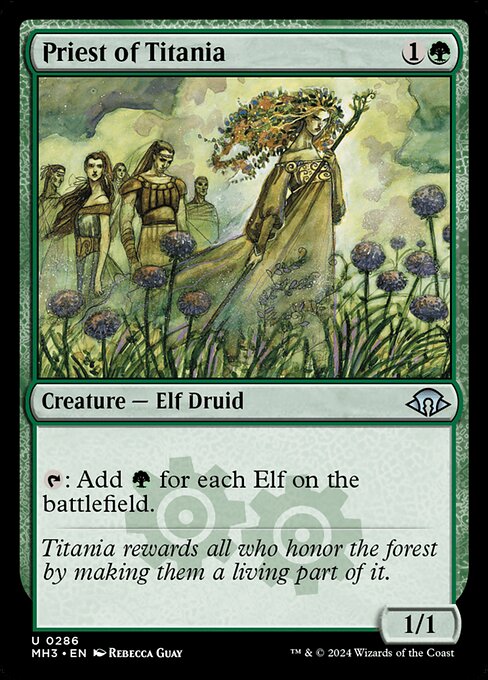
Priest of Titania
Large mana potential
Counts opposing Elves too, unlike a your Elves only engine.
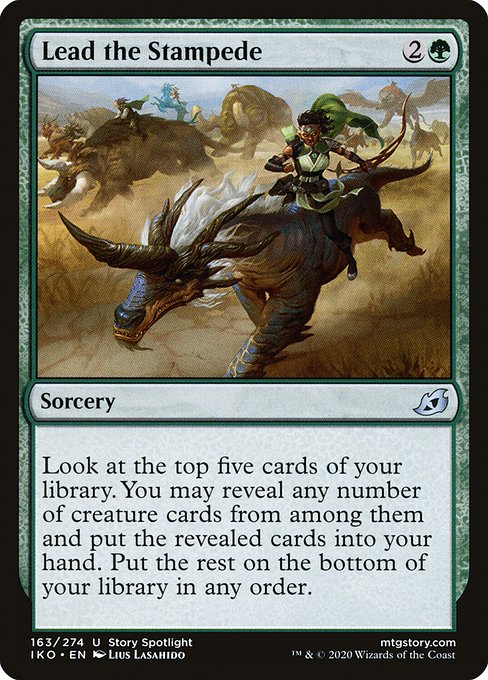
Lead the Stampede
Refill
Creature density determines actual results rather than a guaranteed number.
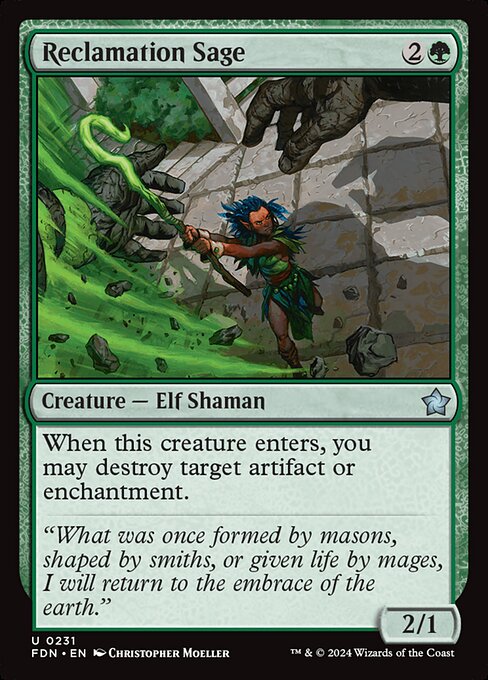
Reclamation Sage
Artifact or enchantment answer
Preserves Elf density while leaving other permanent types for different answers.
A sample start and the first removal test
An opening with two Forests, Llanowar Elves, Dwynen's Elite, Marwyn, Elvish Visionary, and a later payoff has a plausible beginning. Turn one Forest casts Llanowar Elves. Turn two the second Forest plus the Elf can supply three mana. You can cast Marwyn then, or develop the Elite with another Elf already present. Those lines produce different power and body counts on the following turn.
If you choose Marwyn first, a later Elite and its token can grow her through their entries. If you cast the Elite before Marwyn, those earlier entries do not retroactively add Marwyn counters. You may prefer the wider early board in one game and the faster commander engine in another. State which line you are testing rather than combining the best parts of both as though all the creatures entered in the favorable order.
Now test an opponent removing Marwyn before her next activation opportunity. The ordinary mana creatures and lands should still let you cast something useful. If every other card in hand assumes a huge Marwyn activation, the commander dependence is too concentrated for the games you want. Keep a refill or a modest independent play instead of only increasing the maximum successful output.
Also test a wipe after the first large development turn. Saving one refill and a creature can make the recovery turn real, while deploying the whole hand may leave only a costly commander recast. A basic land base and a few noncreature resources can provide resilience that another expensive creature engine does not. The deck's floor is part of its budget value.
Upgrade the weak role before the premium finisher
If the current cart cannot support a premium combat finisher, a practical team pump can preserve the combat route while losing some immediacy or ceiling. Name that tradeoff. A card that needs an existing large creature is not equivalent to one that calculates a bonus from the whole army. A replacement should fit the board your list actually creates, not merely share green mana symbols.
If a premium tutor is the expensive item, more draw and redundant role pieces can create a less deterministic but functional plan. If a mana engine is unavailable, ordinary one mana accelerants can improve early development without duplicating its late output. Those choices can also change how the deck feels. Less searching and fewer compact loops may be a deliberate preference rather than a temporary defect awaiting more money.
Price actual printings, shipping, and cards already owned. Do not remove useful interaction solely to meet a headline number while keeping a luxurious finisher. Use the budget tools to compare roles, then run opening hands again. The most expensive card is not automatically the first card the deck needs.
Build your deck and create a free account to save a starting Elf list and its next revision. Record whether games fail from missing draw, a fragile mana engine, no combat route, or too little interaction. Make a targeted change and test ordinary turns. A budget Elf deck becomes reliable when its abundant mana has a useful destination and its recovery turn is part of the plan.
Budget Elves questions
Build your deck
Put these choices into a Commander list. Create a free account to save your deck and keep tuning it with Deckcipher.
FAQ
Is Marwyn or Ezuri better for a budget start?
Marwyn supplies a power based mana engine, while Ezuri supplies a paid combat payoff and a separate defensive option. Choose the job you want available from the command zone. The support package should supply the other half of that resource to finish sequence.
Does Priest of Titania count opponents' Elves?
Yes. Its count is the battlefield's Elves. Elvish Archdruid counts Elves you control for its mana ability. Read the exact scope before calculating a turn, especially in a matchup where another player also has Elves.
Can a newly cast mana Elf tap immediately?
Normally not if its own ability uses the tap symbol and it has not met the continuous control requirement. Haste or another applicable effect can help. Being an Elf in a large existing army does not remove the restriction for the new creature.
Should I cut lands because so many creatures make mana?
Do so only after testing actual hands and recovery turns. Creatures must be cast before they accelerate, and wipes can remove several at once. Lands, colored requirements, curve, and commander recasts all remain relevant even in a creature dense list.
Are infinite mana combos required?
No. A wide combat plan with draw and a real finisher can be a deliberate choice. Untap loops need their specific pieces and should be described as an optional change in finish and speed. Low price alone does not decide whether a combo fits the intended game.
What should I buy first?
Fix the role that repeatedly fails: early development, draw after the burst, answers, or a finisher. Price actual printings and shipping. A premium payoff is less useful when the current list regularly produces mana but has no cards or loses to an unanswered engine.