
Quick answer
Haste lets a creature ignore the usual continuous control requirement for attacking and for activating its own abilities with the tap or untap symbol in their costs. It does not untap the creature, change equip timing, or let you add an attacker after attackers are declared.
What summoning sickness actually checks
A creature normally cannot attack or activate its own abilities with the tap or untap symbol in their costs unless you have controlled it continuously since the beginning of your most recent turn. Players call this restriction summoning sickness. Haste lets the creature ignore that restriction. It is about continuous control, not a counter placed on the creature or an ability that disappears from its text.
The restriction does not mean a new creature can do nothing. It can normally block, have static abilities, trigger from appropriate events, and activate abilities that do not face the relevant tap or untap symbol restriction. A newly cast creature with a sacrifice ability may be useful immediately if the cost and timing are otherwise legal. Haste is valuable, but not every immediate creature action requires it.
An opponent's turn passing is not the same as the beginning of your turn. A creature you cast on your turn and keep until an opponent's turn is still under the restriction if your next turn has not begun. Conversely, a creature that entered during the previous opponent's end step can usually attack on your upcoming turn because you controlled it as that turn began. Track the controlling player's turn, not a vague full round.
Haste also does not untap anything. A tapped creature with haste normally cannot be declared as an attacker because it is tapped. If an effect steals a creature and gives it haste but does not untap it, check its actual tapped status. Read all the instructions instead of treating haste as an automatic package of untapping, control change, and permission to attack.
A clean attack sequence with a newly cast commander
Suppose you cast your commander during your first main phase and equip Swiftfoot Boots after it resolves. When the equip ability resolves, the commander has haste and hexproof. If it is untapped and no other restriction applies, you may move to combat and declare it as an attacker. The Boots let it ignore the continuous control requirement, while the equip activation itself followed its normal timing.
Opponents can respond before the equip ability resolves. A commander is not protected by the Boots merely because you have announced the equip activation. If an opponent removes it while that activation is on the stack, the attachment may never occur. Keeping mana for another response can matter when the haste source also provides the protection you are relying on.
Once you declare attackers, you cannot add another creature to that declaration simply by giving it haste later. You may have a legal combat trick window, but that window is not a second declare attackers action. An effect that puts a creature onto the battlefield attacking is different and follows its own instructions. Haste does not create that effect by itself.
Losing haste after a creature has been legally declared as an attacker does not automatically remove it from combat. The continuous control restriction was relevant to declaring the attack. If the creature remains in combat, it can deal combat damage normally unless another event changes that. This is different from trying to declare an attack before a temporary haste effect has actually resolved.
Tap abilities, untap abilities, and the wording of a cost
Haste is often more important for an engine creature than for an attacker. A mana creature with a tap symbol can produce mana immediately when haste removes the restriction. A creature with a tap activated draw or damage ability can similarly use that ability without waiting for your next turn. The creature still needs to be untapped to pay a tap cost and still must satisfy every other activation condition.
The untap symbol in an activation cost has a parallel restriction for creatures. Haste can let a newly controlled creature activate such an ability, but you still need to pay the untap cost, meaning the creature must be tapped as required. Haste does not let you untap an already untapped creature as a cost. Costs and permissions are separate checks.
A cost written as tap an untapped creature you control is not the same as the tap symbol in that creature's own activated ability. Newly controlled creatures can often be tapped to crew a Vehicle, convoke a spell, or pay another effect's appropriately worded cost. This is why an inexpensive creature can help crew immediately without needing haste. Read which ability is being activated and how its cost is written.
An activated ability without the tap or untap symbol is not automatically free of timing restrictions. It may say activate only as a sorcery, once each turn, or under another condition. Haste does not remove those restrictions. A card that can tap immediately may still have no legal target, insufficient mana, or an activation limit that prevents the action you hoped to take.
Changing control and animating old permanents
A creature you gain control of has not normally been under your continuous control since your most recent turn began. It therefore faces the usual attack and tap ability restriction unless it has haste or another relevant permission. Temporary theft spells often include haste because otherwise the stolen creature might not be able to attack during the borrowed turn.
Losing control and regaining it breaks continuous control. You cannot point to the creature having been yours earlier in the turn and ignore the intervening change. If the creature returns to you after another player controlled it, evaluate the restriction again. An effect's duration and the creature's abilities determine whether it can attack or activate at the later moment.
Animation checks control history rather than how long the object has been a creature. An artifact you have controlled continuously since your turn began may become a creature later that turn and use a tap ability or attack without needing haste for this restriction. A newly cast artifact that becomes a creature has not met that continuous control requirement and normally needs haste for those actions.
Vehicles make the distinction visible. A Vehicle that has been under your control since the turn began can be crewed and attack if otherwise legal. A newly cast Vehicle can be crewed by creatures that are themselves newly controlled, but becoming crewed does not erase the Vehicle's own continuous control restriction. It generally needs haste to attack that turn. Crew permission and attack permission are separate questions about different objects.
| Situation | Does haste solve the problem? | Remaining requirement |
|---|---|---|
| New untapped creature wants to attack | Yes for continuous control | Must be declared during the normal attack declaration |
| New mana creature wants to tap | Yes for its tap symbol ability | Still must pay all costs |
| Tapped creature wants to attack | No untapping from haste | Needs to be untapped before declaration |
| New creature helps crew a Vehicle | Usually no haste needed for that cost | Vehicle itself may still need haste to attack |
| Old artifact becomes a creature | May not need haste | Check continuous control since your turn began |
Tokens entering attacking are not declared attackers
A token created during your main phase normally needs haste or the usual control history to attack that turn. A token created already tapped and attacking enters through a different instruction. It was not declared as an attacker, so it does not need haste to enter attacking. The effect itself places it into that combat, subject to the relevant rules and choices.
This difference matters for whenever this creature attacks abilities. Entering attacking is not the same event as being declared as an attacker. A token copy with an attack trigger does not automatically trigger that ability just because an effect created it attacking. Other triggers may care about a creature entering or dealing combat damage, and those can work according to their wording.
Haste does not let a creature ignore restrictions on what it may attack. A goaded creature, a creature affected by a can't attack effect, or a creature facing an attack cost still must obey applicable requirements and restrictions. Haste removes one specific continuous control hurdle. It does not pay an attack tax or make every choice of defending player legal.
Extra combats also require actual resources. A creature that attacked once may need to untap before attacking again. Haste does not automatically untap it between combats. A new creature cast between combats could use haste to attack in the next combat if you have the proper opportunity to cast it and all other requirements are met. Treat the extra combat's declaration as its own event rather than assuming the keyword creates extra attacks by itself.
Choose a haste source for the whole list
Fervor gives creatures you control haste through a shared static ability. It can support several new creatures and tokens without a separate equip activation for each. It also spends a card and mana on support rather than a threat. A deck that casts only one modest creature per turn may not need the same teamwide source as a token deck building a large attack at once.
Anger grants haste from your graveyard while you control a Mountain. A land with the Mountain subtype can satisfy that condition; a red producing land without the subtype does not automatically count. The deck needs a way to put Anger into the graveyard and a reliable qualifying land. Graveyard hate can interrupt that plan, so do not count Anger as unconditional haste just because it is in the ninety nine.
Rhythm of the Wild makes your creature spells unable to be countered and gives your nontoken creatures riot. Riot offers a choice of a +1/+1 counter or haste as the creature enters. Choosing the counter does not also give haste through riot. Tokens do not get that riot ability from Rhythm, and the creature spell protection does not make a resolved creature immune to removal. These separate benefits should each match your plan.
Swiftfoot Boots focuses on one equipped creature at a time and combines haste with hexproof. That can be excellent for a commander or tap engine, but the equip cost and timing remain part of the turn. It does not give every new token haste. Compare shared support, graveyard support, and focused equipment based on how many creatures need immediate action and which supporting conditions your deck can meet.
Thousand-Year Elixir is a permission, not full haste
Thousand-Year Elixir lets you activate abilities of creatures you control as though those creatures had haste. That is useful for tap engines, but it does not give the creatures actual haste for attacking. A new creature can use its relevant tap ability through the Elixir and still be unable to attack that turn. Do not count the artifact as team haste in a combat deck.
The Elixir also has an activated ability that untaps a target creature. That can let a creature use a tap ability again if the costs and other restrictions permit it. The untap activation costs mana and taps the Elixir. It is not an unlimited automatic repetition. If the creature's own ability is limited to once each turn, untapping does not remove that limit.
For an engine commander, the distinction can make the Elixir more useful than a pure combat haste source. Immediate activation plus one extra untap may produce cards or mana without exposing the commander to combat. For an attack trigger commander, the same artifact may fail to do the central job. Read the commander's ability before choosing support based on the word haste appearing in reminder style text.
Use the deck building checklist to assign the support role precisely. Write immediate attack, immediate tap ability, or repeated activation next to each candidate. A card that covers two jobs may justify a higher cost. A card covering the wrong job should not remain simply because it was recommended for a different commander with a similar color identity.
Haste support with different conditions

Fervor
Shared creature haste
Useful for several new bodies, including tokens, when the support card earns its slot.

Anger
Graveyard engine
Needs the graveyard position and an actual Mountain subtype under your control.
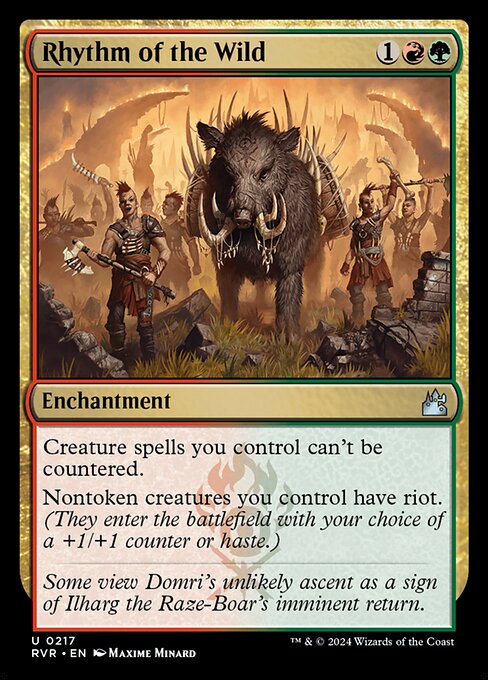
Rhythm of the Wild
Riot choice
Nontoken creatures choose a counter or haste, while creature spells get separate counter protection.

Swiftfoot Boots
One creature
Equipment timing and costs matter before a commander gains the abilities.
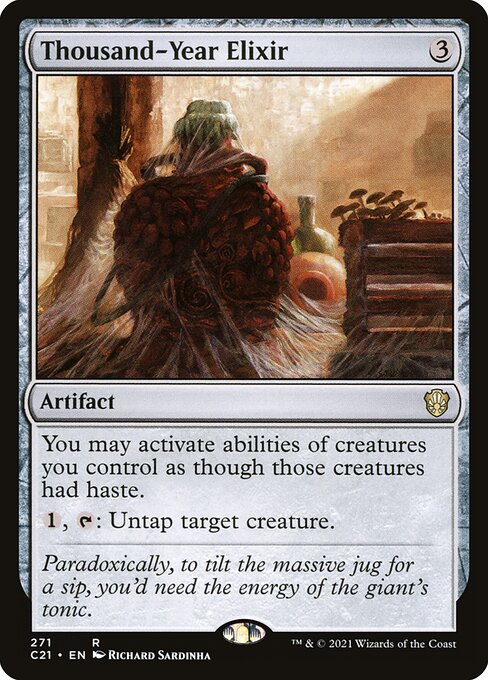
Thousand-Year Elixir
Activation support
Permits immediate creature abilities without granting attack haste.
Answer haste and test the first useful turn
Against a haste deck, keep interaction for the point before the relevant action happens. Removing a creature before attackers are declared prevents its attack. Removing it after an attack trigger exists may leave that trigger on the stack. Removing a shared haste source before declarations can restrict new creatures, but doing so after legal attacks have been declared does not simply remove the attackers from combat.
For tap engines, removing the creature before activation can prevent the ability from being created. Removing it after activation often leaves the ability on the stack. Haste gives the controller an immediate opportunity when they receive priority, so timing and whose turn it is can matter. Do not assume every new creature gives opponents a free window before its controller may use an ability.
Test opening turns with the full cost of the haste source included. A commander plus Boots may require an extra mana and a safe equip window. A team haste enchantment may delay the first threat by a turn. The interaction checker helps inspect whether you can protect the decisive creature while spending mana on that setup. A faster attack is useful only when the rest of the turn remains functional.
Build your deck and create a free account to save separate versions of the haste package. Note the earliest useful action each source enables and the condition it needs. Keep the cards that improve real attacks or activations, and replace redundant support when the list would benefit more from draw, mana, or an additional threat.
Haste questions
Build your deck
Put these choices into a Commander list. Create a free account to save your deck and keep tuning it with Deckcipher.
FAQ
Can a new creature block without haste?
Yes, if it is otherwise a legal blocker and untapped when blockers are declared. The usual continuous control restriction limits attacking and the creature's relevant tap or untap symbol abilities. It does not generally prevent blocking, static abilities, or triggered abilities.
Does haste untap my creature?
No. Haste removes a specific control duration restriction. A tapped creature normally still cannot be declared as an attacker or pay a tap cost. Some cards separately untap a creature and give it haste, but those are two instructions rather than one meaning of the keyword.
Can I give haste after attackers are declared?
You may be able to grant the ability at that time, but it does not add that creature to the completed attack declaration. Give haste before declaring attackers if it is needed to attack. An effect putting a creature onto the battlefield attacking follows a separate instruction.
Do newly controlled creatures need haste to crew?
Not just to be tapped for an ordinary crew cost. That cost is not the tap symbol in the tapped creature's own activated ability. The Vehicle that becomes a creature still has its own continuous control history and may need haste to attack if newly controlled.
Does Thousand-Year Elixir let my new commander attack?
Its permission applies to activating creature abilities as though the creatures had haste. It does not grant actual haste for attacking. It can be excellent for a tap ability commander and ineffective as immediate attack support for an attack trigger commander.
Does losing haste remove an attacker from combat?
Not merely because the creature loses haste after being legally declared. The control restriction was checked for the declaration. Other effects can remove it from combat or the battlefield, but the disappearance of haste alone does not undo the earlier legal attack.