
The best green Commander staples are the cards that turn mana into inevitability
Green Commander staples are not just the most popular green cards. The best ones accelerate your mana, keep cards flowing, protect a board that took several turns to build, and answer problem permanents without diluting your main plan.
Core green Commander staples to know first

Cultivate
Reliable land ramp
A safe three-mana ramp spell that fixes colors, guarantees the next land drop, and works in casual midrange decks that want stable development over explosive speed.
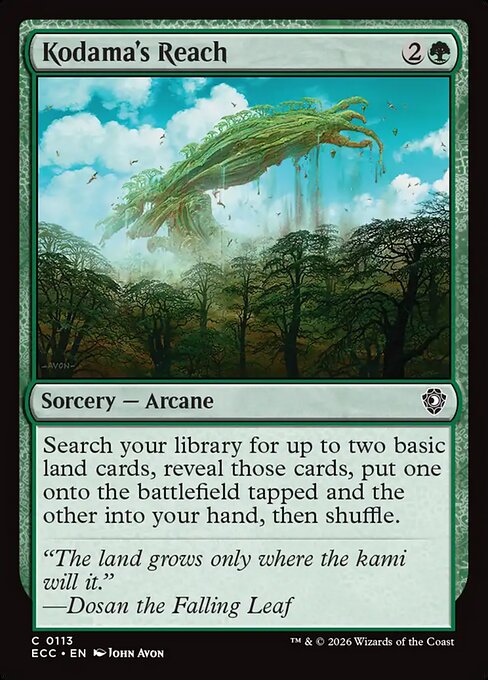
Kodama's Reach
Redundant land ramp
Functionally similar to Cultivate, giving green decks a second copy of the classic three-mana land setup spell when consistency matters.

Nature's Lore
Efficient two-mana ramp
Finds a Forest card and can put it onto the battlefield untapped, which makes it stronger in decks with dual lands, shock lands, or typed nonbasics.

Three Visits
Premium two-mana ramp
Another two-mana spell that searches for a Forest card, giving multicolor green decks excellent fixing when the mana base supports it.

Beast Within
Universal removal
Answers almost any permanent at instant speed, which is exactly what green needs when a single opposing card would otherwise shut down a creature plan.
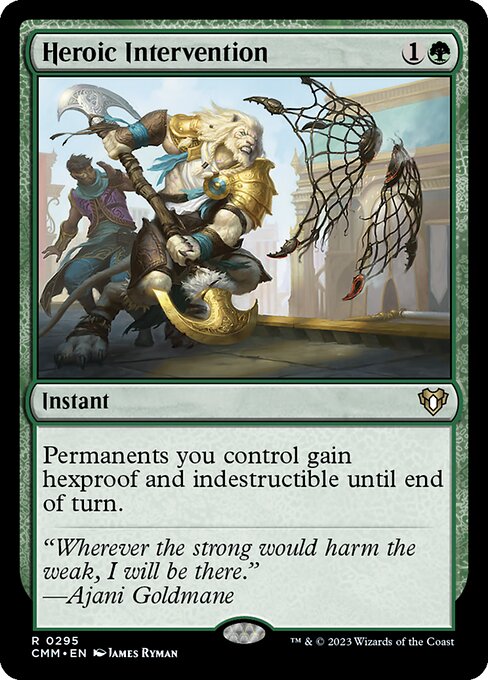
Heroic Intervention
Board protection
Protects your creatures and other permanents from many sweepers and removal sequences, making it one of green's best ways to preserve a winning board.
What counts as a green Commander staple?
A green Commander staple is a card that repeatedly earns consideration because it solves a common EDH problem efficiently: mana development, card flow, board protection, permanent removal, or converting a board into a win. Popularity is useful data, but popular does not mean correct. A real staple has a clear job in your deck and a clear reason to avoid it when the shell or table speed changes.
The biggest mistake is treating green staples as one automatic package. Cultivate is excellent when you want colors and land-drop insurance. Nature's Lore is stronger when typed dual lands make it both ramp and fixing. Llanowar Elves is strongest when casting your commander one turn early matters. The same card can be a staple in one bracket and a liability in another.
Use this test: does the card improve my first three turns, scale in multiplayer, support my commander, or cover a weakness green normally has? If it answers two or more of those questions, test it. If it only looks generically good, make sure it is not crowding out synergy.
Best green ramp staples
Green ramp is not one category. Use a simple decision tree: choose one-mana dorks if commander timing matters; two-mana land ramp if fixing and resilience matter; three-mana ramp if land drops and casual consistency matter; and four-mana ramp only if your deck immediately converts six-plus mana into a major play.
Cultivate and Kodama's Reach remain good in casual decks because they fix colors and make the next land drop reliable. They are slower than two-mana ramp, so they should not be automatic in high-power lists. Nature's Lore and Three Visits are usually the cleaner upgrade when your deck wants to double-spell earlier or cast a four-mana commander on turn three.
Nature's Lore, Three Visits, and Skyshroud Claim find Forest cards, including dual lands with the Forest subtype. Farseek can find a Plains, Island, Swamp, or Mountain card. A dual land that also has Forest can qualify if it has one of those listed types; a plain basic Forest cannot. Farseek puts its chosen land onto the battlefield tapped.
Skyshroud Claim is still strong, but it is a big-mana staple rather than a universal include. It belongs in decks that can spend turn four ramping and then use six or seven mana right away. Cut it from faster lists where the table expects interaction, tutors, or threats before that point.
Ramp staples by speed and deck fit
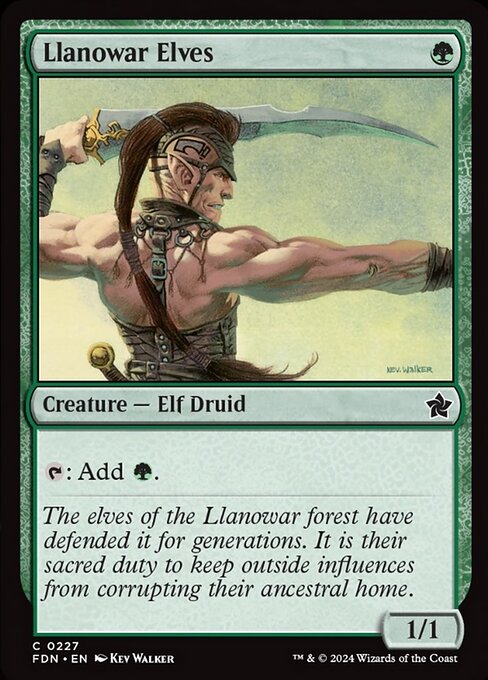
Llanowar Elves
One-mana creature ramp
Best when an early commander or engine creature changes the game. Weaker in decks that expect frequent creature sweepers or need ramp that survives removal.

Elvish Mystic
One-mana creature ramp
A functional redundancy piece for decks that value a turn-one accelerator and can take advantage of creature synergies.

Birds of Paradise
Color-fixing creature ramp
Excellent in multicolor green decks because it fixes any color and still accelerates from turn one.

Farseek
Two-mana fixing
Strong in multicolor decks with typed nonbasic lands. Less exciting in mono-green, where it cannot find a basic Forest.

Skyshroud Claim
Four-mana land burst
Still powerful when it finds two Forest cards and the deck wants to jump into six-plus mana plays. Cut it from lists where spending turn four only ramping is too slow.

Sakura-Tribe Elder
Ramp plus buffer
Trades early damage prevention for a basic land and works well in decks that care about creatures dying, lands entering, or holding up interaction.
How many ramp spells should a green Commander deck play?
Most green Commander decks should start around 10 to 14 ramp effects, then adjust for commander mana value and curve. A three-mana commander may need only 9 or 10 accelerants. A deck built around seven-mana creatures, X-spells, or repeated commander recasts may want 14 to 16. The problem is not playing too much ramp; it is playing ramp that does not translate into action.
Count ramp by function. If all your ramp dies to creature sweepers, add land ramp. If your ramp starts at three mana, you may fall behind faster pods. If your ramp fixes only green, multicolor hands will stumble. A healthy suite mixes speed, resilience, and fixing.
Green card advantage staples
Green card draw is best when it rewards what your deck already does. Garruk's Uprising belongs in big-creature decks. Guardian Project and Beast Whisperer reward high creature counts. Harmonize is less explosive, but it is still useful when your board state is inconsistent and you simply need three cards.
Sylvan Library is one of green's best selection engines, especially with shuffle effects from ramp and tutors. The life payment is real, but 40 starting life lets you turn early life into cards when you need to assemble mana plus payoff. The Great Henge also deserves consideration in creature decks that can reduce its cost; it is expensive in both mana and money, but it turns creatures into cards, counters, and life.
Eternal Witness is not pure card draw, but it often functions as the best card in your graveyard. It gets back a protection spell, a removed finisher, a tutor, or a key land. It is strongest in decks that can blink, recur, tutor, or sacrifice creatures.
Green card draw and advantage staples
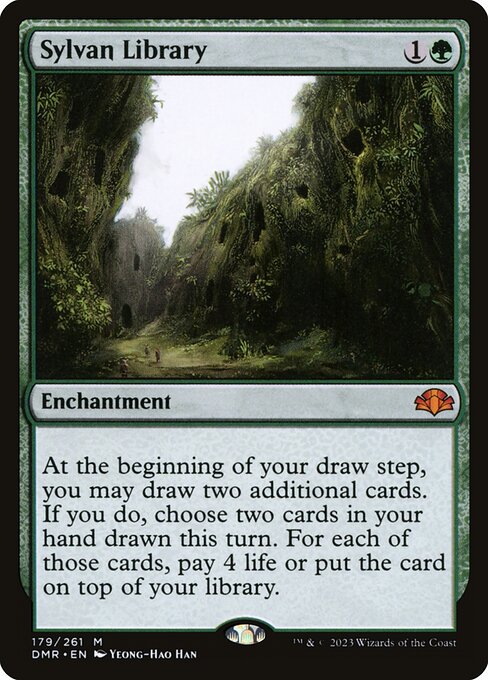
Sylvan Library
Card selection engine
Filters draws every turn and can convert life into extra cards when you need to push ahead. Strongest with shuffle effects and decks that can protect their life total.

Harmonize
Unconditional draw
Not flashy, but it cleanly draws three cards without requiring a creature, board state, or graveyard setup.
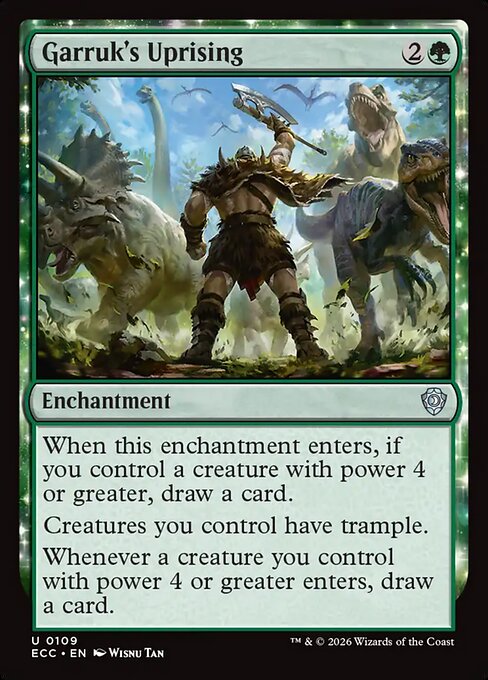
Garruk's Uprising
Creature payoff draw
Draws from large creatures and gives trample, making it excellent in stompy, monsters, and power-four-matters decks.
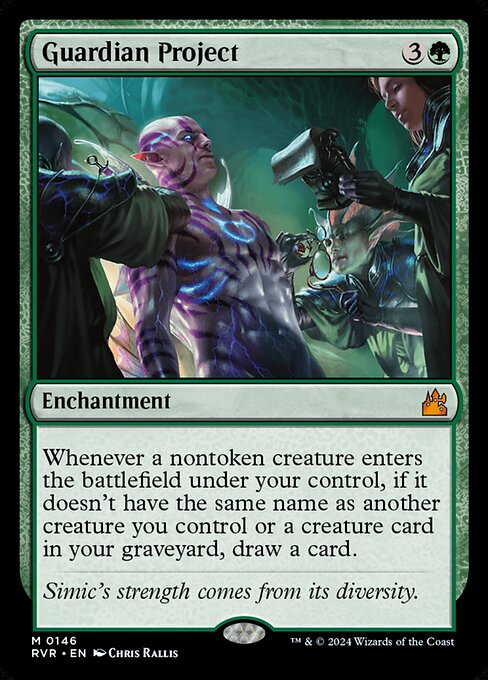
Guardian Project
Creature-chain draw
Draws for a nontoken creature entering under your control if it shares no name with another creature you control or a creature card in your graveyard. This is an entry trigger, not a cast trigger.
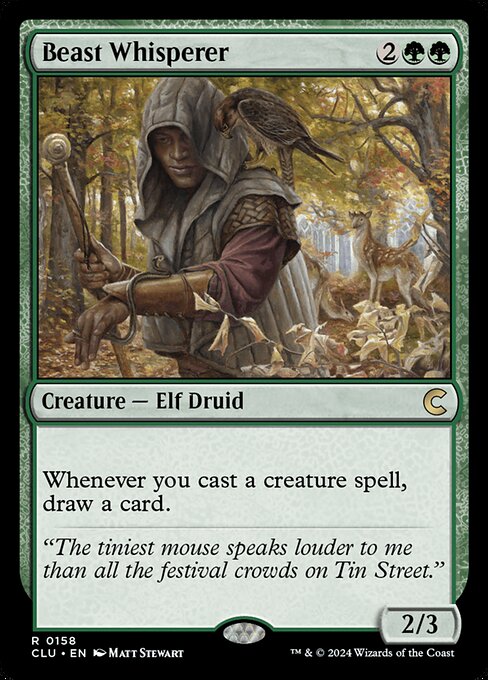
Beast Whisperer
Creature spell draw
Strong in creature-dense decks that can cast multiple creatures in a turn. Vulnerable to removal but powerful when untapped.
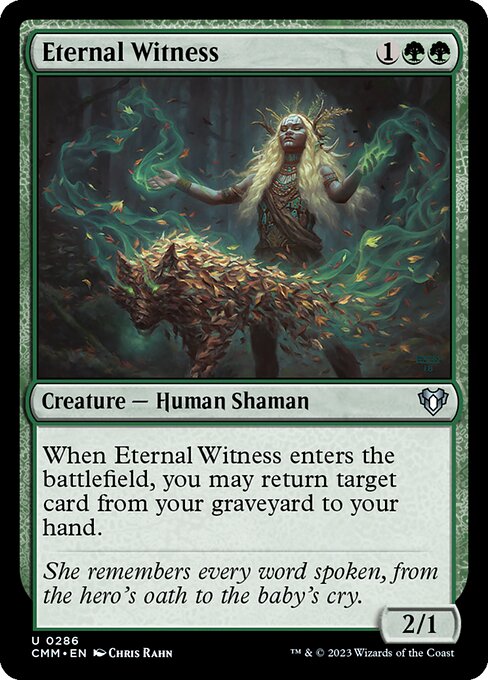
Eternal Witness
Graveyard value
Returns the best card in your graveyard to hand, letting green decks reuse ramp, removal, protection, or a finisher.
Interaction staples green decks should not skip
Strong green decks still need interaction. Beast Within is the cleanest catch-all because it answers nearly any permanent at instant speed. The 3/3 token rarely matters when the alternative is losing to a lock piece, combo permanent, planeswalker, or utility land.
Krosan Grip is a meta call for protected artifacts and enchantments. Reclamation Sage is slower, but excellent when your deck can tutor, recur, blink, or sacrifice creatures. Acidic Slime is no longer a fast staple, but it remains defensible in slower casual brackets because it hits lands and blocks well. Modern high-power lists should also consider Force of Vigor, Boseiju, Who Endures, Collector Ouphe, Kenrith's Transformation, and Elvish Reclaimer depending on the table.
Green removal and utility staples
Beast Within
Catch-all answer
One of green's cleanest ways to remove almost any permanent at instant speed. The 3/3 token is usually an acceptable drawback.
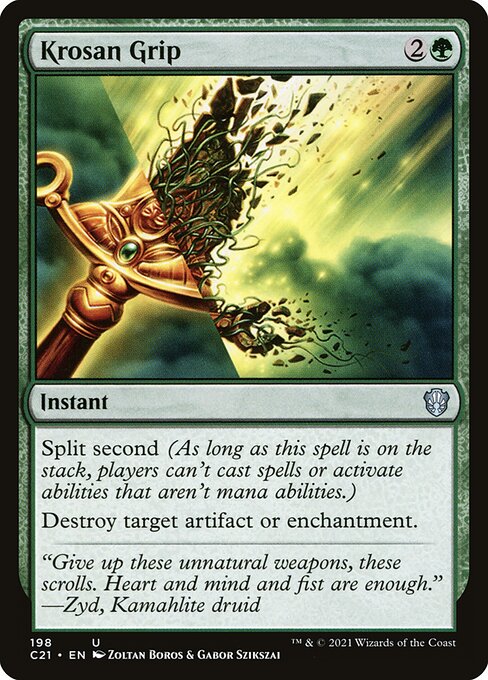
Krosan Grip
Protected artifact and enchantment removal
Split second makes it harder for opponents to respond with activated abilities or counterplay while it is on the stack.
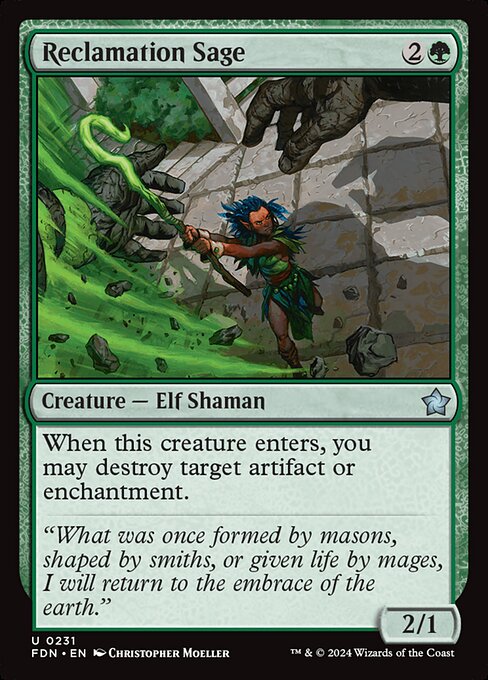
Reclamation Sage
Creature-based removal
Destroys an artifact or enchantment while adding a creature to the battlefield, which is valuable in recursion and creature-toolbox decks.

Acidic Slime
Value removal creature
Answers artifacts, enchantments, or lands and blocks well with deathtouch. Better in slower decks than streamlined fast lists.

Bane of Progress
Mass artifact and enchantment reset
Its entry trigger destroys all artifacts and enchantments, including your own and artifact or enchantment creatures. It does not generally destroy lands or planeswalkers.
Protection staples and why timing matters
Green decks often spend several turns building a board before they can win, so protection is not optional. Heroic Intervention is strongest when it protects multiple important permanents from a sweeper or removal chain. Tamiyo's Safekeeping protects one key permanent for one mana, which is better when your commander or one engine card matters more than your whole board.
Veil of Summer makes spells you control unable to be countered for the turn and gives you and permanents you control hexproof from blue and from black. It draws a card only if an opponent cast a blue or black spell that turn. It does not counter an opposing spell or protect against every kind of removal. Tamiyo's Safekeeping and Heroic Intervention supply indestructible instead, but neither saves a permanent from a nontargeting exile sweeper. Choose the protection spell that matches the actual threat.
Asceticism is powerful but slow. It belongs in slower creature decks that expect long board states, not in streamlined decks trying to win before five-mana enchantments matter.
Green protection staples
Heroic Intervention
Wide-board protection
Protects your board from many destroy effects and targeted removal. Best in decks that commit multiple important permanents.

Tamiyo's Safekeeping
Single-permanent protection
Efficiently protects a commander, engine, or key permanent while gaining a little life. Better for focused setups than wide boards.
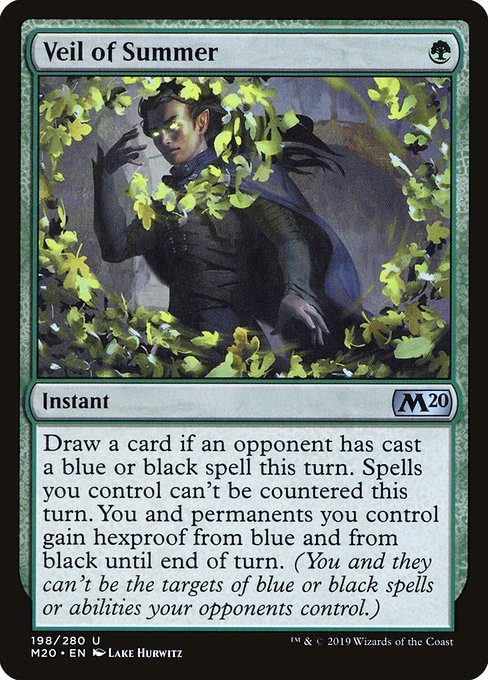
Veil of Summer
Anti-blue and anti-black protection
Excellent when opponents rely on blue or black interaction, and weaker when those colors are absent from the pod.
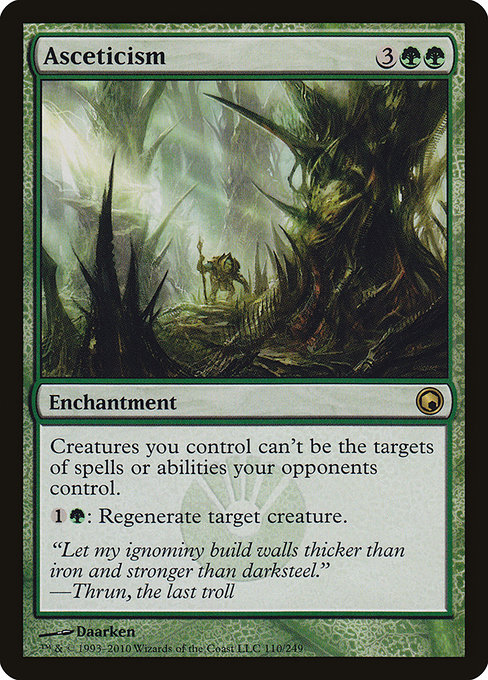
Asceticism
Persistent creature protection
Expensive, but strong in slower creature decks that want ongoing protection and regeneration across multiple turns.
Finishers and payoff staples
Ramp must become pressure. Craterhoof Behemoth is the classic go-wide finisher, but it is not for every green deck. Finale of Devastation is more flexible because it is a tutor early and a lethal pump spell late. Return of the Wildspeaker bridges card draw and finishing power by drawing from a large non-Human or pumping your non-Human creatures.
Budget combat finishers should still end games, not merely be large. Overwhelming Stampede, Pathbreaker Ibex, End-Raze Forerunners, Great Oak Guardian, and Kamahl, Heart of Krosa are stronger examples than a single big body. Terra Stomper is playable only as a lower-power budget stompy threat; it is not a modern staple beside Craterhoof or Finale.
Choose finishers by board pattern: token decks want team pumps, big-creature decks want trample and burst damage, creature-combo decks want tutorable win pieces, and big-mana decks want scalable mana sinks.
Green payoff and finisher staples
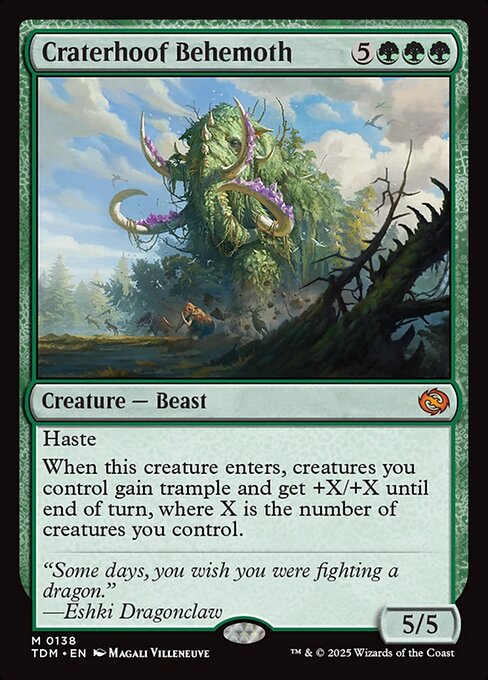
Craterhoof Behemoth
Go-wide finisher
Turns a developed creature board into lethal combat damage. Best in token, creature swarm, and creature-chain decks.
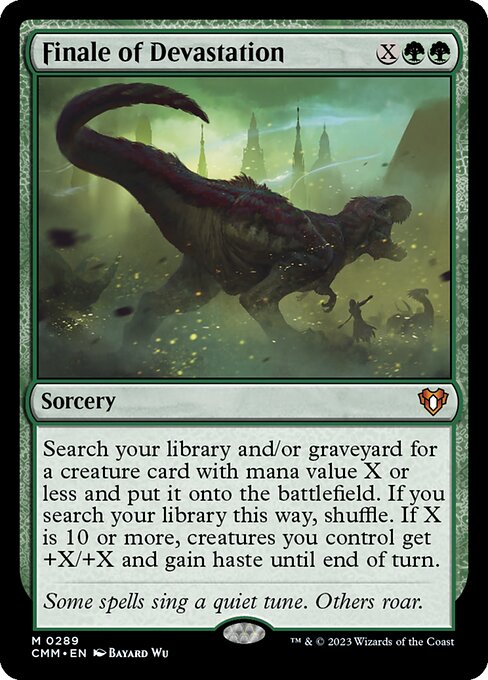
Finale of Devastation
Tutor and finisher
Finds creatures early and can end the game later when X is high enough to pump the team.
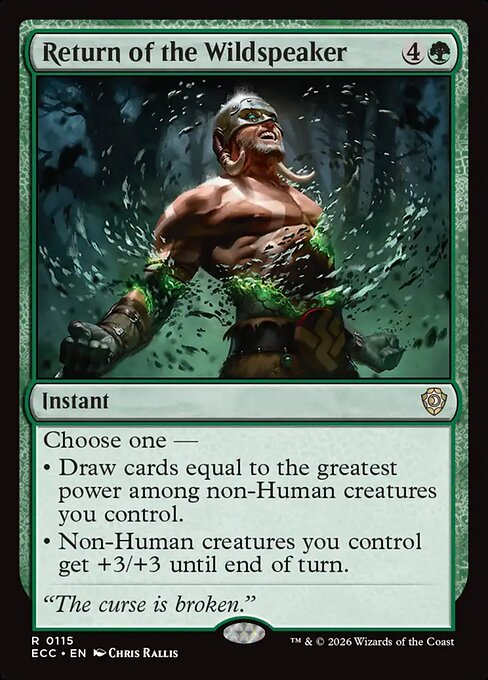
Return of the Wildspeaker
Modal draw or pump
Draws from a large non-Human creature or boosts a board for a finishing attack.

Overwhelming Stampede
Combat finisher
Rewards having one large creature and a supporting board. A strong budget-friendly finisher for creature decks.
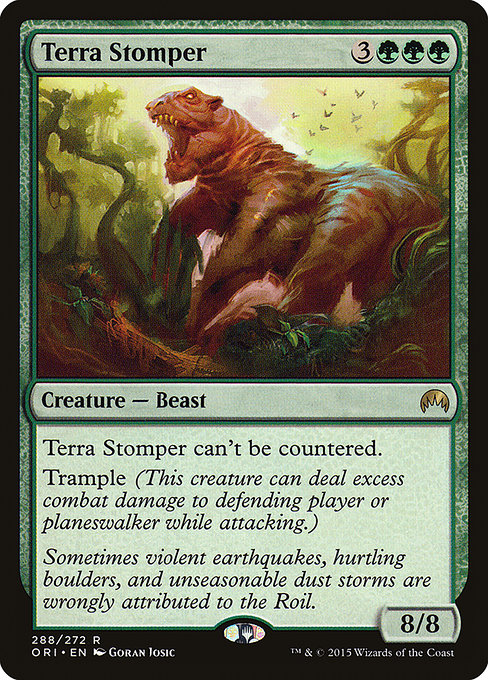
Terra Stomper
Budget casual threat only
A straightforward big creature for lower-power stompy decks. Do not treat it as a staple finisher in tuned lists.
Sequencing green staples in real games
Sequencing is where green staples win or lose games. Hand one: Forest, another land, Llanowar Elves, Cultivate, Beast Within, Garruk's Uprising, and a five-mana creature. Turn one, play the Elf. Turn two, cast Cultivate. Turn three, play Garruk's Uprising if the table is not threatening an immediate must-answer permanent; otherwise hold Beast Within. Turn four, cast the five-mana creature and draw if it has enough power. This line turns early ramp into both mana and card flow.
Consider three lands, Kodama's Reach, Skyshroud Claim, Heroic Intervention, and Craterhoof Behemoth as a hypothetical seven. With no early acceleration or creature engine, its first proactive spell is on turn three. Reach can put a fourth land onto the battlefield tapped and another in hand. A fourth-turn land drop gives five lands before Claim. Whether the Forests Claim finds can enter untapped depends on the lands themselves; the spell does not force them tapped. Even with plenty of mana next turn, Craterhoof has little to pump. This hand illustrates the need for both resources and action, not a guaranteed keep. If you repeatedly draw this pattern, compare it in the Mulligan Calculator.
Removal and protection timing matter too. Save Beast Within for permanents your board cannot beat, not the first medium value engine. Save Heroic Intervention for a winning board or a crucial sweeper turn, not a single early mana creature unless that creature is essential to your combo.
Choosing staples by archetype
Staples should change with the commander. Ashaya, Soul of the Wild rewards creatures that also behave like lands, so creature density and landfall-style synergies matter more than generic sorcery ramp. Selvala, Heart of the Wilds wants cheap acceleration, high-power creatures, protection, and tutors. Vorinclex, Monstrous Raider wants counter multipliers, protection, and payoffs rather than generic stompy threats.
A lands-focused shell can consider Exploration, Azusa, Lost but Seeking, Oracle of Mul Daya, Tireless Provisioner, Tireless Tracker, Scute Swarm, and World Shaper. Extra land-play permissions need lands available to play; they are not themselves a supply of lands. Cultivate and Kodama's Reach can still be useful here because they provide a land to hand as well as one to the battlefield. Cut a generic ramp spell only when the replacement improves the actual landfall sequence or recovery plan, rather than assuming every three-mana ramp spell is automatically wrong for landfall.
Creature-combo mini-package: Birds of Paradise, Delighted Halfling, Llanowar Elves, Worldly Tutor, Green Sun's Zenith, Chord of Calling, Veil of Summer, and Finale of Devastation. Cut clunky three- and four-mana setup cards such as excess Cultivate effects, Skyshroud Claim, and Asceticism when your goal is to assemble and protect a compact creature line.
Commander shells that change staple priority

Ashaya, Soul of the Wild
Land-creature commander
Rewards creatures and land interactions, so creature-based ramp and protection can be more important than generic big threats.

Selvala, Heart of the Wilds
Explosive mana commander
Can turn high-power creatures into major mana production, making early acceleration and powerful creature payoffs especially important.
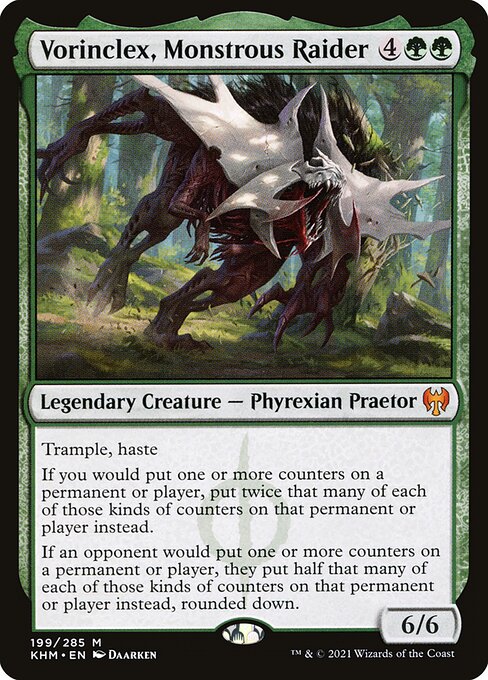
Vorinclex, Monstrous Raider
Counters payoff commander
Pushes decks toward counters, planeswalkers, and protection rather than a generic ramp-only green package.
Budget and upgrade priorities
Budget upgrades should fix role failures first. Cheap ramp is easy to build now: Llanowar Elves, Elvish Mystic, Sakura-Tribe Elder, Cultivate, Kodama's Reach, Farseek, Nature's Lore, and often Three Visits are all realistic starting points in many markets. The real bottlenecks are usually premium draw, protection, finishers, tutors, and lands.
Upgrade in this order: reach enough ramp, add card advantage that matches your board plan, improve interaction, then buy expensive finishers. Sylvan Library, Heroic Intervention, The Great Henge, Finale of Devastation, Craterhoof Behemoth, Worldly Tutor, Green Sun's Zenith, Boseiju, Who Endures, and premium typed lands are stronger upgrades when the rest of the shell can already support them.
Mana-base choices change the quality of Forest-search effects. Nature's Lore and Three Visits do not force the chosen Forest tapped, but the land's own entry condition still applies. Farseek does force the chosen land tapped and can find a land with any of its listed types, including a dual land that is also a Forest. It cannot find a plain basic Forest because that card lacks its listed Plains, Island, Swamp, or Mountain types. Use the Mana Base Calculator to inspect which legal targets your actual list contains.
Build your deck
Create a free Deckcipher account to save this Commander list and compare each change with the connected tools.
FAQ
What are the top green ramp spells in Commander?
The best green ramp spells depend on speed and deck shape. Nature's Lore, Three Visits, Farseek, Sakura-Tribe Elder, Cultivate, Kodama's Reach, Skyshroud Claim, Llanowar Elves, Elvish Mystic, Birds of Paradise, and Delighted Halfling are all common choices, but they fill different roles.
Is Skyshroud Claim still a staple?
Skyshroud Claim is still strong in decks that can use two Forest cards and immediately convert six or seven mana into a payoff. It is less automatic in faster decks where spending turn four only ramping is too slow.
Which green cards are essential Commander staples?
No green card is essential in every deck. Casual staples often include Cultivate, Nature's Lore, Beast Within, Heroic Intervention, Eternal Witness, Garruk's Uprising, Guardian Project, and flexible finishers. High-power decks often care more about fast dorks, Veil of Summer, tutors, Force of Vigor, Boseiju, and compact win enablers.
What are the most popular green cards in Commander decks?
Popular green cards are usually ramp, flexible answers, and creature engines. Popular does not always mean correct: Cultivate may be excellent in a casual bracket and too slow in cEDH, while Collector Ouphe may be powerful in high-power pods and awkward in artifact-heavy casual decks.
How do green staples contribute to deck strategy?
Green staples help a deck reach its key turns faster, keep cards flowing after ramping, protect developed boards, and remove permanents that would stop combat or engine plans. The best staples connect your early mana, midgame engine, and endgame payoff.
What are the best green ramp cards for a budget Commander deck?
Budget decks can start with Llanowar Elves, Elvish Mystic, Sakura-Tribe Elder, Cultivate, Kodama's Reach, Farseek, Nature's Lore, Three Visits when affordable, and Harmonize for simple card draw. The larger budget tension is usually Sylvan Library, Heroic Intervention, Finale of Devastation, Craterhoof Behemoth, premium tutors, and typed lands.
Should every green deck play Heroic Intervention?
Heroic Intervention is excellent in decks that commit multiple important permanents to the battlefield. It is less necessary in decks that play few permanents, can rebuild easily, or would rather protect one key spell with Veil of Summer or one key permanent with Tamiyo's Safekeeping.
Is Harmonize still good in Commander?
Harmonize is still playable when a deck needs unconditional draw and cannot rely on a specific board state. It is less synergistic than creature-based engines, but reliability is still valuable in casual green decks.
Turn the green shortlist into actual cuts
| Problem in the list | Candidate change | What you give up |
|---|---|---|
| Too many expensive setup spells | An excess four-mana ramp spell to Sakura-Tribe Elder | One fetched basic instead of a larger mana jump |
| No draw after committing creatures | A redundant large creature to Guardian Project | The engine needs qualifying nontoken creatures |
| A single engine must survive | An extra threat to Tamiyo's Safekeeping | Protects one permanent rather than advancing the board |
Make the next green change around the resource your engine actually produces. A creature cast, a creature entering, an extra land play, and a land entering can reward different permanents. Write one ordinary development turn and mark which draw triggers happen; do not count a reanimated creature as a cast or a land-search spell as an extra land play. Then reserve a way to use the developed mana after a wipe, through independent access or a castable threat. Build your deck around that sequence and create a free account to save it. A compatible inexpensive creature or reliable colored source may repair more turns than another large payoff.