
Quick answer
Ward triggers when an opponent's spell or ability makes the ward permanent a target. When ward resolves, that opponent may pay its cost. If they do not, ward tries to counter that spell or ability. Ward allows targeting and creates a separate payment decision.
Ward permits a target and then taxes the answer
Ward is a triggered ability, not a restriction on choosing targets. An opponent may cast Swords to Plowshares targeting your creature with ward. The spell is legally cast, its costs are paid, and ward triggers. The ward ability goes onto the stack above the removal spell. Before the removal can resolve, the table must deal with that ward trigger.
When the trigger resolves, the controller of the targeted spell or ability decides whether to pay the ward cost. If they pay, ward does not counter that object. If they decline or cannot pay, ward tries to counter it. The spell or ability remains separate from the ward trigger throughout this process. Paying a tax does not make the underlying removal immune to another counterspell.
This structure is why ward differs from hexproof. Hexproof normally prevents an opponent from choosing your permanent as a target in the first place. Ward allows them to commit a targeted answer, then asks whether they can pay more. A player who has already spent all their mana casting removal may discover that the legal target was not an affordable target. The original casting costs are not refunded when ward counters the spell.
For the ward player, the ability creates friction rather than certainty. An opponent with sufficient resources can pay. An untargeted effect may avoid ward entirely. A spell that cannot be countered can survive ward's countering instruction. Evaluate ward as an additional cost imposed on particular answers, not as a general shield against interaction.
A complete example from casting to resolution
You control Kappa Cannoneer, whose ward cost is four generic mana. An opponent casts a one mana targeted removal spell at it. That player pays the removal spell's normal cost and selects the Cannoneer as the target. Ward triggers and is put above the spell. At this point the opponent has not automatically paid four more mana merely by announcing the removal.
Players receive priority before ward resolves. Someone can counter the removal spell, counter the ward trigger with an appropriate effect, or take another legal action. If all players pass, the ward trigger resolves. The removal spell's controller may produce mana and pay the four mana ward cost at that point. They do not cast another spell in the middle of this payment decision, although mana abilities can be used when the rules permit payment.
If the opponent pays, finish resolving the ward trigger. Players receive priority again before the removal spell resolves. You may still cast an appropriate protection spell or answer the removal. Paying ward has only dealt with that ward trigger. It has not forced everyone to skip later opportunities to act. If the opponent declines, ward counters the removal unless something prevents that countering.
Keep the table's language specific. Saying that a spell costs five can be a useful shortcut for budgeting, but the spell actually cost one to cast and then faced a separate four mana ward trigger. That distinction matters when resources change between those events, when another player responds, or when the targeted spell cannot be countered. Clear sequencing prevents an innocent shortcut from becoming a rules disagreement.
Ward costs can be mana, life, or something else
Read the printed ward cost every time. Tivit, Seller of Secrets has a mana ward cost. Other cards ask for life, a discard, a sacrifice, or another resource. Generic mana cannot pay a life cost, and having a large mana pool does not satisfy a discard requirement when the player has no cards. Different ward costs punish different opponents and stages of the game.
A life payment is a cost, so the player needs to be able to make that payment. Life loss and life payment are not interchangeable wording for every interaction. A discard payment requires an appropriate card in hand. A sacrifice payment requires the specified kind of permanent under the payer's control. Do not substitute another resource because the intended answer is important to the game.
The payment happens when that particular ward trigger resolves. Resources can change before then. A player might float mana before a permanent is removed, draw a card with another resolving effect, or lose access to the object they expected to sacrifice. Those changes can affect whether the payment is possible. They do not retroactively make the original targeting illegal.
For deckbuilding, consider how the cost lines up with opposing decks. A small mana tax is less demanding late in a game with abundant mana. A discard cost can be trivial for a deck with disposable cards and painful for a player holding one essential answer. A large life payment may be easy at forty life but dangerous under combat pressure. Ward's usefulness depends on the table's actual resources, not simply the presence of the keyword.
Multiple ward abilities and changes to the permanent
If a permanent has two instances of ward, both trigger when the relevant targeting event happens. The opponent must handle both triggers to keep a normally counterable spell or ability on the stack. Paying one ward cost does not pay the other. If one asks for mana and the other asks for life, the payer faces those distinct resources rather than choosing whichever payment they prefer.
The triggers resolve one at a time. If the first counters the targeted spell, the later trigger can still resolve, but paying it will not bring that spell back. Once the threat to the spell is gone, there is usually no practical reason to pay the remaining cost. The exact order can matter when multiple payments use overlapping resources, so announce the triggers clearly instead of presenting one unexplained combined bill.
Removing the ward permanent after the ward trigger exists does not erase that trigger. Like other triggered abilities, it exists independently on the stack. Conversely, giving a permanent ward after an opponent has already targeted it does not retroactively trigger ward for the earlier event. The ability has to exist at the relevant moment when the permanent becomes a target.
If a spell's target changes to a ward permanent, that can be a new targeting event and can trigger ward. If a spell never targets the permanent, adding ward does nothing to it. These details matter in a protection package that grants abilities temporarily. Choose an effect that actually addresses the current problem rather than assuming any defensive keyword can be added in response with the same result.
| Situation | Does ward trigger? | What happens next |
|---|---|---|
| Opponent targets the ward creature | Yes | Resolve ward before the targeted spell or ability |
| You target your own ward creature | No | Ward cares about opponents' spells and abilities |
| A spell destroys all creatures | No | No target means no ward targeting event |
| An uncounterable spell targets it | Yes | Declining payment does not make the spell counterable |
| Ward is granted after targeting | No retroactive trigger | The earlier targeting event has already happened |
Uncounterable spells and abilities that are not spells
Ward can trigger even when the targeted spell cannot be countered. Its controller may decline the payment. Ward then attempts to counter the spell, but the effect preventing that countering wins the relevant conflict. The spell stays on the stack and can resolve normally if its targets remain legal. Ward is not a hidden casting restriction that makes an uncounterable spell illegal.
That does not mean an uncounterable spell ignores all other defenses. Hexproof can prevent the target from being chosen. Protection can make a target illegal. A spell still needs to follow its instructions and have a legal target when it resolves. Ward's specific weakness to cannot be countered should not be expanded into a claim that such a spell can interact with anything under any circumstances.
Ward also works against targeted activated and triggered abilities controlled by opponents. If an opposing ability targets your ward creature, it creates the same ward decision. A spell counter that only counters spells cannot counter an activated ability, but ward is written to cover both spells and abilities. This can make a permanent's repeatable targeting engine more expensive to use against a ward board.
The source of an ability and the ability itself are different objects. Destroying the source after activation often leaves the activated ability on the stack. Ward can still counter that ability unless something applicable prevents it. Similarly, paying ward does not require the source to remain on the battlefield unless the payment or another effect specifically depends on it. Follow the stack object rather than the physical card that originally produced it.
Untargeted answers go around the ward trigger
A board wipe that says destroy all creatures does not target individual creatures. Ward does not trigger simply because the permanent will be affected. A spell asking each player to sacrifice a creature likewise does not target the chosen creature. The affected player makes the sacrifice choice during resolution according to the spell's wording. Ward never gets a targeting event from that choice.
Not every sacrifice effect works identically. A spell may target a player and instruct that player to sacrifice. A ward ability on one of the player's creatures does not trigger merely because the player is targeted. Read which object is the target. If a card explicitly grants ward to a player or another object, apply its actual text, but do not extend a creature's ward to everything its controller owns.
Combat is another route. Declaring an attacker or blocker does not target the creature it fights in combat. Ward does not charge an opponent for blocking, assigning combat damage, or attacking a planeswalker. A triggered ability generated by that combat might target and therefore trigger ward, but the combat actions themselves do not. A large ward creature can still lose to a sufficiently large blocker.
Use the protection guide and hexproof and shroud guide to compare these gaps. Each ability covers a different class of interaction. Combining two complementary defenses can be useful, but the deck still needs a plan for sacrifice, mass removal, combat, and effects that do not care about either keyword.
Choose a protection package that fits the deck
Kappa Cannoneer illustrates ward as part of a threat. Its tax buys time while the rest of its text rewards an artifact plan. Tivit combines a ward tax with an expensive commander that can attract targeted answers. These examples should not lead to adding every ward card to every deck. The card must still contribute to your actual route to winning.
Swiftfoot Boots offers hexproof and haste rather than ward. Lightning Greaves offers shroud and haste. That difference affects your own targeting. Ward ordinarily does not interfere with your spells and abilities targeting your permanent. Hexproof also allows your own targeting, while shroud stops both sides. A deck intending to equip, enchant, or repeatedly target its commander should notice that distinction before choosing the cheaper equip cost.
Temporary protection should be evaluated against the answer you expect. Granting hexproof before a targeted spell resolves can make its target illegal. Granting ward after targeting does not create a retroactive tax. Granting indestructible can stop destruction while leaving exile untouched. A protection spell is valuable because of what it changes at the relevant moment, not merely because its name belongs in a protection category.
Ward also influences sequencing. Casting a commander when opponents are tapped low can make its tax more difficult to pay. Holding up your own interaction can protect against an opponent who saved enough mana anyway. Do not lower the deck's land count simply because ward is printed on the commander. Recasting an expensive commander after an untargeted answer still requires a functioning mana base.
Compare the exact defensive wording
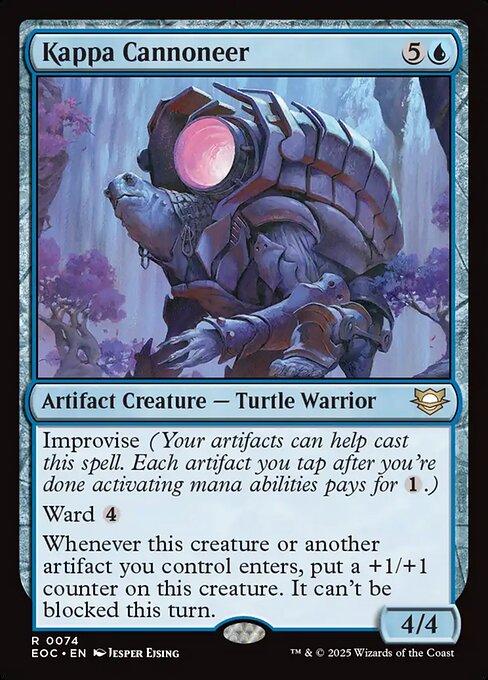
Kappa Cannoneer
Ward threat
The mana tax applies when an opponent's spell or ability targets it.
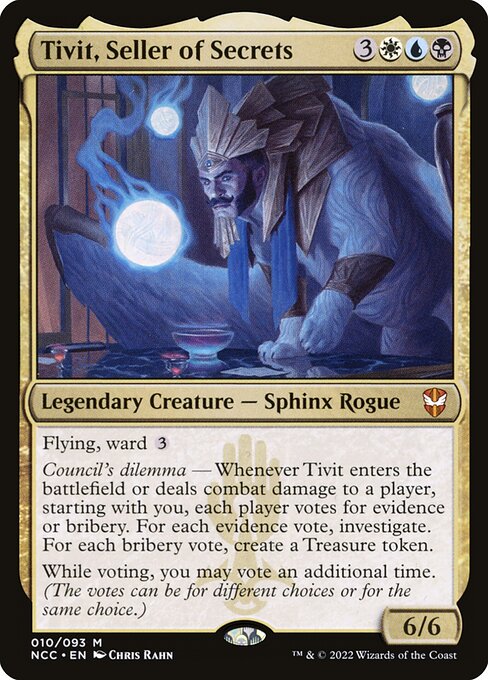
Tivit, Seller of Secrets
Ward commander
An expensive command zone engine still needs protection from untargeted answers.

Swiftfoot Boots
Hexproof equipment
Protects against opposing targets while allowing your own targets.

Lightning Greaves
Shroud equipment
Can interfere with your own targeted spells and equip abilities.
Practical removal decisions and a useful test routine
When you hold targeted removal against ward, count the complete resource requirement before announcing the spell. Reserve the removal spell's cost, the ward payment, and any mana you want for another response. If the ward cost is nonmana, confirm that you have the required resource and are willing to lose it. A legal play can still be a poor exchange if it consumes your whole turn.
Sometimes the correct choice is to decline payment after circumstances change. If another player already removed the threat or the targeted spell is no longer useful, paying ward may only waste resources. In other situations, forcing a ward trigger onto the stack can be part of a plan to test responses, but do not assume an opponent must pay simply because they began the sequence. The decision belongs at resolution.
For a ward deck, review actual failures rather than celebrating every uncast removal spell you imagine. Note whether your threat died to an untargeted wipe, whether the tax was paid easily, and whether protecting it would have advanced your game. If you are regularly losing to sacrifice, adding more mana ward may not address the problem. Use the interaction checker to examine the kinds of answers your deck can hold up in return.
Build your deck and create a free Deckcipher account to save a version with those gaps marked. Test a turn where the opponent can pay ward and a turn where the answer is a board wipe. A protection package that only works when opponents lack resources is much narrower than one supported by card draw, rebuilding tools, and appropriately chosen interaction.
Ward questions
Build your deck
Put these choices into a Commander list. Create a free account to save your deck and keep tuning it with Deckcipher.
FAQ
Must I pay ward while casting the removal spell?
No. You pay the spell's casting costs first. Ward triggers from the targeting event, and its controller puts the trigger on the stack. The relevant opponent decides whether to pay the ward cost when that trigger resolves. This leaves normal response windows before and after the trigger.
Can I legally target something if I cannot pay ward?
Usually yes. Ward is a triggered ability rather than a targeting prohibition. If you later decline or cannot make the payment, ward tries to counter the targeted spell or ability. You do not receive a refund of costs paid to cast or activate it.
Does ward stop a spell that cannot be countered?
Ward triggers, but its attempt to counter that spell fails if the spell cannot be countered. The controller may decline payment. The spell still needs legal targets and must obey other applicable restrictions, so this interaction does not bypass hexproof or protection.
Does removing the creature remove its ward trigger?
No. Once triggered, ward exists independently of the permanent that had it. Removing the permanent does not simply erase the trigger. The underlying targeted spell might also have a target legality problem, but that is a separate question from whether ward remains on the stack.
Does ward protect against board wipes?
It does not trigger from an effect that does not target the permanent. Destroy all creatures, ordinary combat damage, and many sacrifice instructions therefore avoid ward. Look for the word target and identify exactly which object is targeted instead of assuming every harmful effect triggers the tax.
What if a creature has two ward abilities?
Both can trigger from the same relevant targeting event. Handle them separately and pay each applicable cost if you want an ordinarily counterable spell or ability to survive both. Paying one is not a choice that replaces payment for the other instance.