
Quick answer
Hexproof prevents opponents from targeting the protected object or player. Shroud prevents anyone from targeting it, including its controller. Neither ability prevents untargeted board wipes, ordinary combat damage, or every sacrifice effect.
The difference that changes your own plays
Hexproof stops spells and abilities your opponents control from targeting the protected permanent or player. Your own spells and abilities can still target your hexproof permanent. That makes hexproof especially useful when your plan includes Equipment, Auras, pump spells, or targeted abilities aimed at your own commander. The defensive text leaves those friendly interactions available.
Shroud has no opponent only exception. A permanent with shroud cannot be the target of spells or abilities controlled by any player. That includes its controller. Putting Lightning Greaves on a creature can protect it from opposing spot removal while also preventing your next equip ability or Aura spell from targeting that same creature. The ability does not ask whether the targeted effect is helpful.
Both abilities are restrictions on targeting, not triggers that opponents can buy their way through. An opponent cannot legally cast targeted removal at a creature that already has the relevant hexproof or shroud merely by offering more mana. Ward creates a different process: it permits a target and then triggers a possible counter unless a cost is paid. Do not use the terms interchangeably.
The protected object also matters. A creature's hexproof protects that creature, not every permanent its controller owns. A player's hexproof prevents opponents from targeting that player, but it does not automatically give their creatures hexproof. Start every interaction by naming the target and identifying who controls the spell or ability. Those two details resolve many apparently complicated cases.
Find the word target before choosing a defense
A spell or ability targets when its rules and wording tell you it has targets. Most ordinary targeted effects use the word target. Aura spells also target as part of being cast even when the word is not visible in the enchant ability. Equipment's equip ability targets a creature you control. The fact that a card will eventually affect only one creature does not by itself tell you whether it targets.
A spell that says destroy all creatures does not target each creature individually. A spell telling each opponent to sacrifice a creature does not target the creature chosen during resolution. A combat attack does not target the player or planeswalker being attacked in the sense used by hexproof. Declaring blockers also does not create a targeted ability. These actions can affect a protected permanent without violating the targeting restriction.
Some effects choose objects during resolution without targeting them. The word choose is not a synonym for target. On the other hand, an effect can create a triggered ability that does target, even if the original spell had no targets. Read each object on the stack separately. A nontargeted creature spell can resolve and produce a targeted enters ability, and hexproof can matter to that ability.
Use the interaction checker to see which answers your deck relies on, then inspect their exact language. If every removal spell targets a creature, an opposing hexproof engine presents a real gap. Adding another targeted spell with a different mana cost does not close that gap. An appropriate untargeted answer or a way to remove the protective source may do more.
Granting hexproof in response can invalidate a target
Suppose an opponent casts Swords to Plowshares targeting your commander. At the time of casting, the commander has neither hexproof nor shroud, so the target is legal. You respond with an effect that gives the commander hexproof. If your protection effect resolves first, the commander becomes an illegal target for the opposing removal spell. The spell checks target legality again when it would resolve.
If every target of a spell or ability is illegal at that check, it does not resolve. If some targets remain legal, the spell can still affect those legal targets as its instructions allow. Giving hexproof to one of several targeted creatures therefore does not automatically counter an entire spell with multiple targets. Follow the actual targets and instructions rather than assuming every protection spell creates the same outcome.
Opponents can respond to your protection effect before it resolves. Another removal spell can be placed above it. You need a second response if you want to protect against that new top object as well. Nobody gets to wait until a protection effect has started resolving and then insert another targeted spell before the hexproof appears. Resolution happens as a complete process without ordinary priority windows inside it.
Shroud can also make an existing opposing target illegal, but it can invalidate your own targets too. If you have a beneficial targeted spell waiting underneath the shroud granting effect, it may lose its target when it tries to resolve. Map the whole stack, including your own spells, before treating an emergency protection line as free of consequences.
Equipment timing: Boots and Greaves play differently
Swiftfoot Boots gives the equipped creature hexproof and haste. You may still target that creature with your own equip abilities and targeted spells. Lightning Greaves gives shroud and haste, so the protected creature becomes unavailable to your own targeting as well. The equip costs differ, but the targeting difference can be more important than one saved mana.
To attach another Equipment to a creature wearing Greaves, you may need to move Greaves to another creature first. That equip activation normally requires sorcery timing and a legal creature you control as the new target. You cannot assume you may move it in response to any spell just because its equip cost is zero. Zero cost does not remove the timing restriction on an equip ability.
Moving Greaves creates a period when the first creature no longer has shroud. After an equip ability resolves, players can receive priority before you take the next action. An opponent can use that opening. Announcing several equip actions as a shortcut does not deny opponents their legal response opportunities. If your whole plan depends on moving Greaves away and back without interaction, discuss the actual sequence instead of compressing it into one action.
Equipment already attached to a creature does not fall off merely because that creature gains shroud. Shroud prevents targeting; it does not make an attachment illegal by itself. This differs from protection from artifacts, which can make artifact Equipment unable to remain attached. You can assemble Equipment first and attach Greaves last, but consider how you will modify the loadout later.
| Question | Hexproof | Shroud |
|---|---|---|
| Can opponents target the permanent? | Normally no | No |
| Can you target your own permanent? | Yes | No |
| Do existing legal Equipment fall off? | No, not from hexproof alone | No, not from shroud alone |
| Does destroy all creatures still work? | Yes, unless another defense applies | Yes, unless another defense applies |
| Can an Aura spell target it? | Your Aura can; opposing Aura normally cannot | Aura spells cannot target it |
Auras, attachments, and targeted friendly abilities
Casting an Aura spell requires a legal target for what it will enchant. You can normally cast your own Aura at your hexproof creature because you control that spell. You cannot cast it at your own shrouded creature. An opponent likewise cannot cast an Aura targeting your creature protected by ordinary hexproof. Target legality still depends on any enchant restrictions and other relevant abilities.
Putting an Aura directly onto the battlefield can work differently from casting it. If an effect does not target the permanent the Aura will enchant, the attachment choice can sometimes avoid hexproof or shroud. The Aura still must legally enchant the chosen object. Do not turn this into a claim that every reanimation spell or every attachment effect ignores targeting. The effect itself may have a target and must be read in full.
An Aura already attached does not become illegal solely because the creature gains hexproof or shroud. Those abilities do not forbid being enchanted. Protection from a matching quality can create an attachment problem, but hexproof and shroud generally do not. This is one reason the protection guide treats attachments separately from targeting.
Friendly creature abilities deserve the same attention. A commander that targets one of your creatures with a counter placing ability cannot target a shrouded recipient. A targeted rescue spell cannot save it while shroud applies. Hexproof is often easier in decks with these interactions because it preserves your own access. Choose shroud when its timing and costs fit the actual list, rather than assuming every protective keyword has identical support requirements.
The answers that ignore the targeting restriction
Untargeted destruction can remove hexproof and shrouded creatures. A board wipe saying destroy all creatures does not need to target them. Indestructible can answer that particular destruction, but hexproof by itself cannot. Exile all creatures is a different untargeted instruction and can bypass both hexproof and indestructible. Avoid using one protective ability as evidence against every possible board wipe.
Sacrifice effects often bypass creature hexproof because they target the player or do not target at all. If the player must choose a creature to sacrifice, the chosen creature is not being targeted by that choice. A board with several expendable creatures can absorb some sacrifice effects more easily than a lone protected commander. Board shape can therefore provide a defense that another Equipment slot does not.
Toughness reduction can also work without targeting. A creature with zero or less toughness is put into the graveyard by a state based action. Hexproof does not set a minimum toughness. Ordinary combat damage works too. A hexproof creature can be blocked and killed unless another ability changes that combat. Haste, flying, trample, and indestructible each affect different parts of the situation.
Removing a source that grants teamwide hexproof can open later targets, but the order matters. If an enchantment is the only reason your creatures have hexproof, an opponent can remove that enchantment and then target the creatures after it is gone. A source that also protects itself may require a different approach. Read whether the source says other creatures, creatures you control, or a broader category before choosing the answer.
Choose the protection source for the threats you play
A commander carrying Equipment often values the ability to remain targetable by its controller. Swiftfoot Boots can fit that job, while Greaves may ask for extra creatures and careful attachment order. A deck whose threat needs only haste and no later friendly targets may accept shroud's inconvenience more easily. The choice should come from the sequence you expect to play, not a universal equipment ranking.
Heroic Intervention gives permanents you control hexproof and indestructible until end of turn. Its breadth can protect several kinds of permanents from targeted interaction and destruction. It still does not stop an untargeted exile instruction or a sacrifice requirement merely because the card sounds comprehensive. Saving an entire board from one answer does not make it an answer to all board wipes.
Asceticism grants creatures you control hexproof and provides a separate regeneration ability. Regeneration has its own limits and timing; it is not another spelling of indestructible. Some destruction effects prohibit regeneration, and exile is not destruction. Evaluate the enchantment's mana cost, the activation mana you must preserve, and how quickly it helps compared with an immediate protection spell.
Arcane Lighthouse illustrates a different kind of tool: an activation can remove opponents' creatures' hexproof and shroud for the turn as its text specifies. That can make targeted interaction possible after the activation resolves. It does not itself remove the creature, and it occupies a land slot that does not supply colored mana. Count its mana and color requirements alongside the removal spell you intend to follow it with.
Protection tools with real tradeoffs

Swiftfoot Boots
Friendly targeting remains
Hexproof and haste are useful when your commander still needs your own targeting.

Lightning Greaves
Shroud and haste
Sequence other attachments before Greaves and respect normal equip timing.
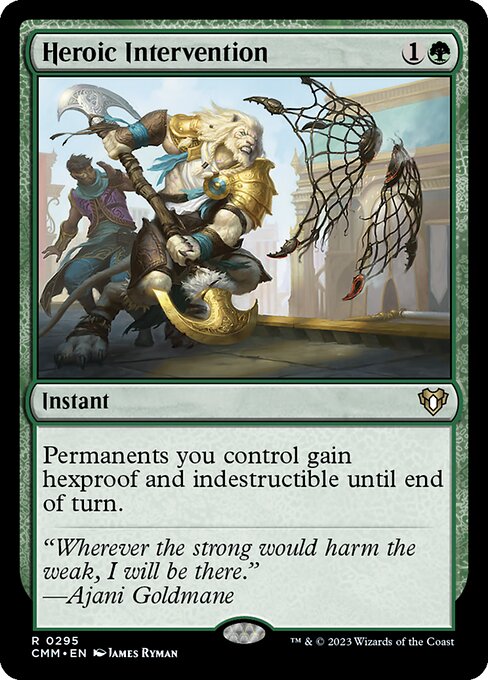
Heroic Intervention
Temporary broad cover
Hexproof plus indestructible still leaves gaps against untargeted exile and sacrifice.
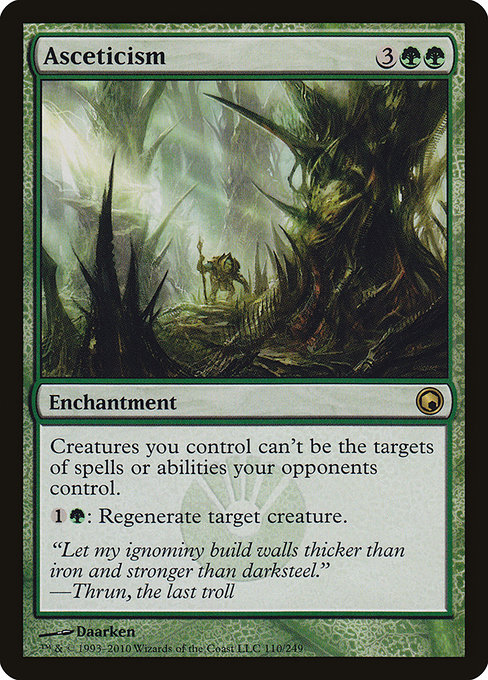
Asceticism
Creature focused support
A slower enchantment with a separate regeneration ability and activation costs.

Arcane Lighthouse
Target access
Can open opposing creatures to targeted answers but needs another card to finish the job.
Test the gaps rather than counting protection labels
Lay out the threats your deck needs to preserve and identify which of your own spells target them. Include equip activations, Aura spells, counter abilities, and rescue effects. A shroud source that looks efficient in isolation may interfere with several of those cards. A hexproof source may fit the same plan smoothly but cost more mana. That is a meaningful tradeoff rather than a reason to declare one keyword always superior.
Rehearse an opposing targeted answer, an untargeted destruction spell, and an untargeted exile spell. Mark which protection cards actually change each outcome. If all of your protection defeats only the first case, consider adding recovery or a different defensive effect. The deck building checklist can help keep protection from crowding out the draw and mana that let you rebuild.
In games, note how your protected threat actually leaves the battlefield. If it dies in combat, another copy of the same targeting defense may not help. If it is repeatedly exiled by a board wipe, indestructible alone does not solve that problem either. Describe the failed line precisely before choosing a replacement card. That makes your upgrades address a real interaction rather than a vague feeling that the commander needs more protection.
Build your deck and create a free Deckcipher account to save those changes. Keep one version with the current protection package and another with a tested alternative. Compare the friendly targeting sequence, mana left open, and ability to rebuild. Those practical details tell you much more than the number of cards with a defensive keyword printed on them.
Hexproof and shroud questions
Build your deck
Put these choices into a Commander list. Create a free account to save your deck and keep tuning it with Deckcipher.
FAQ
Can I equip my own hexproof creature?
Yes, ordinary hexproof only restricts spells and abilities your opponents control. Your own equip ability can target it if all other requirements are satisfied. Shroud is different and stops your equip ability from targeting the creature as well. Normal equip timing still applies in either case.
Does Lightning Greaves make other Equipment fall off?
No. Shroud prevents targeting but does not make an already legal Equipment attachment illegal. You may have trouble targeting the creature with later equip activations while Greaves remains attached. Moving Greaves can create a window for opponents to interact, so plan the order carefully.
Can I respond to removal with hexproof?
Yes, if you have a legal effect and priority. If the protection resolves first, an opposing targeted spell may find its target illegal on resolution. If every target is illegal, it does not resolve. Opponents can respond to your protection before that protection resolves.
Do board wipes target every creature?
Ordinary wording such as destroy all creatures does not target them. Hexproof and shroud do not prevent that destruction. Specific board wipes can have different instructions, so read the actual card. Indestructible, phasing, or recovery may address some cases that targeting protection does not.
Can a shrouded creature have Auras?
Yes. Shroud does not by itself make existing Auras illegal. Casting a new Aura spell requires targeting, which shroud prevents. Some effects put Auras onto the battlefield without targeting the intended enchanted object, but the particular effect and attachment still must be legal.
Does hexproof protect my life total and other permanents?
Only the object or player that actually has hexproof receives its targeting restriction. A hexproof creature does not give its controller hexproof. A hexproof player does not automatically protect their creatures. Always identify what the opposing effect targets before deciding whether the ability applies.