
Quick answer
Protection from a quality stops damage, enchanting or equipping, blocking, and targeting from the matching sources or objects. It does not stop every effect. Untargeted destruction, sacrifice, and toughness reduction can still answer a protected creature.
Read the quality before applying the protection
Protection always names a quality. Protection from red, protection from creatures, and protection from everything cover different sets of objects. Start by identifying the exact quality and the source of the effect you are considering. A creature with protection from red is not automatically protected from a colorless artifact, a black spell, or every effect controlled by a player who happens to have red cards.
The usual memory aid is damage, enchanting or equipping, blocking, and targeting. Those categories are useful because they tell you both what protection stops and where to look for its limits. Do not replace the actual rule with the idea that the creature ignores the chosen quality. A red effect that does something outside the protected categories can still matter.
Color also belongs to objects rather than to the color of mana used to pay for them. A colorless artifact does not become red merely because its controller spent a Mountain to cast it. An activated ability generally gets the relevant source characteristics from its source, not from the color of mana paid to activate it. For a spell, check the spell's characteristics and any effects that change them.
Mother of Runes grants protection from a chosen color to a creature you control. Giver of Runes can grant protection from colorless or a chosen color to another creature you control. Those are different options and targeting restrictions. Read the helper before building a line around it: Giver cannot simply target itself, and choosing a color is not the same as choosing all colors at once.
Targeting: protection can stop an answer at two moments
A spell or ability cannot legally choose a protected object as a target when the protection applies to that spell or source. If your creature already has protection from white, an opponent cannot cast Swords to Plowshares targeting it. The opponent must find a legal target or choose a different play. This is a targeting restriction rather than a payment like ward.
Protection can also change target legality after a spell is cast. Suppose an opponent casts a red damage spell at your creature. In response, you activate Mother of Runes and give that creature protection from red. If the protection ability resolves first, the damage spell later checks its target again. The protected creature is now an illegal target for that red spell. If every target is illegal, the spell does not resolve.
The opponent can respond to Mother's activation. If they remove the intended recipient before the protection resolves, your ability may lose its target. If they remove Mother instead, an already activated ability usually remains on the stack and can still resolve. Removing the source and removing the target create different outcomes. Players must decide which action actually interrupts the line.
Protection does not care whether the targeting is friendly. Giving your creature protection from white can make your own white pump spell or white targeted rescue spell unable to target it. That can be a worthwhile cost when saving the creature, but it is still a cost. Do not assume the ability contains the opponent only limitation of hexproof. The hexproof and shroud guide explains that separate distinction.
Damage prevention is narrower than immunity to effects
Protection prevents damage from sources with the stated quality. A creature with protection from red normally has red combat damage and red noncombat damage prevented. The damage does not happen, so abilities that require that damage to be dealt do not trigger from prevented damage. A deathtouch source that deals no damage has not dealt the damage needed for deathtouch to matter.
Blasphemous Act is a red spell that deals damage to creatures without targeting them. Protection from red can prevent that damage even though targeting is irrelevant. This example is a useful correction to the claim that protection only matters when a spell says target. Damage prevention is its own category. The same creature may still die to a nontargeted destruction spell because destruction is a different instruction.
Some effects say damage cannot be prevented. Such an effect can stop the damage prevention part of protection from preventing damage. It does not automatically remove protection's other parts. An opponent still cannot legally target a creature with a matching spell merely because damage is unpreventable. A matching creature still faces the blocking restriction if protection is present when blockers are declared.
Damage to a player and life loss also require separate treatment. A creature's protection does not shield its controller from damage. An effect that makes a player lose life is not dealing damage just because both events lower a life total. Apply the rule to the protected object and the action actually described. Broad claims about immunity usually fail because they skip one of those details.
Auras and Equipment can fall off your own creature
Protection restricts what may remain attached, not only which spells may target. An Aura with a matching quality cannot legally enchant the protected permanent. Equipment and Fortifications with a matching quality likewise cannot stay attached in the prohibited way. State based actions clean up illegal attachments after the relevant spell or ability finishes resolving.
If a creature enchanted by a white Aura gains protection from white, that Aura will normally be put into its owner's graveyard for being illegally attached. Giving protection may save the creature from an opposing white spell while also costing your own Aura. Some cards have specific text that creates an exception. Use that card's actual wording rather than treating every protection effect as though it had an exception.
Equipment usually remains on the battlefield when it becomes unattached. A creature gaining protection from artifacts can cause an attached artifact Equipment to become unattached. That is different from destroying the Equipment. The equip ability also targets, so attempting to equip a creature with protection from artifacts faces a targeting restriction before attachment even happens. A colorless piece of Equipment is still an artifact.
This matters especially in Voltron. A protection choice may provide a clear attack path while removing the Equipment that supplied most of the attacker's power. Calculate the attacker after the attachments are gone. In an Aura deck, compare a protection activation with a different rescue effect before committing. Saving the commander and losing its entire damage package can be correct, but the new board may not support the attack you originally planned.
| Effect or action | Protection from the matching quality | Reason |
|---|---|---|
| Targeted removal | Cannot target, or target becomes illegal | Targeting restriction |
| Damage without targets | Normally prevented | Damage prevention still applies |
| Destroy all creatures | Can still destroy it | Destruction is not automatically damage or targeting |
| Matching Aura attached | Normally becomes illegal | Protection restricts enchanting |
| Blocking declaration | Matching creatures cannot block it | Check protection when blockers are declared |
Blocking, combat timing, and trample math
An attacking creature with protection from a quality cannot be blocked by creatures with that quality. Protection from green can let an attacker pass green creatures, including multicolored creatures that are green. It does not stop a colorless blocker merely because a green player controls it. If the defending player has a legal blocker outside the chosen quality, the attack is still blockable.
Timing matters. Give the attacker protection before blockers are declared if your goal is to make matching creatures unable to block. Giving protection after a creature has already blocked does not undo the block. The attacker remains blocked. Protection may prevent damage from the blocker, but without trample or another relevant effect, a blocked attacker does not start dealing combat damage to the defending player simply because the blocker can no longer hurt it.
Trample has its own assignment rule. When a trampling attacker is blocked by a creature with protection, the attacker must still assign lethal damage to blockers before assigning excess damage to the defending player or other attacked object as appropriate. Damage prevention is ignored when determining that lethal assignment. A five power trampler blocked by a two toughness creature with protection can usually assign two to the blocker and three to the player, even if the two damage will be prevented.
Protection on a blocking creature can therefore prevent damage while still allowing excess trample damage through. Protection is useful, but it does not rewrite the attacker's power or make every trample attack harmless. Read the trample guide for multi blocker examples. Keep damage assignment, damage prevention, and blocked status as three separate questions.
The answers protection does not cover
Wrath of God destroys all creatures and does not target them. Protection from white does not prevent that instruction. The spell is white, but protection does not prohibit every white effect. A creature still needs indestructible or another relevant survival mechanism to avoid that kind of destruction. This is why a protection activation that defeats Swords to Plowshares may do nothing against a board wipe of the same color.
An effect that reduces toughness without targeting can also work. If a protected creature's toughness becomes zero or less, it is put into the graveyard as a state based action. That is not damage and is not destruction. Protection's damage prevention does not replace the creature's toughness with a minimum value, and the targeting restriction is irrelevant when the effect has no target.
Sacrifice instructions can bypass protection when they do not target the protected permanent. A spell targeting a player and asking that player to sacrifice a creature is targeting the player, not the creature eventually selected. The creature's protection does not prevent its controller from choosing it for the required sacrifice. Read specific restrictions on the sacrifice choice, because some effects constrain the selection.
Protection also does not stop every counter, every ability removal effect, or every rule based action. What matters is whether the particular effect fits a protected category. Check the interaction checker for the kinds of answers available in your deck, then examine their wording. A suite with only targeted colored removal can have a very different matchup from one including a flexible untargeted answer.
Build with protection without losing your own plan
Reusable protection creatures encourage keeping mana and timing available. Mother of Runes uses a tap ability, so a newly cast Mother ordinarily cannot activate it until the summoning sickness restriction is satisfied or an applicable effect changes the situation. The recipient you hope to protect may be safe next turn, but that does not mean Mother provides immediate protection on the turn she enters.
In a creature deck, a protection helper can defend an engine, create a favorable block, or open a combat route. Those uses compete for the same activation. Tapping Mother to force damage through can leave the engine exposed during later turns. Holding the activation forever can miss an attack that would eliminate the actual threat. Decide which creature and which event matter rather than treating the activation as a permanent reservation.
Brave the Elements protects white creatures you control from one chosen color. It does not grant the ability to all your creatures regardless of color, and it does not protect your noncreature permanents. In a mostly white board, that can be a powerful attack or defense tool. In a multicolor creature pile, inspect which bodies are actually white before counting it as teamwide coverage.
Protection from a color is also not protection from a player's whole deck. A two color opponent can answer with the other color, a colorless card, or an untargeted effect. Build a mix of card advantage, recovery, and answers so the list can survive after protection is bypassed. A saved commander is only useful if the rest of the deck can convert that time into cards, pressure, or a winning turn.
Protection examples with different jobs
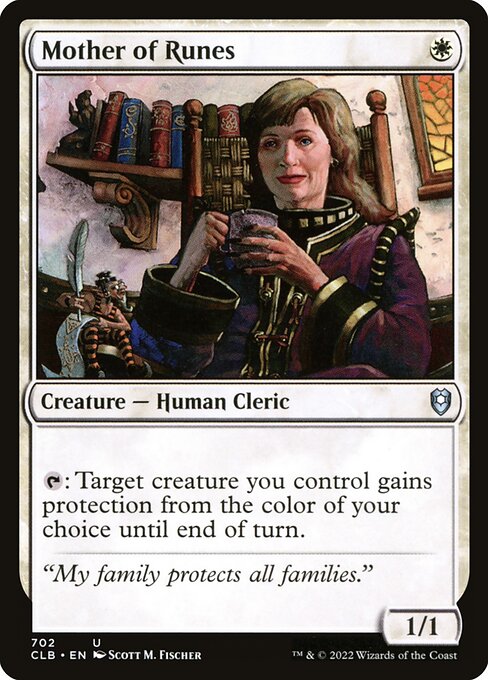
Mother of Runes
Reusable color protection
Can target herself or another creature you control, but needs a legal activation and chosen color.

Giver of Runes
Broader source choices
Can choose colorless, but must target another creature you control.

Brave the Elements
White creature support
Protects your white creatures from one chosen color for the turn.

Blasphemous Act
Damage based comparison
A nontargeted red damage spell illustrates protection's prevention category.
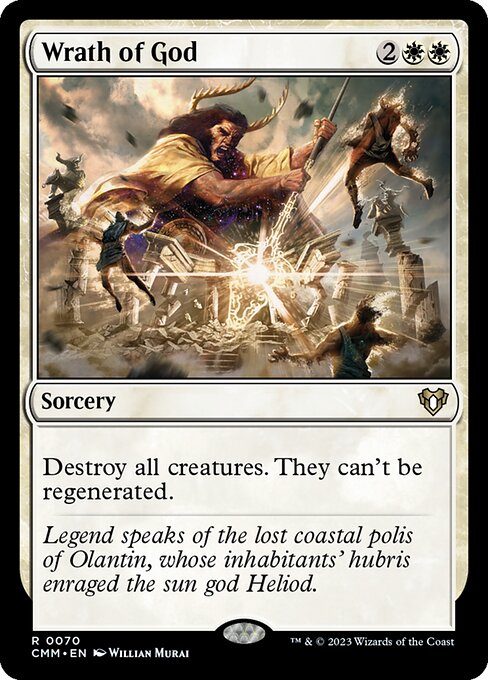
Wrath of God
Destruction comparison
Nontargeted destruction demonstrates a gap protection does not close.
A practical protection rehearsal before your next game
Start with one threat, one protection effect, and three different opposing answers. Use a targeted colored removal spell, a damage based board wipe, and a nontargeted destruction spell. For each answer, identify whether the spell can target, whether it deals damage, and whether protection changes the result. This small exercise is more useful than memorizing that a creature is safe from a color.
Next add your own Aura or Equipment. Give the creature the protection quality you would choose in a real game and check whether its attachments remain legal. Recalculate power and toughness after any attachment changes. Then declare an attack once with protection granted before blockers and once with it granted after blockers. The resulting difference makes the combat timing much easier to remember.
For an actual list, mark which protection cards interfere with your own targeting or attachments. Compare a single large threat plan with a wider creature plan, because a one creature rescue effect and a team protection effect solve different problems. The deck building checklist helps keep those support slots balanced with lands, draw, and interaction.
Build your deck and create a free account to save the protection package alongside your threats. Note the exact answer each protection card is supposed to defeat. If several cards all stop targeted colored removal while none helps rebuild from a wipe, use that evidence to diversify the package rather than adding another similar protection trick.
Protection questions
Build your deck
Put these choices into a Commander list. Create a free account to save your deck and keep tuning it with Deckcipher.
FAQ
Does protection from white stop Wrath of God?
No. Wrath destroys creatures without targeting or dealing damage. Protection does not prohibit every effect of the chosen color. The creature needs a different relevant defense, such as indestructible, to avoid that destruction. Other board wipes may use exile or toughness reduction and need their own analysis.
Does protection stop Blasphemous Act?
Protection from red normally prevents its red damage to the protected creature. The spell does not target, but damage prevention is another part of protection. If a separate effect makes damage unpreventable, that prevention can fail. Other protection restrictions still work according to their own categories.
Can I target my own protected creature?
Only if your spell or ability is not prohibited by that protection. Protection does not have the opponent only wording of hexproof. Your own white spell cannot target your creature with protection from white. Plan friendly tricks and attachments before choosing the protection quality.
Does protection granted after blockers make an attack unblocked?
No. A legal block remains a block. Protection can prevent matching damage and may affect attachments, but it does not erase blocked status. Trample can permit excess damage under its normal assignment rules. Without a relevant ability, the blocked attacker does not simply hit the player.
Will my Equipment fall off?
It can if the Equipment has a quality prohibited by the protection. Protection from artifacts generally makes attached artifact Equipment illegal and causes it to become unattached. The Equipment usually stays on the battlefield. Auras that become illegally attached normally go to their owners' graveyards.
Can a sacrifice effect remove a protected creature?
Yes, when the instruction can legally make its controller sacrifice that creature. Many sacrifice effects target a player or do not target at all. The protected creature is then chosen during resolution, so its protection does not block a targeting event that never happened to it.