
Vivi Ornitier wants cheap spells, safe setup turns, and a clear mana sink
A strong Vivi Ornitier Commander deck should be built like an Izzet spellslinger deck that converts repeated noncreature spells into mana, counters, and a lethal payoff. Upgrade the deck by lowering the curve, adding one-mana cantrips, protecting Vivi, and choosing budget swaps that preserve spell density instead of jamming unrelated good cards.
Recommended starting targets
What Vivi Ornitier is trying to do
Vivi Ornitier is at its best when your deck treats every cheap noncreature spell as both progression and fuel. The important Commander deck-building question is not just whether a spell is powerful in isolation. The question is whether it helps you cast multiple spells in one turn, grow your commander, protect the board position you have built, or turn temporary mana into a win before the table untaps.
That makes Vivi Ornitier different from a generic Izzet value commander. You are not simply drawing cards and hoping the game goes long. You are building turn sequences. A typical strong turn might start with Ponder or Preordain, hold up Swan Song if an opponent tries to remove Vivi, then use the mana and velocity from your commander to resolve Thousand-Year Storm or Mizzix's Mastery. The exact card choices can change by budget, but the structure should stay the same.
Core spellslinger cards for Vivi Ornitier
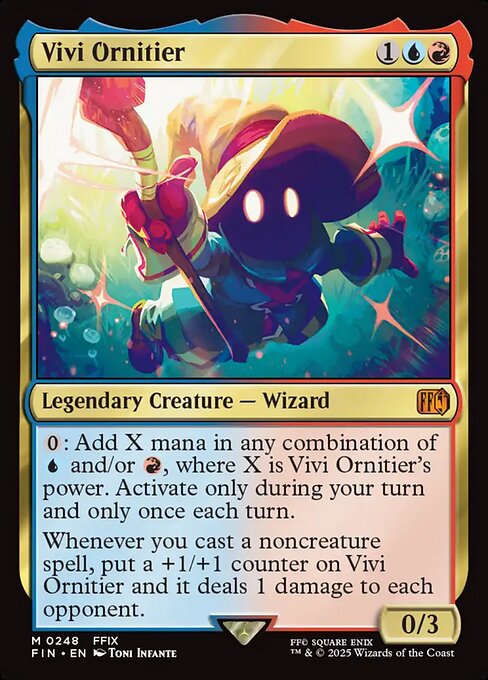
Vivi Ornitier
Commander
Build around repeated noncreature spells and mana conversion. The deck should maximize low-cost spells that let Vivi snowball without needing combat.
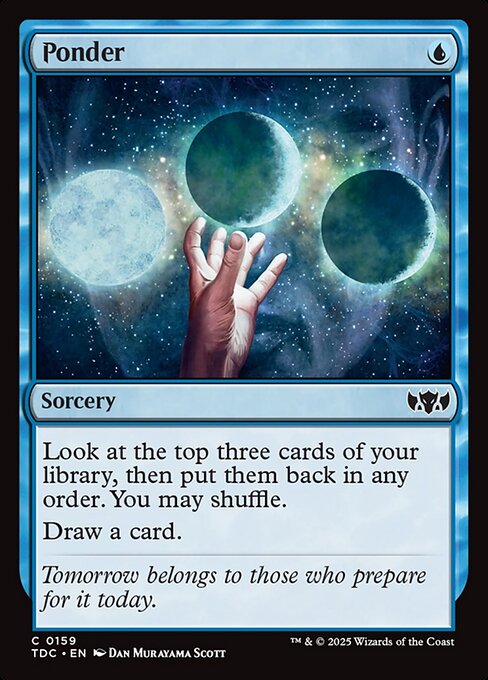
Ponder
Cantrip
One mana selection is ideal because it smooths early land drops and becomes a low-risk spell to start larger Vivi turns later.

Preordain
Cantrip
Excellent in opening hands and still useful after Vivi is online because it digs toward protection, payoff, or a missing land.
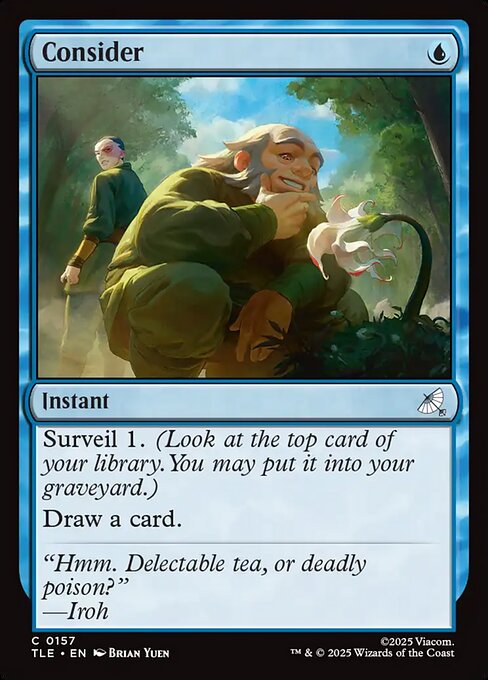
Consider
Instant-speed cantrip
Lets you leave interaction open and still trigger Vivi if nothing needs answering. This play pattern matters in real pods.

Faithless Looting
Filtering
Turns excess lands and expensive payoffs into better resources, then gives the deck another spell from the graveyard later.

Expressive Iteration
Card advantage
A strong two-mana bridge card that rewards careful sequencing and keeps the deck stocked without raising the curve too much.
The first upgrade is lowering the curve
The most common mistake in a Vivi Ornitier Commander deck is playing too many exciting four, five, and six mana spells. Big Izzet cards are fun, but Vivi rewards volume. If your opening hand contains three lands, one expensive payoff, one reactive spell, and two clunky draw spells, you are likely to pass the early turns while faster decks develop. If that same hand contains Ponder, Consider, and a two-mana interaction spell, you can hit land drops, choose when to deploy Vivi, and start chaining spells before the table is ready.
For most casual and upgraded casual builds, aim for at least twenty-four noncreature spells that cost one or two mana. This does not mean every spell must be a cantrip. Cheap removal, cheap counters, and cheap rituals all count because they let you interact while still increasing your spell count. The goal is to make Vivi turns feel natural instead of requiring a perfect seven-card setup.
Curve targets for a practical Vivi Ornitier deck
| Slot | Target count | Why it matters |
|---|---|---|
| One mana cantrips and filters | 8 to 12 | They make early hands keepable and give Vivi low-risk triggers later. |
| Two mana draw, counters, and removal | 12 to 18 | This is the deck's workhorse range for developing without tapping out forever. |
| Three mana engines | 5 to 8 | Use these for effects that actually change the game, not filler. |
| Four or more mana payoffs | 5 to 8 | Keep this section lean so opening hands do not clog. |
| Mana rocks | 6 to 9 | Prefer rocks that help cast Vivi on time and still support multi-spell turns. |
Best upgrade categories for Vivi Ornitier
The best upgrades fall into four categories: cheap selection, protection, payoff engines, and mana conversion. Cheap selection keeps the deck consistent. Protection keeps your commander alive through the first removal spell. Payoff engines turn your spell count into damage, copies, or cards. Mana conversion prevents you from wasting the burst turns that Vivi creates.
Protection deserves special attention. If your table has learned that Vivi Ornitier is the engine, you should expect removal before you untap. Cards like Lightning Greaves and Swiftfoot Boots are not spellslinger cards by theme, but they solve a Commander problem that can otherwise make the deck feel fragile. Cheap counters such as Swan Song and Counterspell also do double duty because they protect your commander while adding another noncreature spell to the turn.
Upgrade cards that change how the deck plays

Lightning Greaves
Protection
Protects Vivi immediately and can let the deck commit its commander earlier. The equip cost matters when you are trying to keep mana for spells.

Swiftfoot Boots
Protection
Slightly slower than free equip protection, but hexproof lets you still target your own commander when needed.
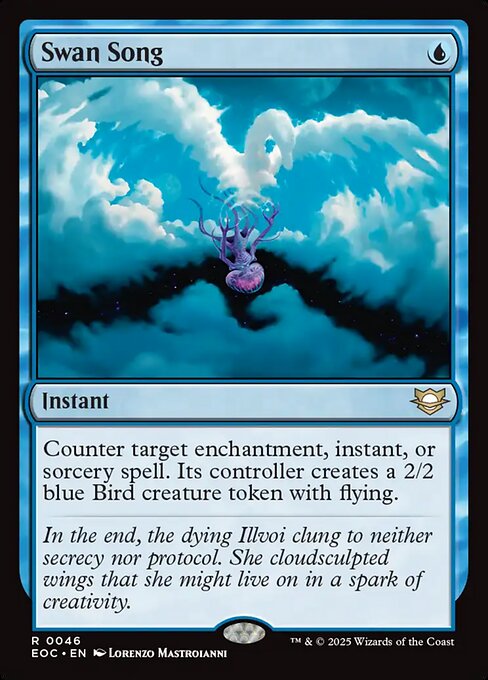
Swan Song
Efficient counterspell
Excellent at defending a key turn for one mana. The Bird token is usually less important than stopping removal or a board wipe.
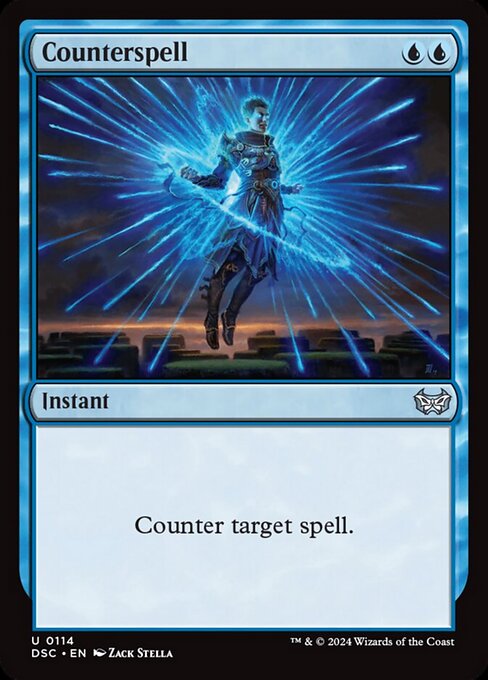
Counterspell
Broad answer
Clean and reliable interaction. The double blue cost is real, so check your mana base before assuming it is free to include.
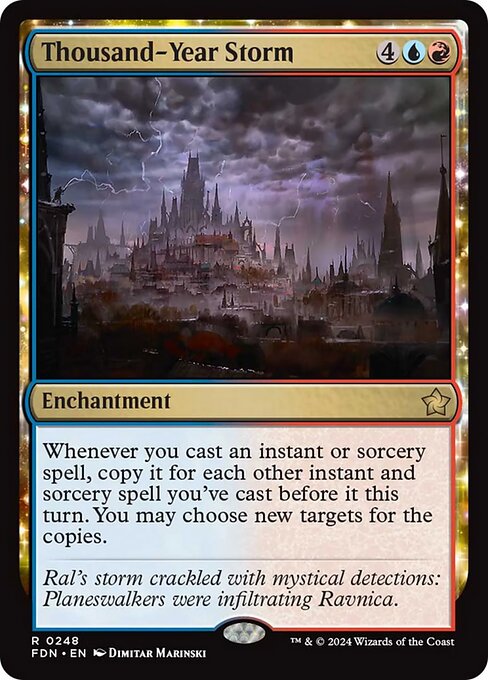
Thousand-Year Storm
Top-end payoff
A true closer when the deck is full of cheap spells. Keep your curve low enough that this card wins instead of merely looking impressive.
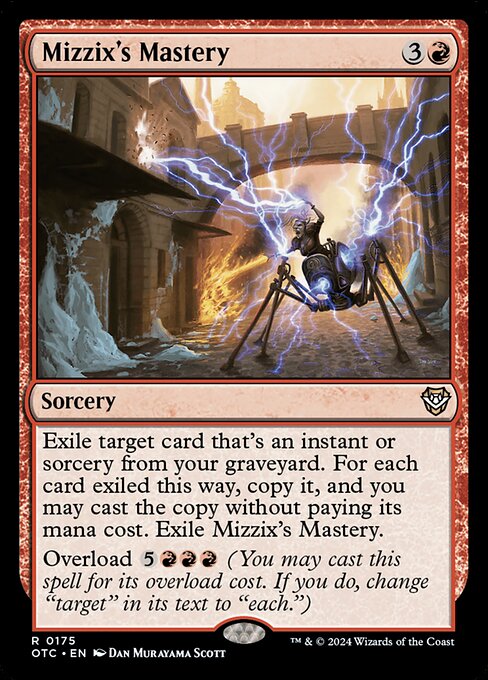
Mizzix's Mastery
Graveyard payoff
Gives the deck a comeback plan after trading resources. It is strongest when your cheap spells naturally fill the graveyard.
Budget swaps that keep the deck functional
Budget swapping in Vivi Ornitier is not about finding a cheaper card with the same text box. It is about preserving the job. If an expensive card protects Vivi for one mana, your replacement should still be cheap protection, not a five-mana value spell. If an expensive card is a finisher, your replacement should still end the game or create a decisive turn. The deck gets worse when budget cuts raise the average mana value.
Use the Commander Budget Alternatives tool when you are deciding between similar effects, then check the final list in the Deck Price Calculator. A Vivi deck can be built at a wide range of budgets because many of the most important cards are commons and uncommons. The expensive upgrades usually improve efficiency, speed, or resilience rather than changing the core identity.
Budget swap example: premium protection versus cheaper protection
If the table removes Vivi on sight, prioritize this slot before buying flashier finishers.
Lightning Greaves
Premium protection
Best when you want to cast Vivi and immediately reduce exposure to targeted removal. Free equip is a major tempo advantage.
Swiftfoot Boots
Budget protection
Still protects Vivi from targeted removal, but the equip cost can make your first big spell chain a turn slower.
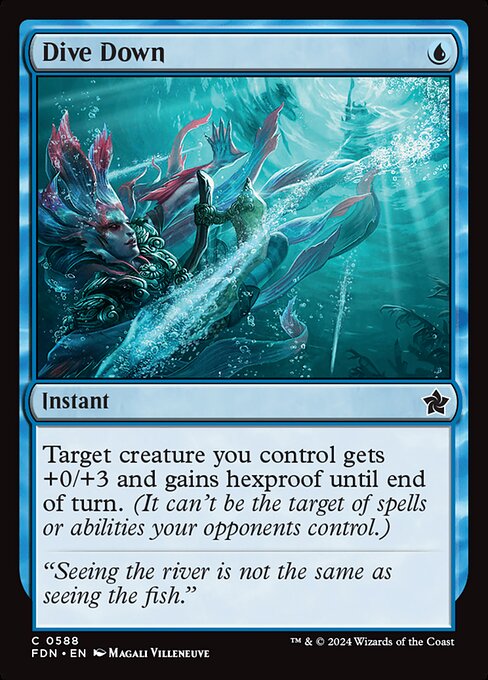
Dive Down
One-shot protection
A cheap instant that can save Vivi while triggering the deck's spellslinger plan. Better in lower-budget lists that want more noncreature density.
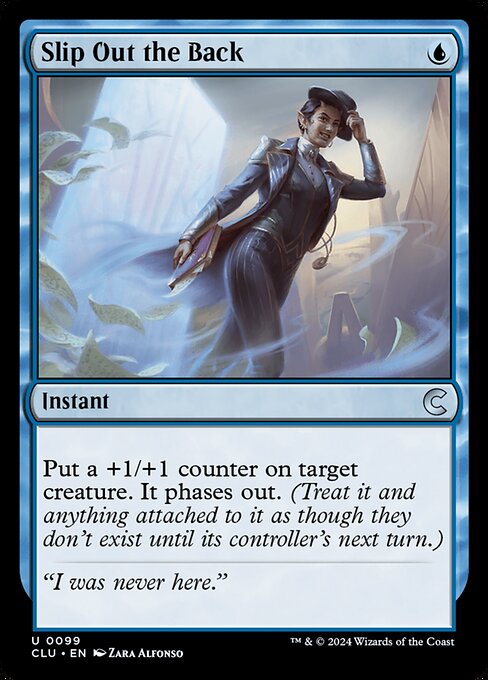
Slip Out the Back
One-shot protection
Protects Vivi from many removal and wipe situations while adding a counter. It is especially useful when you can afford to lose Vivi until the next turn.
Budget swap example: expensive finisher versus accessible finishers
Choose finishers that reward high spell count instead of generic expensive threats.
Thousand-Year Storm
Explosive spell-copy payoff
One of the scariest top-end cards when the deck can cast three or more cheap spells after it resolves.
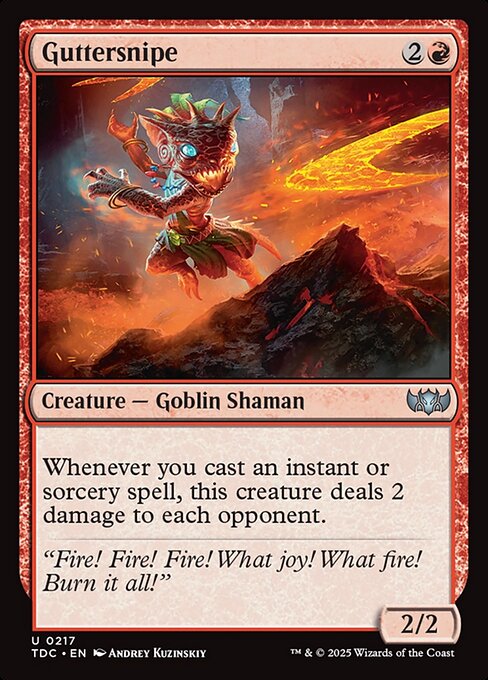
Guttersnipe
Budget damage payoff
Converts every instant and sorcery into table-wide damage. It is easier to cast before the big turn, but it dies to creature removal.
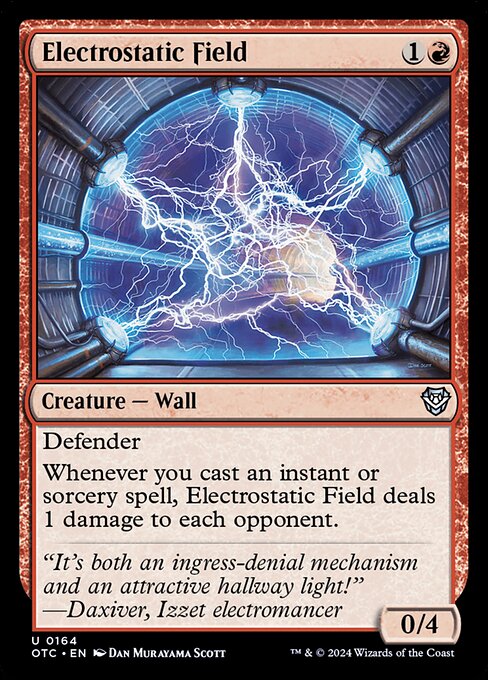
Electrostatic Field
Defensive damage payoff
Lower ceiling than Guttersnipe, but the bigger toughness blocks early attackers and still rewards cheap spells.
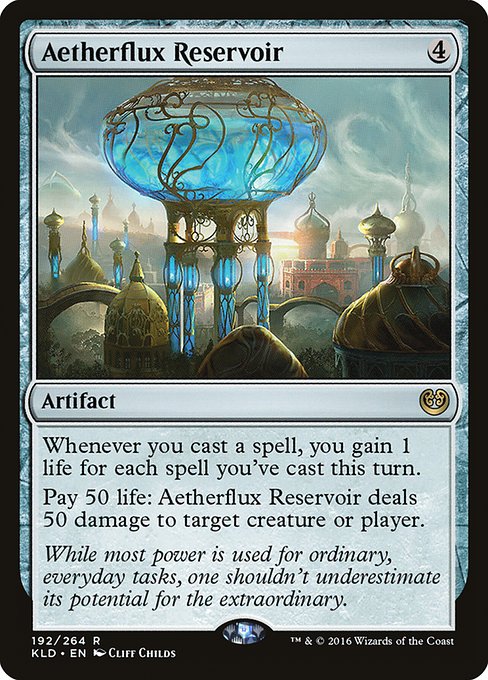
Aetherflux Reservoir
Life gain finisher
Rewards long chains of spells and gives the deck a noncombat kill. It needs enough cheap spells to be more than a slow life gain artifact.
Win conditions: do not rely on value alone
Vivi Ornitier can generate a lot of momentum, but Commander games are not won by momentum unless your deck converts it. You need a small package of cards that actually kill the table, create overwhelming advantage, or turn a full graveyard into a decisive turn. The cleanest budget plan is damage from repeated spell casts. The higher-ceiling plan is spell copying or graveyard recursion. The most important point is that these cards should be few enough that you still draw enablers early.
A practical Vivi Ornitier deck should run five to eight win-focused cards. If you run fewer, you may spin your wheels and pass with a full grip. If you run more, your early hands become clunky. Guttersnipe and Electrostatic Field are budget-friendly because they turn normal play into pressure. Aetherflux Reservoir is more explosive, but it asks you to build with a higher density of one-mana spells. Mizzix's Mastery gives you a different axis by letting your graveyard become the payoff.
Win condition package options
Guttersnipe
Table damage
Best in lists with a high instant and sorcery count. It turns routine cantrips into real damage without needing combat.
Electrostatic Field
Incremental damage
A defensive version of the same plan. It is less explosive but often buys time against creature decks.
Aetherflux Reservoir
Storm-style finisher
Strongest when your curve is very low. Count your one-mana spells before adding it, because it needs chains, not isolated value.
Mizzix's Mastery
Late-game closer
Excellent after the deck has spent the early game filtering, trading, and filling the graveyard.
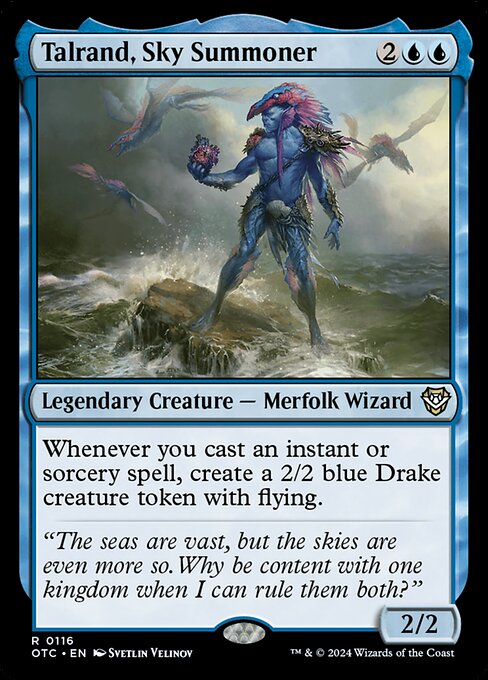
Talrand, Sky Summoner
Token payoff
Creates blockers and attackers from normal spell casting. It is slower than direct damage but better in creature-heavy pods.
Interaction and protection counts
Because Vivi Ornitier is an engine commander, your interaction suite should not be an afterthought. Start with ten to fourteen interactive cards, then adjust based on pod speed. At least four should protect your own plan, and at least six should stop opposing wins or remove hate pieces. Cheap interaction is especially valuable because it lets you defend Vivi and continue developing in the same turn.
This is where many lists lose focus. A four-mana counterspell may technically answer a threat, but it is awkward in a deck trying to chain spells. A one or two mana answer keeps your turn flexible. Use the Commander Interaction Checker after you draft the list, especially if you have added too many payoffs and cut the boring answers. Vivi does not need a huge number of creatures, but it does need to survive the first wave of removal.
Efficient interaction to consider

Chaos Warp
Catch-all removal
Answers problematic permanents that Izzet can otherwise struggle with. The random replacement is a real downside, but flexibility matters.

Reality Shift
Creature removal
Efficient exile removal for commanders and graveyard-relevant creatures. The manifested card is usually acceptable.

Abrade
Flexible removal
Kills many early creatures or important artifacts. The modal design makes it a strong budget interaction slot.

Arcane Denial
Accessible counterspell
Easy to cast in two-color decks and replaces itself. Giving cards is a cost, but stopping a key spell is often worth it.

Negate
Noncreature answer
A simple budget counter that protects Vivi from many removal spells and stops board wipes or combo pieces.
Mana base and sequencing tips
Vivi Ornitier asks for colored mana early and repeated spell casting later, so the mana base should be stable before it is fancy. In most two-color Commander lists, thirty-four to thirty-six lands is a reasonable starting point if you also run enough cheap cantrips and mana rocks. If your build has several five and six mana cards, move toward thirty-six lands. If your curve is extremely low, thirty-four can work, but only if your opening hands still produce both colors.
Sequencing matters more than it looks. Do not fire every cantrip before you know what you need. In the early turns, Ponder and Preordain are often land-finding tools. Once Vivi is on the battlefield, the same cards become engine pieces. If you suspect removal, it is often correct to wait until you can cast Vivi with one mana open for Dive Down, Slip Out the Back, or Swan Song rather than running the commander into an obvious answer.
Use the Commander Mana Curve Calculator to check whether your upgrade package accidentally raised the deck's average mana value. Then test opening hands with the Mulligan Calculator if you are unsure whether thirty-four lands is enough. The best Vivi lists feel smooth because they have enough cheap plays, not because they always draw a perfect engine.
Mana and velocity support

Sol Ring
Fast mana
Still one of the best ways to accelerate into setup pieces. It does not cast colored cantrips, so do not let it hide a weak mana base.

Arcane Signet
Color fixing
Reliable two-mana fixing that helps cast Vivi and supports double-spell turns later.
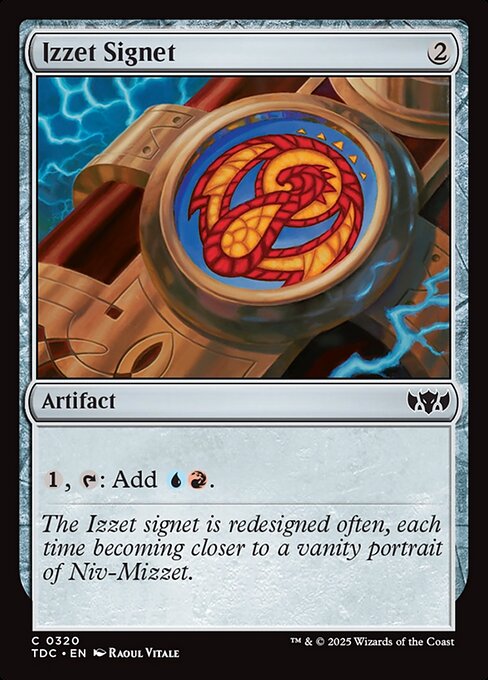
Izzet Signet
Color fixing
Good budget ramp, especially in lists that need both blue and red early. Be mindful that it requires mana to activate.

Talisman of Creativity
Efficient ramp
Enters early and immediately produces colored mana. The life loss is usually minor in a forty-life format.
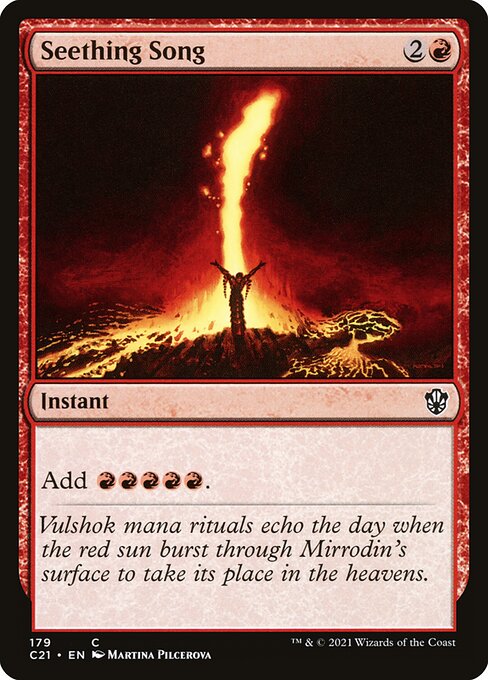
Seething Song
Burst mana
Best in versions that can convert a single explosive turn into a payoff. Do not count it as stable ramp.
Suggested upgrade order
If you are upgrading a Vivi Ornitier deck in stages, start with consistency before power. The first dollars should usually go toward one-mana selection, two-mana fixing, and protection. After that, add the payoff that matches your pod. Creature-heavy casual tables may make Talrand, Sky Summoner more useful than a fragile all-in storm plan. Slower battlecruiser tables give you more time for Thousand-Year Storm. Faster tables demand cheaper protection and lower setup costs.
- Add enough one-mana cantrips and filters to make early hands consistent.
- Upgrade the two-mana ramp so Vivi can arrive on time with colored mana available.
- Add protection before adding expensive finishers.
- Choose five to eight win cards that match your spell count and pod speed.
- Audit interaction so the deck can stop opposing wins, not just execute its own plan.
- Price the final list and replace luxury cards with role-preserving budget swaps.
Tune the upgrade list before buying cards
Import your Vivi Ornitier deck, check the price, then compare budget alternatives before you lock in upgrades.
Final checklist for a Vivi Ornitier build
Before calling the deck finished, goldfish several opening hands and ask whether the first four turns have a real plan. You want hands that can cast early selection, develop mana, deploy Vivi, and either protect the commander or continue chaining spells. If your hands routinely pass the first two turns or contain multiple expensive payoffs, cut from the top of the curve.
The strongest Vivi Ornitier Commander deck guide upgrades and budget swaps all point to the same conclusion: protect the engine, keep the curve low, and spend upgrade slots on cards that improve actual turn sequences. A budget Vivi list with Ponder, Preordain, Consider, Arcane Signet, Negate, and Guttersnipe will often play better than a pricier list overloaded with disconnected haymakers. Build for the turns you expect to take, not just the cards you hope to resolve.
FAQ
How many lands should a Vivi Ornitier Commander deck play?
Start with 34 to 36 lands. Use 36 if your list has several expensive payoffs, and only move to 34 if your curve is low, your cantrip count is high, and your mana testing supports it.
Is Vivi Ornitier a spellslinger commander or a combo commander?
Vivi Ornitier can be built either way, but most casual builds should start as spellslinger decks. Cheap noncreature spells, protection, and a few clear finishers make the deck functional before you add more combo-oriented packages.
What should I upgrade first in a Vivi Ornitier deck?
Upgrade consistency first. Add cheap cantrips, reliable two-mana ramp, and protection before buying expensive finishers. The deck needs Vivi to survive and needs enough cheap spells to turn the commander into an engine.
Are budget Vivi Ornitier decks viable?
Yes. Many of the best structural cards for the archetype are inexpensive cantrips, budget counters, and role-player payoffs. Budget lists lose some speed and resilience, but they can still execute the core plan well.
How many win conditions does Vivi Ornitier need?
Five to eight dedicated win-focused cards is a good range. Fewer can make the deck spin its wheels, while too many can clog opening hands and reduce the cheap spell density that makes Vivi strong.