
Quick answer
Attacking does not cause a creature with vigilance to tap. The creature still needs to be otherwise legal to attack, and it remains able to block later only if it stays untapped. Vigilance does not grant haste or permission to block extra creatures.
Why attacking and tapping are separate events
Normally, declaring a creature as an attacker causes it to tap. Vigilance removes that tapping consequence. The creature still becomes an attacking creature and still participates in combat. It can trigger abilities that care about attacking, deal combat damage, and be blocked according to the normal rules. Remaining untapped does not make the creature less of an attacker.
The keyword does not untap a creature that is already tapped. A tapped creature with vigilance normally cannot be declared as an attacker. Giving a tapped creature vigilance before combat does not fix that problem. You need an untap effect or another relevant permission. It is useful to separate the requirement to be untapped when attacking from the normal result of tapping after you declare the attack.
Vigilance also does not remove the continuous control requirement usually called summoning sickness. A creature you just cast cannot normally attack without haste or another applicable permission merely because it has vigilance. Haste and vigilance cover different restrictions. A commander with both may attack immediately while staying untapped, but neither keyword supplies the other's benefit.
The value in Commander is that attacking need not abandon all defense. A useful creature can contribute damage or an attack trigger while still being available on three opposing turns. That availability is not guaranteed survival. Opponents can tap, remove, or otherwise disable the creature, and a block still exposes it to combat. Vigilance creates options rather than a promise that attacks have no cost.
Grant vigilance before the attack declaration
Suppose you control an untapped creature that has been under your control since your turn began. If it gains vigilance before attackers are declared, declaring it as an attacker will not cause it to tap. After the declaration, it is an untapped attacking creature. You can use that position for later choices if the rest of your cards permit them.
If you give vigilance after declaring the creature as an attacker, it has ordinarily already tapped. The new keyword does not rewind that event or untap it. It may matter to another effect that checks whether the creature has vigilance, but it does not provide the usual practical benefit of staying untapped for that declaration. Timing changes the result even though the final printed abilities look the same.
Losing vigilance after a legal attack declaration does not cause the attacker to tap retroactively. The declaration happened while the ability applied. The creature remains untapped unless another action or effect taps it. This mirrors the difference between granting an ability before an event and trying to apply it to a completed event afterward.
Players receive opportunities to act before combat advances to declaring attackers. Use the main phase or the beginning of combat step as appropriate for the card you are casting or activating. Do not describe a late protection or pump spell as preserving vigilance's earlier tapping result unless it actually untaps the creature. A clear announcement of moving to attacks gives opponents a chance to use their own timing correctly.
Tap abilities can be used after the creature attacks
An untapped vigilance attacker can activate a tap ability if the activation is otherwise legal. Tapping it after it has attacked does not normally remove it from combat. It remains an attacking creature and can still deal combat damage. Physical orientation is not the same as combat status. This is useful when a creature has both a relevant attack and a later resource ability.
For example, an eligible creature can attack with vigilance and then be tapped to help pay a legal cost before damage. That action may use mana, crew a Vehicle, or support another ability depending on the actual cards. The creature still needs to satisfy every relevant cost and activation restriction. Vigilance does not turn an ability that says activate only as a sorcery into an instant speed action.
Using that tap opportunity also gives up the untapped body for later defense until it untaps again. The deck may value the resource more than the blocker, but the tradeoff remains. A vigilance attacker tapped for mana is not available to block on the next opponent's turn merely because it has vigilance. The keyword prevented one tap event, not every possible tap during the turn.
If the creature has a tap symbol in its own ability cost, the normal continuous control restriction still applies to that activation unless haste or another relevant effect helps. The fact that it attacked legally may establish some useful history, but vigilance itself does not waive tap ability restrictions. Read the haste guide for the distinction between a creature's own tap symbol and costs that tap other creatures.
Blocking choices across a multiplayer round
In a four player game, leaving one useful creature untapped can influence several opponents. A deathtouch blocker may discourage a large attacker. A large flyer may protect against evasive pressure. An engine creature that survives combat may remain available for its ability. Vigilance lets that body attack without automatically giving up those roles, but the opponents' actual boards determine how much those roles matter.
One ordinary creature can normally block only one attacker each combat. Vigilance does not grant additional blocks. A player attacking with several creatures may still get damage through your single untapped defender. Effects such as Brave the Sands have separate text allowing an additional block. Keep that permission distinct from the vigilance the same card grants.
Blocking does not normally tap a creature. An untapped vigilance creature that blocks and survives can often remain untapped for a later opponent's turn. It is not used up merely because it blocked once. Damage marked on it does remain through the turn and can make a later block dangerous. Different opponents' turns have their own cleanup steps, so track the current turn rather than carrying marked damage across the entire table round.
The apparent free attack may still provoke a costly response. Attacking one player can leave a valuable creature exposed to that player's legal blocks, removal, or combat tricks before it ever gets back to defending you. Vigilance makes attacking less restrictive, but you should still ask whether the attack's damage or trigger is worth risking the creature. An untapped dead creature provides no defensive value.
| Action or situation | What vigilance does | What it does not do |
|---|---|---|
| Declare a legal attack | Avoids tapping from that declaration | Does not grant haste |
| Give vigilance after attacking | Changes abilities from that point | Does not undo the earlier tap |
| Use a tap ability after attacking | Leaves the creature in combat when normally applicable | Does not preserve untapped status afterward |
| Block on an opponent's turn | Untapped creature may be available | Does not allow extra blocks by itself |
| Begin another combat | Creature may still be untapped | Does not create another combat phase |
Extra combats, goad, and attack requirements
A vigilance creature may be ready to attack in a later combat because the first attack did not tap it. That is useful with extra combat effects, but vigilance does not create the extra combat or remove attack restrictions. If the creature was tapped for another cost between combats, it still needs to be untapped when the next declaration requires it.
Read an extra combat card's untap instruction carefully. Some effects untap particular creatures, while others have timing conditions. A vigilance attacker may not need that untap portion, but the rest of the card still follows its text. Do not assume an effect that works with one attack loop creates the same result with every untapped creature or every commander.
Goad can require an eligible creature to attack and to attack a player other than the goading player if able. Vigilance does not cancel those requirements. It can leave the goaded creature untapped after its required attack, which may make it a later blocker. The attack still has to be legally declared under all applicable requirements, restrictions, and costs.
An attack tax also remains a cost. A vigilance creature cannot ignore a payment required to attack a particular player just because it stays untapped. Conversely, being untapped is not proof that a creature failed to meet an attack requirement: it may have attacked with vigilance. In a busy multiplayer combat, track declarations and effects rather than using tapped creatures as the only record of who attacked.
Reconnaissance offers a different combat tool
Reconnaissance has an activated ability that removes a target attacking creature you control from combat and untaps it. It does not simply grant vigilance. Before damage, using it can withdraw a creature from an unfavorable block, but that creature then will not deal its combat damage from that combat. You have traded the damage for preserving the creature and returning it untapped.
During the end of combat step, creatures that attacked are still attacking until combat ends unless something already removed them. Reconnaissance can target an eligible attacking creature then, after it has dealt combat damage, and untap it. That creates an outcome resembling vigilance while using a different action and timing. The card's current reminder text explicitly calls attention to that end of combat use.
Between first strike and normal combat damage, withdrawing a creature prevents its later combat damage. A double striker removed after the first step does not receive a free second hit from outside combat. The timing can still be a good defensive choice, but understand the damage you are giving up. This is a reason to announce which damage step has happened before activating the enchantment.
The ability targets your creature. Shroud can prevent that target, while ordinary hexproof does not stop your own ability from targeting your permanent. Reconnaissance also needs the creature to be attacking when the ability can legally affect it. It is not a general untap engine for creatures sitting outside combat. Read the hexproof and shroud guide when choosing Equipment that may interfere with this line.
Choose vigilance cards with relevant additional value
Brave the Sands grants vigilance to your creatures and separately lets each block an additional creature each combat. That can be useful for a board that needs to attack while defending against wide pressure. It does not make small creatures survive large multi blocks. Evaluate their power, toughness, and other abilities before assuming the extra blocking permission is always beneficial.
Heliod, God of the Sun grants vigilance to your other creatures. That wording matters if Heliod becomes a creature through devotion: he does not gain vigilance from his own other creatures ability. He has his own indestructible ability and a token creation activation, but those are separate pieces. A deck using him as support should consider the mana needed to create tokens and whether its white devotion is reliable.
Serra Angel is a simple flying vigilance body that shows the basic combat pattern. Flying may let it attack a player with no aerial defense while vigilance leaves it able to block a flyer afterward. That does not make it the default best card for every white Commander deck. The body, cost, creature types, and commander synergies determine whether a straightforward attacker earns a slot over an engine creature.
Quest for Renewal rewards creatures becoming tapped and can eventually untap your creatures during other players' untap steps when it has enough quest counters. Vigilance attacks do not tap creatures, so they do not generate those counters merely by attacking. That tension is useful to notice: two support cards that both seem defensive can ask for opposing events. A deck needs other tap opportunities if it wants both plans working together.
Vigilance and related support
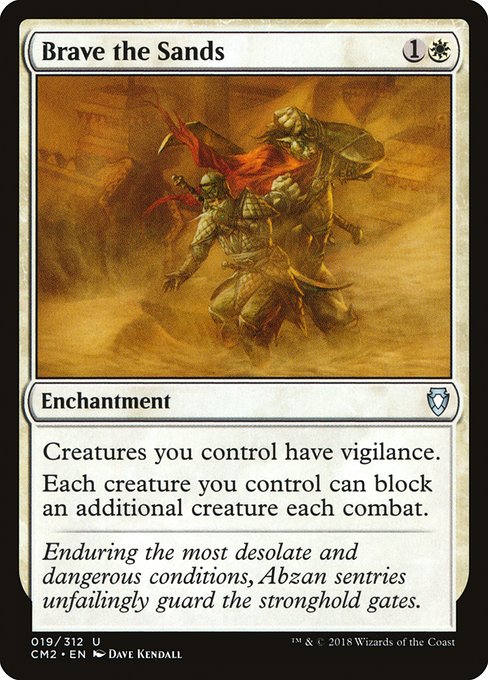
Brave the Sands
Wide defense
Vigilance and extra blocking are separate benefits that need suitable creatures.
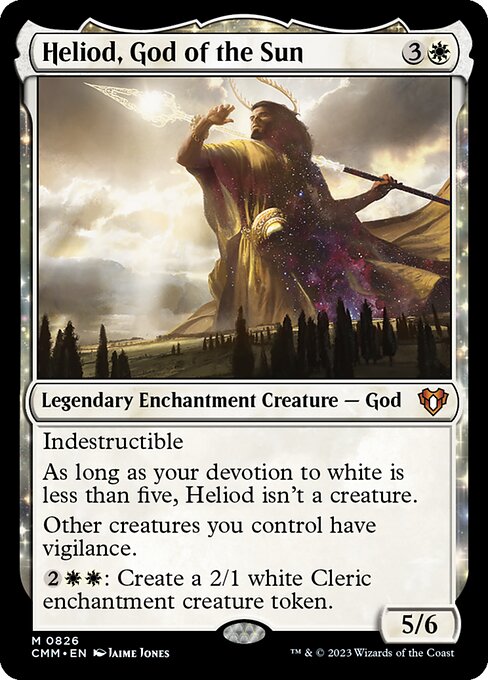
Heliod, God of the Sun
Other creature support
His vigilance grant does not include Heliod himself.

Serra Angel
Simple combat example
Flying can open attacks while the untapped body remains a potential defender.
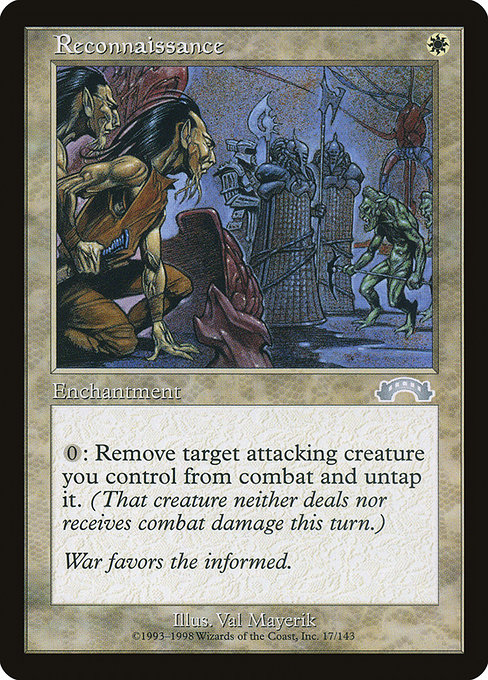
Reconnaissance
Combat withdrawal
Timing decides whether you preserve damage or remove the creature before it deals damage.
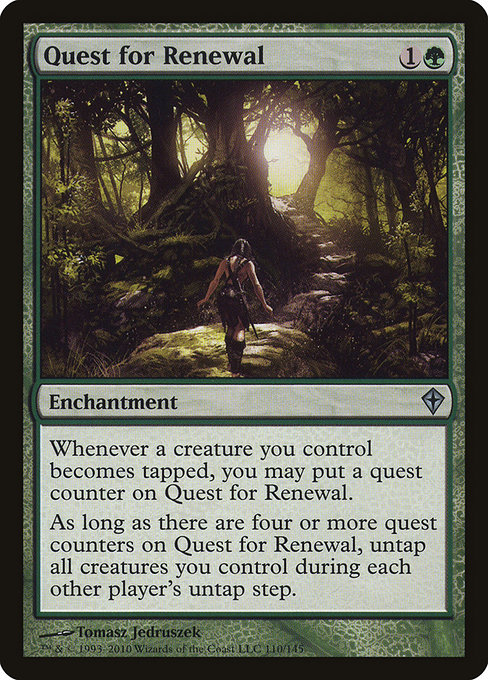
Quest for Renewal
Untap engine
Needs actual tap events for quest counters rather than vigilance attack declarations.
Test attack freedom against the real opportunity cost
A vigilance package should improve attacks you were reluctant to make. Start by identifying the reason you were holding creatures back: incoming ground damage, flyers, a valuable tap ability, or fear of losing the attacker in a block. Vigilance directly helps some of those situations and does little against the last one. An evasion or protection effect may be the relevant solution instead.
Rehearse one attack while keeping the creature untapped, then a version where you use its tap ability after attacking. Compare what remains available on the next opponent's turn. Add a second attacker on the defending side to see whether one blocker is enough. These concrete boards show whether shared vigilance, extra blocks, or an untap effect is doing the work your deck needs.
Use the deck building checklist to make sure support enchantments are not crowding out creatures and card flow. A deck with several vigilance grants and too few worthwhile bodies can spend turns improving an empty battlefield. The interaction checker can also help inspect the answers you retain when you attack without tapping your engine creatures.
Build your deck and create a free account to save a version with a clear attack and defense plan. Keep notes on which vigilance attacks produced useful damage or triggers and which exposed creatures to unnecessary risk. The best support choice gives your existing creatures meaningful additional decisions, rather than adding a keyword that rarely changes a real turn.
Vigilance questions
Build your deck
Put these choices into a Commander list. Create a free account to save your deck and keep tuning it with Deckcipher.
FAQ
Does vigilance untap a tapped attacker?
No. It prevents the attack declaration from causing a tap. Granting vigilance after a creature already tapped does not reverse that event. If a creature is already tapped before attackers are declared, it normally needs a separate untap effect before it can attack.
Does vigilance let a new creature attack?
Not by itself. The normal continuous control restriction still applies. Haste or another relevant permission can address that restriction. A creature with both haste and vigilance may attack immediately and remain untapped when it is otherwise legal to declare it.
Can I tap a vigilance creature after it attacks?
Yes, if the action or ability is legal and you can pay its costs. Tapping an already attacking creature does not normally remove it from combat. It will no longer be untapped for later blocking unless something untaps it again.
Can a vigilance creature block several attackers?
Vigilance alone does not grant additional blocks. A separate effect such as Brave the Sands can permit another block. The creature still needs to be a legal blocker for each attacker and still receives combat damage according to the resulting combat.
Does Reconnaissance work after combat damage?
It can be activated during the end of combat step while the creature is still attacking, removing it from combat and untapping it after its damage. Before damage, the same withdrawal prevents that creature from dealing the later combat damage. The timing changes the tradeoff.
Does attacking with vigilance add Quest for Renewal counters?
The attack does not tap the creature, so it does not create that card's becomes tapped event. Other tap actions can add counters when its trigger condition is met. Read the actual input the support card needs instead of assuming vigilance and every untap engine reinforce each other.