
Make useful tokens before buying another multiplier
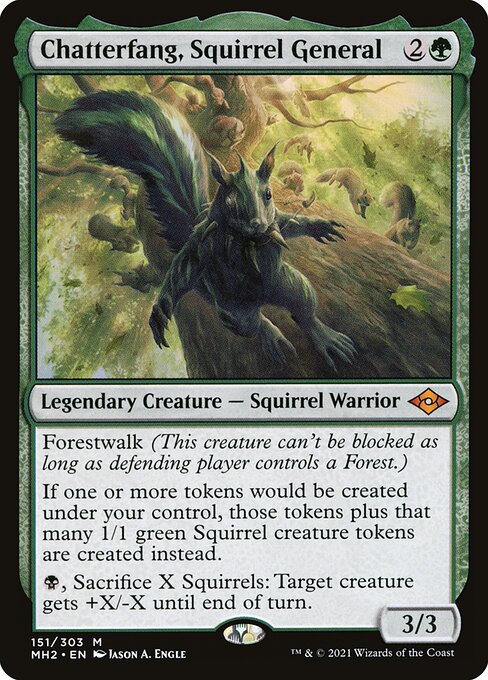
Chatterfang, Squirrel General adds Squirrels when any kind of token is created under your control. Treasure and Food producers can therefore build the army while doing another useful job. Upgrade an inconsistent list with early ramp, token producers such as Tireless Provisioner and Saproling Migration, token-compatible draw, and protection. Choose deliberately between combat, sacrifice drain, and repeatable loops. A powerful combo piece is a different purchase from the card that makes your ordinary turns work.
Build around these actual requirements
Choose what your Squirrels are supposed to accomplish
Chatterfang can lead an attacking Squirrel deck, a token value deck, or a compact sacrifice combo deck. These versions share cards but do not want every slot to do the same thing. Squirrel Sovereign improves combat. Zulaport Cutthroat rewards dying creatures. Tireless Provisioner gives you mana or Food alongside Squirrels. Buying all three themes without enough producers leaves you with a board full of support creatures waiting for the actual deck to begin.
Start with a token-and-sacrifice value shell that can attack when the board is open and drain when combat stalls. Add deterministic loops only if you want them in your games. In this Reddit upgrade discussion, a player who changed commanders still struggled to produce enough Squirrels. That is the useful question to bring to your list: how many cards make resources without needing an already impressive board? A multiplier cannot repair a hand with nothing to multiply.
If you started from Squirreled Away, switching the commander does not automatically turn every existing card into a Chatterfang engine. Import the exact version you are playing. The swaps below are conditional changes for cards actually present in your list, rather than a purported stock upgrade map. Use the deck audit to distinguish token production, sacrifice access, card draw, and finishing effects. Several cards can fill more than one role, but they still need to work together at the same time.
Keep early green, available black, and a producer
A useful testing start is around 36 to 37 lands with roughly ten inexpensive mana-development cards, then adjust for your curve and results. Green gets ramp onto the battlefield; black lets you convert Squirrels into removal and cast your draw spells. Chatterfang has a green mana cost but a black symbol in its rules text, so its Commander color identity is green and black. A hand that casts the commander but cannot produce black may still fail its most important interaction check.
Forest, Swamp, Forest, Rampant Growth, Saproling Migration, Deadly Dispute, and Tamiyo's Safekeeping is a coherent opening hand. Ramp on turn two, cast Chatterfang from four lands on turn three after the third natural land drop, and keep a green source available if your fetched basic and taps permit. On turn four, Migration can make four creatures for two mana: two Saprolings plus two Squirrels. Your remaining lands can support interaction instead of forcing you to pass with a single vulnerable commander and no material.
A two-land hand with Pitiless Plunderer, two anthems, and expensive token makers is not a combo hand yet. It is several draws away from a board. Keep a producer before a second payoff, and remember the mana curve guide when too many cards compete for turns three and four. Use the mana base calculator to check early green and later black separately. A colorless utility land is not automatically free in a two-color deck with repeated black activations. The Commander mana base guide explains how that opportunity cost changes early turns.
Get the replacement math right before adding more effects
Chatterfang's token ability replaces a creation event; it does not trigger afterward. Creating one Treasure while Chatterfang is present creates the Treasure and one green Squirrel together. Creating two Saprolings makes those two Saprolings and two Squirrels. The added Squirrels do not cause Chatterfang to apply again to the same event, so the ability does not loop by itself. Opponents can remove Chatterfang before the token-making spell or ability resolves, but there is no separate Chatterfang trigger to counter once the tokens are being created.
With Peregrin Took, replacement order matters. For an effect that would create one Treasure, applying Took first adds a Food. Chatterfang then sees two tokens and adds two Squirrels. The result is one Treasure, one Food, and two Squirrels. Applying Chatterfang first produces a Treasure and a Squirrel, then Took adds only one Food. You get one fewer Squirrel. You choose the applicable order as the player receiving these tokens, and each effect applies only once to that event.
Extra Squirrels are ordinary green creature tokens unless the creating effect supplies other relevant instructions. Do not assume they inherit an original token's mana ability or creature type. If the creation effect specifically creates the tokens tapped, the added Squirrels are tapped too. Chatterfang also does not transform a Treasure you already controlled into a new Squirrel. It changes creation under your control, not every later event involving a token. These details matter when you are counting blockers or trying to produce mana immediately.
Producers that contribute more than a creature
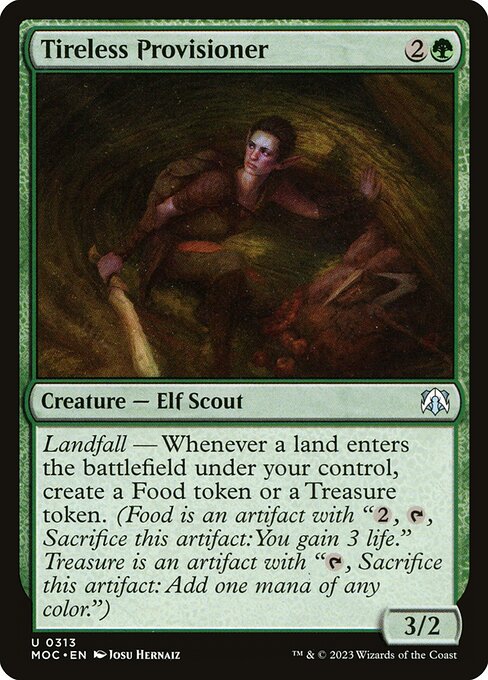
Tireless Provisioner
Land-drop resources
Each land entering can create a Treasure or Food and, with Chatterfang, a Squirrel.
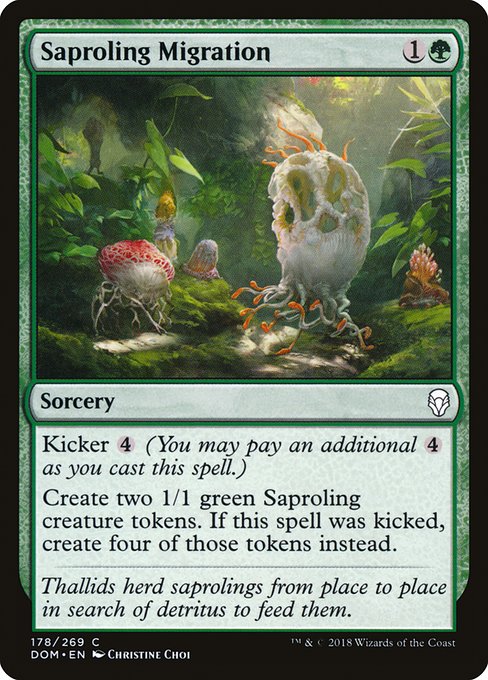
Saproling Migration
Immediate board material
Two mana creates two Saprolings. Chatterfang adds two Squirrels.
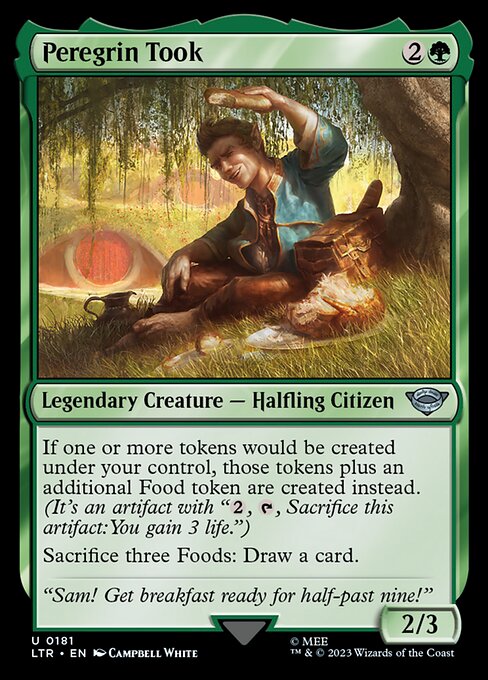
Peregrin Took
A Food added to a creation event
Order this effect before Chatterfang when doing so increases your Squirrel count.
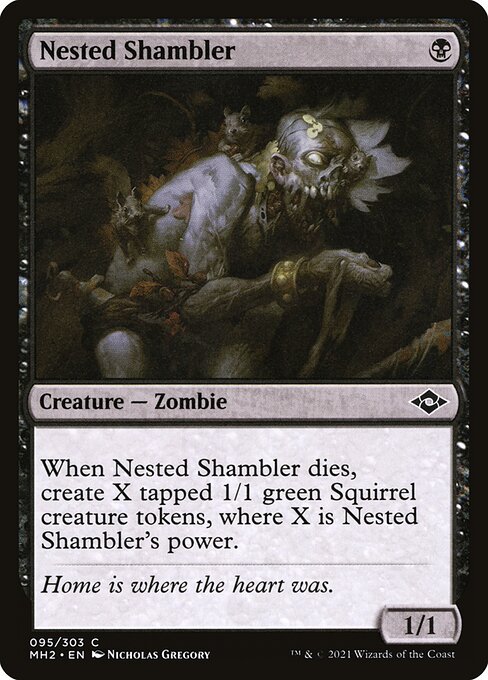
Nested Shambler
Death-based replenishment
Creates tapped Squirrels equal to its power when it dies. Chatterfang adds more if still present.
Make packages with an explicit reason for each cut
An efficient first package for a slow sacrifice-focused list is Rampant Growth, Tireless Provisioner, and Zulaport Cutthroat. If your current list contains Cultivate, Squirrel Mob, and Squirrel Sovereign, those are possible one-for-one cuts for this specific plan. The swap lowers the ramp cost, trades a large individual attacker for production, and trades an anthem for a drain payoff. It intentionally makes combat less central. Keep the original combat cards when attacking with a Squirrel army is the deck you want to play.
| Cut only if present | Add instead | The practical tradeoff |
|---|---|---|
| Cultivate | Rampant Growth | Turn-two ramp can precede a turn-three commander; you lose the second basic going to hand. |
| Squirrel Mob | Tireless Provisioner | A larger attacker becomes a resource producer that helps even before your army is established. |
| Squirrel Sovereign | Zulaport Cutthroat | Sacrifice damage replaces an anthem. This changes how the list closes games. |
| Golgari Germination | Saproling Migration | Immediate material replaces a trigger that ignores your creature tokens dying. |
| A redundant expensive token doubler | Tamiyo's Safekeeping | Protect the first useful engine when paying for another multiplier is repeatedly too slow. |
Do not label Peregrin Took a direct replacement for Parallel Lives or Doubling Season. Took adds one Food per applicable creation event, not a copy of each original token and not additional counters. The distinction is favorable when many small events happen, but it cannot reproduce every doubled-token line. Similarly, Saproling Migration is useful immediate fuel rather than a substitute for an ongoing enchantment engine. The role-first swap guide helps keep these differences explicit. Compare complete packages with the budget alternatives tool, then check actual printing prices before deciding which tradeoff is worth making.
Choose draw that sees the tokens you sacrifice
Grim Haruspex and Midnight Reaper care about nontoken creatures, so sacrificing a field of Squirrel tokens does not refill your hand through them. They can still belong in a creature-heavy shell, but the word dies is not enough to make a card a token draw engine. Skullclamp directly rewards the death of its equipped creature. On a normal 1/1 Squirrel it gives +1/-1, and the creature dies as a state-based action before you receive priority. That draws two cards without needing a separate outlet.
Anthems change the Skullclamp sequence. A 1/1 Squirrel boosted by Squirrel Sovereign becomes 2/2 before equipment, then 3/1 with Clamp, so it survives the equip. You now need an outlet or another way to kill it. This does not make the anthem unplayable; it changes the mana and pieces needed for your draw plan. Moldervine Reclamation costs more to establish but sees your creature tokens die and commonly survives a creature wipe. That is a real resilience tradeoff against cheaper, more fragile draw options.
Deadly Dispute gives immediate cards and a Treasure from an artifact or creature you sacrifice as an additional cost. With Chatterfang present when it resolves, that Treasure creation also brings a Squirrel. Plumb the Forbidden can convert multiple doomed creatures before a wipe; sacrificing three produces three copies plus the original, for four draws and four life lost if everything resolves. You still need the mana open before the wipe, and the sacrificed bodies are gone even if the spell is countered.
Know exactly what Pitiless Plunderer loops require
Pitiless Plunderer rewards another creature you control dying with a Treasure. Chatterfang adds a replacement Squirrel to that Treasure creation. The simplest repeatable route begins with both creatures in play, one expendable Squirrel, and one available black mana. It is repeatable because Chatterfang's activation has no tap cost. Summoning sickness does not prevent that activation. It still needs a legal creature target when you activate it and enough Squirrels to pay the chosen X.
- Choose X equal to one and target the Squirrel you intend to sacrifice. Targets are chosen before costs are paid.
- Pay one black and sacrifice that Squirrel. Pitiless Plunderer triggers from its death. Resolve that trigger to create one Treasure and one new Squirrel.
- The original Chatterfang ability has lost its only target and does not resolve. That does not undo its paid costs or the Plunderer trigger.
- Sacrifice the Treasure for black mana and repeat with the new Squirrel. This version pays for itself but does not accumulate Treasure. A payoff such as Zulaport Cutthroat turns repeated creature deaths into a finish.
There is also a positive-mana version: start with two expendable Squirrels, choose X equal to two, target one of those Squirrels, and sacrifice both. Two Plunderer triggers create two Treasures and two replacement Squirrels. Spend one Treasure for the next black activation and retain the other. Each completed repetition adds a Treasure. Name a finite number of repetitions and the intended result. Treasures by themselves do not eliminate opponents; retain a spell or permanent that actually converts the resources into a win.
Other tempting combos have real limits
Warren Soultrader plus Chatterfang can turn a creature into a Treasure and a replacement Squirrel, then repeat by sacrificing that Squirrel. Soultrader costs one life per activation. Without life gain or another route, that is a finite engine. Zulaport Cutthroat can replenish the paid life while draining opponents, provided you start with enough life to survive paying the cost and can resolve the relevant triggers. Mirkwood Bats drains when tokens are created or sacrificed but does not gain you life, so it is not the same sustaining piece.
Scurry Oak and Ivy Lane Denizen form a different loop. A green creature entering can let Denizen put a counter on Oak; Oak can make a green Squirrel; that Squirrel triggers Denizen again. The token creation is optional, so you can stop. Chatterfang is not required for the underlying loop. If you want a combat deck without repeatable token combos, avoid including both cards just because each looks thematic. A budget does not determine how fast or repetitive a game becomes.
Payoffs are different from engines
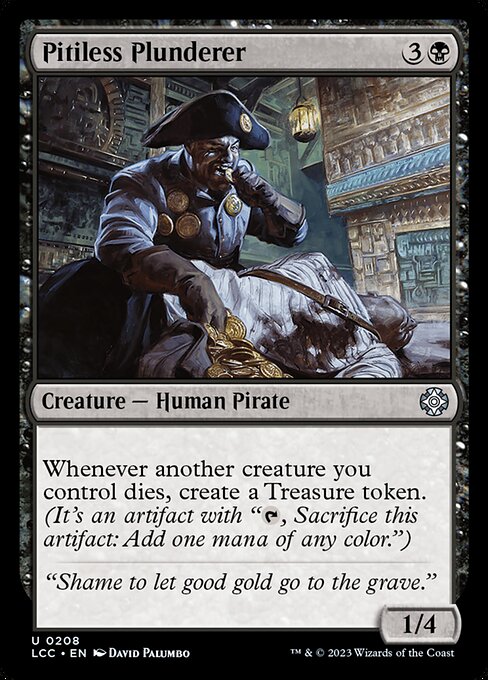
Pitiless Plunderer
Death-to-Treasure engine
Needs creatures to die. A sacrificed Food alone does not trigger it.

Zulaport Cutthroat
Creature-death finish
Drains all opponents and gains you one life per relevant death.

Warren Soultrader
Life-limited conversion
Without a life-gain source, repeated activations eventually exhaust your life.
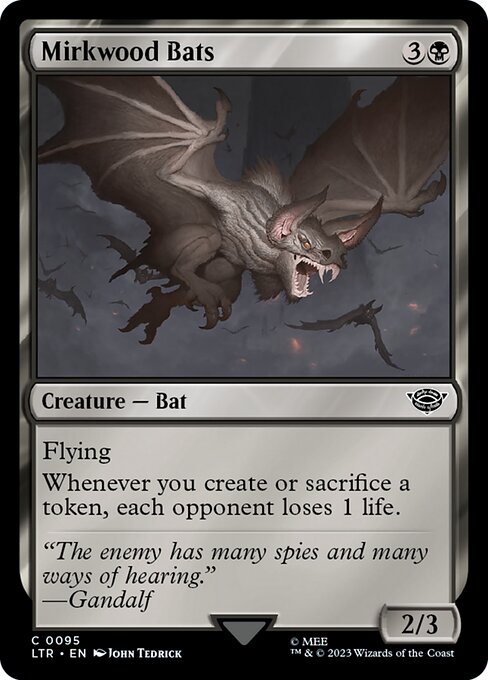
Mirkwood Bats
Token-event payoff
Sees created and sacrificed tokens, including artifacts, but supplies no life gain.
Keep removal, protection, and a second board in reserve
Chatterfang's activated ability gives +X/-X rather than dealing damage or destroying a creature. Enough toughness reduction can remove an indestructible creature, but the ability still targets and does not answer everything. You need black mana for each activation, and spending all your Squirrels may leave no blockers. Forestwalk applies only when the defending player controls a Forest, including a nonbasic land with that type. It does not make your entire Squirrel army unblockable.
Tamiyo's Safekeeping can preserve an engine against targeted exile or destruction, but it does not stop a nontargeting exile wipe or protect your whole board. Keep an actual producer in reserve. After a reset, replaying Tireless Provisioner before a land drop or casting Migration after Chatterfang is usually more productive than deploying an anthem onto an empty battlefield. Effects that exile creatures instead of letting them enter the graveyard can also prevent the deaths that Plunderer needs. Keep interaction for the permanent that shuts off your plan, not only creatures you can shrink.
Review three things after games: how often you had tokens without a payoff, how often you had payoffs without tokens, and whether your black mana stayed available. If creatures pile up without a finish, add a drain piece or a specific combat closer. If support cards sit around waiting, replace one with a producer. If every turn ends tapped out, revisit the curve and cheap ramp. Price the answer to the actual failure with the deck price calculator, rather than assuming another multiplier is the next step.
Check the package against your actual list
Compare current printing prices and make sure your token makers, outlets, draw, and finish can function together.
Questions before you sleeve it up
Does Chatterfang double Treasure mana?
No. Creating one Treasure also creates a Squirrel, so you receive two tokens of different kinds. The added Squirrel does not inherit the Treasure mana ability. Effects such as Jaheira can grant abilities separately, but creature tokens with a tap ability still care about summoning sickness. Count the mana from the actual permanents you have.
Can I sacrifice the creature I target with Chatterfang?
Yes, if it is a Squirrel you control and you can pay the rest of the cost. You choose the creature target before paying the sacrifice cost. The ability later fails if its only target is gone, but death triggers from paying the cost still exist. This is why a replacement Squirrel from Plunderer can sustain the described loop.
Is Chatterfang plus Pitiless Plunderer infinite mana?
The starting resources matter. One Squirrel and one black mana support a mana-neutral repeatable loop. Two Squirrels let you sacrifice both for X equal to two, create two Treasures and two Squirrels, then spend one Treasure per repetition and retain one. A suitable payoff or mana sink is still needed to finish the game.
What is the first budget upgrade for too few Squirrels?
Add a producer that functions without an established army. Saproling Migration gives immediate material, and Tireless Provisioner rewards ordinary land drops while providing useful artifacts. Cut a redundant anthem or an individual attacker only when that card is actually in your list and you are deliberately moving toward token production and sacrifice.
Can I keep the deck focused on combat?
Yes. Keep efficient producers and protection, retain combat payoffs that actually change attacks, and omit the compact loop packages you do not want. You still need draw and answers to wipes. Tell the table whether your list contains repeatable Plunderer or Oak loops, since that information describes the deck more accurately than its purchase price.
Sources and further reading
- Chatterfang current Oracle text and rulings: The current token replacement effect, black activation, and Forestwalk.
- Wizards Modern Horizons 2 release notes: Token types and characteristics of added Squirrels. Current Oracle rulings take priority over older wording.
- Magic comprehensive rules: Replacement effects, target selection before paying costs, and interaction during loops.
- Good Games Chatterfang deck tech: Published token-and-sacrifice deckbuilding context. The loop section here adds explicit starting resources and payoff requirements.
- Reddit: Chatterfang precon upgrade questions: Player discussion about insufficient token generation after changing commanders.
- Pitiless Plunderer current Oracle text: Requires another creature you control to die, not merely a token to be sacrificed.
- Warren Soultrader current Oracle text: The life payment makes the unassisted Soultrader route finite.