
Quick answer
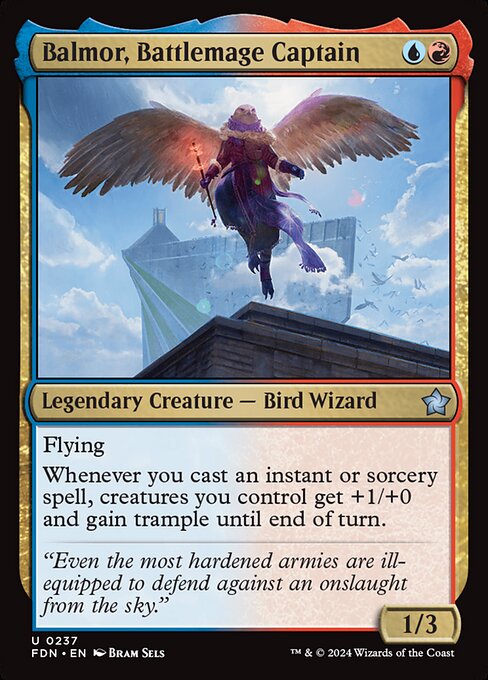
Balmor turns ordinary instants and sorceries into temporary power and trample for an existing board. A budget build needs cheap selection, a few reliable creature makers, enough lands to cast several spells legally, and a way to keep cards flowing after the first attack.
Choose spell combat instead of collecting every payoff
Balmor, Battlemage Captain rewards casting an instant or sorcery by giving creatures you control +1/+0 and trample for the turn. That creates a direct combat plan from otherwise useful spells. A cheap selection spell can improve the hand while also improving an attack. The list still needs creatures on the battlefield when the bonus matters and enough cards to continue after the turn ends.
This is different from a dedicated storm deck trying to cast a long sequence toward a particular spell count payoff. You can build Balmor around finite useful casts and combat rather than an elaborate loop. Decide which experience you want before spending money on rituals, recursion, or narrow combo pieces. Low prices do not make every spell chain equally suitable for the intended game.
Talrand, Sky Summoner supplies a different command zone option based on making flying Drakes from instant and sorcery casts. In a Balmor deck he can be a useful creature engine in the ninety nine. If you choose him as commander, the list becomes mono blue and cannot retain the red cards from this package. Command zone identity is an actual construction constraint, not a cosmetic swap between similar spell rewards.
Start with a sentence such as build a small board, cast useful spells, and attack with a temporary team bonus. That sentence makes cuts easier. A large spell costing the whole turn may be impressive but prevent the several small actions Balmor wants. A third expensive payoff may be less useful than a land, an efficient answer, or a draw spell that keeps the hand functioning.
Use cheap selection to make the opening turns reliable
Ponder examines three cards, permits reordering and an optional shuffle, then draws. Preordain scries two before drawing. Opt scries one before drawing and is an instant. These cards all help selection, but they are not identical and do not guarantee the missing land. Choose the one whose timing and filtering fit the turn you are actually planning.
Ponder and Preordain are sorceries. You normally use them in a main phase with the appropriate empty stack condition. Opt can be held for a legal instant speed window, including before combat damage if a Balmor bonus will matter. A hand that needs to find land now may still want to cast the selection early rather than preserve it as a combat trick and miss a critical land drop.
One mana spent on selection is mana not held for an answer at that moment. A deck full of one mana spells still needs colored sources and enough total resources to cast several in a turn. Do not keep a hand of one land and several cantrips solely because each cantrip is cheap. Work through what happens if the first look does not find another source.
The mulligan guide helps compare functional sequences rather than exciting potential. For this deck, a useful opener usually has colors, a development route, and some card access or interaction. It does not have to contain every engine. Cheap selection should make an already plausible hand better, not become an excuse to accept a hand requiring several perfect reveals.
Establish a few engines that make the spells matter
Young Pyromancer creates an Elemental when you cast an instant or sorcery. Talrand creates a flying Drake from the same cast categories. Third Path Iconoclast instead triggers from noncreature spells, which includes suitable artifacts and enchantments as well as instants and sorceries. Their input scopes differ, and a card satisfying one is not automatically a trigger for all of them.
A cast trigger exists even if the original spell is later countered. Countering your selection spell does not normally erase the already triggered token ability. Removing the creature engine after a trigger exists also does not erase that trigger, although it prevents future events from creating more while the engine is absent. This can make modest spells productive through some interaction without making the engines invulnerable.
When several triggers you control arise from the same cast, their order can matter. If a token making trigger resolves before Balmor's bonus, the new creature can receive that bonus when it resolves. A creature arriving after the bonus has applied does not automatically inherit that earlier temporary effect. The new token still normally cannot attack that turn without haste, so do not turn correct trigger order into imaginary immediate attackers.
Keep the engine count practical. Too few bodies can leave Balmor pumping only itself. Too many three and four mana payoff creatures can leave the hand without cheap spells or mana to use them. Test the turn after you cast an engine rather than evaluating only the board after several uncontested turns. A useful engine should connect to spells the deck already wants to cast.
Separate mana recovery from extra cards
Frantic Search draws two, discards two, and untaps up to three lands. With suitable lands already in play, untapping can recover resources spent on the spell and help another action. You still need the mana to cast it first. A hand with only two ordinary lands does not cast a three mana spell for free simply because the final instruction can untap lands.
Its draw and discard improve selection, but they do not produce two extra cards retained in hand. The spell itself is also a card spent. If you need raw resources after an empty hand, compare it with a true refill rather than counting every draw word as the same role. A graveyard plan can make the discard useful, but that support must exist in the actual list.
Big Score discards a card as an additional cost, then draws two and creates two Treasures on resolution. If the spell is countered, the discarded card is not refunded. The Treasures can fund later spells or colored requirements, but they arrive only when the spell resolves. They cannot help pay the same Big Score that created them.
These tools can make a productive turn, but they are not substitutes for a land base. Repeatedly relying on a four mana spell to repair an opening with too little mana is backwards. Use the mana base calculator to inspect sources, then rehearse a turn with exact blue and red payments. A burst plan is reliable when it begins from resources you can actually establish.
| Card category | What it contributes | What it does not guarantee |
|---|---|---|
| Ponder or Preordain | Early selection and a cast trigger | The missing land or net extra hand size |
| Opt | Instant timing and selection | A relevant combat without creatures |
| Frantic Search | Filtering and possible mana recovery | Permission to cast without upfront mana |
| Big Score | Filtering plus later Treasures | A refund of the additional discard if countered |
| Token engine | Bodies from qualifying casts | Immediate attacks from newly created tokens |
Interaction should remain useful outside the big turn
Negate counters a noncreature spell. It can protect a developed board from an appropriate wipe or stop a noncreature engine before resolution. It cannot counter an ordinary creature spell just because that creature is dangerous. A package containing only similarly restricted counters may leave gaps against resolved permanents and creature based wins.
Abrade can deal three damage to a target creature or destroy a target artifact. You choose one mode, not both. It is useful when small utility creatures and artifacts are relevant, but it is not an answer to every large creature or enchantment. The modal flexibility is valuable because it covers several real situations, not because it makes the card universal removal.
Do not cast a counterspell at nothing merely to trigger Balmor or an engine. A spell requiring a target needs a legal one. An instant selection spell without targets may be available as a combat pump when no opposing spell exists; Negate is not. Similarly, casting removal at your own important permanent solely for a trigger is usually an expensive way to manufacture an input.
Use the interaction checker to inspect stack answers and resolved threat answers separately. Keep enough mana to use the answer when the table's critical turn arrives. A spellslinger deck can appear interactive while tapping every source to generate an extra token and being unable to stop the actual threat. Preserving one response can be more valuable than one additional point of temporary power.
Crackling Drake is a payoff with a real mana requirement
Crackling Drake counts instant and sorcery cards you own in exile and in your graveyard for its power. It does not count every spell anyone has cast or every card you have drawn. Exiled cards you own can continue supporting it, which gives the card a different relationship with graveyard removal from a payoff counting only cards still in the graveyard.
Its entry draws a card and its flying can give a large body a route to player damage. That does not make it easy to cast in every red blue mana base. The colored requirements are demanding, so inspect early dual sources and tapped lands. A low overall curve can still stumble on a particular spell with several required colored pips.
The Drake can be a secondary threat when the token board has been removed. It can also be answered by ordinary creature interaction, and increasing its power does not improve its toughness in the same way. Do not assume a large power number guarantees safe combat into any flyer. The flying guide explains the legal blockers and timing that still matter.
Compare that independent threat with another engine requiring several future casts. A deck may need one body that draws immediately more than another support card waiting for a full hand. The reverse can be true in a list already producing many resources. Choose based on the board state in which you regularly stall rather than adding every creature whose text mentions spells.
A compact budget spellslinger package
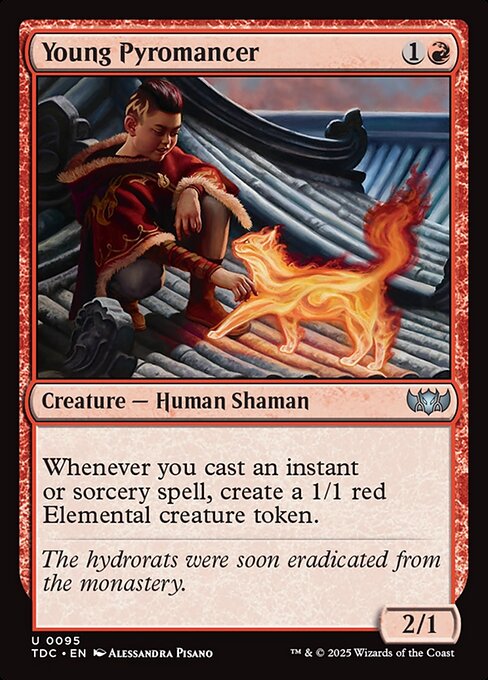
Young Pyromancer
Instant and sorcery body engine
Rewards the spell categories Balmor wants without requiring a long storm turn.

Third Path Iconoclast
Noncreature body engine
Additional artifact and enchantment casts can trigger it when Balmor does not.
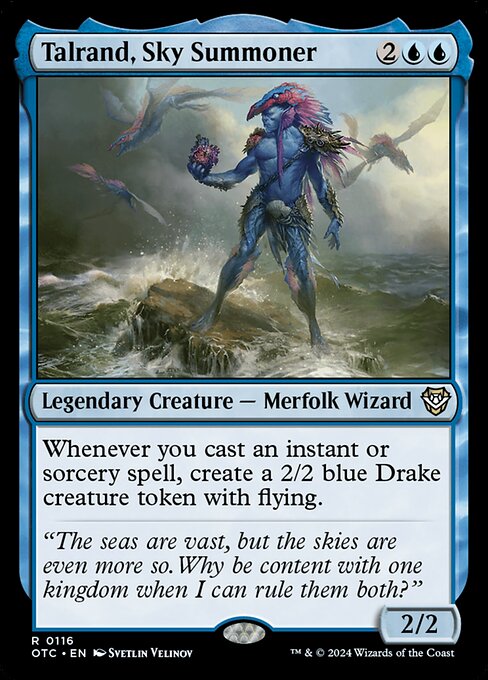
Talrand, Sky Summoner
Evasive body engine
Drakes provide a different combat route at a higher engine cost.

Preordain
Early filtering
Helps a plausible opening while still spending the mana for that action.

Big Score
Later resource bridge
Requires an upfront discard and produces usable Treasures only on resolution.
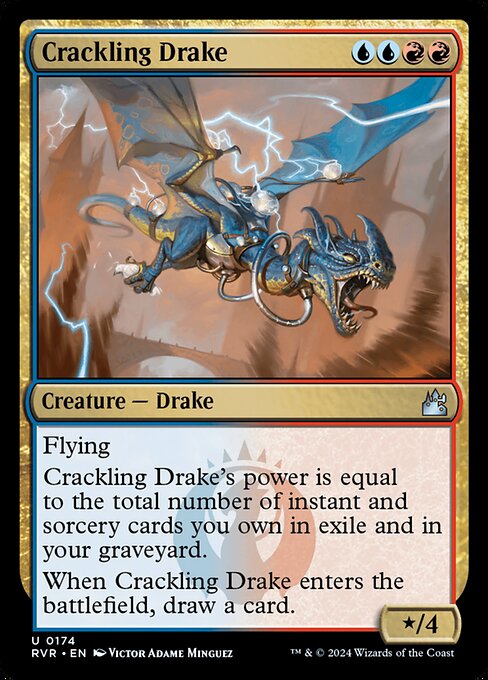
Crackling Drake
Independent threat
A card on entry and large potential power with demanding colored costs.
A finite combat turn can be enough
Suppose you begin the turn with Balmor and several creatures that are already eligible to attack. Casting two useful instants or sorceries and resolving the associated Balmor triggers gives the existing board two temporary power increases and trample. That can create a meaningful attack without a combo. The damage still depends on the actual creatures, blockers, and any prevention or removal.
Cast sorcery selection before moving into combat when required. You can preserve an instant for a later legal window if seeing blocks will improve the decision. Granting trample before damage can change assignment, while a power bonus after damage cannot change the event that already happened. The trample guide helps calculate how much actually reaches each player.
Do not include newly made tokens in the attack unless they have a legal way to attack immediately. They can improve future turns or supply defense after the attack. A turn producing several bodies and some damage can be useful even if it is not lethal. Forcing an unsupported lethal calculation can lead to spending the hand and passing with no protection.
Now test the same hand with Balmor removed. The cantrips, interaction, and draw should still be legal useful cards. The token engines can continue building resources, and a separate threat may matter. If every spell is a narrow pump that only works with one creature, the deck is more fragile than a list whose normal spell functions already advance the game.
Make budget upgrades from the turn that failed
If the deck has many payoff creatures and too few spells, buying another engine does not solve the shortage. If it casts several spells but makes no useful board, improve creature production. If it runs out of cards after the first attack, replace a redundant finisher with access. If it regularly lacks the second red or blue source, inspect mana before purchasing a premium spell.
Substitutions should preserve the needed job. A cheap conditional counter may replace a broader one while leaving a clear coverage gap to address elsewhere. A one time draw spell can replace a premium repeatable engine while giving up longevity. A modest token maker can preserve the creature plan without duplicating every evasive or defensive feature of a more expensive option.
Price the actual printing and delivered cart. The budget tools help compare candidates, while the seller's current cost determines what you spend. Keep basic lands and ordinary draw when they make the list function. A small package of efficient cards can be more useful than one celebrated staple consuming most of the available budget.
Build your deck and create a free account to save the initial spell and creature balance. Test one developing turn, one attack turn, and a turn after an engine is removed. Record the actual mana, retained cards, and eligible attackers. That turns the next upgrade into a targeted fix instead of an attempt to buy a longer spell chain without knowing what the chain should accomplish.
Budget Spellslinger questions
Build your deck
Put these choices into a Commander list. Create a free account to save your deck and keep tuning it with Deckcipher.
FAQ
Does a copied spell trigger Balmor?
A spell copy placed directly on the stack is normally not cast and does not create a cast trigger. An effect specifically telling you to cast a copy is different. Read the action performed rather than treating all copies as additional spells cast.
Do cantrips replace card draw engines?
They help selection and usually replace themselves, but they do not provide the same retained card volume as a refill or repeatable engine. A list full of cantrips can still empty its hand after development. Preserve an actual resource plan alongside cheap cast triggers.
Can a token from Young Pyromancer attack immediately?
Normally not without haste or another relevant permission. Creating a token during your turn does not remove the continuous control requirement. Correct trigger order can let it receive a temporary bonus, but that does not itself make it an eligible attacker.
Is Frantic Search always free?
No. You need the upfront mana, and the amount recovered depends on which lands can untap and produce mana afterward. Its draw and discard also cost a card from hand overall. Evaluate the full sequence rather than only the final untap instruction.
Can Negate be cast just for a trigger?
It still needs a legal target noncreature spell. Without one, you cannot cast it merely to pump the board. A nontargeted instant can be more flexible as a combat cast, while a counterspell should retain its actual interaction role.
Do I need storm combos to finish?
No. Balmor can support finite spells and combat, with token engines building a board over several turns. Deterministic loops are a separate construction choice. Match that choice to the intended game and describe it without using budget as a substitute for speed or power.