
cEDH is Commander played to win as efficiently as possible
cEDH means competitive Elder Dragon Highlander: normal Commander rules and ban list, but with decks, mulligans, threat assessment, and table decisions optimized for winning. It is not just “expensive EDH.” It is a metagame where legal fast mana, compact combos, cheap interaction, and precise sequencing matter.
Fast cEDH self-check
What cEDH means
cEDH is the competitive end of Commander. The rules are still Commander: one hundred cards, singleton construction outside basic lands, commander color identity, forty life, and multiplayer pods. What changes is the agreement at the table. Everyone is expected to maximize win percentage from deck construction through the final priority pass.
Current legality matters. cEDH normally uses the official Commander ban list unless an event explicitly says otherwise, so always verify the event document and the date of any list you copy. Under the post-September-2024 Commander ban list, cards such as Mana Crypt, Dockside Extortionist, and Jeweled Lotus are not normal legal cEDH examples. Their absence reshaped acceleration, commander deployment, and red Treasure engines, pushing lists toward legal options such as Sol Ring, Chrome Mox, Mox Diamond, Lotus Petal, Mox Opal where enabled, Grim Monolith, Birds of Paradise, Mystic Remora, Rhystic Study, Esper Sentinel, Orcish Bowmasters, and commander-specific engines.
A practical definition: every card slot should help win, find a win, protect a win, stop a win, or produce mana to do those things ahead of schedule. A tuned high-power deck can be strong and still not be cEDH if its first meaningful pressure happens too late or if it folds to one counterspell.
Cards that illustrate common cEDH roles
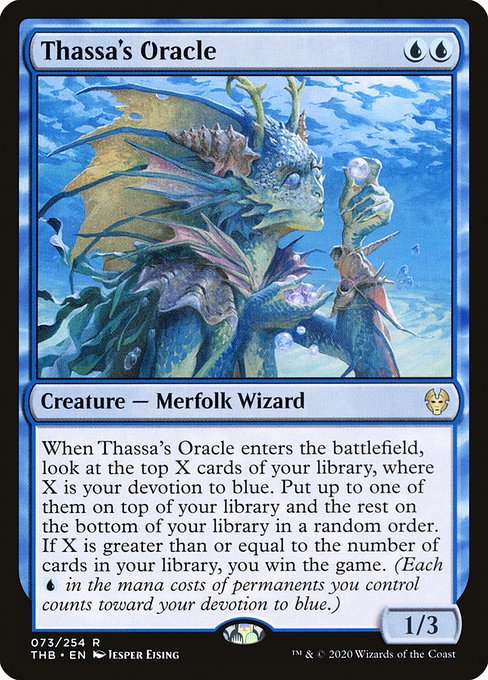
Thassa's Oracle
Compact win condition
Often represents how cEDH favors low-mana, low-card-count win packages that can end the game immediately when assembled.
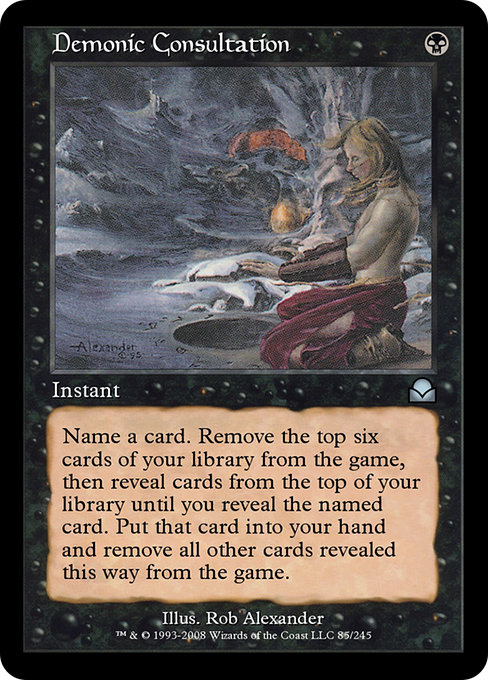
Demonic Consultation
Combo enabler and tutor-like effect
Shows why risk is acceptable when the line wins now or finds the exact card needed under pressure.
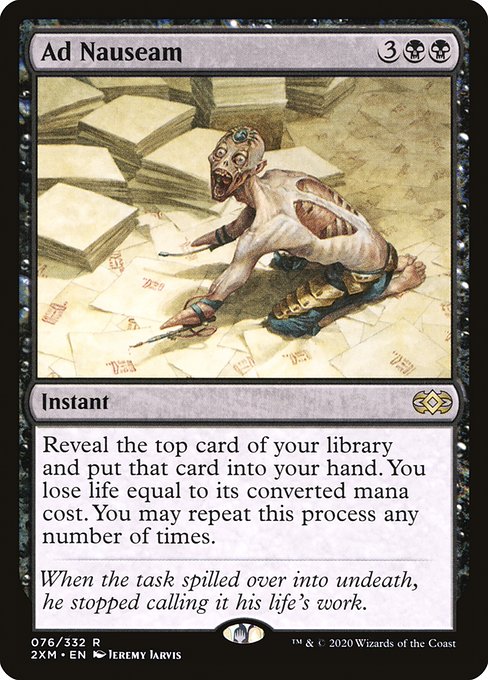
Ad Nauseam
Explosive card advantage
Rewards very low mana curves and can convert life total into enough cards to attempt a protected win.
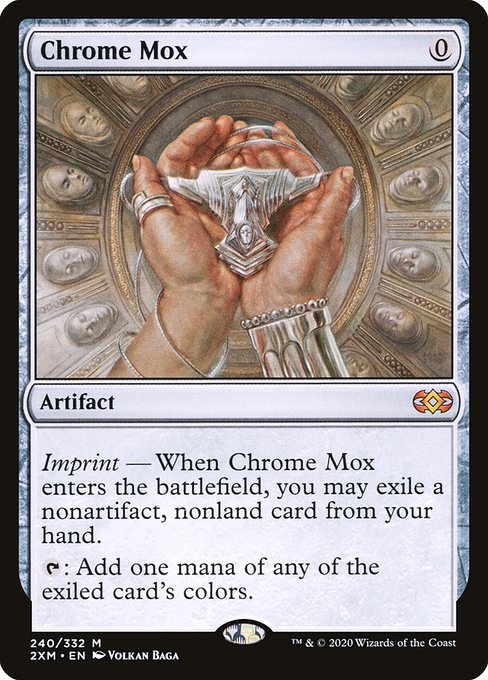
Chrome Mox
Legal fast mana
Trades a card for immediate acceleration, which helps power early commanders, engines, or protected win attempts.
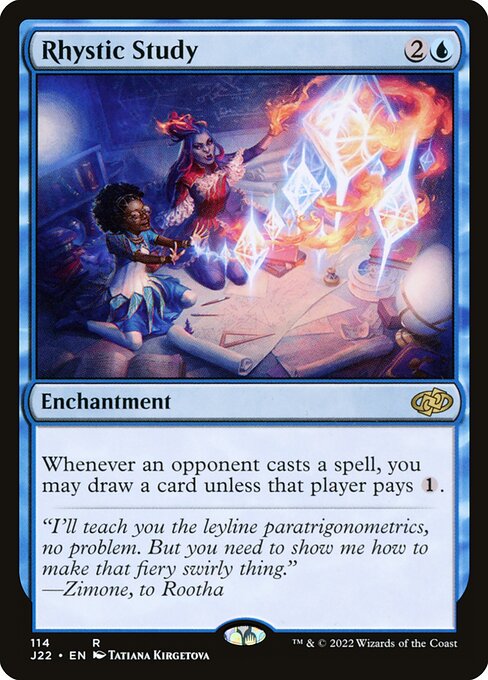
Rhystic Study
Early card advantage
Forces opponents to choose between slowing down and feeding cards to the player who resolved it early.
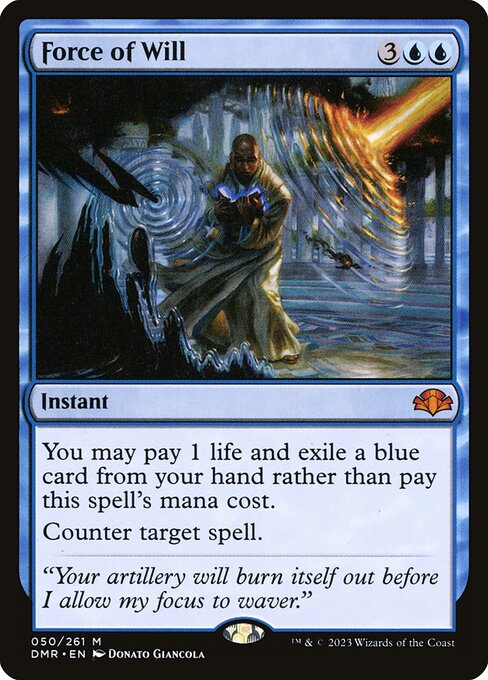
Force of Will
Free stack interaction
Protects a win or stops an opponent while tapped out, which is one of the defining pressures of competitive pods.

Sol Ring
Legal fast mana
Still legal in Commander and capable of accelerating engines or commanders ahead of the normal land-per-turn schedule.
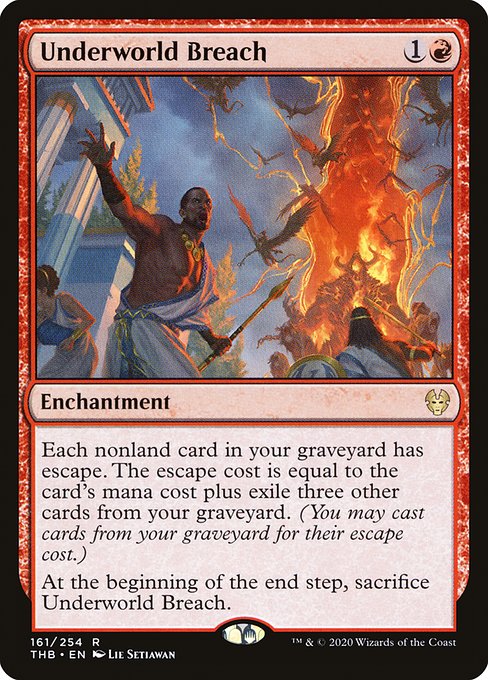
Underworld Breach
Graveyard engine
Turns the graveyard into a second hand and supports compact loops when paired with the right mana and mill pieces.
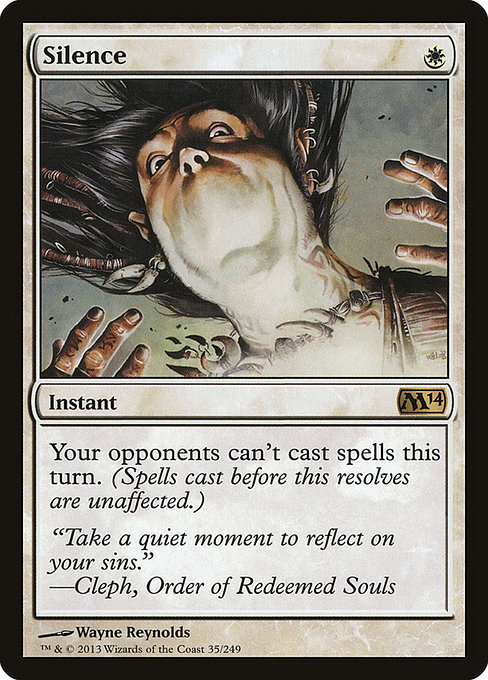
Silence
Protection and tempo
Can clear a window for your own win or stop an opponent from executing a spell-heavy turn.
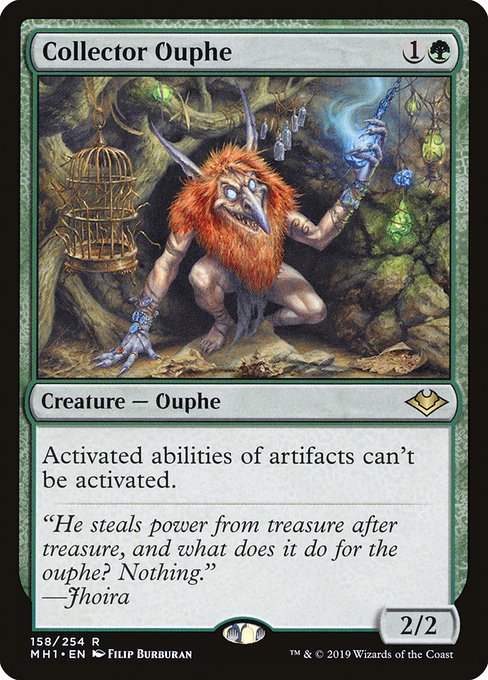
Collector Ouphe
Stax pressure
Attacks artifact mana and forces fast decks to play a slower game where creature combat and removal matter more.
How cEDH differs from high power Commander
High power Commander often contains competitive pieces but preserves restrictions: fewer tutors, no fast combos, budget limits, pet cards, or a preference for longer games. cEDH removes those restrictions within current Commander legality. The deck is built for the strongest available lines, and the pilot mulligans for a hand that either develops quickly, interacts early, or presents a credible route to a win.
The turn-two-through-five pressure metric is a simplification, not a promise that every game ends there. Turbo shells may threaten a win on turn two or three. Midrange decks may spend those turns deploying Mystic Remora, Rhystic Study, Tymna the Weaver, Kinnan, Bonder Prodigy, or interaction. Stax decks may use Drannith Magistrate, Collector Ouphe, or Magda, Brazen Outlaw pressure to make everyone play slower.
cEDH vs high power EDH in practice
| Question | High power EDH | cEDH |
|---|---|---|
| What is the deck built to do? | Execute a strong plan while often preserving theme, budget, or table preferences. | Maximize win percentage using the most efficient legal cards and lines available. |
| How fast should it matter? | Usually presents major pressure around the midgame, often turns five through eight. | Must respect wins, locks, or decisive advantage starting in the first few turns. |
| How are mulligans handled? | Keeps many playable hands with lands, ramp, and a plan. | Aggressively ships hands that do not produce early mana, interaction, or a route to action. |
| What interaction matters most? | Board wipes, permanent removal, and flexible answers are common. | Cheap stack interaction, silence effects, efficient removal, and proactive hate are prioritized. |
| How is politics used? | Deals and table narratives can shape the game. | Communication focuses on known information, risk, priority, and preventing wins. |
If you are unsure where your deck sits, use the Bracket Calculator only as a conversation aid. For cEDH, the stronger test is whether your commander, mana, tutors, win package, and interaction match established competitive archetypes on Moxfield primers and recent results from tournament aggregators such as EDHTop16 and adnaus.gg.
What cEDH decks are trying to do
Most cEDH decks are proactive, disruptive, or both. They threaten compact wins, deploy engines that snowball, or slow the table until their commander turns small advantages into a win. Recent tournament data is not one static “best deck” list, but EDHTop16 and adnaus.gg results commonly show a mix of blue midrange, turbo or tempo shells, commander-engine combo, and stax-adjacent strategies. Common archetype examples include Rograkh, Son of Rohgahh plus Silas Renn turbo shells, Tymna the Weaver plus Kraum, Ludevic's Opus midrange, Kinnan, Bonder Prodigy mana-combo decks, Najeela, the Blade-Blossom tempo-combo, Sisay, Weatherlight Captain toolbox, Tivit, Seller of Secrets control-combo, and Magda, Brazen Outlaw artifact-combo.
A Rograkh/Silas deck often uses legal zero-mana creatures, rituals, Ad Nauseam, Underworld Breach, and Thassa's Oracle lines, backed by free counters. Tymna/Kraum trades speed for cards and stack control, then wins with Oracle/Consultation or Breach. Kinnan turns mana rocks and dorks into oversized acceleration and can win through Basalt Monolith loops or creature-based outlets. Magda uses Dwarves, Treasures, and artifact tutors to assemble deterministic artifact lines while pressuring slower blue decks from a different angle.
Those snapshots are metagame-sensitive, especially after banned fast mana and banned red Treasure engines changed the texture of early turns. The post-ban environment made some all-in turbo openings less automatic, increased the value of resilient engines and commander-based mana, and forced former Dockside decks to justify red with Breach, interaction, commanders, or specific combo lines rather than generic Treasure snowballing. Use Moxfield primers for current list context, Commander Spellbook to verify combo steps, and recent EDHTop16 or adnaus.gg event lists when you want claims about what is actually performing.
The real speed of cEDH games
New players often hear “cEDH is turn-one wins” and get the wrong picture. Exceptional hands exist, but a normal competitive pod is more often a sequence of early threats, engines, and stopped wins. The key difference is not only when the game ends. It is when someone could have ended it if the table failed to interact.
Example: Player A resolves turn-one Mystic Remora. Player B has Vampiric Tutor at end step. Player C passes with two blue sources open. Player D has a turn-two commander that generates mana. The immediate question is not “who looks scary?” It is “who converts their next turn into a win?” If B tutors openly and untaps with black-blue mana, hold stack interaction for the win attempt. If A draws six cards from careless noncreature spells, A may become the problem instead. If C is the only player representing a counterspell, do not force them to answer a value card if a deterministic combo is likely next.
Goldfish your first three turns
Test ten openers. Record keep rate, first action, earliest win attempt, protection available, and whether the hand loses to one common answer. Then compare your results to established primers.
How to evaluate whether your deck is cEDH
Start with the actual win line. Thassa's Oracle plus Demonic Consultation usually needs one blue-blue spell and one black instant. A common sequence is cast Oracle, let it resolve, then with Oracle's triggered ability on the stack cast Demonic Consultation naming a card not in your deck. Consultation exiles the library. When Oracle's trigger resolves, you win if your devotion to blue is greater than or equal to the number of cards in your library. Opponents can counter Oracle before it resolves, counter Consultation before the library is exiled, counter or Stifle the triggered ability, or use effects that stop winning. Removing Oracle after Consultation has exiled the whole library usually does not stop the win by itself, because zero devotion is still greater than or equal to zero cards in library; creature removal only works in spots where the Oracle player still has enough cards left in library that lowering devotion makes the trigger fail. The Oracle player protects the line with Silence, Pact of Negation, Force of Will, Flusterstorm, discard, or by waiting until opponents are tapped low.
Underworld Breach lines are similarly compact but resource-driven. A classic shell uses Underworld Breach, Lion's Eye Diamond, and Brain Freeze. With enough cards in graveyard, cast Breach, sacrifice LED for mana, escape Brain Freeze targeting yourself, mill more cards, escape LED and Brain Freeze repeatedly, then finish by milling opponents or finding a win such as Oracle. Graveyard hate like Soul-Guide Lantern, Dauthi Voidwalker, Endurance, or Rest in Peace can stop it; so can countering Breach or removing it before the loop is established.
Then evaluate openers. Keep: land, Chrome Mox, blue card, Mystic Remora, tutor, Force of Will, second land is slow but interactive and has a powerful engine. Conditional keep: land, Lotus Petal, Dark Ritual, Ad Nauseam, Silence, no blue card, no follow-up may be explosive but fragile if the table has counters. Mulligan: three lands, Sol Ring, five-mana payoff, creature removal, no tutor or draw engine; it has mana but no competitive action.
- Identify your fastest realistic win line, not your dream hand.
- Count how many cards find or enable that line.
- Count cheap interaction that protects your line or stops Oracle, Breach, Ad Nauseam, stax, and commander engines.
- Goldfish ten openers and record keep, mulligan, first action, and protected-win rate.
- Cut cards that are powerful only after the critical turn window has already passed.
Budget and proxy expectations
cEDH is associated with expensive cards because efficient mana bases, tutors, and interaction can be scarce. The core idea, though, is competitive access, not luxury collecting. Many cEDH communities are proxy-friendly because they want games decided by construction and play skill rather than by who owns a particular dual land.
Ask before playing. Stores, leagues, and prize events may have different proxy policies. Also distinguish proxy-friendly cEDH from budget high power: removing expensive tutors, lands, or fast mana changes the metagame and the expected speed.
If you are upgrading gradually, prioritize structure: untapped mana, low curve, coherent win package, and the right answer suite. A focused budget-conscious shell teaches more than an unfocused pile of famous staples.
What to expect in your first cEDH pod
Expect players to talk about priority and risk directly: “Can anyone stop this?”, “Does this tutor mean a win?”, “Who pays for Rhystic Study?”, and “What happens if that commander untaps?” That is not automatically bullying. It is competitive multiplayer threat assessment.
Your first goal is to make decisions for the right reasons. Mulligan hands that do not do anything. Spend interaction on game-ending actions, not merely strong-looking cards. If you lose, ask what turn the critical decision happened. In cEDH, the losing mistake is often two turns before the final combo resolves.
Say you are new before the game starts. Good cEDH pods still want clean play, legal sequencing, and clear shortcuts. Competitive intent does not require hiding rules confusion.
Common misconceptions about cEDH
The first misconception is that cEDH has no politics. It has less deal-making, but it still has table communication grounded in probability. “If this player untaps with that engine, they can find a protected win” is competitive politics.
The second misconception is that cEDH is only combo. Combo is common because it beats forty life and three opponents efficiently, but competitive decks also include stax, tempo, midrange, control, and commander-centric engines. They still need a reliable way to close once ahead.
The third misconception is that a few staples make a deck cEDH. Adding Rhystic Study, Force of Will, or Esper Sentinel to a casual shell improves it, but cEDH is the whole system: commander choice, legal acceleration, curve, tutors, interaction, win conditions, and pilot decisions.
A practical framework for deciding if cEDH is for you
You will probably enjoy cEDH if you like tight games, repeated testing, precise sequencing, and learning from small mistakes. You may not enjoy it if your favorite part of Commander is resolving splashy spells, preserving theme over efficiency, avoiding tutors, or letting board states breathe for several turns.
If you are between formats, label your deck clearly. “High power, no fast combo, wins around turns six to eight” is more useful than “probably an eight.” “cEDH list with proxies and tournament-style mulligans” is also clear.
For serious learning, pick one known archetype, read multiple Moxfield primers, look up its combos on Commander Spellbook, goldfish openers, practice interaction scenarios, and compare current builds against recent EDHTop16 or adnaus.gg results instead of relying on old pre-ban lists. cEDH is less about memorizing every staple and more about understanding why each card is in the list.
FAQ
What does cEDH stand for?
cEDH stands for competitive Elder Dragon Highlander, another name for competitive Commander. It uses normal Commander rules, with players building and piloting to win as efficiently as possible.
Is cEDH a different format from Commander?
Usually no. cEDH uses the Commander rules and ban list unless a specific event announces otherwise. Always check current legality before copying older lists.
What deck should I start with?
Start with a documented archetype that has primers and reps available, such as Tymna/Kraum, Kinnan, Tivit, Magda, Najeela, Sisay, or Rograkh/Silas. Pick based on playstyle: turbo combo, midrange control, stax, or commander-engine combo, then compare the list to recent EDHTop16 and adnaus.gg results for current metagame context.
What does a keepable cEDH hand look like?
A keepable hand usually has early mana plus action: a draw engine, tutor, commander deployment, protected win attempt, or relevant interaction. Mana with no action is a mulligan more often than new players expect.
How do I interact with common win attempts?
Against Oracle/Consultation, fight Oracle before it resolves, fight Consultation before the library is exiled, counter or Stifle the Oracle trigger, or use effects that stop winning. Do not assume killing Oracle after the library is empty stops the combo; with zero cards in library, even zero devotion satisfies Oracle. Against Breach, counter or remove Breach and use graveyard hate. Against Ad Nauseam, counter it if possible because one resolved copy can produce enough cards to win.
Do I need expensive cards to play cEDH?
You need access to efficient game pieces, but many cEDH communities allow proxies. Ask your store, event, or playgroup before arriving.