
Count Game Changers first, then check three patterns
Count the cards on the official Game Changers list. Zero points at Bracket 1 or 2, one to three points at Bracket 3, and four or more means Bracket 4. Then check whether the deck runs mass land denial, chains extra turns, or can assemble a two-card infinite combo early. Any of those three pushes a Core or Upgraded deck up to Optimized regardless of the count. If both checks are clean and the deck still wins before turn six, trust the speed over the checklist.
The bracket question comes up because somebody at the table asked it, and most players have no idea what to say. The honest answer is that the framework is easier than it looks. It is not a power score out of ten and it is not a judgement about how good your deck is. It is a short description of what your deck is capable of doing to a game, expressed as a number from one to five so four strangers can compare notes in under a minute.
This guide walks through the check in the order that resolves the most decks fastest. You can do the whole thing by hand in about five minutes, or you can paste the list into the bracket calculator and read the same answer with the triggering cards named. Doing it by hand once is worth it though, because after that you will recognise the signals in every deck you build.
Step one: count your Game Changers
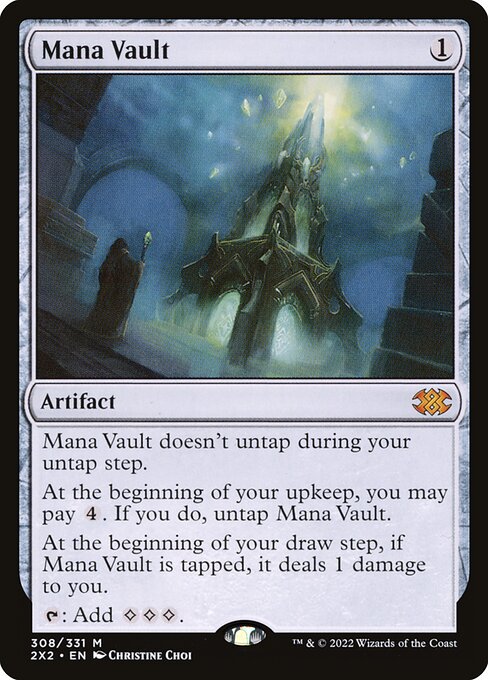
Game Changers are a published list of cards that the Commander format flags as unusually swingy for casual play. The list includes fast mana like Mana Vault and Jeweled Lotus, cheap unconditional tutors like Demonic Tutor and Vampiric Tutor, and format-warping engines like Rhystic Study and Smothering Tithe. The point of the list is not that these cards are banned or unfair. It is that they change what a game looks like enough that other players deserve a heads up.
The count is the only hard number in the whole framework, which is why it goes first. Brackets 1 and 2 expect zero. Bracket 3 allows up to three. Brackets 4 and 5 have no cap at all, because at that level the banned list is the only limit that still applies. Most decks resolve on this step alone. If you are running six Game Changers, you have your answer and you can stop reading.
Game Changer allowance by bracket
| Bracket | Name | Game Changers allowed | What the table expects |
|---|---|---|---|
| 1 | Exhibition | None | Theme first, very low pressure, games run long |
| 2 | Core | None | Commander as it plays out of the box |
| 3 | Upgraded | Up to 3 | A tuned deck with a sharper mana base and stronger staples |
| 4 | Optimized | No limit | Fast, compact, and built to close |
| 5 | cEDH | No limit | Tournament intent against a known metagame |
The trap here is counting from memory. The list is longer than most players think and it gets revised, so a deck that was clean a year ago may not be now. Scanning the list mechanically takes a few seconds with the Game Changers checker, and it is worth doing before you quote a number to a pod.
Step two: check the three pattern rules
Beyond the count, the framework names three specific things a deck should not be doing if it wants to call itself Bracket 1, 2, or 3. Mass land denial is the first: repeatedly destroying everyone's lands, or locking the table out of playing them. Chained extra turns is the second: taking several extra turns in a row as a plan rather than as a one-off. Early two-card infinite combos are the third: a pair of cards that ends the game together and can realistically come down in the first few turns.
Notice that the third one has a timing qualifier. Brackets 2 and 3 are allowed to contain a combo. What they are not allowed to contain is a combo that assembles early and reliably. A deck that can put its two pieces together on turn four with a tutor backing it up is describing a very different game than one where the same two cards happen to show up on turn twelve. The question is never whether the combo exists. It is how soon and how repeatably.
Step three: be honest about speed
This is the step people skip, and it is the one that decides whether your stated bracket survives contact with an actual game. Ask yourself what your deck does on turn six when nothing has gone wrong. If the answer is that you cast your commander and start generating value, you are in Bracket 2 or low Bracket 3 territory. If the answer is that you are protecting a win attempt for next turn, you are playing a Bracket 4 game whether or not the checklist agrees.
Speed comes from three places that are easy to audit. A low average mana value means you deploy your plan sooner. A dense ramp package means you get there even sooner. And a high tutor count means you find the same best cards every game instead of drawing a different deck each time. None of those are capped by any bracket rule, but a deck with all three plays a full bracket above what its card list suggests. If you want the numbers rather than the impression, the deck audit reports curve, ramp, and interaction counts alongside the bracket estimate.
The Bracket 2 and Bracket 3 line, where most decks actually sit
Most upgraded precons and most long-running personal decks land right on this line, which is why it causes the most arguments. The practical difference is not raw strength. It is whether the deck has started buying cards that compress the game. Bracket 2 is Commander as it comes: fair ramp, fair draw, removal, and a plan that takes a while to arrive. Bracket 3 is the same deck after its owner has spent real money and real thought on it.
A decent rule of thumb is the mana base. A Bracket 2 deck runs basics, a Command Tower, and whatever dual lands came in the box. A Bracket 3 deck has been through a round of land upgrades, because that is the first thing people fix once they care about consistency. If your lands look expensive, the rest of the deck usually follows. There is a fuller walkthrough of the specific changes in Bracket 2 vs Bracket 3.
What to say at the table once you know
The bracket is only useful if it makes the pregame conversation shorter. The version that works is three sentences: the number, the one thing your deck does that people should know about, and roughly when it happens. Something like "Bracket 3 Atraxa, it grinds counters and can go infinite around turn nine if nobody interacts" gives everyone enough to decide whether the table matches, without anyone reading your list.
Two habits make that conversation go badly. Quoting a bracket you have not actually checked is the first, because the number will not survive the game. Treating the bracket as a score to win is the second. Nobody is trying to catch you out. Four people are trying to work out whether the next ninety minutes will be worth it. If the table turns out to sit a bracket apart, the fix is usually one or two swaps, not a different deck.
Moving your deck to a different bracket
Going down is easier than most people expect, because bracket pressure is concentrated rather than spread out. Cut the Game Changers first, then the combo, then the fast mana. What you should not do is trim generic good cards, because that lowers your win rate without lowering your bracket. A Bracket 3 deck that has had its three Game Changers removed is a perfectly strong Bracket 2 deck, not a weak one.
Going up runs the same list in reverse: add Game Changers, add fast mana, lower the curve, and add a compact way to finish. Recheck after each batch of swaps so you can stop at the bracket you actually wanted rather than overshooting into a pod that no longer matches. If budget is part of the decision, price the list first, because the cards that raise a bracket are usually the same ones that raise the total.
Get the answer from your actual list
Paste your decklist to count Game Changers, flag mass land denial, extra turns and early combos, and see which cards decided the bracket.
Commander bracket questions
What bracket is an upgraded precon?
Usually Bracket 2 or low Bracket 3. A precon with a tidier mana base and a few stronger staples is still Core. It becomes Upgraded once you add Game Changers, a real fast mana package, or a compact two-card combo.
How many Game Changers can a Bracket 3 deck run?
Up to three. Brackets 1 and 2 expect none, and Brackets 4 and 5 have no cap. Running a fourth does not make the deck illegal, it just means the deck is now describing itself as Bracket 4.
Does Sol Ring count against my bracket?
No. Sol Ring is not a Game Changer and appears in a large share of Commander decks at every bracket. The pressure comes from stacking several premium accelerants together, not from Sol Ring on its own.
Can decks from different brackets play together?
Adjacent brackets usually produce reasonable games. Two or more brackets apart tends to be lopsided in one direction and unfun in both. Most tables aim to stay within one bracket of each other.
Is the bracket an official rule I have to follow?
It is an official framework, but it is a communication tool rather than a deckbuilding restriction. Nothing stops you playing a Bracket 4 deck at a Bracket 2 table except the fact that the other three players will not enjoy it.
Does my commander decide my bracket?
Not directly. The framework looks at deck contents. Some commanders make higher brackets easy to reach because they enable combos or generate huge advantage, but the same commander can head a Bracket 2 or a Bracket 5 deck depending on what sits behind it.