
Bracket 2 is Core. Bracket 3 is Upgraded.
Bracket 2 allows no Game Changers; Bracket 3 allows up to three. The difference also includes the intended pace and how a deck wins. Zero Game Changers does not automatically make a deck Bracket 2, and adding one does not make every other part of a deck suitable for Bracket 3.
Commander Bracket 2 vs Bracket 3: quick comparison
| Feature | Bracket 2: Core | Bracket 3: Upgraded |
|---|---|---|
| Game Changers | 0 | 0 to 3 |
| Game experience | Lower pressure, with visible development | Stronger synergy and larger swing turns |
| Expected time to develop | At least eight turns before a win or loss | At least six turns before a win or loss |
| Two-card infinite combos | No intentional two-card infinites | Late-game lines only; no plan to assemble them early |
| Extra turns and land denial | Few extra turns, no chaining or looping; no mass land denial | Same restrictions |
| What to disclose | Main plan and unusual effects | Game Changers, combo lines, and normal pace |
If the upgrades have made your games much faster, read Commander Bracket 3 vs Bracket 4. It explains the next boundary and shows how to describe a more optimized version of a deck.
Check the deck behind the label
Review Game Changers and bracket pressure alongside the mana, ramp, draw and interaction that make the list work. Inspect the flagged cards before choosing which version to bring.
How many Game Changers in Bracket 3?
Bracket 3 allows zero to three Game Changers. Bracket 2 excludes them, according to the current Wizards Commander guidance, checked October 27, 2026. Scan your list with the Game Changers Checker, then compare the deck's overall plan with the bracket expectations below.
What actually changes between Bracket 2 and Bracket 3?
Start with the Game Changer count, then examine the games the deck is built to produce. An efficient list can be too forceful for a Core table even without any flagged cards. Check the whole list rather than assigning a bracket from the commander, the price, or one impressive turn.
Cards that often appear in bracket conversations

Arcane Signet
Normal fixing and ramp
A normal inclusion in many decks. It smooths mana but usually does not define a bracket by itself.
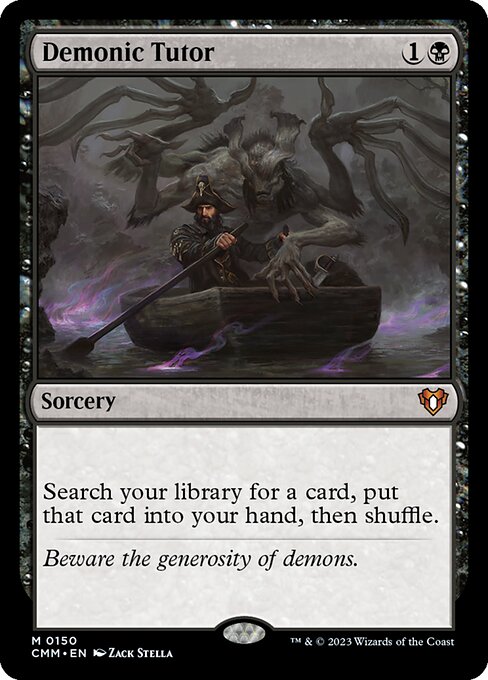
Demonic Tutor
Game Changer consistency card
A major Bracket 3 signal because it turns one slot into the best card for the current game state at only two mana.
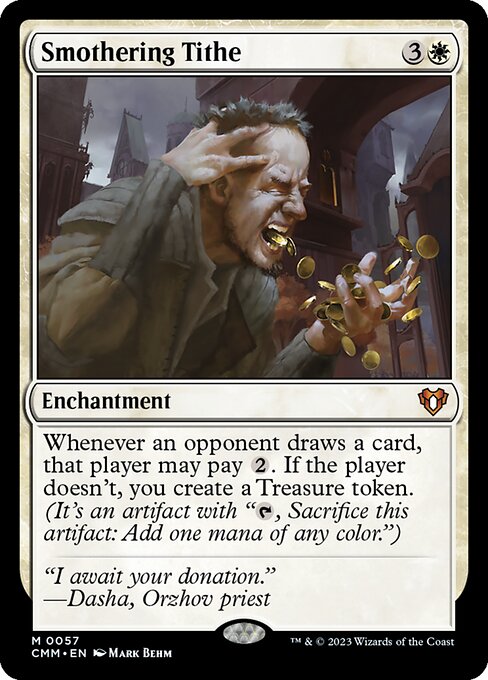
Smothering Tithe
Game Changer mana engine
Creates Treasures from opponents' draws unless they pay. Consider how your deck uses that burst of mana.
Bracket 2 decks: Core Commander with no Game Changers
Bracket 2 is not untouched-precon-only Commander. A Bracket 2 deck can have a real plan, upgraded lands, enough ramp, clean removal, and cards chosen because they support the commander. The official line to watch is that it should avoid Game Changers. That keeps the game closer to a normal social Commander experience where engines develop, threats are visible, and opponents are not expected to answer premium snowball cards immediately.
For a concrete Core example, imagine a Selesnya token deck led by Emmara, Soul of the Accord. Raise the Alarm and Secure the Wastes build its board, Mentor of the Meek provides repeatable draw, and Overrun rewards a developed army. The list has no Game Changers, no intentional two-card infinite, and needs time to establish creatures. These choices illustrate a possible Core plan; the complete list and its usual games decide the fit.
- Keep the deck functional: enough lands, draw, and answers still matter.
- Explain whether the deck needs a board and a turn cycle before it can close.
- Check combo interactions among the whole 99, including your commander.
- Discuss tutors by what they find and how often they find it.
- Do not classify a deck from its budget or from being sold as a precon.
Bracket 3 decks: Upgraded Commander with limited Game Changers
Upgraded gives you room to choose stronger engines while preserving the game you want to play. You do not need to fill all three Game Changer slots. Sometimes an extra draw source or a useful removal spell solves the deck problem better than another expensive staple. Choose upgrades for the work they do.
Think about what happens when an upgrade survives for a turn cycle. Does it let you rebuild after removal, produce a burst of mana, or find your finisher reliably? Those are useful details to tell the pod. A strong card can change the experience more than its mana value or price suggests.
Practical examples: Emmara tokens and Muldrotha value
The cleanest Bracket 2-to-3 move is adding one to three Game Changers that directly support the deck's plan. The important part is role fit. Do not think of this as "replace Arcane Signet with Demonic Tutor." Those cards do different jobs. Think in actual swaps: a slow tutor becomes Demonic Tutor, a six-mana draw spell becomes Rhystic Study, or a fair mana doubler becomes Smothering Tithe.
Keep the same Emmara token plan and replace a slow mana engine with Smothering Tithe. It can help pay for Secure the Wastes and leave mana for protection. If it is the only Game Changer, disclose one, not three. Watch actual games: the upgrade should support the token plan rather than turn the deck into a hidden fast-combo list.
For a second example, take a Sultai Muldrotha, the Gravetide value deck using Sakura-Tribe Elder, Satyr Wayfinder, Eternal Witness, and recurring permanents. A version adding Rhystic Study and Demonic Tutor has two named Game Changers. Say whether the tutor usually finds an answer, a value engine, or a win. These builds can share a commander and many cards while asking different things of opponents.
Compare the list before and after an upgrade
Keep a copy of the original list before making swaps. A new engine can change the deck's pace while the Game Changer total stays the same. The Commander deck analyzer gives you a common set of counts to review for both versions.
- Record the Game Changers and flagged pressure cards in the original list. Read the cards rather than relying on the bracket label.
- After the swaps, check whether you removed lands, early ramp, draw or answers to make room. A stronger individual card can leave a structural gap.
- Compare opening hands and games with the same plan in mind. Tell the table what changed in the deck's usual setup and win attempt, not just the new label.
How to classify your own deck without arguing over labels
Review the whole list with the Commander Bracket Calculator, then inspect the flagged cards and any combo lines yourself. Save the result as a starting point for discussion. A card scanner can miss intent, unusual interactions, and the way a pilot consistently uses tutors.
Play five opening hands and record setup, first credible win attempt, and what has to survive. A hand that produces a large board is different from one that wins immediately. Repeat the exercise after upgrades so you can describe the new deck rather than the slower version you remember. Goldfishing cannot measure opponents' disruption, but it can expose misleading assumptions.
How to move a deck down from Bracket 3 to Bracket 2
To move down, remove Game Changers first. Cut Rhystic Study for a theme draw engine, Smothering Tithe for ordinary ramp, Cyclonic Rift for a normal board wipe or bounce spell, and Demonic Tutor or Vampiric Tutor for slower, narrower, or more flavorful search effects. That is a clearer bracket change than shaving one random strong creature.
After that, reduce consistency and compression. Replace compact finishes with board-based payoffs, add cards that support the theme without always finding the same line, and allow the deck to have normal Commander variance. The goal is not to make the deck bad. The goal is to make its best games less automatic and its average games more interactive for Bracket 2 tables.
How to move a deck up from Bracket 2 to Bracket 3
For Emmara, decide whether mana for token makers is the bottleneck before adding Smothering Tithe. For Muldrotha, decide whether you need more cards or a way to locate a specific answer before choosing Rhystic Study or Demonic Tutor. Test a small batch of changes and keep notes on what they actually accomplish.
Keep the list current
Core is no longer defined by preconstructed products, and tutors have no separate numerical cap. Some tutors are themselves Game Changers. The February check-in also added Farewell and Biorhythm to that list. Recheck cards after updates instead of assuming that a precon or an old saved estimate is still a match.
Check the list you actually play
Paste your deck into the bracket calculator, review the flags, then tell the pod how your deck normally develops and wins.
FAQ
How many Game Changers can Bracket 3 have?
Up to three. Zero is also allowed. Count the actual cards, including a listed commander, then review the rest of the deck's plan.
Does zero Game Changers automatically mean Bracket 2?
No. A deck can still be built for faster, more consistent games. Tell opponents how it wins and what an ordinary opening looks like.
Are all precons Bracket 2?
No. Wizards removed the precon benchmark. Products vary, and later Game Changer updates can affect an unchanged list.
Do tutors automatically move a deck up?
No. Check whether each tutor is a Game Changer, and describe its purpose. There is no separate tutor-count ceiling.
Can these brackets play together?
Sometimes. The February 2026 guidance encourages discussing adjacent brackets. Share the deck's pace and unusual effects before agreeing to the game.
What if my deck is too strong for Bracket 3?
Read the Bracket 3 vs Bracket 4 comparison, then check the full list in the bracket calculator.