
Ms. Bumbleflower wants political generosity, not pure charity
A strong Ms. Bumbleflower commander deck uses group hug effects to create temporary allies, then converts the extra cards and counters into a real win plan. The best upgrades add repeatable value, evasive threats, and selective interaction, while the best budget swaps keep the deck friendly without letting faster decks run away.
Recommended build targets
Core cards for a focused Ms. Bumbleflower shell
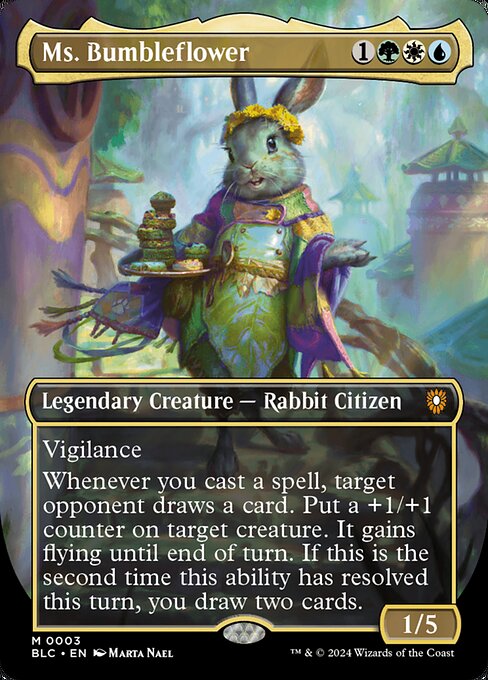
Ms. Bumbleflower
Commander
Turns your spell casting into table politics, counters, and evasive pressure. Build around controlled generosity rather than giving every opponent equal resources.
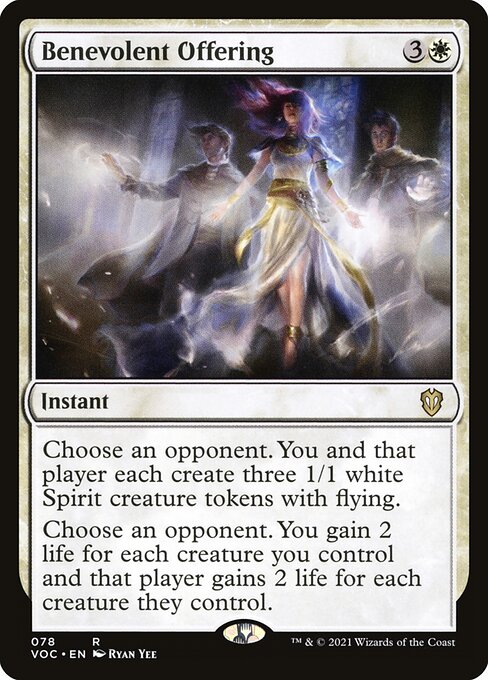
Benevolent Offering
Political payoff
Creates a life buffer and a large board swing while letting you choose which opponent receives the smaller benefit.
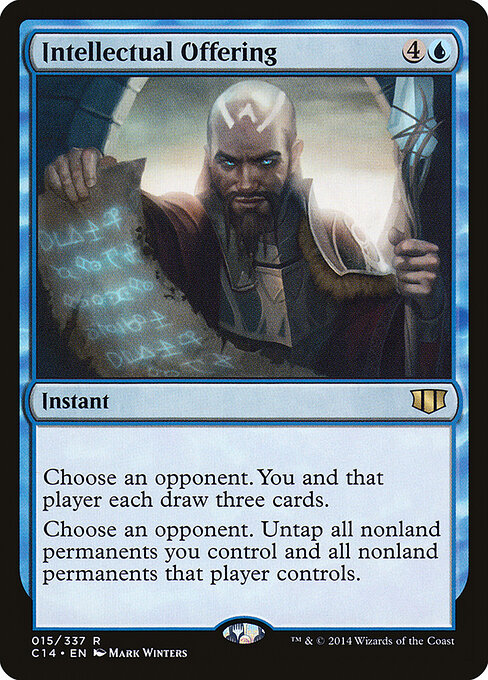
Intellectual Offering
Group draw and untap
Excellent when you can untap mana creatures, utility lands, or blockers while choosing the opponent least able to exploit the cards.
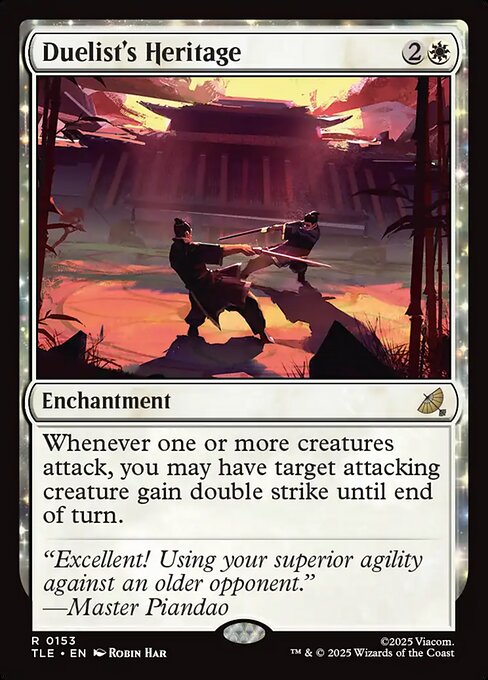
Duelist's Heritage
Political finisher
Gives double strike to your best attacker or encourages opponents to attack each other, making it one of the cleanest upgrades for a friendly combat deck.
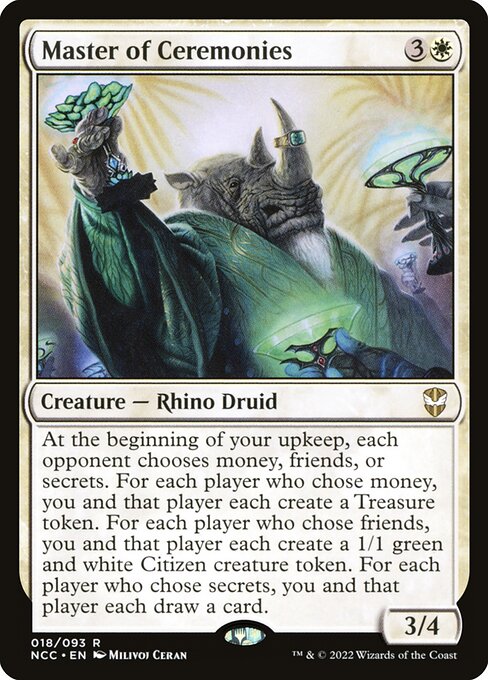
Master of Ceremonies
Negotiation engine
Lets opponents choose gifts, but you receive every chosen mode. It is best when your deck can use cards, Treasures, and creature bodies equally well.
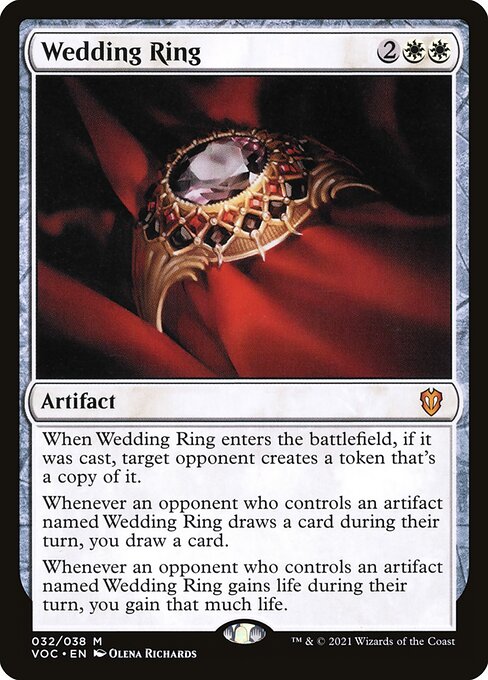
Wedding Ring
Symmetrical draw tool
Pairs best with a slower opponent or the player least likely to combo immediately, turning politics into a repeatable draw source.
What Ms. Bumbleflower is trying to do
Ms. Bumbleflower is not a normal Bant value commander where every card should simply draw more cards and protect a single engine. The commander asks you to cast spells, make deals, grow creatures, and turn a table that is receiving small gifts into a table that still has to answer your board. That means your best deckbuilding question is not “how much can I give away?” It is “which gifts help me survive long enough to win, and which gifts give an opponent the game?”
The most common mistake with Ms. Bumbleflower is building pure group hug. Cards that give every opponent cards, mana, or free attacks can make the game exciting, but they also reduce your agency. If the fastest player receives the same help as the slowest player, you have not made a political choice. You have accelerated the table and hoped your commander keeps up. A better Ms. Bumbleflower commander deck gives one opponent a card when it buys safety, points combat elsewhere when it changes the race, and saves removal for the player who turns donated resources into a win attempt.
In practice, the deck wants three overlapping packages. First, it needs cheap spells so Ms. Bumbleflower can trigger often and your turn does not end after one expensive play. Second, it needs creatures that turn counters and temporary evasion into meaningful damage. Third, it needs enough interaction that your gifts do not become permission for the table to ignore you. If you are importing a precon or first draft, run it through the Commander Deck Audit and check whether your ramp, draw, removal, and finishers are all present before buying upgrades.
Upgrade priority one: make the gifts selective
Selective group hug cards are much stronger than symmetrical ones in Ms. Bumbleflower because they let you choose the player who gets the side benefit. Benevolent Offering is a good example: it can stabilize your life total and create blockers while giving one opponent a smaller version of the effect. That opponent should usually be the player under pressure, not the player already ahead. The card is not just a token spell. It is a way to change combat math and buy an ally for a full turn cycle.
Intellectual Offering is more dangerous but has a higher ceiling. Untapping your own mana and permanents can create a huge swing, especially when you choose an opponent who cannot immediately weaponize the extra cards. If your table has graveyard combo, storm, or fast artifact mana, this kind of effect becomes more risky. In mid-power games, though, it is one of the better ways to make the deck feel political without falling behind.
Master of Ceremonies is the kind of upgrade that looks cute but plays better than expected in a deck that uses multiple resource types. If opponents choose cards, you draw. If they choose Treasures, you ramp. If they choose Citizen tokens, your board grows. The important part is that you are getting the combined result of multiple choices, so the table’s attempt to minimize your benefit often still leaves you with a useful pile of material.
Group hug effects by risk level
| Card | Best use | Risk | Deckbuilding note |
|---|---|---|---|
| Benevolent Offering | Stabilizing combat and making a temporary ally | Low to medium | Best when creature combat matters at your table |
| Intellectual Offering | Refilling and untapping for a swing turn | Medium to high | Avoid feeding the player most likely to combo |
| Master of Ceremonies | Accumulating mixed resources over time | Medium | Stronger when you can use cards, mana, and tokens |
| Wedding Ring | Drawing extra cards through a chosen partner | Medium | Pick the player least likely to convert cards into an immediate win |
Upgrade priority two: turn counters into damage
Ms. Bumbleflower naturally encourages a board where small creatures become real threats. The missing piece is often conversion. A pile of counters is not enough if opponents can chump block forever or race you in the air. That is why Duelist's Heritage is such a strong fit. It works politically when you give another player’s attacker double strike, but it also closes games when your own counter-stacked creature connects.
The best combat upgrades for this commander should do at least two jobs. They should help your creatures push through damage, and they should create incentives for opponents to attack each other. Duelist's Heritage checks both boxes because it can reward an opponent for sending damage away from you. That matters in a group hug deck: if your cards make everyone like you but nobody’s life total changes, the game eventually reaches a point where the strongest engine wins. Combat incentives stop the table from turtling.
Upgrade comparison: political combat over generic anthem effects
Generic creature buffs can make the board bigger, but Ms. Bumbleflower usually wants effects that change attack decisions. This comparison favors cards that help you close without making you the automatic archenemy.
Duelist's Heritage
Premium political combat upgrade
Enables surprise kills with your own attacker while also bargaining with opponents during their combat steps.
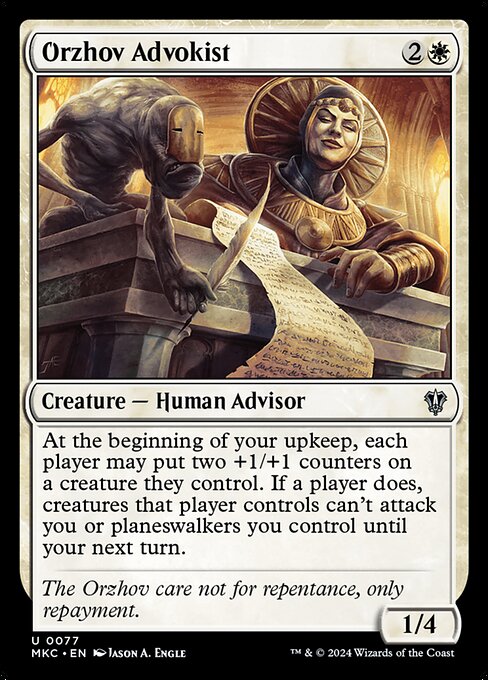
Orzhov Advokist
Budget political deterrent
Hands out counters but discourages those creatures from attacking you, which fits a slower hug plan.
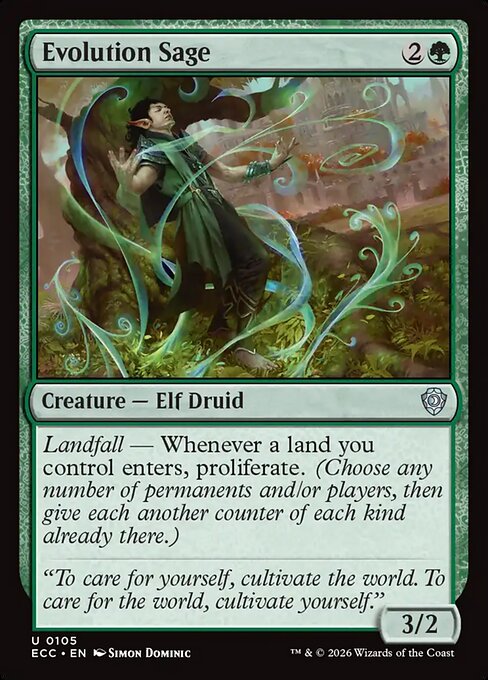
Evolution Sage
Counter scaling engine
Turns land drops into proliferate triggers, making Ms. Bumbleflower's counters matter without giving opponents direct resources.
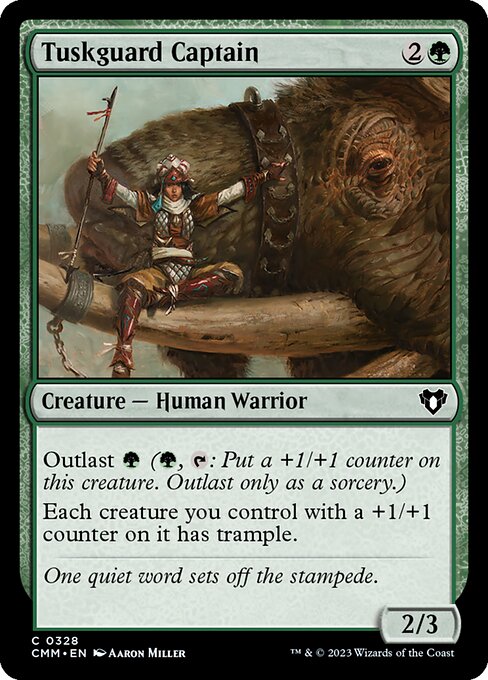
Tuskguard Captain
Budget evasion enabler
Gives trample to creatures with +1/+1 counters, helping the deck convert friendly counter growth into actual damage.
Budget swaps that keep the deck functional
Budget upgrading Ms. Bumbleflower should start with role replacement, not card-for-card imitation. If an expensive card draws cards, ask whether you need raw draw, repeatable draw, or political draw. If an expensive card ends games, ask whether your replacement actually ends games or only makes the board look bigger. The best budget swaps preserve function first and style second.
Orzhov Advokist is a good budget inclusion even though it gives opponents counters. In this specific commander, the restriction matters because it points those larger creatures away from you. That is exactly the difference between good group hug and bad group hug: you are not merely increasing the table’s resources, you are shaping where those resources go. Evolution Sage is a different kind of budget upgrade because it does not negotiate. It quietly scales your counter plan every time you make a land drop, and it becomes much better when your deck already wants to play a normal land count rather than relying only on artifacts.
Tuskguard Captain is not flashy, but it solves a real gameplay problem. Ms. Bumbleflower can make one creature large, then another, then another, but large creatures without evasion still get blanked by spare tokens. Trample changes the clock. In a lower-budget list, that single keyword can be worth more than another expensive value engine because it actually converts your commander’s counters into pressure.
Ramp and mana curve: do not let the friendly deck stumble
A political deck still has to cast spells on curve. Ms. Bumbleflower wants enough cheap action that you can play your commander and follow with two spells in the same turn cycle soon after. If your opening turns are tapped land, tapped land, three-mana rock, you will often start making deals after the most explosive player has already developed. That is why the deck should usually run 10 to 12 ramp pieces and keep its average mana value under control.
The curve question is especially important because group hug cards can disguise clunky deckbuilding. Drawing extra cards does not help if your hand contains too many five-mana plays and not enough early interaction. Use the Commander Mana Curve Calculator to check whether your list can double-spell by the middle turns. A practical target is to have enough one and two mana plays that Ms. Bumbleflower can start generating value immediately rather than waiting until turn six.
Mana and consistency cards to consider

Cultivate
Budget ramp
Fixes Bant colors and guarantees the next land drop, which is useful for a deck that wants stable mana more than explosive speed.
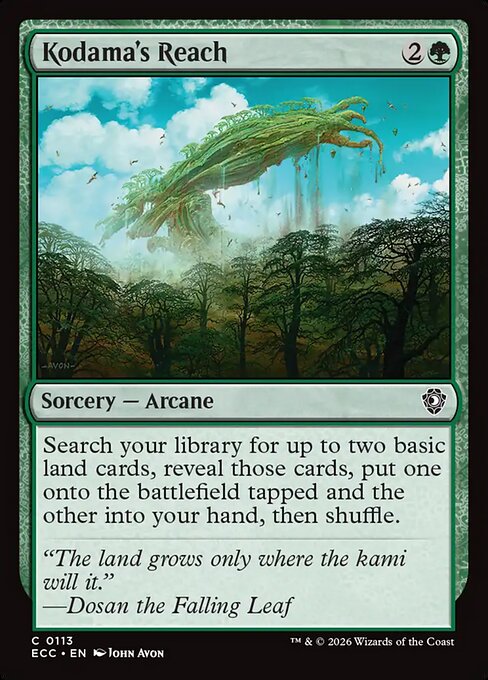
Kodama's Reach
Budget ramp
Functionally similar to Cultivate and a clean inclusion when the deck needs consistent land-based ramp.

Farseek
Efficient fixing
Stronger with dual lands that have basic land types, but still useful in many Bant mana bases.

Nature's Lore
Efficient ramp
Finds a Forest card and can put it in untapped, which helps the deck cast a second spell sooner.
Interaction: stay generous, but not defenseless
Ms. Bumbleflower decks lose when they spend the first half of the game helping everyone and the second half hoping someone else answers the real threat. You need interaction that can handle combo pieces, giant attackers, and value engines. The right number is usually 9 to 11 interactive cards, with a mix of creature removal, artifact or enchantment removal, and at least a few flexible answers.
Swords to Plowshares and Path to Exile remain excellent because one mana matters. Yes, they give the opponent life or a land, but Ms. Bumbleflower already accepts small gifts when they buy time. Generous Gift and Beast Within are on-theme in the best possible way: they give a token, but they answer almost anything. In this commander, that drawback is often politically useful because you can remove a dangerous permanent while framing the replacement token as compensation.
Do not cut too much interaction for more hug effects. A table that receives extra cards will find threats. Your job is to make sure the most dangerous threat does not decide the game before your counter-enhanced board can matter. If you are unsure whether your list has enough answers, paste it into the Commander Interaction Checker and count flexible removal separately from narrow combat tricks.
Interaction that fits Ms. Bumbleflower's politics

Swords to Plowshares
Efficient creature removal
The life gain is usually a small price for answering the creature that would actually end the game.

Path to Exile
Efficient creature removal
Giving a land is real, so save it for commanders, combo creatures, or attackers that threaten lethal pressure.

Generous Gift
Universal answer
Destroys almost any permanent and leaves behind a token that is usually manageable in a deck with blockers and politics.

Beast Within
Universal answer
A green parallel to Generous Gift that handles problem lands, combo pieces, and planeswalkers at instant speed.
Win conditions: friendly decks still need to end games
A good Ms. Bumbleflower game should not end with the table realizing you helped the eventual winner more than yourself. Your list needs 4 to 6 cards that can close, and they should connect to the commander’s actual plan. Combat finishers, counter payoffs, and political attack incentives are more coherent than unrelated combo packages unless your table expects higher power games.
Duelist's Heritage can act as a finisher without looking like one when it enters. Tuskguard Captain can turn a wide counter board into a lethal trample attack. Evolution Sage can push creatures out of normal damage ranges over several turns. These are not all the same power level, but they share an important trait: they reward you for doing the Ms. Bumbleflower thing instead of asking you to abandon it.
If your table uses Commander brackets or pregame power conversations, describe this deck honestly. A low-interaction pure hug list is not automatically low power if it feeds explosive decks. A tuned Ms. Bumbleflower list with efficient removal, strong mana, and several compact finishers may play above the casual impression its theme suggests. Before a game night, the Bracket Calculator can help you frame whether your upgrades push the list toward a more optimized experience.
What to cut first from a precon or casual draft
Start cuts with cards that give resources to every opponent at the same time without protecting you or advancing a win. Symmetrical draw and mana effects can be fun, but they are the easiest way to lose control of the game. Next, cut expensive cards that do not immediately stabilize, draw, remove, or threaten lethal damage. A five-mana spell in this deck needs to matter because you often want to cast more than one spell per turn.
Also watch for cards that only look political. If a card asks opponents to choose but every choice is good for the scariest player, it may not be helping you. By contrast, Wedding Ring is narrow but purposeful because you choose the partner. Master of Ceremonies is risky but flexible because it gives you a combined payout. Benevolent Offering is useful because you choose who receives the bonus. Choice and direction are what separate playable politics from random generosity.
- Cut symmetrical hug cards that accelerate all three opponents equally.
- Trim five mana value cards that do not affect the board immediately.
- Keep enough cheap ramp to cast Ms. Bumbleflower and follow with another spell.
- Protect at least four real win conditions instead of adding endless value pieces.
- Prefer political cards where you choose the beneficiary.
Price your Ms. Bumbleflower upgrades
Before ordering cards, paste your list into Deckcipher and compare upgrade packages against your actual budget.
Sample upgrade plan by budget
For a small budget, focus on role density. Add Cultivate, Kodama's Reach, Tuskguard Captain, Evolution Sage, Generous Gift, and Beast Within if your list is missing cheap structure. This kind of upgrade package improves consistency without changing the deck’s identity. It also avoids the trap of buying one expensive card while leaving the mana curve, removal count, and finishers underbuilt.
For a medium budget, upgrade the political engines. Duelist's Heritage, Master of Ceremonies, Wedding Ring, Benevolent Offering, and Intellectual Offering all make the deck more distinct while still giving you decisions during the game. This is the sweet spot for many Commander tables because the deck becomes more capable without becoming a hard-control shell or a combo deck.
For a higher budget, spend carefully. Better lands and efficient ramp will make every game smoother, but they will not fix a deck with no closing plan. Before replacing your mana base, use the Deck Price Calculator to separate must-have role upgrades from comfort upgrades. If a cheaper card performs the same job at your table, use the Commander Budget Alternatives tool and keep the deck aligned with the experience your group wants.
Budget upgrade roadmap
| Budget level | Buy first | Avoid spending on | Why |
|---|---|---|---|
| Low | Ramp, flexible removal, trample or proliferate payoffs | Luxury lands | The deck needs function before polish |
| Medium | Political engines and combat finishers | Extra symmetrical hug effects | Selective gifts win more games than equal gifts |
| High | Mana base smoothing and premium role upgrades | Unrelated combo packages | Power should support the commander’s plan |
Final deckbuilding checklist
The best Ms. Bumbleflower commander deck guide group hug upgrades and budget swaps all point to the same conclusion: be generous with intent. Your opponents can receive cards, tokens, life, or counters, but those gifts should buy safety, redirect attacks, or set up your own finish. If the table gets stronger and your position does not improve, the card is not political. It is just risky.
Before finalizing the list, count your ramp, interaction, and win conditions. Make sure your curve lets you cast Ms. Bumbleflower and still use your mana efficiently. Then check whether every hug effect has a preferred recipient, a defensive purpose, or a way to help you close. A deck that passes those tests will feel friendly at the table while still giving you enough control to win games.
FAQ
Is Ms. Bumbleflower a true group hug commander?
Yes, but the strongest builds are selective group hug rather than pure group hug. Ms. Bumbleflower rewards generosity, politics, and table deals, but your deck still needs removal, ramp, and win conditions.
How many group hug cards should Ms. Bumbleflower play?
Most lists want roughly 8 to 12 political or group hug effects. More than that can become dangerous if the cards help every opponent equally and do not protect you or advance your win plan.
What are the best budget upgrades for Ms. Bumbleflower?
Good budget upgrades include Cultivate, Kodama's Reach, Evolution Sage, Tuskguard Captain, Generous Gift, and Beast Within. They improve the deck’s ramp, counter scaling, evasion, and interaction without requiring a premium mana base.
How does Ms. Bumbleflower win games?
Most practical builds win through combat. The commander helps grow creatures and create political openings, while cards such as Duelist's Heritage, Tuskguard Captain, and Evolution Sage help convert counters into lethal pressure.
Should I play symmetrical draw effects in Ms. Bumbleflower?
Use them carefully. Symmetrical draw can make the table happy, but it also gives combo and control decks more tools. Effects where you choose the opponent, such as Wedding Ring or Benevolent Offering, usually give you more agency.