
A healthy Commander interaction package is broad, cheap, and relevant before turn six.
For most casual and mid-power Commander decks, start with 8 to 12 spot removal spells, 2 to 4 board wipes, 2 to 5 protection pieces, and 1 to 3 graveyard hate cards. Count those categories separately first, then tune around your commander, colors, pod speed, and win condition.
Baseline interaction targets
Why Commander interaction is different from sixty-card Magic
A Commander interaction guide has to start with the format’s basic pressure: you are answering three opponents, not one. A hand with one Doom Blade-style card can look fine in a duel and still be exposed if the real problem is an enchantment engine, graveyard loop, artifact combo, or spell on the stack.
The goal is not to kill every threat. Good interaction answers the cards that will end the game, snowball too far, or stop your deck from functioning. That means your 99 needs coverage: creature removal, noncreature answers, sweepers, protection, graveyard hate, and, when available, stack interaction.
After reading, paste your deck into the Commander Deck Building Checklist to count categories, then use the Commander Interaction Checker to inspect answer density and mana value. If the deck’s speed does not match your table, check expectations with the Commander Bracket Calculator.
Reference interaction cards used in this guide

Swords to Plowshares
One-mana creature removal
A benchmark because it is cheap, instant speed, and answers almost any creature regardless of size.

Path to Exile
One-mana creature removal
Efficient exile removal with a real ramp drawback, best saved for commanders, combo creatures, and must-answer threats.

Generous Gift
Flexible permanent removal
Answers almost anything at instant speed, which matters when your pod’s threats are not all creatures.

Beast Within
Flexible permanent removal
Green’s clean answer to problematic permanents, including planeswalkers, lands, artifacts, and enchantments.

Chaos Warp
Red catch-all answer
One of red’s most useful ways to interact with enchantments and other permanent types it can struggle to remove.
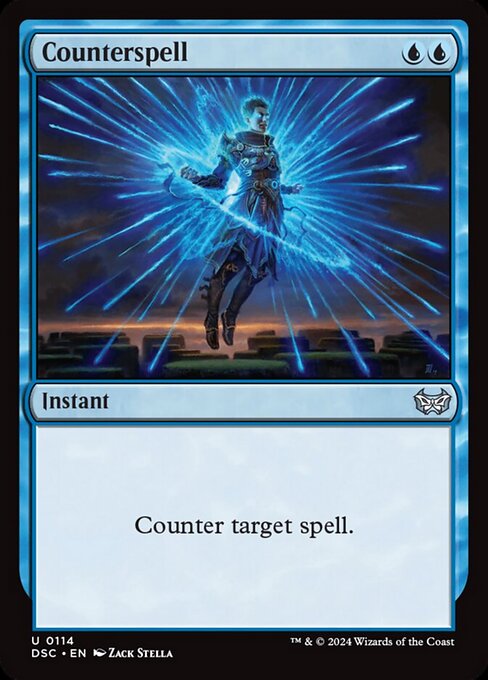
Counterspell
Stack interaction
Clean permission that answers spells before they become hard-to-remove permanents or game-ending effects.
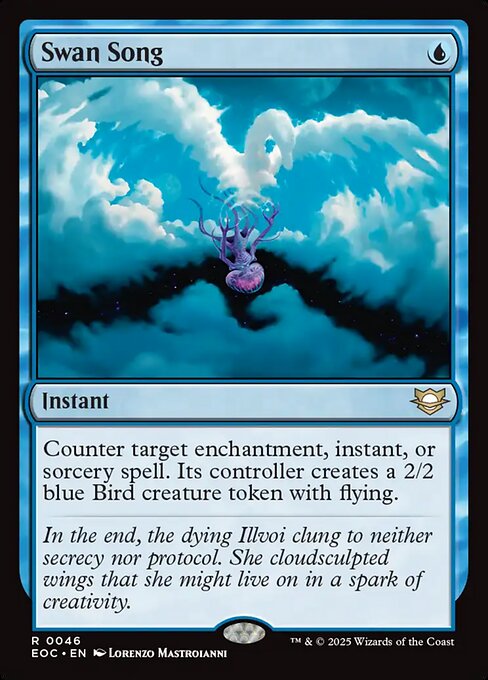
Swan Song
Efficient protection and disruption
Trades one mana for stopping many board wipes, combo pieces, tutors, and protection fights.
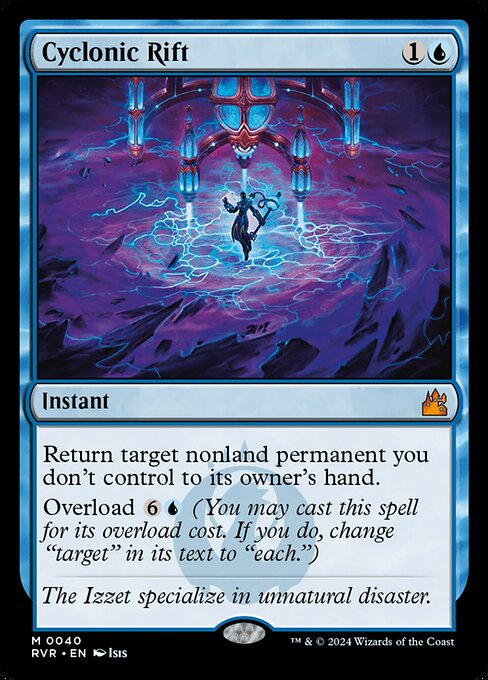
Cyclonic Rift
Asymmetric reset
A powerful tempo reset that is strongest when it converts a crowded board into an immediate winning attack or combo turn.
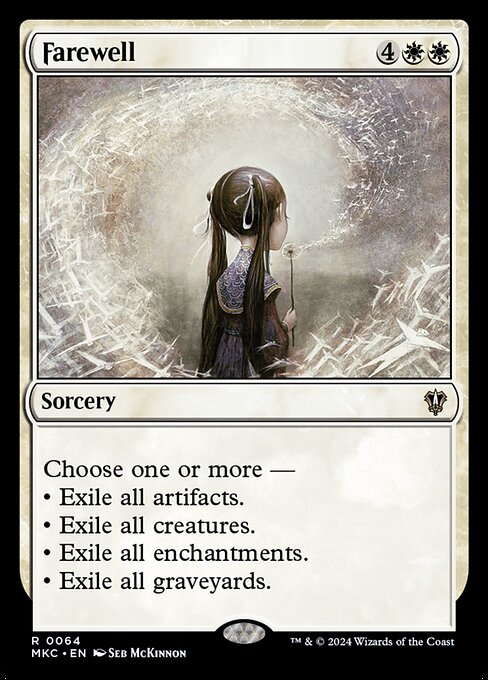
Farewell
Modular exile wipe
Excellent when your table uses graveyards, artifacts, enchantments, and creature boards at the same time.

Blasphemous Act
Creature board wipe
Often costs one mana in creature-heavy pods, making it easy to reset the board and rebuild in the same turn cycle.

Toxic Deluge
Scalable creature wipe
Efficient against indestructible creatures because it gives negative toughness instead of destroying.
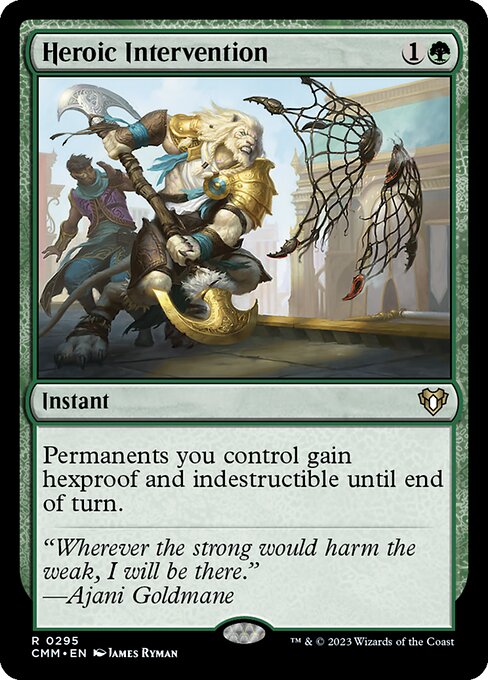
Heroic Intervention
Board protection
Protects a developed board from destroy effects and targeted removal, especially in creature or artifact shells.
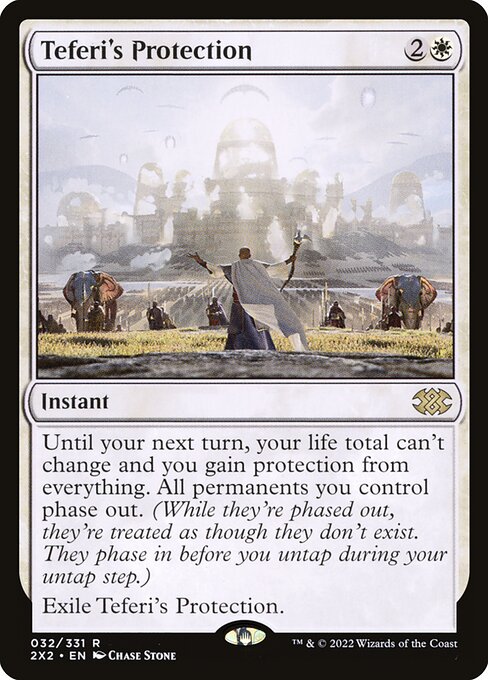
Teferi's Protection
Full-turn protection
Protects life total, permanents, and setup turns, but it is strongest when held for decisive danger rather than minor value.
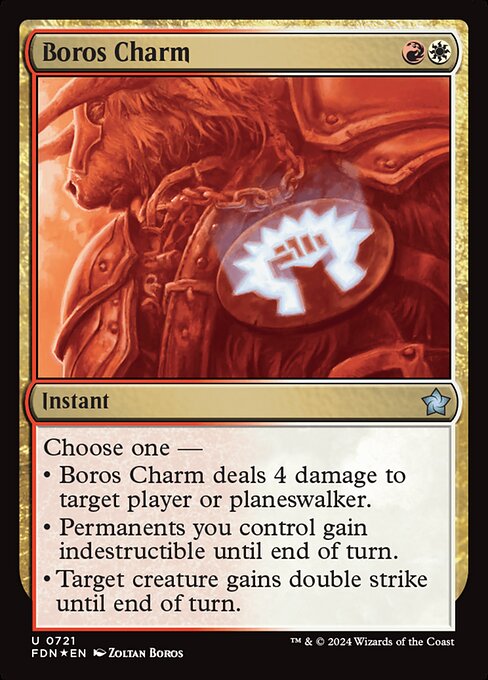
Boros Charm
Flexible protection
The indestructible mode protects permanents, while the damage and double strike modes keep it from being dead in proactive decks.

Swiftfoot Boots
Commander protection
Gives haste and hexproof, which is valuable for commanders that need to attack or tap before opponents untap.

Lightning Greaves
Commander protection
Zero equip cost makes it excellent for tempo, but shroud can interfere with your own auras, equipment, and targeted effects.
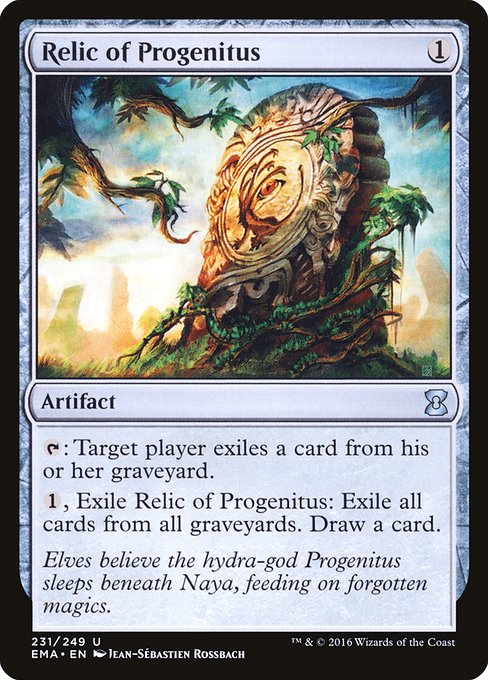
Relic of Progenitus
Graveyard hate
Cheap, colorless, and replaces itself, making it a reasonable inclusion when you need graveyard coverage without dead cards.

Soul-Guide Lantern
Graveyard hate
Targets one graveyard early or exiles all opposing graveyards later while preserving the option to draw a card.

Bojuka Bog
Land-based graveyard hate
Low deck-building cost in black decks, though entering tapped matters for faster or color-hungry lists.
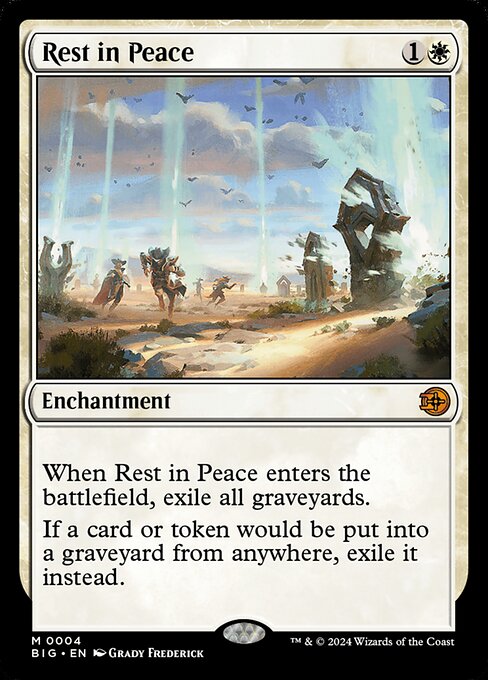
Rest in Peace
Static graveyard hate
Shuts off graveyard strategies continuously, but it also turns off your own graveyard synergies.
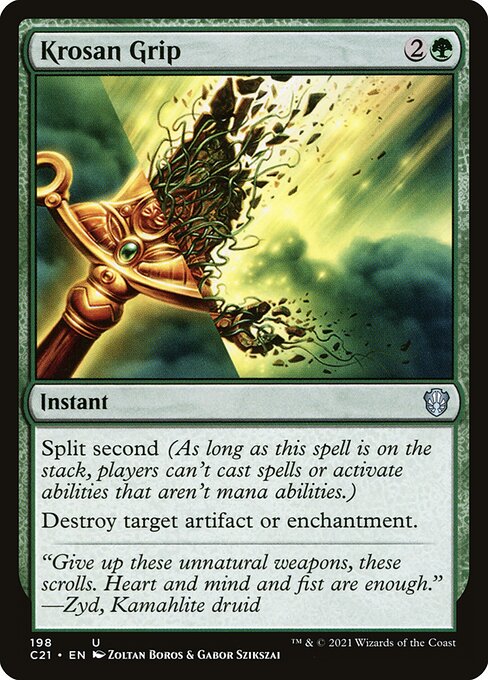
Krosan Grip
Artifact and enchantment answer
Split second makes it reliable against tables that can otherwise protect combo pieces or sacrifice targets in response.

Anguished Unmaking
Flexible exile removal
Exiles most nonland permanents at instant speed, with life loss that is usually acceptable in a forty-life format.
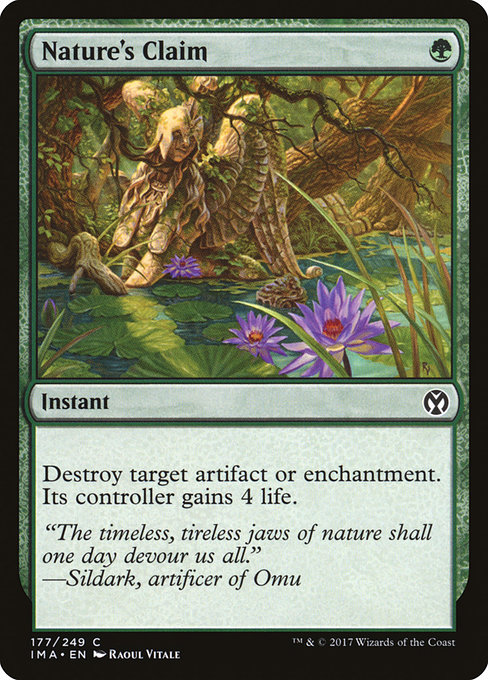
Nature's Claim
Cheap artifact and enchantment removal
One mana is the reason to play it, especially when stopping a fast engine matters more than the four life.
Build spot removal around what actually beats you
Spot removal is any single-target or narrow answer used to stop one problem: creature kill, artifact removal, enchantment removal, bounce, edicts, theft effects, or flexible permanent answers. Countermagic is interaction, but do not count it as creature removal unless your list can reliably hold it up before the creature resolves.
Start around 8 to 12 spot removal pieces, with several at one to three mana. Save Swords to Plowshares and Path to Exile for commanders, combo creatures, or must-answer threats, not every early value creature.
Flexible cards such as Generous Gift, Beast Within, Chaos Warp, and Anguished Unmaking prevent you from losing to a permanent type your deck forgot. Use edicts like Sheoldred's Edict when Voltron or hexproof commanders are common, bounce when resetting tokens or stealing a tempo-positive turn matters, and Nature's Claim when one mana is more important than the four life.
Spot removal mix by deck speed
| Deck profile | Recommended spot removal | What to prioritize | Common mistake |
|---|---|---|---|
| Low-power battlecruiser | 8-10 pieces | Flexible answers and a few cheap creature answers | Playing only expensive removal because the deck expects long games |
| Mid-power value deck | 10-12 pieces | Instant-speed answers at 1-3 mana | Answering value pieces instead of saving removal for engines and win attempts |
| Creature-heavy aggro | 7-10 pieces | Cheap blocker removal plus protection | Cutting too much interaction for more threats |
| Control or spellslinger | 8-12 removal pieces plus counters | Flexible removal, counters, and sweepers counted separately | Blurring all counters and removal into one fuzzy total |
| Graveyard or combo deck | 8-11 pieces | Low-cost protection and disruption | Assuming speed replaces the need to interact |
Board wipes are reset buttons, not excuses to skip early answers
Most Commander decks want 2 to 4 board wipes. Creature decks can lean toward two if they have protection and rebuild engines. Control decks can play four or more if they expect to win after exhausting the table. A wipe does not replace spot removal because it may arrive too late, miss the actual permanent, or punish your own board more than the opponent’s.
Choose wipes for the boards you lose to. Blasphemous Act is for creature swarms, Toxic Deluge beats indestructible, and Farewell answers creatures, artifacts, enchantments, and graveyards. Count Farewell as a board wipe first; it can hate graveyards, but in real games you may need other modes.
Cyclonic Rift is strongest when it enables a winning turn. Asymmetrical wipes and resets are best in decks that break parity: token decks can use one-sided destroy effects, artifact decks can spare artifacts, and blue tempo decks can bounce the table before lethal.
Protection is interaction for your own plan
Protection answers opposing removal by preserving your route to victory, but it should be counted separately from removal and wipes. It matters most for commander-centric, Voltron, combo-creature, and board-based decks. Control decks, graveyard decks, and redundant value decks may prefer recursion, countermagic, or extra threats instead.
Board decks like Heroic Intervention, Teferi's Protection, Boros Charm, Flawless Maneuver, Clever Concealment, Selfless Spirit, or Dauntless Escort. Commander-centric decks prefer Swiftfoot Boots, Lightning Greaves, Mother of Runes, Tamiyo's Safekeeping, and Snakeskin Veil.
Do not use protection emotionally. Saving one medium creature is usually worse than holding the spell for the wipe that would erase your board or for the turn you attempt to win.
Protection choices are not interchangeable
These cards all protect something, but they belong in different shells. Pick the effect that protects your actual plan, not the one with the highest reputation.
Heroic Intervention
Board-wide instant protection
Best when you commit several important permanents and expect destroy effects or targeted removal.
Swiftfoot Boots
Commander-focused equipment
Best when one commander must attack, tap, or survive summoning sickness with haste and hexproof.
Boros Charm
Flexible proactive protection
Best in red-white decks that can use every mode and want to protect permanents without holding up much mana.
Graveyard hate is not optional if your pod uses the graveyard
Most decks should start with 1 to 3 graveyard hate pieces. One-shot hate such as Soul-Guide Lantern, Nihil Spellbomb, Tormod's Crypt, or Bojuka Bog is best held until a player commits a Reanimate, Living Death, Underworld Breach, or recursion trigger. For broader options, use a Scryfall search for cheap graveyard hate.
Static hate such as Rest in Peace, Leyline of the Void, Dauthi Voidwalker, and Grafdigger's Cage changes the table before graveyards become resources. Avoid broad hate in Muldrotha, Karador, Araumi, or aristocrats decks unless you are willing to shut off yourself.
Selective hate is often the best compromise: Lantern, Relic, Cling to Dust, Endurance, Unlicensed Hearse, or Bojuka Bog can stop opponents without blanking your own recursion.
Countermagic and stack interaction fill gaps removal cannot
Blue decks should usually run stack interaction because Counterspell and Swan Song stop tutors, extra turns, board wipes, and combo payoffs before they resolve. Count countermagic separately from permanent removal unless the counter is specifically replacing a removal slot in your audit.
Rule of Law effects are not generic removal, but they are interaction against storm and spell combo. Torpor Orb-style effects attack ETB engines and some aristocrats shells by stopping triggers before they generate value. Use EDHREC prevalence data and Scryfall searches to identify which role your local meta actually needs, not just which staple is most popular.
Tune interaction to your commander, not to a universal template
Packages should reflect how the deck wins. A token deck needs protection because it commits a board. A control deck needs cheap answers and sweepers because it expects to trade resources. A stompy deck needs blocker removal and artifact or enchantment answers because it loses to pillowforts and combo pieces more than to small creatures.
Use this table as a starting point, then adjust for colors, budget, and your pod. The spot removal column is not a total interaction budget; protection, wipes, counters, and graveyard hate are counted on top of it when they are doing different primary jobs.
A quick before-and-after audit: a mid-power creature deck with Beast Within, Generous Gift, Chaos Warp, Swords, Path, Blasphemous Act, Farewell, and no protection or graveyard hate looks interactive but is lopsided: 5 spot removal, 2 wipes, 0 protection, 0 graveyard hate. Add Tamiyo's Safekeeping, Heroic Intervention, Soul-Guide Lantern, Nature's Claim, and Stroke of Midnight, then cut two redundant six-drops and one low-impact threat. The new package has 7 spot removal, 2 wipes, 2 protection pieces, and 1 hate card without changing the deck’s plan.
Match the table problem to the answer
| Pod problem | Best interaction choices | Avoid relying only on |
|---|---|---|
| Graveyard loops | Soul-Guide Lantern, Bojuka Bog, Dauthi Voidwalker, instant-speed exile | Creature removal |
| Artifact combo | Nature's Claim, Abrade, Krosan Grip, counterspells | Slow board wipes |
| Go-wide tokens | Blasphemous Act, Toxic Deluge, bounce resets, Ghostly Prison effects | One-for-one removal |
| Voltron commanders | Exile removal, edicts, bounce before combat | Damage-based removal only |
| Enchantress engines | Generous Gift, Beast Within, Farewell, Aura Shards | Creature wipes |
| ETB or aristocrats engines | Graveyard hate, exile wipes, Torpor Orb-style effects | Destroy effects that trigger death payoffs |
| Storm or spell combo | Countermagic, Rule of Law effects, instant graveyard hate | Sorcery-speed removal |
A practical interaction audit you can run in five minutes
Sort every interactive card by primary job. Modal cards improve flexibility, but do not count the same copy as two guaranteed slots. Farewell is not both your only wipe and your only graveyard hate. A bounce spell can be removal if it breaks tempo or answers tokens, but it is not the same as exile.
- Count 8 to 12 spot removal pieces, including noncreature answers.
- Count 2 to 4 board wipes that solve the boards you actually lose to.
- Count 2 to 5 protection pieces if your commander or board must survive.
- Count 1 to 3 graveyard hate cards, using selective hate if you use your graveyard.
- Count stack interaction separately from permanent removal.
- Check that several answers cost 1 to 3 mana.
- Ask whether you can stop a win attempt on another player’s turn.
The final question is whether your interaction supports your route to winning. A deck that answers everything but never closes will create long games without improving its win rate. A deck that goldfishes beautifully but cannot stop one opposing engine will feel powerful until it sits at a real table.
Audit your interaction package
Paste a decklist to check your removal, wipes, protection, graveyard hate, and interaction density against practical Commander targets.
Common interaction mistakes to avoid
The first mistake is counting only raw quantity. Ten interaction spells can still be wrong if seven kill small creatures and none answer artifacts or enchantments. The second mistake is firing removal at annoying value instead of saving it for a win attempt. The third is holding up countermagic while failing to advance your own plan.
The fourth mistake is using protection to save replaceable creatures instead of the permanent that wins. The fifth is playing graveyard hate that damages your own plan more than the opponent’s. If your categories look correct but games still feel clunky, use the Commander Mana Curve Calculator alongside the checklist.
FAQ
How much interaction should a Commander deck run?
Most Commander decks should start around 8 to 12 spot removal spells, 2 to 4 board wipes, 2 to 5 protection pieces, and 1 to 3 graveyard hate cards. Count stack interaction separately, then evaluate the full package.
Do board wipes count as removal?
They count as interaction, but they should not replace all spot removal. Board wipes reset broad battlefields, while spot removal answers a specific engine, commander, or combo creature before it takes over.
How many graveyard hate cards should I play in Commander?
One to three is a good default. Increase that number if your regular opponents use recursion, reanimation, sacrifice loops, flashback-style value, or graveyard-based commanders.
Is protection better than more threats?
Protection is better when you already have permanents that generate value or win if they survive. More threats are better when your deck often has nothing worth protecting.
Should every blue deck play countermagic?
Most blue decks benefit from some stack interaction, but the amount depends on the deck’s mana use. If you can hold up mana profitably, countermagic is excellent.
What is the biggest sign my deck lacks interaction?
If you often identify the winning threat but cannot answer it before it snowballs, your interaction package is too narrow, too slow, or too small.