
How to upgrade Muldrotha without just buying every graveyard staple
A strong Muldrotha, the Gravetide deck is built around cheap permanents that do something when cast, die, or sacrifice themselves, because Muldrotha lets you replay one permanent of each type from your graveyard each turn. Prioritize self-mill, land and creature ramp, repeatable removal permanents, and a few clear finishers before chasing premium recursion cards.
Practical Muldrotha deck targets
What Muldrotha actually rewards
Muldrotha, the Gravetide is not just a generic value commander. The deck becomes powerful when your graveyard is a second hand and your permanents are chosen to be replayed. On each of your turns, Muldrotha, the Gravetide lets you play up to one permanent card of each permanent type from your graveyard. That means one land, one creature, one artifact, one enchantment, one planeswalker, and one battle if your list uses them. Instants and sorceries do not get the same support, so a normal Sultai control package can look good on paper while underusing the commander.
The most common deck-building mistake is filling the list with individually strong cards that do not change value when they are in the graveyard. In Muldrotha, the Gravetide, a modest self-sacrificing permanent can outperform a flashier one-shot spell because it becomes a repeatable resource. Spore Frog can turn every combat step into a negotiation. Seal of Primordium can make artifact and enchantment decks play cautiously. Sakura-Tribe Elder ramps early, fixes colors, and later becomes a reliable land drop from the graveyard.
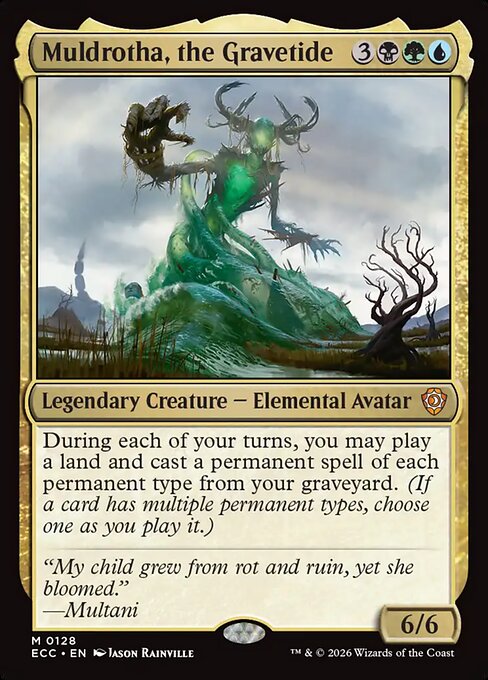
Muldrotha, the Gravetide
Commander and recursion engine
The deck should be built so its graveyard contains useful permanents by the time this six-mana commander resolves.
Core graveyard engine cards to prioritize
Your first upgrades should make the deck function before Muldrotha, the Gravetide enters the battlefield. Self-mill is not optional here. It turns on your commander, finds utility lands, and makes future turns flexible. The best versions are attached to permanents, because a milled permanent is still live later. If your opening turns are only tapped lands and reactive spells, you will often cast Muldrotha into an empty graveyard and pass with no value.
Satyr Wayfinder and Stitcher's Supplier are good examples of budget-friendly engine pieces. Satyr Wayfinder helps hit land drops while putting cards into the graveyard. Stitcher's Supplier is lower impact by itself, but it is excellent when your deck can sacrifice creatures repeatedly. Mesmeric Orb is more explosive and can stock the graveyard quickly, but it also helps opponents and can attract removal. Sidisi, Brood Tyrant is more expensive in mana, but it gives the deck a board presence while milling, which matters in pods where graveyard decks are pressured by combat.
Self-mill and graveyard setup

Satyr Wayfinder
Early self-mill and land selection
A strong budget include because it finds lands while loading permanents for later Muldrotha turns.

Stitcher's Supplier
Cheap graveyard filler
Best when the list has sacrifice outlets or recursion loops that can trigger it more than once.
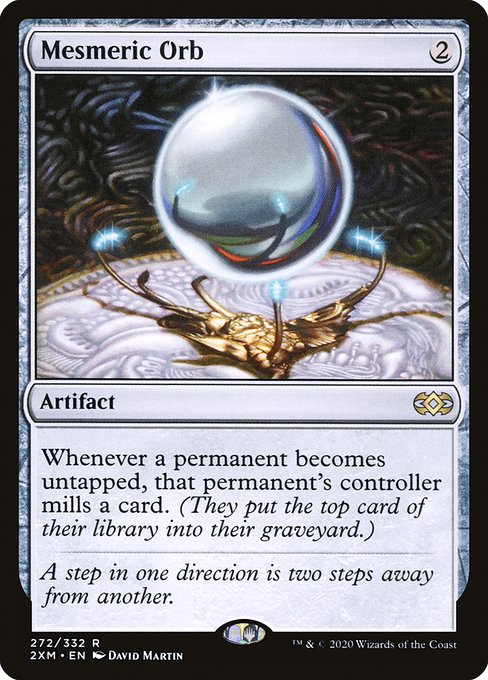
Mesmeric Orb
High-output mill engine
Powerful but symmetrical, so use it when your deck benefits more from graveyards than the table does.
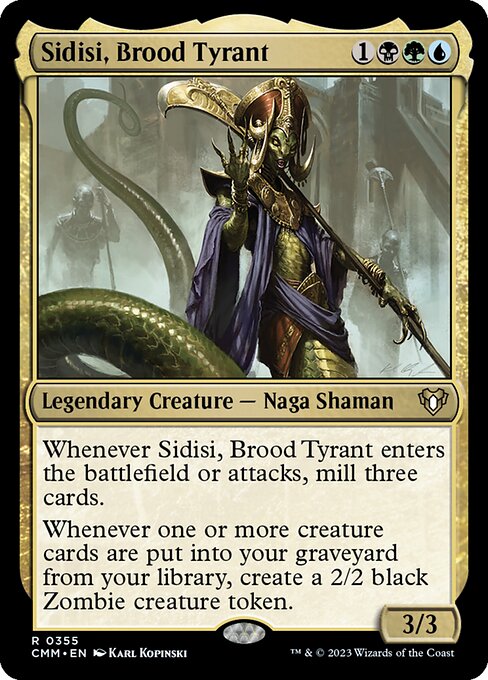
Sidisi, Brood Tyrant
Self-mill payoff
Turns milling into bodies and gives slower Muldrotha builds a way to block and pressure planeswalkers.
Ramp upgrades: land ramp beats fragile rocks more often than it looks
Muldrotha, the Gravetide costs six mana, so the deck cannot keep hands that do nothing until turn four. You want acceleration that fixes colors and remains useful if milled. Land ramp is especially attractive because Muldrotha lets you play lands from the graveyard. Sakura-Tribe Elder is one of the cleanest examples: it blocks, sacrifices itself, finds a basic land, and can be replayed as your creature for the turn later. Wayfarer's Bauble gives non-green-style ramp from an artifact slot and can be replayed after it has been sacrificed.
This does not mean every mana rock is wrong. Sol Ring and Arcane Signet are efficient enough that most casual lists still want them. The issue is the third, fourth, and fifth rock. Commander's Sphere is slower, but it can sacrifice itself for a card and then be replayed from the graveyard as your artifact for the turn. If your build is trying to grind rather than race, that kind of text matters. Use the mana base calculator if your opening hands often have green ramp but no green source, because Muldrotha decks are very sensitive to early color sequencing.
Ramp swap: generic rocks versus recursive ramp
The right answer depends on speed. Faster pods punish three-mana ramp, while slower value pods reward ramp that can be replayed after it sacrifices itself.

Arcane Signet
Efficient color fixing
Still a good include, but it does not become better when it is in your graveyard unless you have artifact recursion available through Muldrotha.

Sakura-Tribe Elder
Recursive creature ramp
Excellent with Muldrotha because it ramps early, sacrifices itself naturally, and can be replayed later.

Wayfarer's Bauble
Recursive artifact ramp
Slower than the best rocks, but it puts lands onto the battlefield and can be used again from the graveyard.
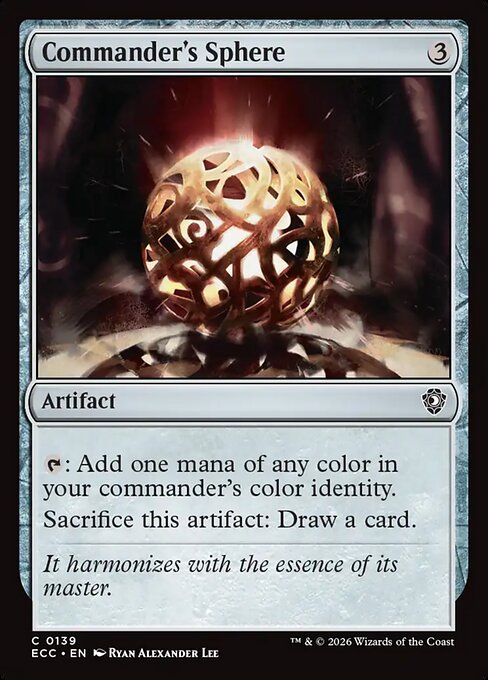
Commander's Sphere
Fixing plus card draw
Playable in grindier lists because sacrificing it for a card leaves it ready to be replayed later.

Sol Ring
Fast mana
Efficient enough to keep in most builds even though it is not specifically a graveyard synergy card.
Removal and protection that get better from the graveyard
Muldrotha decks should not rely entirely on sorcery-speed graveyard value. You still need to survive fast commanders, combo turns, and graveyard hate. The trick is to split your interaction package. Keep some instant-speed answers if your pod demands them, but make room for permanents that answer common board states repeatedly. Seal of Primordium is a clean upgrade over many one-shot artifact and enchantment answers because it sits on the battlefield as a deterrent, sacrifices itself when needed, then returns through Muldrotha, the Gravetide.
Pernicious Deed is a more expensive upgrade, but it is one of the most meaningful cards for this commander because it resets creature tokens, cheap artifacts, and early engines while naturally placing itself into the graveyard. The tradeoff is political and structural: it can slow the whole table down, including your own low-cost permanents. If your list is full of one-mana setup creatures and two-mana artifacts, do not fire it casually. Treat it as a panic button or build your curve so you can recover better than the table.
Protection also matters because six-mana commanders attract removal. Kaya's Ghostform is cheap, permanent-based, and can protect Muldrotha, the Gravetide from many destroy or exile effects that move it from the battlefield. Animate Dead is different: it is not protection, but it gives the deck a low-cost way to bring back a milled or killed creature. Both cards are enchantments, which means they compete for the same Muldrotha replay slot as Seal of Primordium in a given turn. That competition is real and should influence your sequencing.
Recursive answers and protection
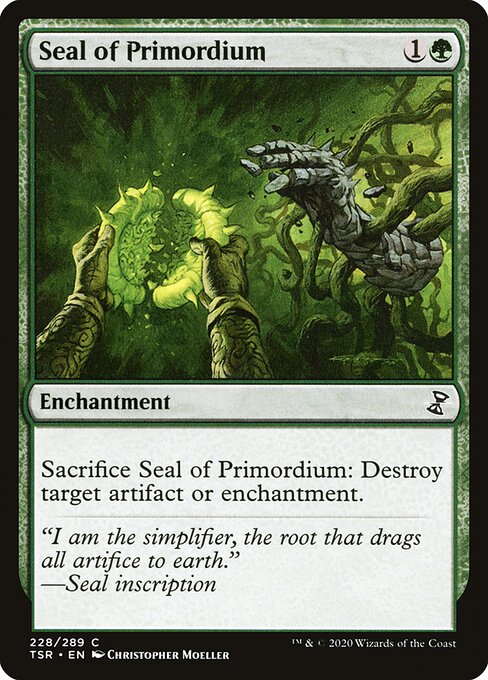
Seal of Primordium
Repeatable artifact and enchantment answer
Excellent in Muldrotha because it sacrifices itself and can be replayed as your enchantment for the turn.
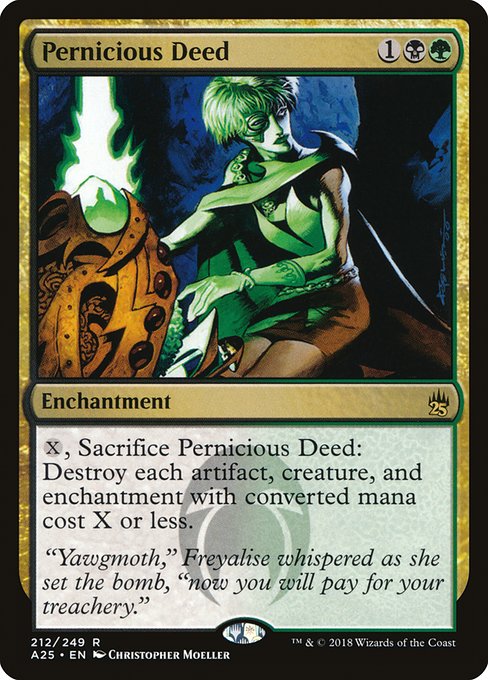
Pernicious Deed
Scalable board control
A premium sweeper for grindy Muldrotha lists that can recover after sacrificing permanents.
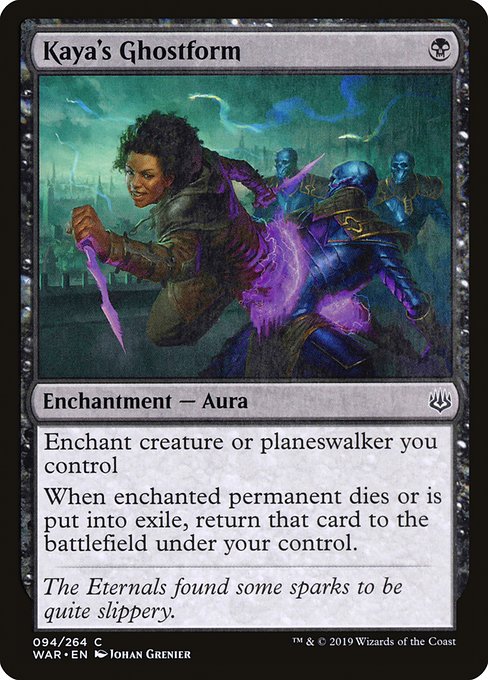
Kaya's Ghostform
Commander protection
Cheap protection that is also a permanent, making it easier to reuse than many spell-based shields.

Animate Dead
Efficient creature recursion
Strong when your graveyard contains high-impact creatures, but it competes with other enchantments for Muldrotha sequencing.
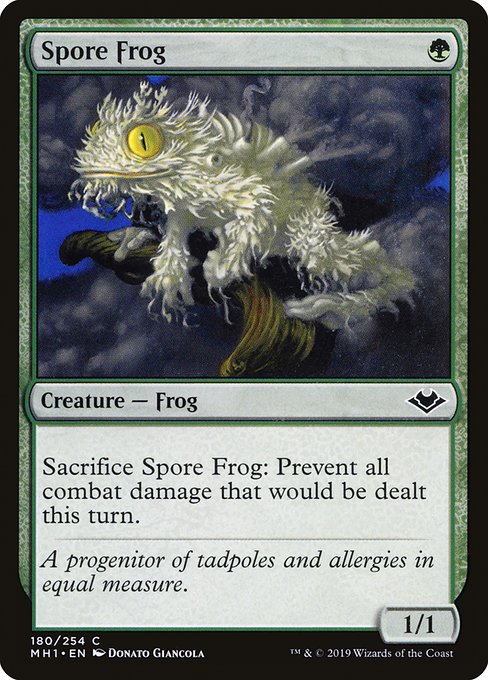
Spore Frog
Combat lock piece
In creature-heavy pods, replaying it each turn can blank attacks and buy time to assemble a win.
Budget swaps that preserve the deck’s plan
Good budget swaps in Muldrotha, the Gravetide are not just cheaper cards with similar words. They preserve the loop pattern: cast or play a permanent, get value, put it into the graveyard, replay it later. If an expensive card is only good because it is efficient, a budget replacement may need to be more synergistic to justify the slot. That is why Wayfarer's Bauble can be more appropriate than another generic rock in a budget list, even if it is not the fastest ramp available.
Use price pressure to decide which upgrades actually change games. Pernicious Deed is a major upgrade if your pod floods the board with low-cost permanents. Mesmeric Orb is a major upgrade if you can protect your graveyard and win from a large graveyard faster than opponents can exploit theirs. If your local games are slower and combat-focused, Spore Frog, Satyr Wayfinder, Sakura-Tribe Elder, Seal of Primordium, and Kaya's Ghostform can raise your deck’s floor for a much smaller spend. You can test those cuts through the Commander budget alternatives tool before ordering cards.
Upgrade priority by problem
| Problem in games | Upgrade direction | Why it matters |
|---|---|---|
| Muldrotha resolves with no graveyard | Add Satyr Wayfinder, Stitcher's Supplier, and Mesmeric Orb style setup | The commander is only threatening when the graveyard already contains useful permanents. |
| You die before turn six | Add Sakura-Tribe Elder, Wayfarer's Bauble, and more early blockers | Six-mana commanders need acceleration and life-total protection before the value engine starts. |
| Artifacts and enchantments take over | Add Seal of Primordium and consider Pernicious Deed | Permanent-based answers become repeatable and force opponents to respect your graveyard. |
| Your commander is removed immediately | Add Kaya's Ghostform and keep mana-efficient recursion like Animate Dead | Protection and reanimation reduce the tempo loss of recasting a six-mana commander. |
| You generate value but cannot win | Add a focused finisher package around Sidisi, Brood Tyrant or land recursion payoffs | Muldrotha can durdle forever unless the list converts recursion into pressure. |
How many recursion pieces are too many?
Because Muldrotha, the Gravetide is already a recursion engine, many lists overfill on redundant recursion and underplay setup, answers, or win conditions. You do not need every card to return something from the graveyard. You need enough cards to put useful things there, enough permanents worth replaying, and enough protection to keep the engine active. Animate Dead earns its slot because it is cheap and can rescue key creatures. Too many expensive recursion cards, however, can clog hands where you have no graveyard yet.
A practical starting point is 8 to 12 self-mill or graveyard setup cards, 10 to 12 ramp cards, 10 to 14 interaction pieces, and only a small number of dedicated reanimation effects beyond the commander. If your deck contains many sacrifice outlets and enter-the-battlefield creatures, you can increase creature density. If your build leans on Seal of Primordium, Pernicious Deed, Kaya's Ghostform, Animate Dead, and similar enchantments, be careful not to create too many turns where your enchantment replay slot is overloaded.
Win conditions: stop looping value and start ending games
Muldrotha, the Gravetide can make a player feel ahead without actually closing the game. Replaying Sakura-Tribe Elder, Seal of Primordium, and Satyr Wayfinder is strong, but it may not kill anyone. Your finishers should match your table speed. In lower-powered pods, Sidisi, Brood Tyrant can create a wide board while you mill naturally. In grindier games, repeated board control from Pernicious Deed plus a protected Muldrotha can let you win through accumulated creature damage and recursion advantage.
Land recursion is another clean way to convert value into inevitability. Ramunap Excavator and World Shaper both support a plan where your self-mill turns into extra land access. Ramunap Excavator is steady and cheap to cast, while World Shaper is slower but can produce a huge recovery turn after it dies. These cards are not automatic in every list. They are strongest when you run enough fetch lands, cycling lands, sacrifice lands, or utility lands to make land replaying more than a normal land drop.
Land recursion and closing tools
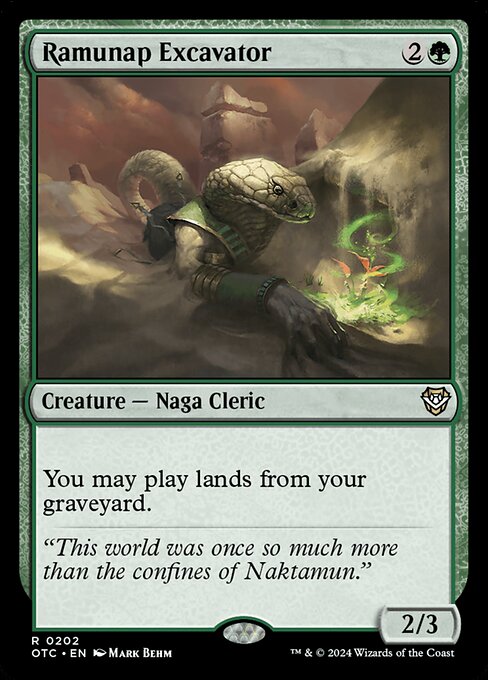
Ramunap Excavator
Land recursion engine
Best when your mana base includes lands that sacrifice, cycle, or otherwise create value from the graveyard.
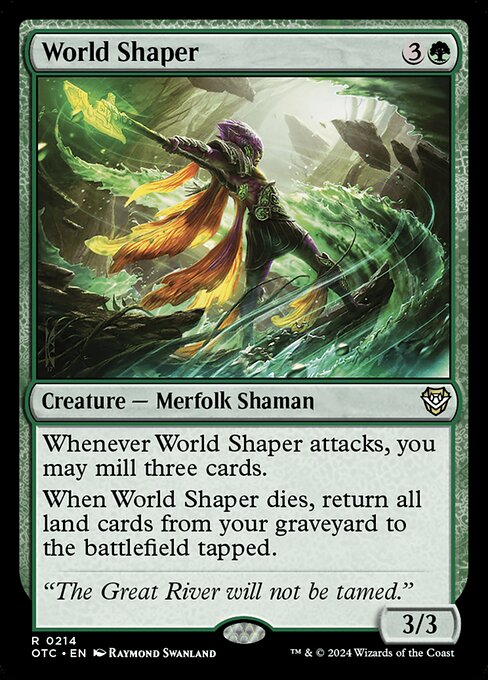
World Shaper
Mass land recovery
A slower but powerful payoff for heavy self-mill lists that can sacrifice or trade it profitably.
A practical upgrade order for a real table
If you are upgrading a preexisting Muldrotha, the Gravetide deck, start with function rather than price. First, count how many cards put permanents into your graveyard before turn six. If the answer is fewer than eight, add Satyr Wayfinder, Stitcher's Supplier, Mesmeric Orb, or similar setup. Second, count ramp that helps cast the commander. If you are below ten ramp pieces, prioritize Sakura-Tribe Elder and Wayfarer's Bauble before adding more expensive value engines.
Third, audit interaction. You want answers that stop opponents now, not just cards that look synergistic in goldfish games. Seal of Primordium, Pernicious Deed, and Spore Frog cover different axes: permanents, boards, and combat. Fourth, add protection. Kaya's Ghostform is a low-cost way to avoid losing a full turn cycle to removal. Finally, add win pressure. Sidisi, Brood Tyrant, Ramunap Excavator, and World Shaper are not interchangeable, but each gives your graveyard plan a route toward ending the game instead of only extending it.
After changes, run the list through a few checks instead of relying on feel. The Commander deck audit is useful for spotting category imbalances, the deck price calculator helps keep upgrades honest, and the Commander mana curve calculator can show whether your six-mana commander is supported by enough early plays. Muldrotha rewards tuning more than raw spending, because the best card is often the one you can replay at the right moment.
Audit your Muldrotha list before buying upgrades
Check ramp, draw, removal, curve, and budget pressure so your next upgrades solve the problems your deck actually has.
FAQ
Is Muldrotha, the Gravetide a good Commander for budget decks?
Yes. Muldrotha, the Gravetide rewards inexpensive permanents that sacrifice themselves or mill cards, so budget cards like Satyr Wayfinder, Sakura-Tribe Elder, Wayfarer's Bauble, Seal of Primordium, Spore Frog, and Kaya's Ghostform can be genuinely strong rather than placeholders.
How much self-mill should a Muldrotha deck play?
A good starting range is 8 to 12 self-mill or graveyard setup cards. Satyr Wayfinder, Stitcher's Supplier, Mesmeric Orb, and Sidisi, Brood Tyrant all support different versions of that plan. Run more if your deck has strong graveyard payoffs, and less if your meta uses heavy graveyard hate.
Should Muldrotha decks play mana rocks or land ramp?
Most lists still play efficient rocks like Sol Ring and Arcane Signet, but land ramp and sacrifice artifacts are especially attractive. Sakura-Tribe Elder and Wayfarer's Bauble are strong because they fix mana, place themselves in the graveyard, and remain useful after Muldrotha, the Gravetide resolves.
Is Pernicious Deed worth it in Muldrotha?
Pernicious Deed is one of the strongest upgrade cards for grindy Muldrotha decks because it is an enchantment that sacrifices itself and can be replayed. It is best in metas with tokens, cheap artifacts, and low-cost engines. It is less necessary if your own deck depends heavily on small permanents staying in play.
How does Muldrotha actually win games?
Muldrotha wins by turning recursion into pressure or inevitability. Sidisi, Brood Tyrant can build a board through self-mill, Ramunap Excavator can turn graveyard lands into repeated resources, World Shaper can create a large recovery turn, and repeatable answers like Seal of Primordium and Pernicious Deed can keep opponents from stabilizing.