

Quick answer
A budget Strefan deck needs early life loss, enough Blood to fund attacks, useful Vampires in hand, and ordinary mana for turns when the commander is answered. Separate the small support creatures from the expensive targets so the deck can develop before its first big attack.
Choose a Blood engine rather than a pile of expensive Vampires
Strefan, Maurer Progenitor gives a red black Vampire deck two connected tools. At your end step, he can create Blood based on players who lost life that turn. When he attacks, he can trade two Blood for a Vampire from your hand entering tapped and attacking with temporary indestructible. Those abilities reward setup before the attack rather than a hand containing only impressive creatures.
The commander does not draw the Vampire for you or make every expensive card castable. You need Blood, an attack Strefan can survive, and a worthwhile Vampire in hand. If one of those inputs is missing, the cheat ability may do little. A budget build should improve those ordinary inputs before spending heavily on the largest available target.
Florian, Voldaren Scion offers a different red black direction. He turns opponents' life loss into selection in your postcombat main phase, with permission to play the chosen exiled card that turn. That plan values reliable life loss and mana left to use the card. It is less about paying Blood for a large creature and more about converting pressure into access. Choose the commander's job before choosing the creature curve.
This Strefan framework keeps the early game useful and uses a limited group of larger Vampires as payoffs. Red black mana can begin with basics and practical fixing rather than a premium land collection. The budget tools help compare candidates by function, but the final total still depends on printing, shipping, region, and cards you own.
Start with creatures that help before the commander
Voldaren Epicure deals one damage to each opponent on entry and creates a Blood token. It contributes a body, a resource, and life loss without requiring a successful combat attack. If Strefan is already present and the opponents lost life that turn, his later end step can notice those players. If the Epicure entered several turns earlier, that old life loss does not count for the current turn.
Bloodtithe Harvester supplies another early body and Blood. Its removal ability taps and sacrifices itself, gives a target creature a negative power and toughness effect based on your Blood count, and can be activated only as a sorcery. You cannot use that ability at instant speed to answer an attacker merely because sacrificing a creature feels like a response action.
The Harvester's actual Blood supply also matters. Spending Blood on filtering or Strefan can reduce the amount available for its calculation. Count resources at the relevant time rather than assigning the card a fixed removal number in every game. A card can provide both development and interaction while still requiring a real choice between those jobs.
Keep enough early creatures and card access that you can make a useful turn without Strefan. A hand with three large Vampires, a pump enchantment, and insufficient mana will not become functional simply because the commander eventually cheats one target. Cheap support does not have to be spectacular. It needs to establish the conditions under which the expensive card becomes a good use of a later attack.
Budget Blood like a resource with several competing uses
A Blood token's own activated ability costs one mana, tapping the token, discarding a card, and sacrificing the token to draw a card. That filters the hand; it does not generate a free extra card without a discard. It can improve a clumsy draw or put a card into the graveyard for a supported plan, but each activation consumes a token you may need for Strefan.
Strefan's attack payment uses two Blood tokens without activating their own filtering abilities. Sacrificing the tokens for that payment does not also draw two cards. One object cannot pay several costs at once. Decide whether the current hand needs filtering more than it needs to preserve the next attack payment. A large Vampire already in hand often makes saving two Blood more valuable.
Anje, Maid of Dishonor supplies Blood from the relevant Vampire entry event only once each turn and offers a separate paid sacrifice ability. That activation can sacrifice another creature or a Blood token to make each opponent lose life while you gain life. Those life loss events can help Strefan's later end step if the commander is present at the relevant time. The activation still costs mana and a resource.
Because these uses compete, a displayed pile of Blood is not a promise of unlimited filtering, removal, and cheated creatures in one turn. Write out the payment sequence before spending. The most useful budget upgrade may be another producer or a draw spell that does not use Blood, rather than a fifth payoff asking for the same two tokens.
| Use for Blood | What you receive | What you give up |
|---|---|---|
| Activate the token itself | A card after discarding | Mana, the discarded card, and the Blood token |
| Pay Strefan's attack ability | Potential Vampire from hand | Two Blood and the need for a useful legal attack |
| Pay Anje's sacrifice ability | Life loss across opponents and life gain | Activation mana and the sacrificed resource |
| Keep Blood for Harvester | Potentially larger toughness reduction | Other uses of those tokens before the relevant calculation |
| Hold two for next turn | An available future Strefan payment | Immediate filtering or other conversion now |
Read Strefan timing before counting the payoff
At the beginning of your end step, Strefan counts players who lost life during that turn. The amount each lost is not the number of Blood he creates. One player losing ten life is still one qualifying player. You can qualify as well if you lost life that turn. Damage, life payment, and explicit life loss can all lower life, but the event must belong to the current turn.
The attack ability triggers when Strefan is declared as an attacker. Opponents can respond to that trigger before it resolves. If you pay two Blood as it resolves and put a Vampire in, that creature enters attacking rather than being declared as an attacker. Its enters ability can trigger, but an ability that requires that creature to attack does not trigger merely from entering attacking.
Temporary indestructible on the new Vampire helps against destruction and lethal damage for the duration, but does not make it unblockable or immune to exile and sacrifice. The creature can still be blocked legally. If it lacks trample, killing a blocker does not automatically send its damage to the defending player. Count the actual connection before evaluating life gain or combat damage triggers.
The Vampire comes from hand, so drawing or retaining a worthwhile target matters. A large creature already discarded to Blood is no longer available for this particular instruction. A graveyard recursion package can make discarding useful, but Strefan himself does not turn his attack into general reanimation. The indestructible guide helps define the protection the attack actually provides.
Pick larger Vampires for useful immediate contributions
Patron of the Vein provides an enters ability that destroys a target creature an opponent controls and a separate death related exile and counter ability. It can contribute before combat damage when brought in through Strefan. The destruction still needs a legal target and can fail against indestructible or other relevant defenses. Its future counters reward opposing deaths, not every event that removes a creature from the battlefield.
Champion of Dusk draws and loses life based on the number of Vampires you control when its entry ability resolves. A developed board can make it a substantial refill. The life loss is real, so do not treat the draw as a free reward at a dangerously low life total. A board wipe before you rebuild can also leave the Champion drawing much less than an idealized wide board example.
Sanctum Seeker rewards your Vampires attacking by making each opponent lose life while you gain life. The attack event matters. A Seeker entering attacking through Strefan does not retroactively create triggers for creatures already declared as attackers. If it is already on the battlefield before a later attack declaration, the wide creature plan can use it far more effectively.
Choose a manageable group of targets that provide cards, interaction, or a real route to closing. Filling the deck with expensive flyers that only add power can make hands slow and leave you with no answer when Strefan is removed. A useful enters effect often gives a target a practical floor, but compare the actual mana cost you may need to pay when the cheat route is unavailable.
Counters and lords support a different wide board axis
Stromkirk Captain improves your other Vampire creatures and gives those other creatures first strike. The Captain has first strike itself but does not receive its own other creatures bonus. That can make attacks and blocks more favorable for an established Vampire board. It does not solve an empty hand, create bodies, or grant haste to a new creature.
Cordial Vampire places counters on your Vampires when it or another creature dies. Opposing creature deaths can therefore help, not just your own sacrifices. The trigger still needs to resolve before the counters improve combat. A body that already died to first strike damage is not waiting for a later counter trigger to save it. This rewards timing and controlled sacrifices rather than assuming every combat produces a free rescue.
Indulgent Aristocrat has a paid sacrifice ability placing counters on your Vampires. That gives you a way to convert expendable creatures into growth, but it is not a free outlet. Mana spent on that activation is no longer available for Blood filtering, interaction, or a larger spell. Compare whether the counters change a meaningful block or clock before activating just because you have a spare creature.
A wide counter plan and a Strefan big creature plan can overlap, but too many support cards can pull the deck apart. If the early creatures are all replaced by expensive targets, team bonuses have few recipients. If all the large targets are cut, Strefan's attack ability may have little to put in. Preserve the intended balance and review which stage actually fails in games.
Vampire roles to price before premium threats
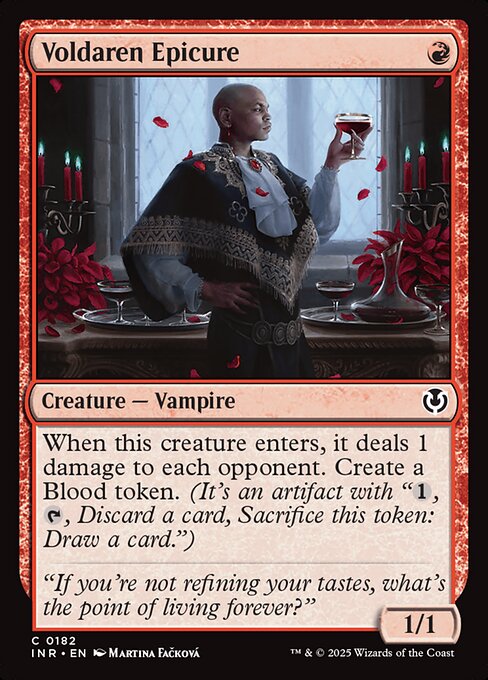
Voldaren Epicure
Early setup
Supplies current turn life loss and Blood without relying on combat damage.
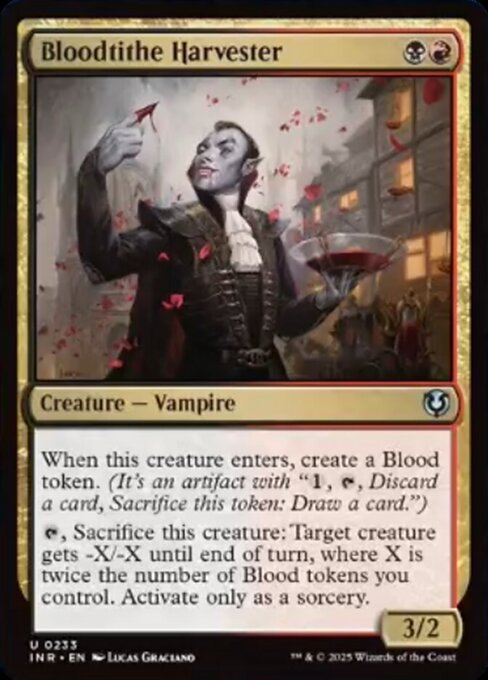
Bloodtithe Harvester
Development and removal
Its sorcery speed sacrifice ability competes for the Blood supply.
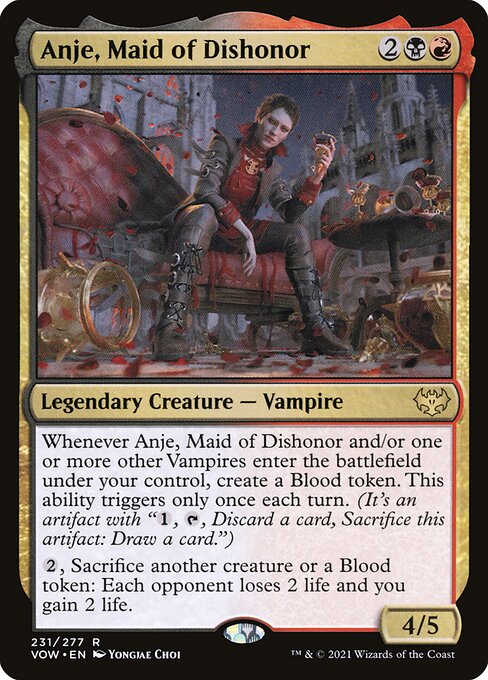
Anje, Maid of Dishonor
Resource bridge
Entry based Blood and paid table life loss link several parts of the plan.

Champion of Dusk
Refill target
Needs a worthwhile Vampire count and enough life to survive the draw trigger.
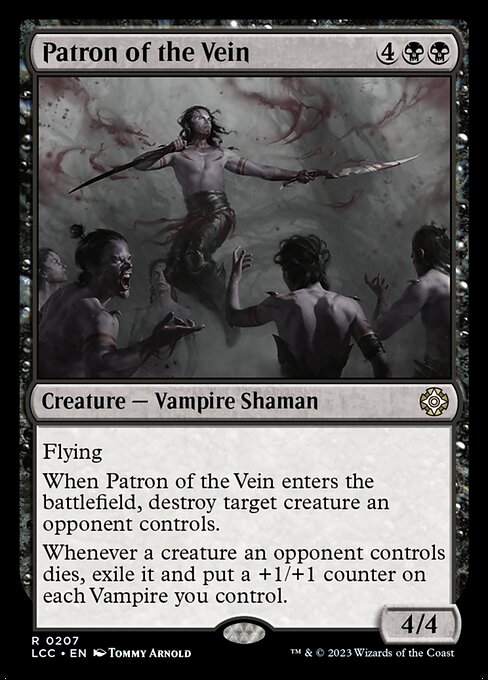
Patron of the Vein
Interaction target
Provides immediate targeted removal and later counters from opposing deaths.
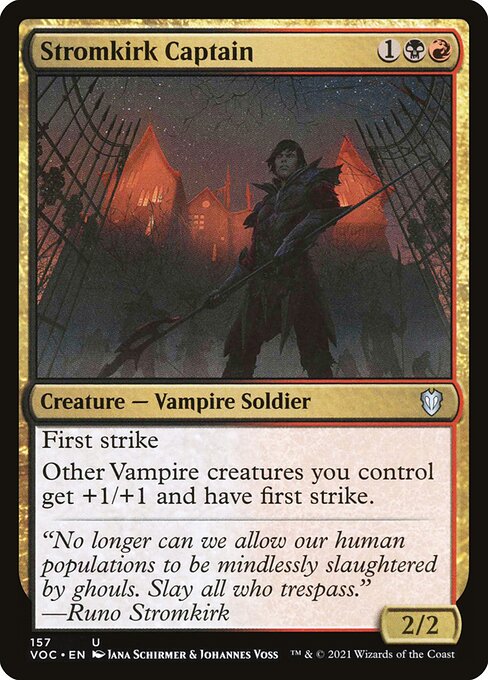
Stromkirk Captain
Wide combat support
Supports other Vampires rather than replacing the need for bodies or cards.
A sample start that does not invent free resources
With a usable red source, Voldaren Epicure can be a first turn play that leaves one Blood. On turn two, a suitable second land can cast Bloodtithe Harvester and create a second Blood. The hand now has two tokens available for a later Strefan attack. It has not already triggered Strefan's end step ability if the commander was not on the battlefield.
Use the next turns to make land drops, develop mana or cards, and cast Strefan when the colors work. Without haste, he normally waits for a later turn to attack. Saving the two Blood preserves the first attack option. Filtering one away may improve the hand, but then you need another source before paying two. These are real choices rather than two benefits from the same tokens.
On the later attack, choose whether the Vampire in hand is useful against the actual board. A Patron can remove a legal blocker or engine creature through its entry trigger. A Champion can refill based on your current count. A creature whose value depends on being declared as an attacker may provide less immediate value. Preserve interaction if the opponent is representing an answer that temporary indestructible does not stop.
Now test the same opening with Strefan removed before his first attack. You should still have early bodies, lands, and some card access. If the hand contains only uncastable six and seven mana creatures afterward, lower the top end or improve mana rather than assuming every game permits the cheat engine to operate. Budget reliability comes from ordinary recovery turns as well as dramatic attacks.
Keep interaction and spending priorities honest
Red black gives the deck access to creature removal, artifact answers, and graveyard interaction outside the Vampire creature type. Keep a spread of those functions rather than trying to solve every problem with combat. A resolved noncreature engine may ignore your flying blockers and life gain. Use the interaction checker to identify coverage gaps before buying another expensive Vampire.
Village Rites trades a creature as an additional casting cost for two cards. It can convert a body that was about to be lost into resources when you have a legal opportunity, but the sacrifice is paid before opponents respond to the spell. If the draw spell is countered, the creature does not return as a refund. It also reduces the Vampire count for later payoffs, which may matter in a tightly sequenced turn.
For budget swaps, preserve the job rather than the creature's size. A cheaper Vampire with useful entry value can replace a more expensive threat while losing a particular combat ability. An ordinary draw spell can replace a premium engine while giving up repeatability. A basic land can reduce a shopping total while losing a utility effect. Each tradeoff should be stated and tested with the actual commander colors.
Build your deck and create a free account to save the first version. Price actual printings and shipping, then note whether your next improvement needs Blood production, draw, mana, or a better target. The deck building checklist helps keep those ordinary roles visible beside the creature theme. A budget Vampire deck works best when the early turns fund a clear later attack rather than merely waiting for one.
Budget Vampires questions
Build your deck
Put these choices into a Commander list. Create a free account to save your deck and keep tuning it with Deckcipher.
FAQ
Does Strefan make Blood equal to damage dealt?
No. He creates Blood for each player who lost life during the current turn. A player losing one or ten life is one qualifying player. Earlier turns do not count, and Strefan needs the relevant end step trigger rather than retroactively rewarding life lost before that turn.
Can the Vampire Strefan puts in trigger its attack ability?
Entering attacking is not being declared as an attacker. Its own attacks trigger does not automatically trigger from that entry. Enters abilities and later combat damage abilities can still matter under their actual conditions. Choose targets for the events Strefan supplies.
Do sacrificed Blood tokens also draw cards?
Only if you actually activate and resolve their own filtering abilities, including the mana and discard costs. Sacrificing two Blood to Strefan or one to Anje does not also activate the tokens. One token cannot pay several different costs at the same time.
Is Bloodtithe Harvester instant speed removal?
Its printed activation is limited to sorcery timing and uses a tap and sacrifice cost. That makes it useful interaction with specific timing, not a response to any attacker. The number of Blood tokens also affects the size of its effect.
Should every Vampire be expensive for Strefan?
No. Early bodies and resource cards establish Blood, life loss, and a usable hand. Too many expensive targets make the deck fragile when the commander is removed. Keep a limited payoff group that contributes cards, interaction, or a meaningful finish.
Can the deck meet a fixed price in every market?
No. Printings, condition, shipping, region, and owned cards change the total. Build and price the actual list, then replace an expensive role with a tested alternative. The cheapest individual threat is not always the best purchase if the deck is missing draw or mana.