
Quick answer
A budget Sai deck can turn useful artifact spells into flying creatures, then use those artifacts for draw, recursion, and a combat finish. The strongest starting point is a coherent low curve with real interaction. Cheap artifacts that accomplish nothing alone, expensive payoffs without setup, and unsupported combo pieces all weaken that plan.
Choose what the artifacts are supposed to accomplish
Artifact decks can attack, recur permanents, assemble combos, or build a large mana engine. Sharing a card type does not make those plans interchangeable. A deck containing several pieces of each may spend its first turns producing small resources and still have no clear way to convert them into a meaningful advantage.
Sai, Master Thopterist provides a focused mono blue starting point. Casting an artifact spell creates a triggered ability that makes a flying Thopter artifact creature token. A useful artifact can therefore develop the deck while also building a board. Sai's activated ability offers another resource exchange: pay one generic and one blue mana, sacrifice two artifacts, and draw a card. Both the mana and the artifacts are real costs.
For a budget combat build, use that structure deliberately. The early artifacts should provide mana, cards, or another needed function. The resulting Thopters can defend and eventually attack, while a small number of payoffs turn their count into a finish. Drawing additional artifacts matters because the commander does not put new spells into the hand simply by making tokens.
Mono blue also lets a basic Island mana base do substantial work. It does not remove the need for enough lands, particularly when the finishers cost six mana. A list with several two mana cost reducers can still miss its third land. Separate permanent mana sources, temporary savings, card access, and finishing effects when deciding whether the deck can actually execute the proposed curve.
Favor early artifacts that do a useful second job
Ichor Wellspring draws a card when it enters and when it is put into a graveyard from the battlefield. Casting it with Sai present can produce a Thopter from the cast trigger before the Wellspring spell resolves. Its entry then supplies the card. Those are different events from different abilities, and countering the Wellspring spell does not automatically counter Sai's already triggered ability.
That structure makes Wellspring more useful than an arbitrary low cost artifact included only to increase a count. It replaces itself after a successful entry and can provide another card if a later sacrifice puts it into the graveyard. The deck still needs a way to use that second trigger. Merely having Sai available does not turn every artifact into a free sacrifice because his draw activation also requires a second artifact and mana.
Do not fill the deck with narrow zero mana objects solely to produce Thopters. They can make a turn look busy, but a hand of weak artifacts may leave the deck without interaction or recovery. Ask what each card does when drawn after a sweeper or when the commander costs too much to recast. A small amount of setup that cannot function independently may be acceptable; an entire hand of it is a different risk.
Cheap mana artifacts can support later plays, yet every mana rock should be judged against the turn it helps. A rock that arrives after you already have enough mana is not an answer to running out of cards. Use the mana base calculator to examine the land plan, then review nonland mana separately instead of assuming any artifact count automatically supplies reliable mana.
Cost reduction and affinity reward different board states
Etherium Sculptor and Foundry Inspector each reduce the generic portion of artifact spells you cast by one. They do not produce mana, and they do not reduce a colored requirement. The Sculptor also requires blue to cast, while the Inspector costs three generic mana. Choosing between them can depend on when the deck wants the reducer and how vulnerable that creature will be in the current game.
Multiple applicable reductions can combine, but a card that still costs blue needs that blue paid. For example, reducing a two generic artifact spell by one leaves one generic to pay. Reducing a spell whose only remaining requirement is blue does not remove that requirement. Cost increases and other alternate or additional costs can also change the final payment, so count the actual spell rather than the mana value printed in the corner alone.
Thoughtcast uses affinity for artifacts, reducing its generic cost by the number of artifacts you control. Thopter tokens count as artifacts, including tokens that have just entered. With four artifacts and no other cost changes, its four generic mana can be covered by affinity, leaving one blue. It still draws two cards, and it is a sorcery rather than an artifact spell, so casting it does not itself trigger Sai.
Thought Monitor combines affinity with an artifact creature and an entry draw of two cards. Its starting cost contains six generic and one blue, so six artifacts can leave the blue payment. Casting it can trigger Sai. That new Thopter arrives after the spell has already been cast and paid for, so it does not retroactively reduce that particular Monitor's cost. Count the artifacts you control while determining the cost.
| Part of the plan | Example | Important limit |
|---|---|---|
| Cast based production | Sai, Master Thopterist | Artifact tokens are not artifact spells being cast |
| Generic reduction | Etherium Sculptor | Savings do not produce mana or remove blue requirements |
| Affinity draw | Thoughtcast | Artifact count matters, but the spell itself does not trigger Sai |
| Entry and death value | Ichor Wellspring | The later card needs an actual battlefield to graveyard move |
| Graveyard recovery | Myr Retriever | Returns another artifact card to hand, which still needs casting |
| Combat conversion | Cyberdrive Awakener | Newly controlled artifacts do not acquire haste from becoming creatures |
Spend tokens on cards with a clear purpose
Sai's draw ability is useful when the battlefield contains artifacts you can afford to give up. Two Thopters can become one card for two mana. That exchange reduces blockers and future combat damage, so it is not automatically correct at the end of every turn. Keep the tokens if they are the defense against an attack or the material for a likely finishing turn.
Sacrificing Wellspring and a Thopter to Sai is a more productive exchange when the other costs are manageable. Wellspring's graveyard trigger goes onto the stack above the activated ability after the activation process is complete. Its trigger can draw one card, and Sai's ability can draw another if it resolves. Opponents cannot remove those sacrificed artifacts in response to prevent the already paid sacrifice costs.
Shimmer Dragon provides a different draw engine by tapping two untapped artifacts you control. The activation has no tap symbol on the Dragon itself. Newly controlled artifact creatures can be tapped to pay that particular cost even though summoning sickness would restrict their own tap symbol abilities or attacking. The two artifacts become tapped and cannot be reused for another such payment without being untapped.
This distinction creates choices during an opponent's turn. Holding untapped Thopters as blockers can be better than drawing immediately. Tapping a mana artifact for the Dragon means it is unavailable to produce mana with a tap ability until untapped. The Dragon has hexproof while you control at least four artifacts, but losing enough artifacts removes that protection. It also does not protect the rest of the board from a sweeper.
Use recursion without pretending the pieces are a loop
Myr Retriever returns another target artifact card from your graveyard to your hand when it dies. Junk Diver has a similar death trigger and flying. Another means the creature cannot target its own card with that trigger. The selected target must also remain legal when the ability resolves. An opponent removing that graveyard card can prevent the return even after the creature has already died.
Both creatures can help rebuild after removal or recover an artifact sacrificed for value. Their triggers return cards to hand rather than directly to the battlefield. Casting a recovered card requires the usual legal timing and costs. With Sai present, casting that artifact can create another Thopter, but the commander does not waive those costs or change a sorcery speed artifact into an instant.
Putting Retriever and Diver in the same deck does not by itself create an infinite sequence. A repeatable line would need the relevant sacrifice access, a way to pay any recasting costs, and a worthwhile result. A budget combat list can use the creatures for ordinary recovery without buying the rest of a combo. Do not keep otherwise weak cards solely because two pieces might someday be connected by an unspecified engine.
Graveyard interaction is therefore worth tracking before committing an important sacrifice. If a recovered artifact is the only way to rebuild, an opponent's open graveyard answer can matter. Sometimes drawing with Sai and preserving the recursion creature is the safer order. The best choice depends on which resources are actually replaceable, rather than a rule that every available sacrifice ability should be used immediately.
Trading Post offers options that each require a payment
Trading Post is useful when a game gives you time to convert one resource into another. Its modes can exchange a discarded card for life, pay life to make a Goat, sacrifice a creature to recover an artifact card, or sacrifice an artifact to draw. Each activation costs mana and tapping the Post as well as the specific mode's other cost. Normally you choose one use before it untaps again.
The Goat is white, but the word white in a token description does not add white to Trading Post's color identity. The card has no white mana symbol in that ability. It can therefore belong in Sai's mono blue deck under ordinary Commander deck construction rules. The token's actual color still matters for effects during the game; color identity and a token's color answer different questions.
Choose the mode that repairs the current bottleneck. Making a Goat does not also return an artifact that activation. Returning an artifact still leaves it in hand waiting to be cast. Drawing by sacrificing Wellspring can pair the Post's draw with Wellspring's death related trigger, but it requires the Post to be untapped and the mana to pay for the activation.
Four mana for a support artifact can be a significant investment in a fast game. If the deck regularly loses before the Post contributes, it may be too slow for that table even though it has many relevant abilities. A flexible card earns its slot by having a useful activation at the time it is drawn. Listing four possible modes is not the same as receiving all four benefits at once.
Give the Thopters a realistic combat finish
Efficient Construction provides another cast based Thopter engine. It costs four mana and does not affect the artifact spell's cost. Like Sai, it does not trigger simply because a Treasure or Thopter token appears. With both permanents present, casting one artifact can create one trigger from each, giving a clearer reason to preserve enough artifacts in hand to follow the investment.
Cyberdrive Awakener turns noncreature artifacts you control into 4/4 artifact creatures for the turn and gives your other artifact creatures flying while it remains on the battlefield. Existing Thopters are already creatures, so the entry trigger does not turn them into 4/4s. An old Wellspring or mana rock can become part of the attack instead. The number of useful attackers matters more than the raw number of artifacts listed in the deck.
Those animated artifacts still need to meet the ordinary conditions for attacking. An artifact you have controlled continuously since the beginning of your most recent turn can normally attack after becoming a creature. A newly cast artifact or a new Treasure generally cannot attack that turn without haste, even if it was not a creature when it entered. The Awakener itself also does not gain haste from its text.
Check whether turning utility artifacts into creatures exposes them to removal before committing the finish. A creature sweeper during that window can remove resources that were previously outside its scope. Keep an alternative if the attack cannot defeat enough opponents or leaves the board defenseless. The flying rules guide covers why flying improves attacking options without guaranteeing an unblockable attack.
Practice one development turn and one finishing turn
Suppose Sai is present with three artifacts already under your control and three untapped Islands. Ichor Wellspring in hand costs two mana without other modifiers. Casting it triggers Sai. When that trigger resolves, a Thopter arrives, bringing the artifact count to four before Wellspring resolves. Wellspring then enters, raises the count to five, and its entry trigger draws a card.
Thoughtcast drawn from that trigger can now cost one blue through affinity with no other relevant cost changes. Spending the remaining Island draws two more cards. The line illustrates how a useful artifact can develop creatures and improve a later draw spell. It does not promise the needed card will be drawn, and it requires the initial commander, artifacts, lands, and spell to be available in the first place.
For a later combat, count which noncreature artifacts have been under your control long enough to attack before casting Cyberdrive Awakener. If three old artifacts become 4/4s, that represents twelve power before blockers and other effects. Two older Thopters remain their existing size. A freshly created Treasure can become a 4/4 too, but without haste it is not another eligible attacker merely because its power is now larger.
Consider the mana sequence as carefully as the power. A mana rock tapped to cast the Awakener is still tapped when it becomes a creature and cannot attack unless something untaps it. If the plan requires that rock's four power, find another way to pay or adjust the expected attack. Paper combat totals that count tapped rocks as attackers can make a reasonable setup look like a finish it cannot actually produce.
Keep answers and recovery beside the artifact count
Blue interaction can protect a key turn or stop an opposing plan, but the deck still needs room to cast it. Spending all available mana on small artifacts can leave a counterspell in hand unusable. Decide whether the next artifact produces enough value to justify giving up that response window. A turn with fewer Thopters and an answer available may preserve the engine that creates the following turn's advantage.
Artifact removal can hit several parts of this deck at once: creatures, mana, and card access may all share that type. Avoid exposing every resource to the same mass answer if the next attack is not decisive. Keep a few productive spells in reserve and consider whether a recursion creature will leave a useful target after the particular removal effect resolves. Exile does not provide a death trigger simply because a permanent disappeared.
When tuning the budget, compare full purchase costs and choose a specific role to improve. A premium land is unlikely to repair a list with no finish, and another six mana payoff may not repair one that misses early land drops. The examples here are a construction plan rather than a fixed price decklist. Printings, condition, stock, and delivery can change the cost of assembling the same functions.
Put the current artifact package into the deck builder and create a free account to save the list. Record whether a loss came from mana, missing cards, a stopped combat turn, or inability to recover. Replace the least useful card for that actual problem. The target is a deck whose artifacts produce connected decisions, rather than a collection chosen only because every card has artifact somewhere in its type line.
Artifact roles to compare
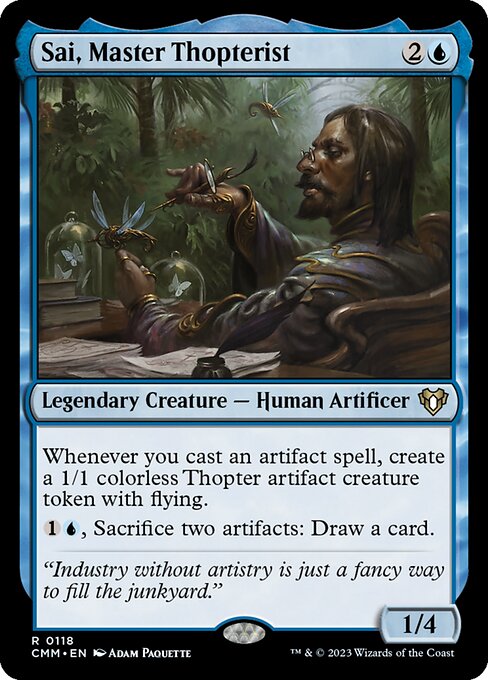
Sai, Master Thopterist
Commander
Preserve enough useful spells in hand to keep his cast trigger productive after the first board develops.
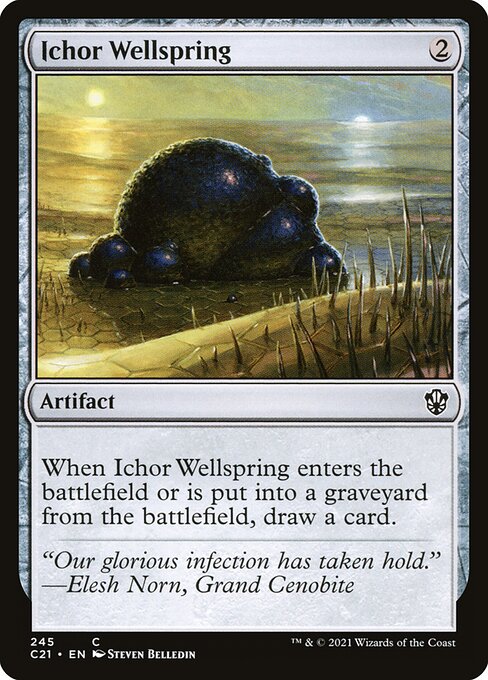
Ichor Wellspring
Cheap card access
Its entry and graveyard abilities reward planning which artifact can be given up later.
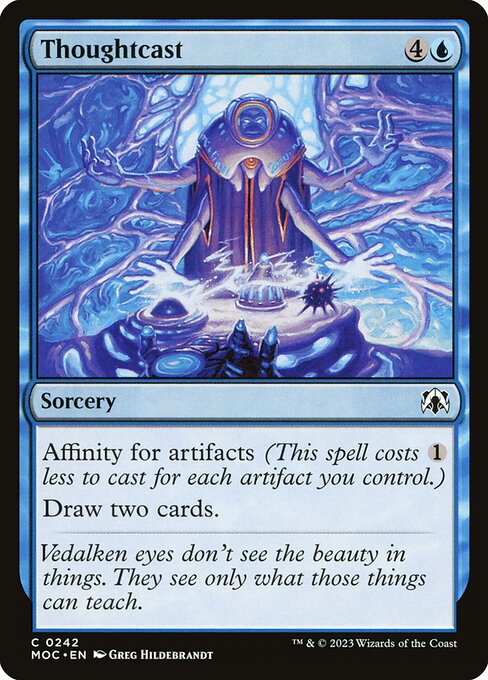
Thoughtcast
Refill
Count current artifacts before casting, then keep the remaining blue requirement in the mana plan.

Thought Monitor
Artifact draw creature
Costs can shrink while its entry value remains useful, but it still depends on the current board.

Shimmer Dragon
Repeatable access
Tapping spare artifacts can find cards while preserving the choice to hold blockers and mana until needed.

Cyberdrive Awakener
Combat finish
List the old untapped noncreature artifacts that can actually attack before paying six mana.
Budget artifact questions
Build your deck
Put these choices into a Commander list. Create a free account to save your deck and keep tuning it with Deckcipher.
FAQ
Does creating a Thopter trigger Sai again?
No. Sai triggers when you cast an artifact spell. A token appearing is not a spell being cast, so his own Thopter does not repeat that trigger.
Does affinity make Thoughtcast free?
Ordinarily affinity can reduce its four generic mana, but its blue requirement remains. Other cost changes may also affect the final payment.
Does Sai's new Thopter reduce the spell that made it?
No. You calculate and pay the spell's cost before its cast trigger resolves. The new token can help with a later spell rather than changing the completed payment.
Can new Thopters help Shimmer Dragon draw immediately?
Yes. Its activation taps two untapped artifacts without using those creatures' own tap symbols. That cost can use new artifact creatures, although they still normally cannot attack without haste.
Does Cyberdrive Awakener make existing Thopters 4/4?
No. Its entry trigger animates noncreature artifacts. Existing artifact creatures retain their existing power and toughness unless another effect changes them.
Is Trading Post legal in mono blue despite making a white Goat?
Yes. Its token color description does not add a white mana symbol to its color identity. Its abilities still require their listed costs and an untapped Post.