
Quick answer
Simic staples should connect green mana and creatures with blue access and interaction. Growth Spiral, Coiling Oracle, Beast Within, and a compatible draw engine are useful comparisons. Landfall, counters, untapping, and large-creature plans need different support. Choose the engine first, then leave enough answers and finishing power to turn extra resources into a game plan.
Green-blue needs more than resources
Simic is the green-blue color pair. It can develop mana, see more cards, protect a turn on the stack, and build several kinds of permanent engine. Those strengths can create a trap: the deck makes more mana and draws more cards without actually pressuring opponents or solving the permanent that stops it. A staple package should connect resources to interaction and a finish, not simply increase both resource counts.
Landfall, counters, creature value, untapping, and large-spell decks are different starting points. A landfall commander may naturally supply cards when ramp resolves. A counter commander may need small creatures and protection. A commander that turns nonland mana sources into more mana may value rocks and creatures differently from ordinary land ramp. Read what the chosen commander rewards before importing the same familiar package.
Give each support card a concrete turn. A cheap accelerator can move the commander forward. A draw engine can refill after development. A flexible answer can remove an existing problem. A finisher can convert a board into pressure. If several cards are useful only after three other engines are already in play, the deck may need fewer setup pieces and more cards that act independently.
Simic candidates with distinct roles
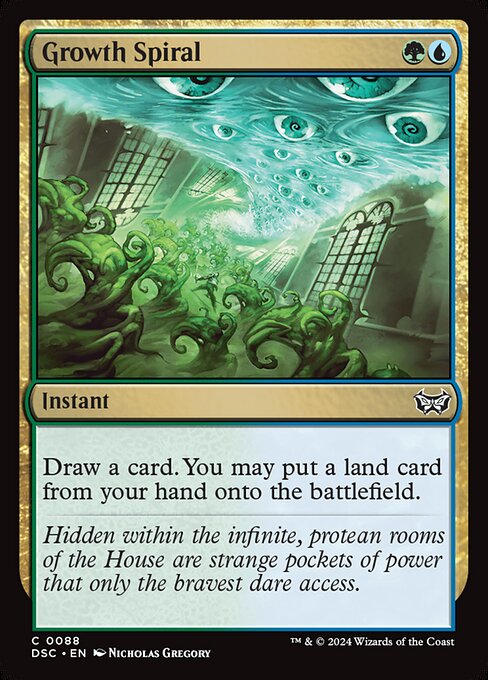
Growth Spiral
Card access and land development
Draws a card, then may put a land from hand onto the battlefield. It needs a land in hand to accelerate.
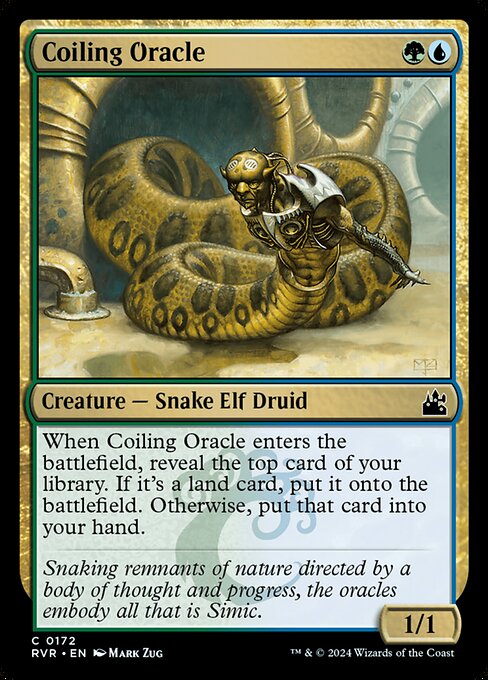
Coiling Oracle
Creature-based access
Reveals the top card on entering. A land goes onto the battlefield; another card goes to hand. The outcome is not guaranteed ramp.

Simic Charm
Flexible support
Offers a creature pump, hexproof for your permanents, or creature bounce. Hexproof does not prevent a nontargeting wipe.

Kiora's Follower
Untap support
Taps to untap another target permanent. It needs a useful permanent to untap and normally cannot tap immediately without haste.

Beast Within
Broad interaction
Destroys a permanent and gives its controller a Beast token. It supplies coverage the ramp and draw engines do not.
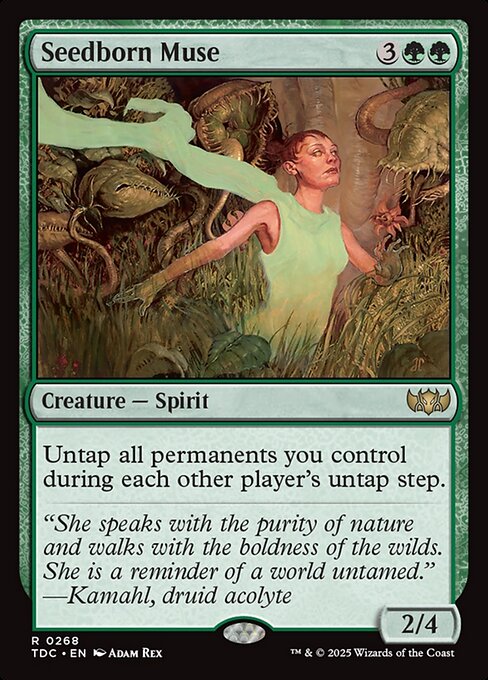
Seedborn Muse
Repeated resource access
Untaps your permanents during other players' untap steps. It does not itself grant flash or create useful things to spend mana on.
Land access and land-play permission are separate
Growth Spiral can draw and then put a land card from hand onto the battlefield. That is an instruction to put a land onto the battlefield, not an extra ordinary land-play permission you can save for later. Explore instead grants an additional land play during the turn and draws a card. Both can help development, but a hand without another land cannot treat either as guaranteed acceleration.
Exploration and Azusa, Lost but Seeking can allow additional land plays, yet still require lands available to play. A deck with several permissions and too few ways to draw or find lands can have a large theoretical ceiling and a slow actual hand. Count lands, access to lands, and extra-play effects separately. One category does not automatically supply the other two.
Coiling Oracle can be attractive in a creature-value shell because it always converts its entry into either a land on the battlefield or a card in hand, subject to having a card to reveal. It does not choose any land from the library and does not guarantee a land hit. A deck that repeatedly blinks or recurs creatures may value its body and entry effect more than a creature-light deck does.
Choose ramp for the commander, not just the color pair
Nature's Lore and Three Visits find a Forest card, including an appropriate typed dual. The spells do not force the land tapped, although its own entry conditions still apply. Farseek finds a Plains, Island, Swamp, or Mountain and puts it tapped. In Simic it can find an Island or a legal Island-Forest dual, but not a plain basic Forest. Count the actual targets in the list.
Cultivate and Kodama's Reach provide a basic land to the battlefield tapped and another to hand. That can support later land drops or a commander that permits another land play, but costs three mana first. Sakura-Tribe Elder supplies a creature that can sacrifice for a tapped basic. A commander that rewards casting a green creature may value a creature-based option differently from a commander that only rewards the resulting land entry.
Kinnan, Bonder Prodigy rewards tapping nonland permanents for mana, so mana creatures and rocks have a specific role there. That does not make land ramp bad everywhere else or imply Kinnan doubles every land. A landfall deck may prefer the permanent resilience and triggers of land development. Build the package around the event and turn the commander needs, then review its colors with Mana Base Calculator.
Use draw that follows your normal action
Tatyova, Benthic Druid rewards lands entering under your control with life and cards. Aesi, Tyrant of Gyre Strait supplies an additional land play on your turns and a land-entry draw trigger. They have different costs and benefits. A list led by either can draw naturally from the land plan, which may free some standalone draw slots for interaction or payoffs. It still needs enough development to reach the commander and enough land supply afterward.
Guardian Project rewards qualifying nontoken creatures entering, including its same-name condition. Beast Whisperer rewards casting creature spells. Garruk's Uprising rewards creatures meeting a power threshold and provides trample. A deck that puts creatures directly onto the battlefield can trigger one kind of engine while missing another. A creature count alone is not enough to decide which draw engine is reliable.
Ponder and Preordain provide selection, while Fact or Fiction offers a choice between piles and can stock the graveyard. Rhystic Study and Mystic Remora depend on opponents' spells and payments, with Remora also requiring upkeep investment. Choose whether the list needs early smoothing, independent refill, or repeatable access. A commander that already draws many cards may need fewer additional engines and more ways to use the resources.
Untapping requires something useful to untap
Kiora's Follower can untap another target permanent. A land producing several mana can make that valuable, while an ordinary one-mana source may offer only modest acceleration. The Follower normally must wait to tap unless it has haste. It cannot target itself through an ability that says another. A repeated untap effect needs a source or ability worth repeating, not simply a promise of more mana.
Seedborn Muse untaps your permanents during each other player's untap step. That can support instant-speed interaction, activated abilities, or a commander with useful mana sinks. It does not grant flash to your creatures or sorceries. A deck that mostly casts sorcery-speed threats and has no activated uses may gain much less than one built to spend resources on every turn.
Wilderness Reclamation untaps lands through a trigger at your end step. It does not untap every permanent, and it does not by itself let you cast a creature during the end step. Floating mana and spending it around the trigger still follows normal timing and mana-emptying rules. Choose the engine only after identifying what the list does with the additional window. Untapping without a useful action can be setup that never becomes value.
Counters need enablers as well as multipliers
Hardened Scales modifies plus-one counters placed on creatures you control, but does not create the first placement by itself. A commander such as Ezuri, Claw of Progress can supply an experience-based counter plan with specific trigger and target conditions. The small creatures that enable the commander can matter more than another multiplier. Keep enough actions that actually place counters before adding several cards that modify those placements.
Vorel of the Hull Clade can double counters on an artifact, creature, or land through its activated ability. It does not target an arbitrary planeswalker simply because that permanent has counters. Its activation has colored mana and a tap cost, so the timing matters. A list that never retains mana for it may prefer an enabler that works without a separate activation.
Counters are not the same as temporary bonuses or copiable characteristics. A clone generally does not copy plus-one counters on the original, and blinking a creature normally returns a new object without those counters. An engine that repeatedly blinks for value can therefore conflict with a plan that concentrates counters on one creature. Decide which resource the deck is meant to preserve rather than combining every apparent growth effect.
Keep answers to resolved creatures and engines
Counterspell can stop a spell on the stack but cannot remove a permanent that has already resolved. Arcane Denial changes the colored requirement and supplies compensation to the opponent. Swan Song is cheap and restricted by spell type. The correct package depends on what you must stop and how much mana the deck can leave open while developing.
Pongify and Rapid Hybridization destroy creatures and create replacement tokens. Reality Shift exiles a creature and manifests a replacement card. Resculpt can exile an artifact or creature and gives a 4/4 token. Those distinctions matter against indestructible, recursion, and a threatening artifact. A cheap answer can still carry a real drawback if the replacement body changes combat.
Beast Within can destroy any permanent, while Krosan Grip and Force of Vigor cover artifacts and enchantments with different costs and timing. Cyclonic Rift can provide a large temporary reset when overloaded, but opponents retain the cards returned to hand. Plan the follow-up rather than treating bounce as permanent removal. Use Interaction Checker to compare coverage without allowing the total count to hide a missing category.
Protect the engine against the effect that threatens it
Heroic Intervention gives hexproof and indestructible to permanents you control for the turn. It can stop destruction but does not prevent a nontargeting exile effect. Simic Charm can give hexproof to your permanents through one mode, but does not give indestructible. Tamiyo's Safekeeping focuses on one permanent. Choose the effect that matches the problem rather than placing all protection in a single interchangeable category.
Veil of Summer makes your spells unable to be countered for the turn and provides hexproof from blue and black to you and your permanents. Its draw condition depends on an opponent having cast a blue or black spell that turn. It is not universal protection against every removal spell or sweeper. Cheap interaction can be excellent, but its restrictions remain part of the decision.
Keep a recovery plan for games when protection is absent. Eternal Witness can return a card to hand, while a suitable creature-return or land-return effect can recover another part of the engine. An exile wipe may remove the resources ordinary recursion needs. Avoid putting the entire list's function into one commander plus several cards that do nothing without it. Independent development and card access make rebuilding more realistic.
Mana sinks must lead somewhere
A Simic list can have an impressive resource engine and still fail to close. Thrasios, Triton Hero offers a repeatable mana sink with its own activated cost, while a large X spell or creature engine can spend mana differently. A mana sink is useful because it converts otherwise unused resources, but repeated value is not automatically a win condition. Know what the cards or permanents it produces are meant to accomplish.
A creature army can use Craterhoof Behemoth, Overwhelming Stampede, or another compatible combat payoff. A single large attacker may need trample, protection, and a way to attack at the relevant time. A spell-based finish needs its actual pieces and a legal resource balance. Do not describe an untap interaction as infinite merely because it can be activated more than once. Repeated activation can still cost more resources than it creates.
If the commander already provides cards from lands, another large draw engine may be less useful than a finisher or answer. If the deck makes mana and cannot find action, more land-play permissions may make the imbalance worse. Review where an ordinary game stalls. The best staple is the card that connects the engine to the missing next stage rather than enlarging the stage the deck already does well.
Use utility lands without sacrificing early colors
Yavimaya Coast can make green or blue at a life cost or colorless without that payment. Hinterland Harbor checks for an Island or Forest. A tapped source may be acceptable in a slower landfall plan and costly in a list that needs a first-turn mana creature or blue interaction. Count the sequence rather than dividing land slots equally by color and assuming the result casts every early spell.
Simic Growth Chamber can return a land you control to hand and provide two mana when tapped later. Returning a land can support additional land plays or replay a useful land, but the Chamber itself enters tapped and does not create unlimited landfall by itself. You still need permission for any extra land plays. A hand dependent on the Chamber can be slower than a hand with ordinary untapped sources.
Do not cut lands simply because the deck includes Growth Spiral, Explore, or the commander's extra-play permission. Those effects still need lands available. Use the printed curve and the costs of activated abilities together when reviewing mana needs. A deck with a low average mana value may still want land drops through later turns because it spends mana on repeated abilities and interaction.
Make swaps that connect resources to action
| Current bottleneck | Comparison to test | What you give up |
|---|---|---|
| Extra land permissions have no lands to use | A redundant permission to actual land access or draw | Lower ceiling, more functional development |
| Many draw engines, no finish | A redundant engine to a compatible payoff | Less resource accumulation, clearer pressure |
| Counters disappear when you blink creatures | A conflicting blink card to support for the main engine | Less entry value, preserved counter investment |
| Untap effects have no use off-turn | A redundant untapper to interaction or a useful mana sink | Less theoretical output, more actual actions |
Keep a copy of the old list and change the role that repeatedly stalls. Use Mana Curve Analyzer to inspect setup costs, while noting activated costs separately. Prices vary by printing, so compare the actual package before buying. A source upgrade, a cheap answer, or an independent refill can improve ordinary games more than another premium engine that only strengthens the best start.
Frequently asked questions about Simic staples
Build your deck
Put these choices into a Commander list. Create a free account to save your deck and keep tuning it with Deckcipher.
FAQ
Does Growth Spiral give an extra land drop?
It draws and then allows you to put a land from hand onto the battlefield as part of resolving. It does not grant a separate land-play permission to use later. Explore does grant an additional land play for the turn. Both need a land available to create extra development.
Does Seedborn Muse let me cast creatures on opponents' turns?
Not by itself. It untaps your permanents during other players' untap steps. You still need normal casting permission, flash, another relevant effect, or an activated use for the mana. Choose the engine when the list can actually spend those resources.
Does Vorel double planeswalker loyalty?
Its ability targets an artifact, creature, or land. A planeswalker that does not also have one of those types is not a legal target merely because it has counters. Read the target restriction before adding it as a generic counter multiplier.
Do clone effects copy plus-one counters?
Generally no. Counters and most temporary bonuses are not copiable values. A cloned creature can have the original's relevant copiable text and printed characteristics without receiving the counters that made the original large. Check the specific copy effect for exceptions.
Should every Simic deck include landfall staples?
No. Counter, creature, artifact-mana, and other commanders may reward a different event. A landfall commander can make land development a draw engine, while a creature commander may prefer creature-based ramp and access. Choose the support for the engine you actually selected.
What is the main Simic deckbuilding trap?
Adding more ramp and draw while leaving too little interaction or finishing power. Resources need a destination. If the list already sees many cards and makes plenty of mana, the next upgrade may be a compatible payoff or an answer rather than another engine.
Build a Simic engine with a destination
Build your deck around the land, creature, counter, or untap plan you chose. Create a free account to save the list and compare that version across the connected tools. Mark which cards create resources and which cards use them. A useful green-blue staple package turns its normal development into choices, pressure, and a realistic finish rather than another turn of setup.