
Quick answer
Naya staples should connect green development, red impact, and white coverage with the board your commander actually makes. Naya Charm, Cabaretti Charm, Aura Shards, and a suitable draw engine are useful comparisons. Jetmir tokens, Mayael threats, Atla creatures, and Ghired populate need different support. Choose the board shape before choosing the combat payoff.
Naya has several ways to build a board
Naya is red, green, and white. It can develop mana, produce creatures, protect a board, and answer many permanent types. That makes it a comfortable home for combat, but combat itself is not one strategy. A token army, one large creature, a collection of expensive threats, and a populate engine need different draw and finishing tools.
Jetmir, Nexus of Revels rewards creature count. Mayael the Anima looks for a particular power threshold. Atla Palani, Nest Tender turns Egg deaths into creatures from the library. Ghired, Conclave Exile copies creature tokens through populate. Choose which event the list reliably produces, then build support around that event. A card can be excellent in one Naya deck and compete with the engine in another.
Avoid treating the colors as permission to add every large combat staple. A finisher needs mana, a board, a way through blockers, and often protection. A deck that spends every early turn adding setup can lose before those pieces matter. Keep ordinary development, useful card access, interaction, and recovery beside the exciting attack turn. The best upgrade often connects two stages rather than enlarging a stage the deck already does well.
Naya-specific comparisons
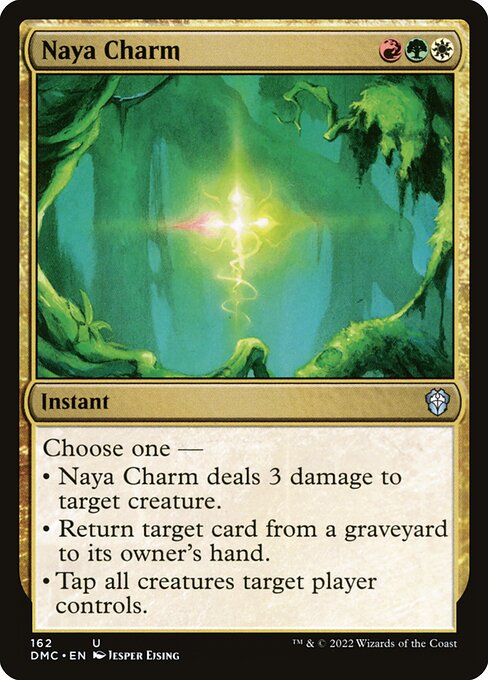
Naya Charm
Flexible support
Can deal three damage to a creature, return a graveyard card to its owner's hand, or tap all creatures one target player controls. It does not tap every opposing board.

Cabaretti Charm
Board-dependent flexibility
Can use creature count as damage, boost your team with trample, or create two Citizens. Its removal mode is weaker when you have few creatures.

Jetmir, Nexus of Revels
Creature-count payoff
Its three, six, and nine-creature conditions add cumulative combat benefits. Losing creatures can remove a threshold benefit before damage.
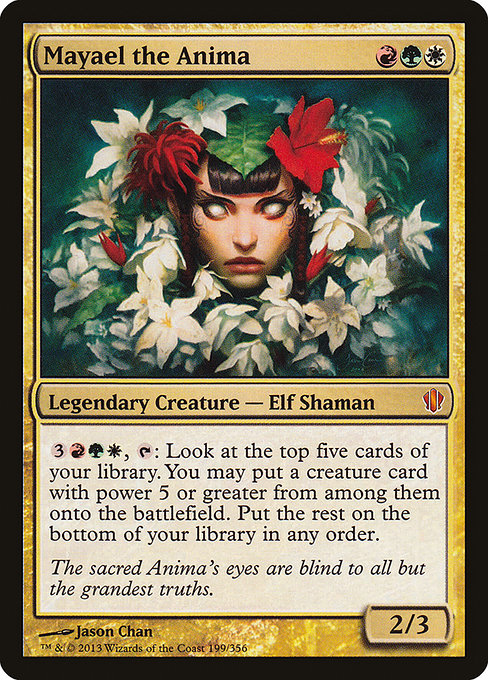
Mayael the Anima
Large-creature access
Its paid tap ability examines five cards and can put a creature with power five or greater onto the battlefield. It needs qualifying density, mana, and time to tap.
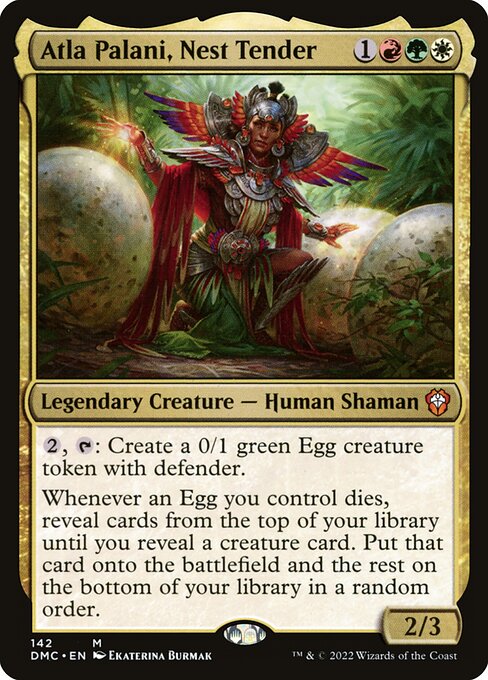
Atla Palani, Nest Tender
Egg-to-creature engine
Creates Eggs through a paid tap ability and rewards an Egg you control dying. Exile and bounce are not death, and the revealed creature is put into play rather than cast.

Ghired, Conclave Exile
Populate pressure
Provides a Rhino on entry and populates when attacking. The new token enters tapped and attacking, which is not the same as being declared as an attacker.
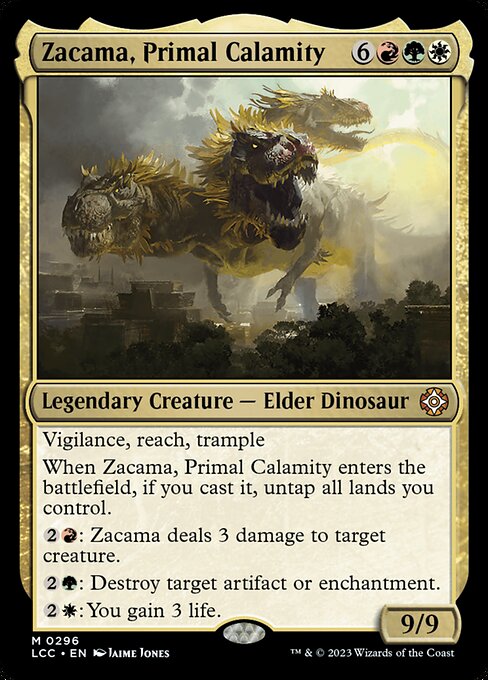
Zacama, Primal Calamity
Large resource payoff
Its land-untap entry trigger requires that you cast it. Putting it directly onto the battlefield through another engine does not meet that condition.
Build early fixing before a large-threat package
Nature's Lore and Three Visits can find Forest cards, including legal typed duals. Their target range is about land type, not merely a land producing green. Farseek can find a Plains, Island, Swamp, or Mountain and puts the chosen land tapped. Naya can use its Plains and Mountain access, including duals that also have Forest. Each spell needs suitable targets in the list.
Birds of Paradise and other mana creatures can improve commander timing and creature count, but normally cannot tap the turn they enter without haste. Land ramp can survive many creature wipes. Sakura-Tribe Elder bridges the roles by sacrificing for a tapped basic without using a tap symbol. A token-count commander can value a body differently from a deck that wants permanent acceleration for repeated expensive threats.
Do not let a larger ramp count hide poor color timing. Mayael costs all three colors to cast and later needs a separate six-mana activation, including those colors again. Atla also needs mana after deployment before making an Egg. Use Mana Base Calculator to inspect the actual early sources and the first useful activation. A commander on the battlefield is not yet a functioning engine if every following payment is unavailable.
Choose draw for tokens or large creatures
Welcoming Vampire checks small power and triggers only once each turn. Tocasia's Welcome checks low mana value and also has a once-per-turn limit. A token burst can trigger either once without providing a separate draw for every token. Skullclamp can draw repeatedly with expendable creatures, but needs equip mana and a way for those creatures to die. Choose the event the deck supplies most naturally.
Garruk's Uprising, Elemental Bond, and Return of the Wildspeaker can suit larger creatures, with different power thresholds, creature-type restrictions, and modes. A deck making many small Citizens does not automatically support the same draw as one making large Rhinos. An anthem can change power, but a draw engine that needs both the anthem and a producer is more conditional than it first appears.
Guardian Project rewards qualifying nontoken entries, while Beast Whisperer rewards creature casts. Mayael and Atla put creatures onto the battlefield without casting them, so that distinction can decide the useful engine. A creature spell that is countered can still have been cast, while it never entered. Retain enough independent access that a removal spell or wipe does not leave every draw card waiting for a board you cannot rebuild.
Jetmir needs bodies more than another multiplier
Jetmir grants cumulative benefits when you control at least three, six, and nine creatures. At nine, the qualifying team has all three bonuses rather than only the final line. The count is continuous. If opponents remove creatures before damage, the remaining creatures may lose trample or double strike when the count drops. Do not lock in the largest bonus at the beginning of combat and ignore later changes.
A reliable stream of creatures can therefore be more useful than another expensive anthem. Cheap producers, token spells, and cards that replace themselves help establish thresholds. Protection can preserve a count that already threatens meaningful damage. A hand of multipliers and no producer has the opposite shape: it promises large combat with no actual body to benefit.
Cabaretti Charm can create two Citizens, support a team attack, or use the existing creature count to damage a creature or planeswalker. Those modes can fit the commander at different stages. The damage mode is not independent removal from an empty battlefield. Keep a cheap creature answer such as Swords to Plowshares beside the board-dependent cards so the deck can act while rebuilding.
Mayael and Atla change the creature balance
Mayael needs enough creatures with power five or greater among the cards she can examine. An ordinary utility creature can support the deck but may be a miss for the activated ability. This creates a tradeoff between helpful small bodies and qualifying threats. Do not replace every support creature with a giant merely to increase the hit count; the deck still needs development and interaction before a six-mana activation.
Atla reveals until a creature appears when an Egg you control dies. Small utility creatures in the library are therefore possible outcomes, not invisible support that the trigger skips. A list can deliberately use them, but should understand the outcome range. A sacrifice outlet can control when an Egg dies, while exile and bounce do not supply that death. Making an Egg also requires a separate paid tap activation unless another effect creates one.
Creatures put directly onto the battlefield do not produce cast triggers. Zacama's land-untap trigger specifically checks whether you cast it, so Mayael or Atla putting it into play will not supply that untap. The body and activated abilities can still be valuable, but the resource calculation is different. Choose threats for their actual entry, static, attack, and death value rather than assuming every line of their text applies through the engine.
Populate copies a token, not all its enhancements
Ghired creates a Rhino on entering and can populate when it attacks. Populate chooses a creature token you control and makes a token copy. Counters, attached Equipment, and most temporary bonuses are not part of that token's copiable values. A small token made large by several temporary boosts does not automatically produce a permanently enlarged copy through populate.
Ghired's populated token enters tapped and attacking. It was not declared as an attacker, so an ability that triggers when that token attacks does not trigger merely from entering that way. Entry triggers can still happen. This distinction matters when choosing tokens with entry value versus attack text. A token can be a strong populate target for one reason and fail to repeat another reason you expected.
Keep enough useful tokens available before investing in repeatable populate. Another populate card does nothing when the list has no creature token to choose. A token doubler can increase production, but is not itself a producer. The best package connects a worthwhile initial token with ways to copy, draw, protect, and finish rather than filling the list with several versions of the middle step.
Use the colors to cover different threats
White provides efficient creature exile, green broad destruction and artifact-or-enchantment answers, and red artifact pressure or damage. Swords to Plowshares, Beast Within, Wear // Tear, and Vandalblast solve different problems. A high creature count does not remove the need for interaction: an enchantment or artifact can stop attacks while your board remains large.
Aura Shards can turn creature entries into optional artifact or enchantment destruction. It needs those entries and legal targets, and cannot directly answer every creature. Naya Charm's tap mode affects a target player's creatures, which can open one attack or prevent one board blocking. It is not a substitute for a permanent answer to a noncreature engine, and other players still have their blockers.
Cabaretti Charm can use your creature count as damage, but damage has limits against indestructible or large threats. A cheap exile answer can complement it. Use Interaction Checker to review creatures, noncreature permanents, graveyards, and protection separately. More cards with combat text do not automatically fill those missing categories.
Choose protection for the board you create
Heroic Intervention can give your permanents hexproof and indestructible for the turn. Boros Charm can also provide indestructible through one mode. Neither prevents every exile, sacrifice, bounce, or toughness-reduction reset. Teferi's Protection and Clever Concealment phase permanents with different scope, and phasing does not create new entry triggers. Choose the protection that matches the exposure you actually face.
A wide army can justify a broad protection spell, while a single essential commander may prefer a cheaper one-permanent option. Holding too much mana for a weak board can also slow development. Compare the value already exposed with the value of adding another producer. Protection should preserve a useful position, not prevent the deck from ever establishing one.
A large life total or several lifelink tokens do not stop commander damage, poison, or every alternate loss. Keep actual answers to the strategies your games present. A lifegain subtheme can buy time and pay costs without becoming the finish itself. If the deck repeatedly survives but never closes, another defensive engine may be less useful than a compatible attack payoff.
Recovery depends on the cards that actually remain
Eternal Witness can return a graveyard card to hand. Sun Titan can return a permanent with mana value three or less on entering or attacking. Sevinne's Reclamation offers another restricted permanent-recovery route. Choose based on the producers, engines, or sources your deck loses. None is universal access to an expensive threat removed by exile.
Tokens normally cease to exist after leaving the battlefield, so a token list needs new production rather than a promise to reanimate the old army. A large-creature list may have real creature cards in the graveyard but need enough mana to recast them. Atla may need a new Egg and outlet. Ghired may need an initial token again. Keep the actual restart sequence visible.
Avoid cutting early development for redundant finishers. A hand that can cast a producer and draw after a reset is often more useful than one holding two large pump spells. Save some independent resources rather than committing every card to the first attack. A strong Naya deck can threaten combat while retaining a realistic turn after opponents respond.
Make the finish fit the usual board
Overwhelming Stampede and Craterhoof Behemoth reward a developed creature board in different ways. Akroma's Will can provide a strong combat window, with both modes available when you control a commander. A single attacker, several large tokens, and a wide small-token army get different returns from those cards. Compare the board the list normally makes with the board the finisher assumes.
Trample helps damage move through blockers under its rules, but does not make removal irrelevant. Double strike creates an additional damage step when applicable, but does not make a blocked attacker without trample automatically hit a player. A team can be large and still need evasion, timing, or protection. The most useful finisher may solve that specific obstacle rather than add another raw bonus.
Explain any intentional loops, repeated extra combats, or deterministic damage engines before games. Naya can support those plans as well as ordinary combat. Choose the pace and resource pattern you want, then make the staple package consistent with it. A deck of individually strong cards can still have several incomplete endings competing for the support slots each one needs.
Make role-preserving cuts
| Observed problem | Comparison to test | Tradeoff |
|---|---|---|
| Jetmir has payoffs but misses creature thresholds | A redundant anthem to a useful producer | Less peak bonus, more actual bodies |
| Mayael misses too often for the mana invested | A low-fit threat to a qualifying creature with useful impact | Different support balance and curve |
| Atla reveals small bodies unexpectedly | Review creature outcomes before adding more Egg support | Fewer utility creatures or a more varied outcome plan |
| Ghired has populate effects but no worthwhile token | A redundant copier to initial token production | Less repetition, a functional starting resource |
Save the old version and compare the failure you actually see. Use Mana Curve Analyzer to inspect the expensive end, while recording activation and equip costs separately. Prices vary by printing, so compare a complete package rather than chasing one premium finisher. A reliable source, producer, or compatible draw engine can improve more ordinary turns than a larger ideal attack.
Frequently asked questions about Naya staples
Build your deck
Put these choices into a Commander list. Create a free account to save your deck and keep tuning it with Deckcipher.
FAQ
Does Naya Charm tap every opponent's creatures?
No. Its tap mode targets one player and taps the creatures that player controls. The other players retain their boards. Use it for the specific attack or defensive window it creates rather than treating it as a table-wide reset.
Does a Ghired token trigger when it attacks?
The populated token enters tapped and attacking, so it was not declared as an attacker. A when-this-attacks trigger does not happen merely from entering that way. Entry triggers can still occur. Choose populate targets with the actual event in mind.
Does Atla get cast triggers from the revealed creature?
No. Its death trigger puts the revealed creature onto the battlefield rather than casting it. Entry and static abilities can matter, but cast-only effects do not happen from that event. The creature selection also includes small creatures that the trigger can reveal.
Does Zacama untap lands when Mayael puts it into play?
Its relevant entry trigger checks whether you cast it. Mayael putting it directly onto the battlefield does not meet that condition. Zacama still has its other characteristics and abilities, but the mana line must not assume the cast-dependent untap.
Are Jetmir's threshold bonuses locked in at attack?
No. They depend on the current number of creatures you control. Removing creatures can make the team lose a threshold benefit before damage. Count the board as it changes rather than preserving the largest bonus from an earlier moment.
What should Naya upgrade before another finisher?
Check early fixing, creature production, compatible draw, protection, and recovery. If those roles fail, another combat payoff may remain stranded. Choose the support for the board your commander actually makes, then add the finish that uses it.
Build Naya around a real board pattern
Build your deck around tokens, large creatures, Eggs, or populate. Create a free account to save the list and compare that version across the connected tools. Name the board each staple needs and the resource it leaves afterward. Naya becomes more reliable when ordinary development naturally prepares the attack, rather than waiting for several unrelated powerful cards to align.