
Quick answer
Mardu staples should connect white answers, black resources, and red pressure with a defined attack or sacrifice plan. Crackling Doom, Mardu Charm, Anguished Unmaking, and a compatible draw engine are useful comparisons. Isshin attack triggers, Alesha recovery, Edgar Vampires, and Kaalia threats need different support. Leave room for the cards that make the commander work.
Mardu needs a chosen route through combat
Mardu is red, white, and black. It can support attack triggers, Equipment, tokens, sacrifice, reanimation, and creature-type decks. The colors provide strong removal and useful resource exchanges, but they do not decide the engine. A list built around Isshin, Two Heavens as One has different support needs from an Alesha, Who Smiles at Death list or a Kaalia of the Vast threat package.
Start with the event you expect on an ordinary turn. Declaring an attack, dealing combat damage, putting a creature onto the battlefield attacking, and a creature dying are distinct events. Similar-looking combat cards can reward different ones. Choose the commander's actual sequence, then add the resources, answers, and recovery needed to repeat it. This prevents a staple package becoming several incomplete engines side by side.
Mardu also needs early mana without a generic green land-ramp suite. A hand full of powerful three-color cards may have few useful first turns. Keep enough castable creatures, rocks, draw, and interaction to develop before the commander. A deck that can function when the commander is removed has more room to choose its attack rather than being forced to recast the same exposed piece immediately.
Mardu-specific comparisons

Mardu Charm
Flexible instant
Offers creature damage, two Warrior tokens with temporary first strike, or a targeted noncreature-nonland discard. Its modes cover different stages rather than producing every result.

Crackling Doom
Multiplayer pressure and sacrifice
Damages each opponent and makes each sacrifice a greatest-power creature they control. It does not target that creature, but a tie can give its controller a choice.

Isshin, Two Heavens as One
Attack-trigger support
Adds another occurrence of a qualifying permanent ability caused by a creature attacking. Combat-damage and ordinary entry triggers are different events.

Alesha, Who Smiles at Death
Power-restricted recovery
An attack can offer a separate payment to return a creature with power two or less tapped and attacking. The restriction uses power, not mana value.
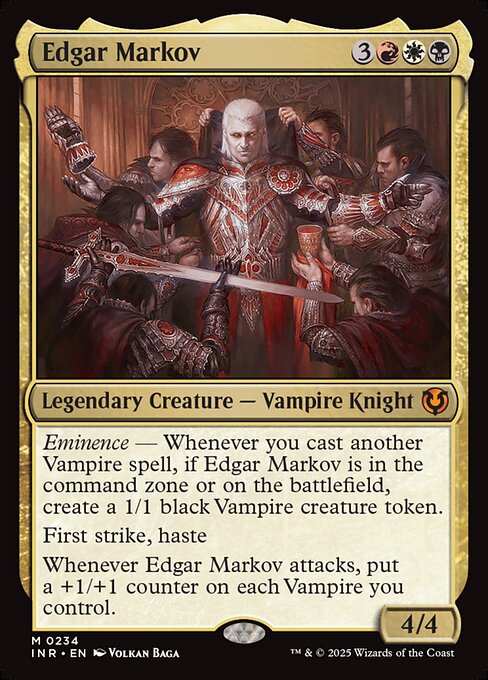
Edgar Markov
Vampire production
Eminence rewards casting another Vampire while Edgar is in the command zone or battlefield. Returning a Vampire directly is not the same as casting it.
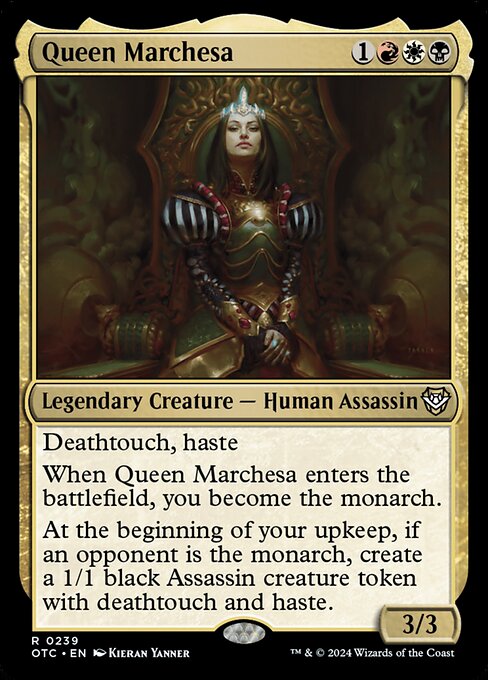
Queen Marchesa
Monarch access
Makes you monarch on entering and can create an Assassin at upkeep when an opponent is monarch. The role creates incentives and a card-access route, not a promise that opponents cannot take it.
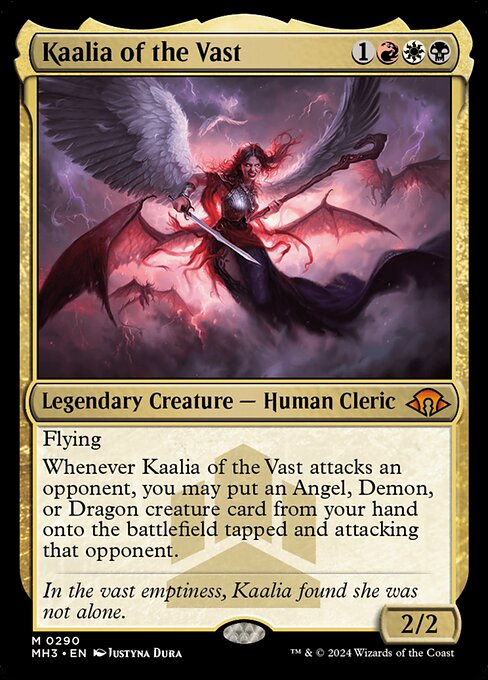
Kaalia of the Vast
Threat deployment
An attack can put an Angel, Demon, or Dragon from hand onto the battlefield tapped and attacking that opponent. It is not a cast and does not declare the new creature as an attacker.
Build mana for the early colors and follow-up
Arcane Signet, relevant Talismans, and guild Signets can support development. A Talisman taps for one mana directly and deals one damage to you when making one of its colors. A Signet needs an input before making its pair. Sol Ring supplies colorless and can accelerate generic costs without fixing a three-colored commander. Count each source after it is used so a proposed turn does not spend the same mana twice.
Isshin costs three mana but requires red, white, and black. Alesha is easier to cast through its printed cost but later needs a separate hybrid payment for its attack trigger. Kaalia needs mana to arrive and often protection or haste support before an attack matters. The useful mana benchmark is the first functional turn, not simply putting the commander onto an otherwise empty battlefield.
Nomad Outpost fixes all three colors but enters tapped. Command Tower has a different entry profile. Pain lands, check lands, and utility lands create other tradeoffs between timing, life, and late value. Use Mana Base Calculator to examine early sources and the colors you need to retain for an answer. A combat deck can have enough total mana and still lack the white needed to protect its attacker.
Use cheap answers beside broad removal
Swords to Plowshares can exile a creature efficiently with life compensation. Anguished Unmaking exiles a nonland permanent and causes you to lose three life on resolution. Terminate destroys a creature and prevents regeneration, while Wear // Tear covers artifact or enchantment modes. These are complementary roles. A deck does not need every flexible three-mana spell when a cheaper answer handles the most common problem and leaves mana for development.
Crackling Doom affects each opponent and does not target their chosen creature. That can help against a creature protected from targeting or destruction. It still makes the opponent sacrifice a creature with the greatest power among their creatures, not any specific lower-power engine you choose. If several tie, that player can choose a qualifying one. Know what the board allows rather than treating sacrifice as unconditional selected removal.
Mardu Charm can make bodies, damage a creature, or reveal one opponent's hand and discard a selected noncreature, nonland card. The discard mode can interrupt a particular plan but does not empty all opposing hands. The damage mode has a fixed ceiling and does not solve indestructible through damage alone. Use Interaction Checker to review the real target types and timing alongside the total count.
Isshin cares about attacking, not every combat event
Isshin can add another occurrence of a triggered ability of a permanent you control when a creature attacking causes that ability to trigger. It does not simply double every ability used during combat. A draw trigger from combat damage happens at a different event. A creature entering already attacking was not declared as an attacker, so the entry does not create an ordinary when-this-attacks trigger.
Choose actual attack-trigger cards, then decide which support gets them into combat safely. Haste can make a new creature act earlier. Evasion can help a creature survive blocks or reach a player, but is not the same as an attack trigger. A creature with a useful attack trigger may still deliver value even if blocked, while another card specifically needs combat damage. The distinction affects which support spell is the best next slot.
Do not sacrifice ordinary development to fill the deck with expensive doubled triggers. A cheap attacker, card access, or protection can create more meaningful turns. The deck should be able to cast an attack-trigger creature and use it without requiring three other high-cost permanents. If the engine has a strong ceiling but rarely reaches its first useful attack, lower setup costs before adding another payoff.
Alesha values power-efficient creatures and spare mana
Alesha can return a targeted creature card with power two or less from your graveyard through its paid attack trigger. The target restriction is not mana value. An expensive utility creature with low power can qualify, while a cheap high-power creature may not. Evaluate the card in the graveyard rather than assuming the size it once reached on the battlefield is still its current power.
The returned creature enters tapped and attacking. It did not cast a spell and was not declared as an attacker, so cast and ordinary attack triggers are not automatically repeated. Entry abilities can still happen. Choose useful entry or static value, sacrifice material, or a combat body that fits the actual sequence. Do not count every exciting attack-trigger creature as an Alesha recursion payoff.
Keep the separate hybrid payment available. A hand that casts another spell before combat may lose access to the return even with a good target ready. The ability can also be interrupted through graveyard removal or the relevant targets. Independent draw, useful small creatures, and a backup recovery effect keep the deck operating when the ideal return is unavailable.
Vampire and Kaalia packages need their own density
Edgar Markov's eminence trigger rewards casting another Vampire when Edgar is in the command zone or battlefield. A Vampire put directly onto the battlefield by reanimation did not produce that cast event. A low-cost Vampire can therefore provide bodies and tempo through the commander's engine, while an unrelated premium creature may consume a slot without contributing to it.
Kaalia wants an Angel, Demon, or Dragon in hand at the attack trigger and can put it into play attacking the chosen opponent. A threat in the graveyard is not available to that instruction. A threat with only a cast trigger may miss its best effect when deployed this way. An entry or static ability can instead function immediately. Choose the body for the route Kaalia uses, not just the largest mana cost you can avoid.
Both decks can be crowded out by generic staples. Keep enough qualifying creatures that the engine actually has material. A useful removal spell still earns a slot, but another expensive value enchantment should be compared with the creature it displaces. A deck can own every popular Mardu card and still become less consistent by including too many of them at once.
Choose resource access for the board you expect
Night's Whisper supplies cards without needing an attack or sacrifice. Deadly Dispute needs an artifact or creature spent as an additional cost and creates a Treasure with its draw. Skullclamp needs equip mana and a creature that dies. A token or aristocrats list can use those conditional resources differently from a Kaalia list whose few creatures are expensive threats it wants to keep.
Welcoming Vampire and Tocasia's Welcome have separate qualifying checks and once-per-turn limits. A batch of small tokens does not draw once for every body from either. Professional Face-Breaker rewards combat damage to players, with one trigger for a player hit by one or more of your creatures in the event. Isshin does not turn that damage event into a doubled attack trigger.
Queen Marchesa can provide the monarch and create a reason for combat to move around the table. The monarch draw is a continuing role that opponents can take through the rules, not private guaranteed access forever. A defensive plan can support it, but spending every slot to preserve the crown may slow the actual finish. Choose a resource engine that fits the pace and board the deck wants to create.
Sacrifice support needs permission and material
Viscera Seer and Goblin Bombardment provide repeatable creature sacrifice outlets with different rewards. Blood Artist and Zulaport Cutthroat reward deaths with different scopes and targeting. Mayhem Devil rewards any player sacrificing a permanent. A payoff is not an outlet, and an outlet does not create its own creatures. Keep supply, permission, and reward visible as separate links.
A temporary theft effect can become removal if a suitable outlet consumes the stolen creature before control returns. The outlet must accept that permanent and be usable at the needed time. A creature-only outlet does not solve a stolen noncreature artifact, and a tap requirement can prevent a newly controlled creature using its own ability. Verify the complete line rather than assuming every theft and sacrifice card combines automatically.
Alesha or other recovery can return useful nontoken creatures, but tokens cease to exist after leaving the battlefield. A token deck needs new production after spending its army. Another death payoff will not fix a list with no producer. The best sacrifice staple depends on the missing link and on whether the deck uses deaths as a finish, card access, or a way to reuse entry effects.
Protection and resets must fit the exposed resource
Boros Charm can grant indestructible to your permanents, but not immunity to exile, sacrifice, bounce, or every toughness reduction. Teferi's Protection and Clever Concealment phase permanents with different scope. Phasing does not produce new entry triggers. A broad protection spell can preserve an army, while a cheaper one-creature option may suit an invested attacker. Choose the resource you are actually trying to keep.
Blasphemous Act deals damage and can be cheap when many creatures are present. Toxic Deluge gives a toughness reduction and costs life. Farewell can exile selected permanent categories and graveyards, potentially removing your own recovery resources. A combat deck normally ahead on creatures should be especially careful with redundant wipes. Resetting the board is useful only when the follow-up is better for the plan.
Sun Titan can recover a permanent card with mana value three or less when entering or attacking. Sevinne's Reclamation can recover a similar range through different costs and flashback. An Equipment left behind by a dying creature still needs another bearer and an equip payment. A token army needs a producer. Match recovery to what the deck really loses rather than calling a generic recursion card universal insurance.
Choose the ending before adding more reach
Mardu can finish through a wide attack, commander damage, repeated deaths, direct damage, or a verified compact line. An Isshin list can use repeated attack value, while Alesha can sustain a small-creature engine. A Kaalia deck can pressure with large threats, and a token list can use a team payoff. Choose one main route with enough support before adding another unrelated ending.
Double strike, trample, lifelink, and haste solve different combat problems. Double strike does not force a blocked attacker without trample to damage the player. Lifelink can stabilize life while leaving the opponent alive. Haste can create an earlier attack without protecting the creature from removal. The most useful combat staple is the one that addresses the obstacle the normal board faces.
Explain deterministic loops, resource denial, or large repeated combats before games. The deck's colors do not define its expected pace. A list can look like creature value and still contain a compact finish. Use that actual plan when choosing tutors, burst mana, and protection. A coherent Mardu list keeps enough room for its engine rather than replacing its character with every powerful card available.
Make focused replacements
| Current bottleneck | Comparison to test | Tradeoff |
|---|---|---|
| Isshin payoffs rarely reach a useful attack | A redundant expensive trigger to cheaper development or haste support | Less ceiling, more actual combat events |
| Alesha targets do not fit power restriction | A low-fit creature to a useful qualifying body | Different size, a working return package |
| Kaalia threats rely on casting | A cast-only payoff to useful entry or static value | Different threat selection, actual engine impact |
| Generic staples crowd out Vampires | A low-synergy value card to a useful Vampire | Less isolated efficiency, more commander production |
Save the old version and compare one observed failure. Use Mana Curve Analyzer to inspect setup, then note equip costs and attack-trigger payments manually. Price the actual printings before buying. A reliable source, useful cheap creature, or compatible draw spell can improve ordinary turns more than another premium finisher that the deck cannot deploy safely.
Frequently asked questions about Mardu staples
Build your deck
Put these choices into a Commander list. Create a free account to save your deck and keep tuning it with Deckcipher.
FAQ
Does Isshin double combat-damage triggers?
Not merely because they happen during combat. Its relevant ability concerns a creature attacking causing a permanent's triggered ability to trigger. Combat damage and creature entry are different events. Read each payoff rather than treating all combat text as the same trigger type.
Does Alesha use mana value for its target?
Its target restriction uses power two or less in the graveyard. A high-mana-value creature with low power can qualify, while a cheap creature with too much power may not. You also need the separate hybrid payment for the attack trigger's return.
Do Kaalia creatures trigger when they attack?
They enter tapped and attacking rather than being declared as attackers. Ordinary when-this-attacks triggers do not happen merely from entering that way. Entry and static abilities can still matter. Casting triggers also do not occur because the creature was not cast.
Does Crackling Doom target the sacrificed creature?
It does not target the creature. Each opponent sacrifices a creature with the greatest power among theirs, and can choose among ties. That can bypass some targeting defenses without allowing you to select a lower-power engine instead. Read the actual board before relying on it.
Does Edgar trigger from reanimated Vampires?
Its eminence production rewards casting another Vampire while Edgar is in the specified zones. A Vampire returned directly to the battlefield was not cast. The deck can still use recursion, but that event does not automatically create the eminence token.
What should Mardu upgrade before another finisher?
Check early colored mana, useful creatures for the commander, independent card access, broad interaction, and recovery after removal. A stronger top-end card may remain stranded when those links fail. Choose the missing support before increasing an attack the deck already struggles to reach.
Build Mardu around the actual combat event
Build your deck around attacks, creature recovery, Vampires, or a chosen sacrifice route. Create a free account to save the version and compare it across the connected tools. Mark casts, attack declarations, damage, entries, and deaths separately. A useful Mardu staple package lets those events lead into the next turn without assuming every card rewards all of them.