
Quick answer
Four-color decks without green have white, blue, black, and red. Start with reliable colored sources, efficient interaction, and an engine the commander actually supports. Breya artifacts and Tymna-Kraum resources need different packages. Arcane Signet, suitable Talismans, cheap answers, and compatible card access are more useful starting comparisons than importing every staple from four colors.
Start with the four colors you need on time
White-blue-black-red Commander decks can draw, counter, exile, destroy artifacts, use graveyards, and create explosive turns. Their central construction problem is often mana rather than missing effects. Breya, Etherium Shaper costs one of each color. Sol Ring can accelerate generic support but does not pay any of those four colored symbols. A powerful hand can still fail the commander's exact payment.
Choose whether the list is primarily artifacts, evasive creature resources, spell-based control, or another coherent engine. Breya naturally supplies artifact creatures and a sacrifice outlet with a separate payment. Tymna the Weaver and Kraum, Ludevic's Opus can combine combat-based and opponent-spell-based card access. Akiri, Line-Slinger and Silas Renn, Seeker Adept provide another legal partner route centered on artifacts and combat. The shared identity does not require the same plan.
Partner commanders also change the command-zone and library arrangement. A normal two-partner deck has two commanders and ninety-eight other cards, not two commanders plus ninety-nine. Their combined color identities determine access, while their individual costs still determine early colors. Build those first turns instead of assuming four-color access means every demanding card belongs.
No-green candidates and their jobs

Breya, Etherium Shaper
Artifact production and spending
Creates two flying Thopters on entry. Its activation costs two mana and two sacrificed artifacts for one selected result. It needs resources and payment, not merely the commander on the battlefield.
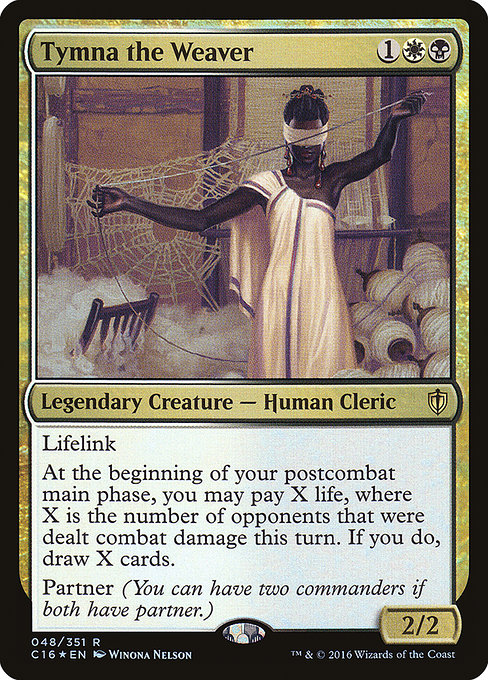
Tymna the Weaver
Combat-based access
At a postcombat main phase, can exchange life for cards according to opponents dealt combat damage that turn. It rewards connecting and does not draw merely from declaring attacks.
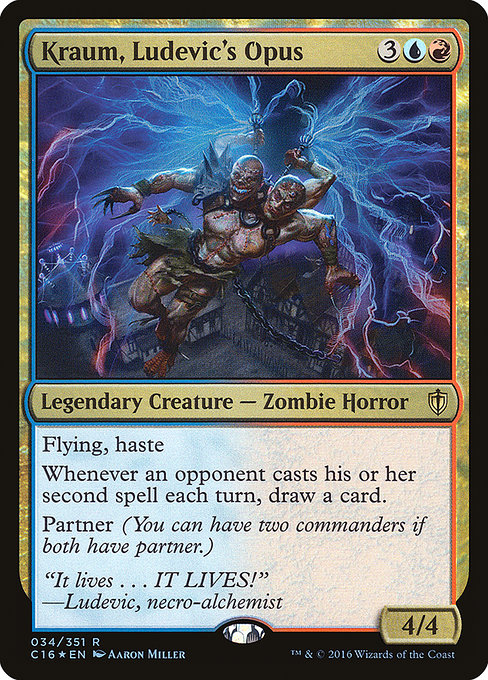
Kraum, Ludevic's Opus
Opponent-spell access
Draws when an opponent casts their second spell in a turn. The trigger is not once for every subsequent spell or every spell cast by the whole table.

Fellwar Stone
Conditional fixing
Can produce a color a land an opponent controls could produce. It does not promise every color in an opening with unusual opposing lands.

Chromatic Lantern
Later fixing
Lets your lands tap for any color and makes mana itself. It costs three, so it is a fixing investment rather than the fastest possible early acceleration.
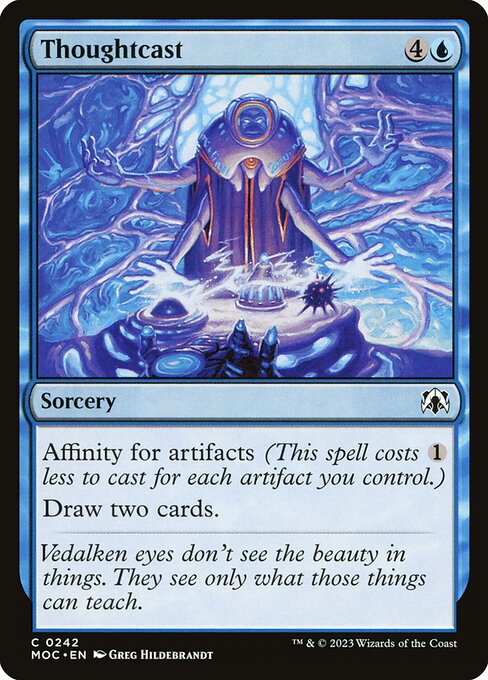
Thoughtcast
Artifact-based draw
Affinity can reduce its generic cost, while its blue pip remains. The deck needs artifacts actually on the battlefield to receive the discount.
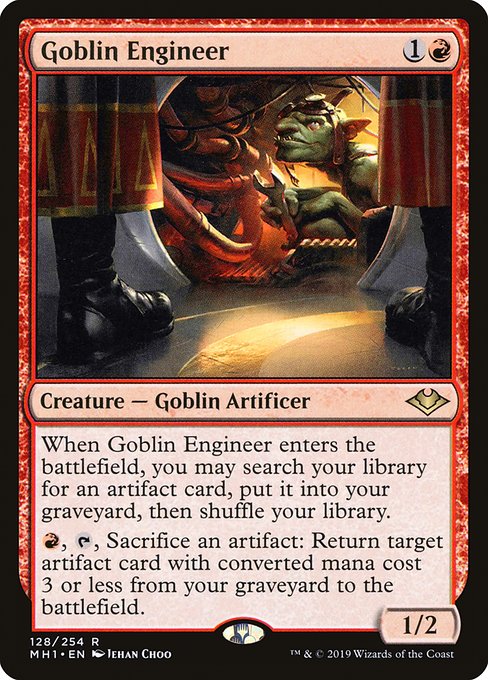
Goblin Engineer
Artifact setup and recovery
Its entry search can find any artifact, but its separate return ability restricts the target to mana value three or less. Searching for a large artifact does not make Engineer able to return it.
Use rocks to fix the real early sequence
Arcane Signet can provide a commander-identity color directly. Talismans make one mana and deal one damage to you when using their colored modes. Signets need one input to produce their pair. These are different turn patterns. A pair of Signets can help four colors but also requires mana to activate them. Mark the input and output instead of counting every printed pair as free extra sources.
Fellwar Stone depends on opposing lands and may be excellent fixing in a normal multiplayer game, but its exact colors are conditional. Chromatic Lantern can rescue awkward colored requirements later, yet a deck that needs early interaction may prefer improving lands and cheaper rocks. A three-mana fixing artifact cannot cast itself when the opening sources fail. Do not use it as a reason to neglect the foundation.
Choose a primary early color or pair when the commander permits it. Tymna can be cast from white-black resources while Kraum requires blue-red later. Breya asks for all four colors together. These plans have different requirements even with the same final identity. Use Mana Base Calculator to compare the actual sequence, not an even split of land names by color.
Artifact count is a resource you may spend
Breya creates two Thopters and can sacrifice two artifacts with two mana to choose a result: damage to a player or planeswalker, a creature toughness reduction, or life gain. The damage mode does not target an arbitrary creature. The reduction can matter against indestructible if toughness reaches zero or less. Each activation consumes artifacts, so the token reserve is not unlimited.
Treasure can make colored mana, supply an artifact count, or pay an artifact-sacrifice cost. It cannot be sacrificed twice for two separate costs. If you spend it to activate a value engine, the colored source is gone for the next spell. If you sacrifice the Thopters, the blockers and attackers are gone. Judge the exchange from the board after payment as well as the immediate reward.
Affinity and artifact-count payoffs can shrink when resources are spent. Thoughtcast may cost more after sacrificing several artifacts. Akiri's power changes with the current artifact count, rather than staying fixed at the largest number reached earlier. A deck can profit from both accumulating and spending artifacts, but needs to decide which job matters during the current turn.
Combat partners need actual connections
Tymna checks opponents dealt combat damage during the turn when its postcombat-main-phase trigger offers the life payment. Attacking three opponents without connecting is not the same as damaging them. A few cheap evasive creatures can therefore support the commander more directly than another expensive generic value permanent. Their role is early access and pressure, not simply filling a creature count.
Kraum offers flying and haste along with access when an opponent casts their second spell each turn. An opponent who casts one large spell may provide no trigger. An opponent's third spell does not become another second spell. The engine can be powerful without a promised card total. Choose additional draw that still works when opponents play slowly or remove one partner.
Silas Renn requires combat damage to a player before offering a targeted artifact card from your graveyard to cast that turn. That cast still needs mana and legal timing. Akiri can become a substantial attacker through artifact count but needs a route through blockers. A combat artifact pair therefore wants different support from Breya's immediate Thopter-and-activation plan, despite using the same four colors.
Choose card access before adding more payoffs
Thoughtcast can become inexpensive with enough artifacts but does not discount its blue pip. Thought Monitor uses affinity too and draws two on entering, with a creature body and a higher printed cost. The two cards create different cast and entry events. A list with few artifacts early may prefer independent access before another affinity card that assumes the engine is already online.
Night's Whisper and Fact or Fiction can function without a creature army. Deadly Dispute needs an artifact or creature sacrificed as an additional cost and can provide a Treasure. Skullclamp needs a creature that dies and mana to equip. An artifact-token deck can support these different exchanges, while a creature-light control list may prefer less conditional options.
Selection and temporary exile access are not identical to raw cards kept in hand. A red impulse effect can expire before the deck has mana to use it. A looting effect spends a discard to improve quality. Keep enough independent access that a wipe or artifact-hate spell does not strand every resource card. The best next draw staple depends on which setup requirement repeatedly fails.
Use four-color coverage without four complete removal suites
White provides cheap creature exile and broad nonland answers, blue stack interaction and bounce, black creature or enchantment answers, and red artifact pressure. Swords to Plowshares, Arcane Denial, Anguished Unmaking, Abrade, and Wear // Tear are candidates with different roles. You do not need a full removal package from each color. Choose a compact set that covers the threats and leaves room for the engine.
Counterspell requires two blue mana, while a flexible three-color spell can demand three different colors. In a four-color list, the cheaper printed mana value does not always mean easier early access. Compare colored requirements with the lands and rocks that remain after deploying the commander. A narrow one-color answer can be more useful than another broad gold spell if it preserves a functional turn.
Use Interaction Checker to look for gaps among creatures, artifacts, enchantments, graveyards, and protection. A counter answers a spell before resolution, while exile or destruction acts later. A bounce spell buys time and may permit replay. Keep those windows visible rather than treating the total interaction count as proof that the list can answer everything.
Artifact recovery needs the right card and target
Goblin Engineer can put an artifact from the library into your graveyard on entering. Its activated ability needs red mana, tapping the Engineer, and sacrificing an artifact, then returns a target artifact with mana value three or less. The entry search has no matching mana-value ceiling. A large artifact placed in the graveyard needs another recovery route if Engineer cannot return it.
Goblin Welder chooses an artifact a player controls and an artifact card in that same player's graveyard. Both targets must remain legal for the exchange described by its ability. Removing the battlefield target or the graveyard target can prevent the result. Its tap ability also has the usual creature-control timing restriction. The card can be powerful, but the engine needs actual targets and a legal activation.
Sun Titan and Sevinne's Reclamation can recover qualifying small permanents, while Reanimate can recover a creature at a life cost. Those ranges overlap without being identical. Tokens cease to exist after leaving, so ordinary return spells do not retrieve the old Thopter or Treasure pile. Keep producers and independent access to rebuild when the artifact resources were tokens rather than reusable cards.
Protect the mana and the engine together
An artifact wipe can remove acceleration, draw, and material for Breya at once. A creature wipe may remove Thopters, Engineers, and combat access while leaving some rocks. Choose protection and recovery with those shared vulnerabilities in mind. Adding another artifact engine can increase output and also concentrate more resources under the same opposing answer.
Boros Charm can grant indestructible through one mode, but not stop exile, bounce, sacrifice, or every toughness reduction. Teferi's Protection and Clever Concealment use phasing with different scope. Phasing does not make the artifacts leave and reenter, so it does not generate a new Breya entry trigger. Choose the effect for the actual threat and the mana you can retain.
Farewell can exile selected categories and may remove your own artifact engine or graveyard if those modes are selected. Austere Command can preserve some categories under the right modes, but artifact creatures can be affected through more than one category. Read the current type lines and mana values. A reset that clears opponents while also removing all your mana may leave no useful follow-up.
A resource engine still needs a finish
Breya can convert repeated artifact supply into damage or control, but a single entry and a few activations are not automatically a table win. A compact combo requires a verified balance of mana, artifacts, and recovery. Tymna and Kraum provide resources without dictating one specific ending. A combat artifact pair may instead use equipped or artifact-scaled attackers. Choose the finish the ordinary cards prepare.
Do not label a line infinite merely because it returns an artifact and sacrifices another. Count every activation payment, every resource removed, and the exact card returned. A mana-value restriction, tap requirement, or graveyard interruption can stop repetition. Useful repeated value does not need an exaggerated unlimited claim to justify the slot.
Explain deterministic combos, draw denial, or long spell chains before games when they are part of the list. Four-color access does not establish the expected pace. A deck can contain expensive staples and still play ordinary combat, or appear modest and contain a compact finish. Choose tutoring and protection for the actual route, and retain enough room for its enablers.
Make focused replacements
| Observed problem | Comparison to test | Tradeoff |
|---|---|---|
| Breya cannot arrive despite colorless acceleration | A low-fit colorless rock to reliable colored development | Less generic burst, actual four-color payment |
| Artifact payoffs have no material after activations | A redundant reward to production or independent draw | Less ceiling, a sustainable resource reserve |
| Combat partners attack but fail to connect | A redundant value card to useful evasive pressure or support | Less isolated power, more actual card access |
| Engineer searches large cards it cannot return | Choose a legal small target or add the correct recovery route | Different payoff size, a working sequence |
Save the original list and compare one bottleneck. Use Mana Curve Analyzer to inspect setup while recording affinity and activated costs separately. Prices vary by printing. Reliable lands, useful cheap artifacts, and independent draw can improve ordinary hands more than another premium payoff that assumes the four-color engine is already complete.
Frequently asked questions about no-green four-color staples
Build your deck
Put these choices into a Commander list. Create a free account to save your deck and keep tuning it with Deckcipher.
FAQ
Can Sol Ring cast Breya with three ordinary lands?
Breya needs white, blue, black, and red. Sol Ring's colorless mana cannot pay those symbols, so three one-mana lands plus the Ring alone do not provide four different required colored mana. Other fixing or resources can change the line. Count colors separately from total mana.
Does Kraum draw for every opposing spell after the first?
It triggers when an opponent casts their second spell each turn. A third or fourth spell is not another second spell. Different opponents can each meet the condition, but the card does not promise a fixed draw total for a turn cycle.
Does Tymna draw from attack declarations?
Its postcombat-main-phase trigger uses opponents dealt combat damage during the turn and asks for a life payment. Merely attacking does not satisfy the damage event. Evasion and useful early attackers can support that resource plan.
Can Goblin Engineer return any artifact it searches?
Its entry search can find an artifact without the return ability's mana-value restriction. The separate return activation targets an artifact card with mana value three or less. A larger searched artifact needs another recovery route.
Can one Treasure pay Breya and its own mana ability?
Not as the sacrifice payment for two separate abilities. Once sacrificed for one cost, it is gone. Appropriate triggers can reward the sacrifice, but that is different from paying multiple sacrifice costs with one permanent. Plan the activation and remaining colored mana explicitly.
What is the main no-green four-color trap?
Adding every strong card from four colors without reliable early fixing or enough support for the commander. Choose a focused engine and a primary early sequence. Use the wide card pool to fill gaps rather than replacing the deck's theme with four separate staple packages.
Build the four colors around a working foundation
Build your deck around artifacts, combat resources, or a defined spell plan. Create a free account to save the version and compare it across the connected tools. Mark the exact colored payment and the board after spending artifacts. A useful no-green package makes the first turns reliable and leaves enough resources for the next one.