
Quick answer
Four-color decks without blue use black, red, green, and white. Start with green fixing, independent card access, flexible answers, and a defined combat or sacrifice plan. Saskia pressure and partner resource engines need different support. The goal is to connect creatures, protection, and recovery without assuming every powerful Abzan, Jund, Naya, and Mardu card belongs.
Choose how the four colors create pressure
Black-red-green-white has access to creature development, broad removal, life-paid cards, tokens, sacrifice, and protection. It can build a fast combat plan, a durable creature engine, or another coherent route. The absence of blue does not mean the deck must ignore the stack, and the presence of four colors does not mean it needs a full staple package from each one.
Saskia the Unyielding connects combat damage with another damage event to a chosen player. Tana, the Bloodsower and Tymna the Weaver can connect combat with tokens and cards. Bruse Tarl, Boorish Herder and Ikra Shidiqi, the Usurper can support a different combat-and-life resource plan. Choose which rewards the deck normally produces, then supply the creatures, evasion, mana, and recovery that make them useful.
Keep early turns functional. Saskia needs four different colored mana together. A partner pair can have a more gradual color sequence, but still needs both cards' actual payments. A hand full of broad answers may fail to establish pressure, while a hand full of attackers may lose to one noncreature engine. Assign those roles across the complete list before shopping for another finisher.
No-blue comparisons and their conditions

Saskia the Unyielding
Distributed combat pressure
Chooses a player as it enters and rewards your creatures dealing combat damage to a player with damage to the chosen player. The extra event is not combat damage for commander-damage tracking.
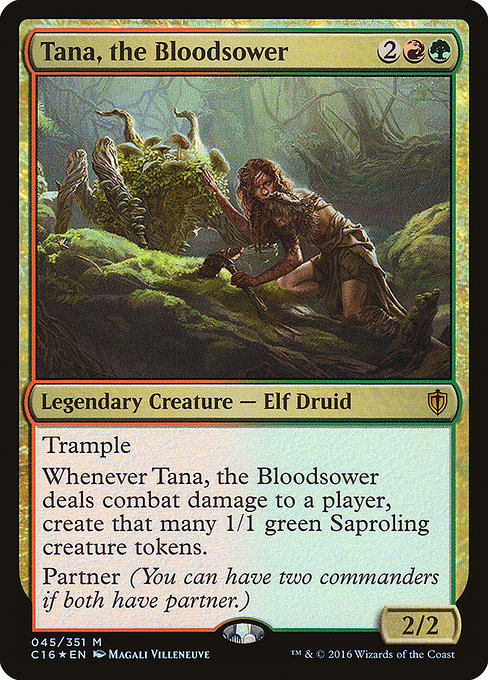
Tana, the Bloodsower
Combat-based production
Combat damage to a player creates that many Saprolings. Attacking or hitting only a blocker does not supply the same event.
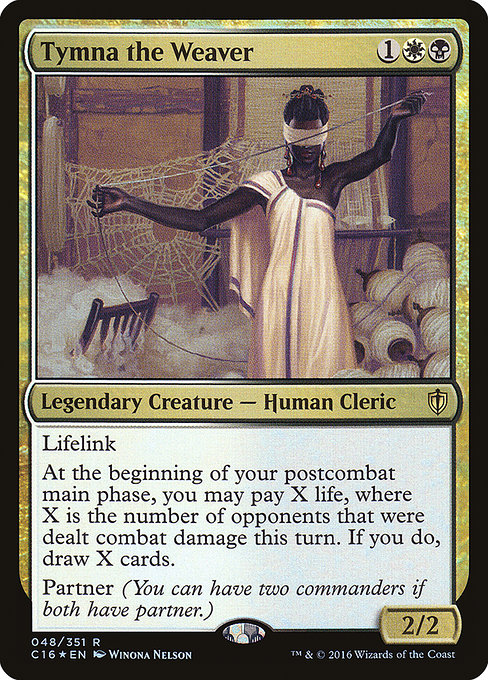
Tymna the Weaver
Combat-based access
A postcombat main phase can offer cards for life according to opponents dealt combat damage that turn. Connecting with different opponents matters more than merely declaring many attackers.
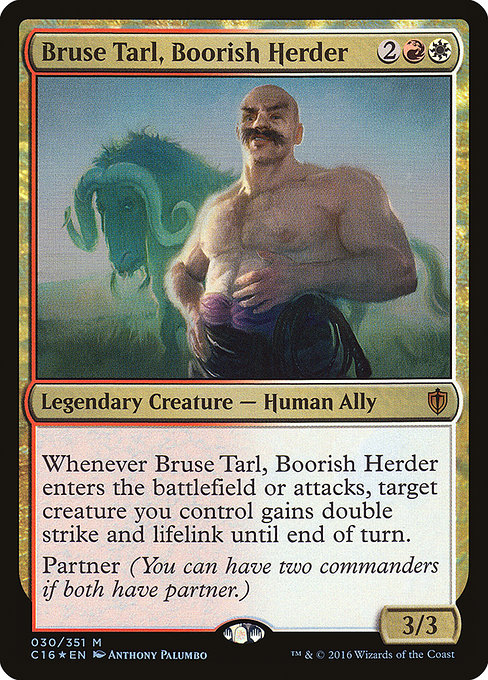
Bruse Tarl, Boorish Herder
Focused combat support
Its entry or attack can give a targeted creature double strike and lifelink for the turn. It does not itself guarantee that creature reaches a player.

Ikra Shidiqi, the Usurper
Combat life resource
Rewards your creatures dealing combat damage to players with life based on their toughness. Life can support costs without being a finish by itself.
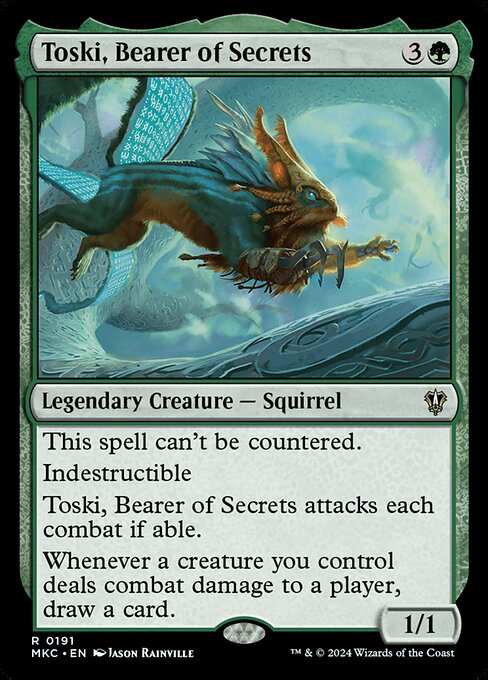
Toski, Bearer of Secrets
Creature-based draw
Draws when your creatures deal combat damage to players. Its durable body does not make the rest of the army immune to removal, and it must attack when able.

Ohran Frostfang
Attack and draw support
Gives attacking creatures deathtouch and draws from combat damage to players. Its five-mana investment still needs creatures and a useful attack.
Use green to establish the first colored sequence
Nature's Lore and Three Visits can find Forest cards, including suitable typed duals. They do not force the chosen land tapped, though its own entry conditions still apply. Farseek can find Plains, Island, Swamp, or Mountain cards and puts its chosen land tapped. This identity can use Plains, Swamp, and Mountain access, including duals that also have Forest. Build actual targets rather than assuming any land producing green is searchable.
Birds of Paradise can supply any color through a creature with the usual tap restriction. Land ramp can preserve development after creature wipes, while Sakura-Tribe Elder can contribute a body and a sacrifice before becoming a tapped basic. A creature-heavy plan may value that overlap. A deck repeatedly losing both mana creatures and attackers can benefit from a more resilient mix.
Use Mana Base Calculator to inspect early green access and later white-black-red requirements. Four-color fixing is a sequence, not an even division. A utility land can be powerful late and still prevent an early answer. A colorless rock can accelerate generic support without paying Saskia's four colored pips. Keep these differences visible before trimming lands for another synergy card.
Read Saskia's damage as a separate event
Saskia chooses a player as it enters. When a creature you control deals combat damage to a player, the trigger makes that creature deal that much damage to the chosen player. That can let an attack pressure one player through combat and another through the additional event. The selection and actual combat damage determine the result, rather than a general instruction that every attack damages everyone.
The additional damage is not combat damage simply because combat caused the trigger. Commander combat-damage tracking does not count it as another combat hit from the commander. Abilities or rules that specifically require combat damage need that distinction. Damage abilities on the source can also require their own text check, so do not reduce every interaction to the slogan that damage doubles.
Choose the attacked player and chosen player deliberately. Blockers, life totals, available answers, and the threat the table needs removed can change the useful line. A creature that cannot connect may provide no trigger despite a high power. A smaller evasive creature can sometimes supply more reliable pressure. Build a route to actual combat damage before adding another multiplier to a damage event that rarely occurs.
Partners reward different pieces of combat
Tana creates Saprolings from damage to a player, which supplies bodies for future attacks, sacrifice, or other payoffs. Bruse can give double strike and lifelink to a targeted creature through entry or attacking. Those abilities can support a connection, but double strike is not evasion. A blocked attacker without trample may deal no combat damage to the defending player.
Tymna uses the number of opponents dealt combat damage in the turn when offering the life payment at a postcombat main phase. Sending several creatures toward one player does not equal damaging several different players. Cheap evasive pressure can supply a useful resource pattern, while an expensive generic engine may delay the first cards. Choose creatures that can connect and still contribute if the commander is removed.
Ikra rewards connections through toughness-based life gain. That can help pay black access costs or stabilize combat, but accumulating life is not itself a victory condition. It does not erase previous commander damage or remove poison counters. A partner package should connect the life resource to useful cards, pressure, or another defined payoff rather than add lifegain for its own sake.
Choose draw that works when attacks are blocked
Toski and Ohran Frostfang can turn successful attacks into cards. They require the damage event and an army able to produce it. Frostfang's deathtouch can make blocking difficult, but an opponent may still accept trades or remove the engine. A creature deck should value these options without counting them as unconditional recovery from an empty battlefield.
Night's Whisper and Harmonize provide access without a combat connection. Guardian Project rewards qualifying nontoken entries, while Beast Whisperer rewards casts. Skullclamp can convert expendable creatures into repeated draw if equip costs and deaths are available. Choose the event the ordinary cards supply, and retain an independent route after a wipe or a stalled attack.
Welcoming Vampire and Tocasia's Welcome have different creature checks and once-per-turn limits. Token production can trigger them without drawing for every token in a batch. A sacrifice draw spell also needs material paid as an additional cost. Keep quantity, selection, and conditional engine access in separate notes. A dozen synergy cards can still leave a hand with no way to find its next useful resource.
Use broad removal without spending every turn answering
Swords to Plowshares can exile a creature efficiently. Anguished Unmaking can exile a nonland permanent and causes you to lose three life on resolution. Assassin's Trophy destroys an opposing permanent and may provide a basic land that the spell does not force tapped. Beast Within gives a token. Wear // Tear and red artifact answers fill narrower roles. Choose a compact mix that leaves mana and slots for the proactive plan.
A large interaction count can still have gaps. Creature destruction may fail against indestructible. A targeted spell may fail against the relevant targeting restriction. A broad but expensive answer can arrive too late. Use Interaction Checker to inspect types and timing, then keep the drawback and target restrictions visible beside each role.
Spend a one-for-one answer on a threat that matters. Three opponents continue developing while you trade a card with one of them. That does not make removal bad; it makes purpose important. If the deck spends every turn reacting without applying pressure, another attacker or resource engine may be more useful than the next flexible answer. Balance agency with a way to close.
No blue still permits specific stack answers
Mana Tithe can counter a spell unless its controller pays one. Lapse of Certainty can counter a spell and put it on top of its owner's library instead of the graveyard. Rebuff the Wicked targets a spell that targets a permanent you control. These are legal white options with different scope and cost, not a complete blue-style counter package.
Bolt Bend can change the target of a spell or ability with a single target and can be cheaper when you control a creature with sufficient power. That can protect a key permanent or redirect a useful effect, but it does not solve a nontargeting wipe or an effect with several targets. Pyroblast and Red Elemental Blast have color-specific applications under their text. Choose such tools for threats you actually need to interrupt.
Protection and proactive disruption can also create a safe window, but must be evaluated honestly. A restriction on casting spells does not necessarily stop an activated ability, and hexproof does not answer every reset. Keep the exact threat and the relevant window in view. The absence of a color changes the menu without justifying the absolute claim that the deck cannot interact on the stack at all.
Sacrifice and recovery should support the pressure
A token engine can supply material for Viscera Seer, Goblin Bombardment, or another outlet. Blood Artist and Zulaport Cutthroat reward deaths with different scopes. An outlet permits the action, a producer supplies the material, and a payoff rewards it. Keep all three links clear. Adding another drain creature does not fix a list with no expendable bodies or legal way to sacrifice them.
Eternal Witness can return a card to hand. Sun Titan can return a permanent with mana value three or less on entering or attacking. Sevinne's Reclamation can recover a similar range through different costs. Those options can restore a producer or draw engine, while Reanimate can return a creature at a life cost. Choose actual targets the deck expects to lose.
Tokens cease to exist after leaving, so ordinary creature-return spells do not retrieve a spent Saproling army. A graveyard exile effect can remove real cards before recovery too. Retain independent production and draw that work without the commander. The useful recovery package gives the deck another pressure turn rather than assuming its first board will remain intact forever.
Choose protection and finishing support together
Heroic Intervention and Boros Charm can preserve permanents through destruction under their respective text, but not every exile, sacrifice, bounce, or toughness reduction. Teferi's Protection and Clever Concealment phase with different scope. Phasing does not create fresh entry triggers. Choose the protection for the resource exposed and the mana available beside the planned attack.
A wide army can use a team payoff such as Overwhelming Stampede, while one large attacker may need evasion and focused protection. Akroma's Will can create a strong combat window with an existing board. A damage multiplier needs an event it actually modifies. Do not add several finishers for different board shapes without enough producers or draw to create any of them reliably.
Explain intentional loops, restrictive creature effects, or deterministic damage lines before games. A creature-focused deck can still create a much sharper experience than its printed curve suggests. Choose tutoring, protection, and redundancy for the actual pace. Four-color access should help fill gaps while preserving the commander's reason for being there.
Make role-preserving swaps
| Observed problem | Comparison to test | Tradeoff |
|---|---|---|
| Saskia has high power but few connections | A redundant multiplier to useful evasion or pressure | Less peak damage, more actual triggers |
| Tymna attacks one player but needs broader access | A low-fit expensive card to useful evasive creatures | Different threat size, more damage opportunities |
| Life gain accumulates without a finish | A redundant defensive payoff to compatible pressure or access | Less life ceiling, a destination for resources |
| Creature wipes remove both army and mana | Some vulnerable acceleration to lasting land development | Different speed, better rebuild |
Save the old version and compare one bottleneck. Use Mana Curve Analyzer to inspect setup, while recording activated and equip costs manually. Current printing prices vary. Better colored sources, independent draw, and useful cheap creatures can improve ordinary hands more than another premium card that only strengthens an attack the deck rarely gets to make.
Frequently asked questions about no-blue four-color staples
Build your deck
Put these choices into a Commander list. Create a free account to save your deck and keep tuning it with Deckcipher.
FAQ
Does Saskia double commander damage?
Its additional triggered damage is not combat damage. Commander-damage tracking only counts the relevant commander's combat damage to a player, so do not record the extra event as another combat hit. Follow the source and event rather than treating every extra damage instruction as a duplicate combat step.
Does Tana create tokens for attacking?
It needs combat damage to a player. Attacking without connecting or dealing damage only to a blocker does not supply that event. Evasion, trample, and protection can support the plan in different ways. Choose the actual obstacle before adding another token payoff.
Can a no-blue deck counter a spell?
Specific legal cards can, including Mana Tithe, Lapse of Certainty, and Rebuff the Wicked under their conditions. These are different from an unrestricted blue counter suite. Choose an answer for a real threat and retain its scope, cost, and drawback.
Does high life prevent commander damage losses?
No. Gaining life does not erase previously recorded commander combat damage or remove poison counters. Life is a useful resource for survival and costs, not universal protection. Keep a clear finish and relevant interaction beside lifegain engines.
Does double strike guarantee a player is hit?
No. Blocking and damage assignment still apply. A blocked attacker without trample may deal no combat damage to the defending player. A creature can have high potential damage and still need a route through the board.
What should I fix before another combat payoff?
Check early fixing, creatures that can connect, independent card access, protection, and recovery. A more powerful multiplier may remain unused when those links fail. Choose the support for the board the commander normally produces rather than the largest imagined attack.
Build the four colors around real damage and recovery
Build your deck around Saskia pressure, partner combat resources, or a chosen sacrifice route. Create a free account to save the version and compare it across the connected tools. Track actual connections, costs, and the board after spending resources. A strong no-blue package turns its broad creature tools into repeated meaningful turns instead of one unsupported attack.