
Quick answer
Esper staples should connect white removal and protection with blue access and black resource engines. Void Rend and Esper Charm offer flexible three-color options, while cheaper single-color answers can preserve development. Artifact, token, connive, and control commanders need different engines. Choose the normal action first, then reserve mana and slots for a clear finish.
Esper has broad answers but still needs a focus
Esper is white, blue, and black. It can counter spells, exile creatures, remove noncreature engines, draw cards, and reuse graveyards. That coverage makes the color combination attractive for control and artifacts, but those are not its only plans. Tokens, evasive combat, enchantments, and reanimation can all use Esper support. A staple package should keep the chosen commander working rather than turn every list into an identical control shell.
Start with the resource the commander provides. Raffine rewards attacking and conniving. Alela rewards casting artifacts and enchantments. Marneus Calgar rewards token entries. Urza, Chief Artificer rewards an artifact-creature plan. These events can overlap, but they are not the same. A card that increases the artifact count may contribute to one engine without producing the casts or token batches another commander needs.
The absence of green also matters. Esper can use mana rocks, Treasures, and specific creature or land-access tools, but should not copy a green deck's ramp package. A list with excellent three-color interaction can still spend its first turns unable to cast it. Build early mana and independent card access before adding another expensive engine. Good coverage is only useful when the deck can pay for the relevant answer.
Esper-specific comparisons

Void Rend
Broad destruction
Cannot be countered and destroys a target nonland permanent. It still does not exile, bypass indestructible, or hit a land.

Esper Charm
Flexible instant
Offers two-card draw, targeted two-card discard, or enchantment destruction. Choose the mode for the current problem rather than assuming all three happen.
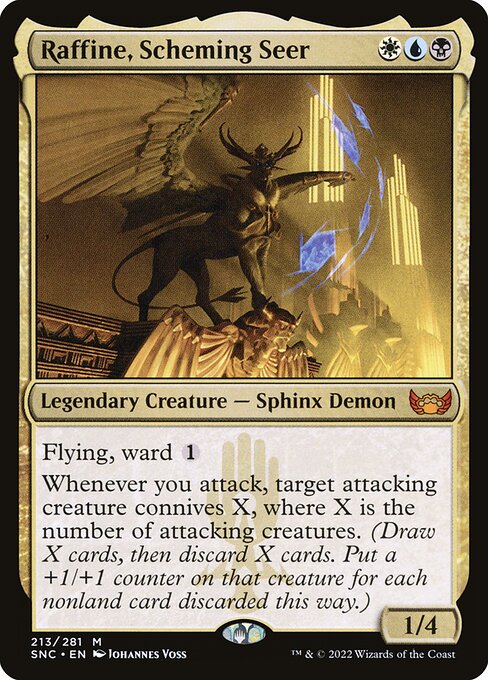
Raffine, Scheming Seer
Combat selection
Rewards attacking through connive on a targeted attacker. Drawing and discarding improves quality; nonland discards supply counters rather than pure hand growth.

Alela, Artful Provocateur
Cast-based token production
Artifact and enchantment casts create flying Faeries. Putting those permanents directly onto the battlefield does not produce the same cast event.
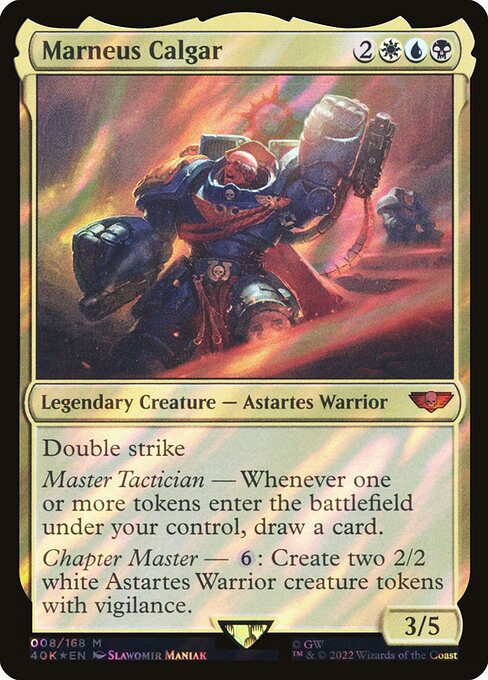
Marneus Calgar
Token-entry draw
Draws when one or more tokens enter under your control. A single batch of several tokens is not a separate trigger for every token.

Urza, Chief Artificer
Artifact-creature development
Its affinity counts artifact creatures, not every artifact. It also supports an artifact-creature board and produces a Construct at your end step.

Sharuum the Hegemon
Artifact recovery
Can return an artifact card from your graveyard to the battlefield on entering. It needs a relevant target and costs six mana before that value.
Build mana before collecting demanding gold spells
Arcane Signet provides a color in the commander's identity. A Talisman can produce one mana directly, with one damage to you from its colored mode. A guild Signet needs one mana input to produce its two colors. These differences affect whether the deck can develop and still leave an answer available. A turn with three lands and a Signet is not correctly counted by adding two mana from the Signet without paying its input.
Choose rocks for actual colored requirements. Raffine wants all three colors early. Void Rend and Esper Charm also require white, blue, and black. Counterspell needs two blue, while some black engines need several black pips. A rock that makes only colorless may be good for generic setup and still fail the critical colored spell. Sol Ring accelerates many turns without fixing those requirements.
Raffine's Tower supplies Esper colors and has basic land types, but enters tapped. Command Tower has a different entry profile and no basic land types. Pain lands, check lands, and utility lands create different opening sequences. Use Mana Base Calculator to inspect the actual early sources. An artifact theme is not permission to replace too many colored lands with interesting colorless sources.
Use cheap answers beside the flexible ones
Void Rend is broad nonland destruction with an uncounterable clause. That clause helps it resolve through ordinary counters but does not remove indestructible. Anguished Unmaking can exile a nonland permanent and causes you to lose three life on resolution. Despark is cheaper but restricts the target by mana value. Choose the problem each solves and retain a mix rather than paying three colored mana for every interaction slot.
Swords to Plowshares provides cheap creature exile, while blue counters can stop an important spell before it resolves. Arcane Denial is less demanding on colored mana than Counterspell but can give the opposing player cards. Swan Song has a restricted type range. A control deck needs to know which answer it can afford while developing, and which answer still works after a permanent has entered the battlefield.
Esper Charm can destroy an enchantment or provide cards when no answer is needed. Its discard mode targets a player and can be useful in a particular resource fight, but trading a card to make one opponent discard does not automatically control the other two players. Use the flexible mode you need. A guide should not treat discard as universally useful multiplayer pressure regardless of the opposing hands and engines.
Artifact count and artifact casting are different engines
Alela creates a Faerie from casting an artifact or enchantment spell. A Treasure token entering is not an artifact spell being cast. Sharuum returning an artifact directly is also an entry rather than a cast. If the deck relies on Alela for production, retain enough actual spells that produce that event. Adding token generators alone may increase artifact count while doing less for the commander than expected.
Etherium Sculptor reduces generic costs of artifact spells. It does not reduce colored pips or the cost of activating an artifact already on the battlefield. A list of cheap artifacts with no generic costs may receive little benefit. Foundry Inspector offers a similar generic discount through a different body and cost. Compare expected casts and the commander's other needs rather than calling either equivalent to a mana rock.
Urza, Chief Artificer has affinity for artifact creatures specifically. Ordinary Treasures, Clues, and mana rocks do not count unless they are also creatures. The deck can use cards such as artifact creatures that accelerate or provide value to connect its development with that discount. The affinity reduces generic mana, so the colored requirement remains. Count the actual artifact-creature type line instead of the total artifacts displayed in a deck summary.
Tokens need a batch-aware draw plan
Marneus Calgar draws when one or more tokens enter under your control. Creating several tokens together supplies one occurrence of that event, not one for each token. Creating tokens in separate events can produce separate triggers. Its own paid token-making ability can therefore be a mana sink and draw opportunity, but the cost and batch structure determine the result. Do not multiply the draw count by token quantity automatically.
Welcoming Vampire and Tocasia's Welcome have different qualifying creature checks and once-per-turn limits. Skullclamp can draw repeatedly if expendable creatures can die and equip costs are paid. A token deck may prefer these engines over another expensive enchantment that draws only from spell casts. Choose the event the normal producers actually supply, and keep independent access for a board wiped clean of creatures.
Artifact tokens also carry competing uses. A Treasure can make mana or be sacrificed to another outlet, but not pay two sacrifice costs. A Clue needs mana and sacrifice to draw through its normal ability. A token used for an artifact-count bonus may be worth keeping rather than consuming. Evaluate the board after spending the resources, especially if those tokens also provide the colored mana needed for interaction.
Connive improves quality without creating free cards
Raffine makes a targeted attacking creature connive X, where X is the number of attacking creatures. This is one connive X action: draw X cards, discard X cards, then put a +1/+1 counter on the conniving creature for each nonland card discarded this way. It is not X separate ordinary connive actions, and the hand does not grow by X. The selection can stock a graveyard while building an attacker, but the trigger needs an attack and a legal target.
Cheap evasive creatures can support that attack pattern more naturally than several expensive generic engines. A creature that connects can also support combat-based draw, while a large nonattacking artifact may add little to Raffine's engine. Decide whether the deck uses the discarded cards for recursion or mainly values selection and counters. That choice affects whether a graveyard package deserves its slots.
Do not discard the only answer you need just to gain another counter. A larger attacker is useful only if the line remains safe and can reach the relevant opponent. Board wipes, blocked attacks, and removal can interrupt a plan invested in one creature. Keep a fallback draw route and enough independent interaction to function when the preferred attacker is unavailable.
Recursion should match the card types you spend
Sharuum can return an artifact from your graveyard when it enters. That can recover a resource engine or useful artifact creature, but not an arbitrary enchantment or instant. Its six-mana cost asks for a payoff worth reaching. A deck that rarely has important artifacts in the graveyard should not include it merely because Esper has an artifact reputation.
Sun Titan returns a permanent card with mana value three or less on entering or attacking. Sevinne's Reclamation can recover a similar permanent range with different costs and flashback. Reanimate instead returns a creature from any graveyard at a life cost. Compare which card types and mana values your actual engine loses. The best recovery slot is the one with useful targets after the disruption you expect.
Tokens do not become reusable cards after leaving the battlefield and ceasing to exist. An artifact-token engine may need to rebuild production rather than retrieve every spent resource. Keep enough independent producers and draw that the deck can restart. A graveyard full of instants does not support artifact-only recursion, and an exile reset may remove the targets ordinary return spells require.
Choose resets with your own permanents in mind
Supreme Verdict cannot be countered and destroys creatures, but indestructible creatures survive that destruction. Toxic Deluge can reduce toughness enough to remove them at a life cost. Farewell can exile selected categories and affects your resources in those categories too. An artifact deck selecting the artifact mode can lose its mana, draw, and tokens together.
Austere Command can sometimes preserve the part of your board you need, depending on the selected modes and current permanent values. Its creature split uses mana value, not power. A large Construct token can have a low mana value despite its size, so do not assume a high-toughness artifact army survives the small-creature mode. Read the actual characteristics before choosing a supposedly asymmetric reset.
Protection can preserve a developed board, but only against the effects it covers. Indestructible does not stop exile, and hexproof does not stop an untargeted wipe. Teferi's Protection phases rather than retriggering artifact or creature entries. A control list may prefer a reset, while an artifact-token list may prefer protection or recovery. Choose these as one package so the answers do not undermine the engine.
Turn value into a defined endgame
Esper can accumulate a large hand and a durable board while still lacking a finish. Artifact creatures can attack, token production can support a combat payoff, and recursion can maintain pressure. A control deck can choose an alternate condition or a verified compact line. The destination should be present in the list rather than assumed to appear after enough cards are drawn.
Tivit, Seller of Secrets can create Clues and Treasures through its vote-based ability. Those resources require their own spending rules and do not automatically constitute a win. A deck can use them for development and later pressure, or deliberately build a combo around them. Do not imply that choosing Tivit commits every player to the same finish or that the commander's resource creation is free to use without mana.
Explain the actual route before games, especially if the list includes deterministic combos, repeated extra turns, or restrictive resource denial. A collection of expensive staples does not by itself describe pace. A clear plan helps choose the right protection and interaction too: preserving combat pressure, forcing through a spell, and grinding value require different answer windows.
Make swaps that improve the real engine
| Observed problem | Comparison to test | Tradeoff |
|---|---|---|
| Alela has artifacts but few artifact casts | A redundant token payoff to a useful castable artifact | More commander events, less token amplification |
| Urza discount is weaker than expected | A noncreature artifact to a useful artifact creature | Different vulnerability and support roles |
| Gold answers sit uncastable early | Some flexible three-color answers to cheaper coverage | Narrower targets, easier development turns |
| Many tokens, little lasting card access | A redundant multiplier to a compatible draw engine | Less ceiling, better resources after production |
Save the earlier version and change one role at a time. Use Interaction Checker for coverage and Mana Curve Analyzer for expensive setup. Keep type-specific and batch-specific conditions in a manual note because the printed curve alone cannot show them. Prices vary by printing. A modest source upgrade or a compatible cheap artifact can improve more hands than one isolated premium value engine.
Frequently asked questions about Esper staples
Build your deck
Put these choices into a Commander list. Create a free account to save your deck and keep tuning it with Deckcipher.
FAQ
Does Void Rend exile an indestructible permanent?
No. It destroys a nonland permanent and cannot be countered. Indestructible still prevents destruction, and lands are outside the target range. Use an appropriate exile effect or another answer when destruction is insufficient. Resolving reliably is different from removing every kind of threat.
Does Alela trigger from Treasure tokens entering?
Not through its artifact-and-enchantment cast trigger. Tokens entering are not spells being cast. Alela wants actual qualifying casts, while other commanders may reward entries or artifact count. Build support for the event your chosen commander uses.
Does Urza count all artifacts for affinity?
Urza, Chief Artificer uses affinity for artifact creatures. A noncreature mana rock or Treasure does not count merely because it is an artifact. The discount also reduces generic costs, leaving colored requirements. Count the relevant type line rather than every artifact in the deck.
Does Marneus draw once for every token?
Its trigger sees one or more tokens entering under your control, so a single batch of several tokens creates one trigger. Separate entry events can create separate triggers. Check how the producer creates tokens instead of multiplying the draw count by the number of bodies.
Does connive count as raw card advantage?
It draws and discards, improving card quality and potentially adding counters from nonland discards. It does not normally increase hand size by the number connived. Recursion or discard payoffs can add value, but they are additional parts of the engine.
What should an Esper deck upgrade first?
Check early colored mana, independent card access, answers to the relevant threats, and a clear finish. A powerful flexible spell can remain unusable when the mana cannot support it. Fix the ordinary turns and the engine's actual trigger before buying another premium generic value card.
Build Esper around casts, entries, or combat
Build your deck with the resource event written down. Create a free account to save the list and compare that version across the connected tools. Keep track of which artifacts you can spend, which permanents supply draw, and which turn presents a finish. A useful Esper package covers the game's demands while preserving enough space for the commander to make those resources matter.