
Quick answer
Kinnan is a useful first cEDH candidate for learning mana development and a concrete combo. Yuriko offers a combat based source of cards, while Tymna with Kraum teaches broader resource and stack decisions. The best starting deck is one whose opening hands, complete win, and recovery plan you are willing to practice. A simple headline does not make every version simple to pilot.
Choose a learning task before choosing the commander
The best cEDH commander for a beginner depends on which decisions the player wants to practice. Some decks make their early development obvious and hide complexity in the finishing turn. Others offer cards and interaction but ask the pilot to evaluate several opponents at once. A commander with only a few lines of text can still lead a deck with difficult mulligans and many possible sequences.
Start with three questions. Can you explain what a useful opening hand does? Can you demonstrate the complete win rather than only the mana engine? Can you describe what the deck does after that first attempt is stopped? A list that has answers to those questions is easier to learn than a pile of individually strong cards, even if another commander has a reputation for being more straightforward.
cEDH uses Commander rules and its banned list with a shared competitive objective. A powerful casual deck does not become an appropriate competitive starting point merely by adding a tutor and a compact combo. Conversely, price alone does not establish how a deck plays. The intended environment, available opposition, and coherence of the list matter.
The candidates below are learning options, not a global tournament ranking or a promise of easy wins. Individual builds of the same commander can differ substantially. Begin with one coherent list, check its current legality, and learn its existing choices before replacing many cards. That gives early games a useful baseline and makes it easier to distinguish a decision error from a structural problem in the deck.
Kinnan connects early mana to a clear plan
Kinnan, Bonder Prodigy rewards tapping nonland permanents for mana with one additional mana of a type that permanent produced. This can improve ordinary mana creatures and artifacts while leaving lands outside that ability. The resulting development is visible: establish mana, use it to gain resources or present a threat, and preserve enough interaction to survive the other players' turns.
Llanowar Elves illustrates the condition. Its mana activation taps a nonland permanent to produce green, so Kinnan can add another green. An Island does not receive that bonus because it is a land. A mana ability that does not involve tapping the permanent does not qualify merely because it produces mana. Read the actual costs of every proposed engine rather than assuming all mana production is doubled.
Kinnan's other ability costs five generic, one green, and one blue. It examines the top five cards and can put a non Human creature from among them onto the battlefield, with the rest going to the bottom in a random order. That is not a general draw ability and does not allow any card among the five to enter. A chosen creature's entry can be useful even when casting it would have been too expensive.
The learning advantage is that development and pressure are connected in the command zone. The challenge is recognizing when to invest in mana, when to hold an answer, and when an activation is likely to accomplish enough. Some Kinnan builds lean heavily on control engines and copy effects. Those versions can ask very different questions from a creature focused starting list despite sharing the same commander.
Learn the entire Basalt Monolith line before using it
Basalt Monolith normally taps for three colorless mana and can be untapped by paying three. With Kinnan present, tapping it for mana can produce the additional colorless mana, bringing that activation's output to four. Pay three of it to untap the Monolith and one remains. Repeating a legal cycle can build an arbitrarily large amount of colorless mana while the required permanents and abilities remain available.
The untap ability uses the stack, so opponents can respond at that window. Declaring a repeatable sequence is not permission to ignore interaction. Demonstrate the starting state, the actions, and the net result of one cycle, then propose an appropriate finite number of repetitions or shortcut under the rules being used. If another effect prevents activating the artifact, the proposed line may no longer work.
Colorless mana alone does not pay Kinnan's green and blue activation requirements. That is the most important gap to identify before announcing a win. Thrasios, Triton Hero offers one possible conversion through an activation costing four generic mana, which can use the colorless supply. Its ability scries one, then reveals the top card and either puts a land onto the battlefield tapped or draws the revealed nonland card.
Walking Ballista in hand is a different possible payoff. Casting it uses two X payments and it enters with X counters, which can be removed for damage. If the game requires 120 damage before other effects, choosing X equal to 120 requires 240 mana and supplies that many counters. Putting Ballista directly onto the battlefield through Kinnan normally gives it no counters from an X casting payment. The mana engine, access to the payoff, and legal execution must all be explained separately.
| Starting option | Useful learning focus | Difficulty to respect |
|---|---|---|
| Kinnan, Bonder Prodigy | Mana development and a visible resource engine | Different builds have very different mulligans; colorless mana still needs conversion |
| Yuriko, the Tiger's Shadow | Attack decisions and recurring card access | Combat access and top card management compete with interaction slots |
| Tymna the Weaver with Kraum, Ludevic's Opus | Resources across combat and opponents' turns | Four colors and broad answers increase sequencing and threat assessment demands |
| Magda, Brazen Outlaw | A focused Treasure and search engine | The searched artifact or Dragon and its actual follow up line still require detailed knowledge |
Yuriko teaches a different route to cards
Yuriko, the Tiger's Shadow has commander ninjutsu, allowing the ability to be activated from the command zone or hand by paying its costs and returning an unblocked attacker you control. This puts Yuriko onto the battlefield tapped and attacking. It is not casting the commander, so ordinary commander tax is not added to that activated ability's cost. A legal unblocked attacker and the required mana are still necessary.
Whenever a Ninja you control deals combat damage to a player, Yuriko can reveal your top card, put it into your hand, and make each opponent lose life equal to its mana value. Putting that card into your hand is not drawing it. The ability also needs combat damage to a player; damage to a creature or another kind of damage does not satisfy the same event.
This gives the pilot repeated practical questions. Which early creature can get through? Which attacker is worth returning? How much mana can remain available after ninjutsu? Is the current hand better served by another attacker, card selection, or an answer? Those choices connect ordinary combat concepts to a competitive resource plan without requiring every turn to end with a combo attempt.
Yuriko is not automatically easy because her cost can avoid tax through the ability. Opponents can block the supporting attackers or interact with the pieces that make combat reliable. Filling the deck with high mana value cards only to increase revealed life loss can weaken the actual spells you draw. Choose a coherent list whose card quality and route to winning are understood, rather than treating repeated reveals as a guarantee that the table will run out of life first.
Tymna and Kraum broaden the decisions you practice
Tymna the Weaver and Kraum, Ludevic's Opus can partner as commanders and together provide white, blue, black, and red identity. That access supports a wide range of resources and answers, but it also adds colored mana demands. Their individual commander taxes are tracked separately. Casting one again does not increase the other's tax simply because they began in the same command zone.
Tymna's draw opportunity comes at the beginning of your postcombat main phase. Its size is the number of opponents that were dealt combat damage that turn. Damaging the same opponent with three creatures does not count as three opponents. You may pay that much life to draw that many cards. A small attack that reaches a second opponent can therefore matter differently from adding more damage to the first.
Kraum offers flying and haste plus a trigger when an opponent casts their second spell each turn. It does not trigger for every spell after the second. Track each opponent's spells within the current turn rather than counting all spells at the table together. The resource arrives from opposing actions, which can encourage the pilot to preserve interaction and let the engine operate.
This partner arrangement can teach a wide view of the table. The cost is a greater number of choices about which engine to develop, when combat is worth the risk, and how to use broad interaction without exhausting the hand. It can be a reasonable first choice for a player who enjoys that work. It is less suitable if the desired first exercise is one narrow setup that can be rehearsed in isolation.
A focused commander still has hidden execution demands
Magda, Brazen Outlaw provides an example of why a direct headline and an easy deck are different ideas. When a Dwarf you control becomes tapped, Magda can create a Treasure. Her activated ability sacrifices five Treasures to search for an artifact or Dragon card and put it onto the battlefield. The deck must actually generate the tapping events and have the required Treasures to spend.
That access can be powerful, but choosing what to search for is a substantial part of playing the list. The target must answer the current problem or connect to the intended win through the actual board. Searching for a creature is not casting it, and every proposed follow up must work through the effects currently present. An engine disabled by an opposing permanent needs a different decision from one facing only a potential counterspell.
Mono red removes some color sequencing problems while keeping many timing and resource decisions. Sacrificing five Treasures spends mana resources that might have supported another action. A single search is not evidence that every artifact package can finish from every state. This makes Magda appealing to someone willing to study its specific tools rather than an automatic recommendation for avoiding rules work.
Use the same test for any supposedly simple commander: identify what the deck needs on the battlefield, which actions opponents can interrupt, and what remains after the attempt. A player who enjoys a particular commander may learn those details faster through interest and repetition. That practical fit can matter more than another player's claim that the deck takes fewer decisions.
Practice opening hands as action sequences
An opening hand should describe a plan, not merely contain several recognizable staples. In Kinnan, name how you produce green and blue, when the commander can arrive, and what the remaining resources accomplish. Three mana rocks can still be a weak hand if the commander cannot be cast and there is no useful access to more cards. A hand with a combo piece but no relevant development may also be incomplete.
For Yuriko, identify the early attacker and the mana available for commander ninjutsu after it can become unblocked. If the only route depends on an opponent declining an obvious block, the opening is less reliable than it first looks. For a four color partner deck, sequence the exact land and nonland mana rather than counting a dual land as two simultaneous mana.
Use the actual multiplayer mulligan procedure. The first mulligan is free: redraw seven and put zero cards on the bottom. Taking another mulligan means shuffling back the hand, redrawing seven, then bottoming the appropriate number as part of that mulligan, before the next round of keep or mulligan declarations. The second mulligan therefore bottoms one card, and the next bottoms two. The Commander mulligan guide works through the procedure and practical keep decisions.
Write down why you kept before playing the hand. Afterward, distinguish a plan that failed because of opposing interaction from one that could not function even without interference. Both outcomes are useful, but they point to different improvements. Solo practice can expose payment mistakes and missing steps; actual multiplayer games are needed to test threat assessment, pressure, and interaction against three other decision makers.
Learn interaction by identifying the exact window
A stack of spells and abilities resolves one object at a time with priority opportunities between resolutions. Passing priority is not a promise to ignore everything that happens afterward. Conversely, a player cannot wait until an opponent has seen a spell resolve and then retroactively respond to that completed event. State the object being answered and the moment the answer is intended to work.
Thassa's Oracle with Demonic Consultation is a useful exercise in precision for a deck whose identity allows both. After Oracle enters, its triggered ability can be on the stack while Consultation is cast. Naming a card absent from the library can cause Consultation to exile through the library. The Oracle ability still needs to resolve and satisfy its comparison. The sequence includes a creature spell, an entry trigger, and an instant, each with different possible responses.
Removing Oracle after its ability has triggered does not remove the trigger. Its resolution determines devotion at that time, and a zero card library can satisfy a comparison with zero devotion. That does not make the attempt unanswerable: the entry trigger can itself be countered by an applicable effect, and other legal actions can alter the state before it resolves. Learn actual answer categories rather than using remove the creature as a universal shortcut.
The goal of learning these windows is to preserve a meaningful response, not to counter every spell that looks strong. Three opponents may each represent a different threat. Spending the only relevant answer on a minor engine can leave the immediate win untouched. Ask what changes if the current object resolves and which future action your remaining hand can still stop.
Test a complete list before buying interchangeable staples
An expensive card collection is not a substitute for a practiced deck. Begin with a coherent list and use a practice method the group or organizer allows. Casual proxy acceptance does not establish a tournament's policy. Check the event's requirements before relying on a particular printing or substitute, and evaluate purchases only after the intended deck has survived more than a few unopposed sample turns.
Current legality is another reason to check an imported list. Mana Crypt, Jeweled Lotus, and Dockside Extortionist remain banned in Commander under the list checked for this guide. Older primers and videos may still show them. A Competitive Brawl announcement is not a Commander announcement. Use the correct format rather than treating every headline about a familiar card as a restriction on every game mode.
When a budget substitution is necessary, identify the role and resulting cost. Replacing a zero mana source with a two mana source changes opening sequences. Replacing a flexible answer with a narrow one changes which threats the hand can cover. Those choices can still produce a useful practice deck, but their impact should be understood instead of assuming all mana sources or counters perform the same job.
Create a free account and save the starting list in the deck builder. Keep the original version and note each deliberate change with its intended purpose. The cEDH staples guide helps compare roles once the deck is chosen. Early purchases are more useful when they support that specific plan than when they merely expand a collection of expensive cards labeled competitive.
Measure learning through the decisions you can now explain
The first useful milestone is demonstrating the deck's win without skipping mana, targets, or timing. Next, explain a keepable hand that does not contain the win immediately. Then practice a position after the commander has been removed or a combo piece has been exiled. A deck that can only be described from its perfect board has not yet been learned in the form actual games will present.
During games, take brief notes about one uncertain decision rather than trying to reconstruct every action afterward. Record the available resources and the alternatives you considered. A question such as whether to cast the engine or leave blue mana open is easier to review when the actual threat and hand are known. A final win or loss alone cannot establish whether that choice was good.
Stay on the same coherent list long enough to recognize its recurring patterns. Switching commanders after every difficult game repeatedly replaces deck knowledge with novelty. Changing a few slots in response to a documented problem can be useful, but changing half the list obscures which part improved. Interest still matters: a deck you dislike practicing is a poor long term starting choice even if its headline plan is straightforward.
Kinnan, Yuriko, the partner engines, and Magda teach different aspects of competitive Commander. Choose the one whose decisions you want to repeat, respect the complexity hidden beyond the first combo, and learn how the other three players can interfere. That gives the first deck a clear purpose even before the pilot can consistently recognize every opposing line.
Starting commanders and the questions they teach
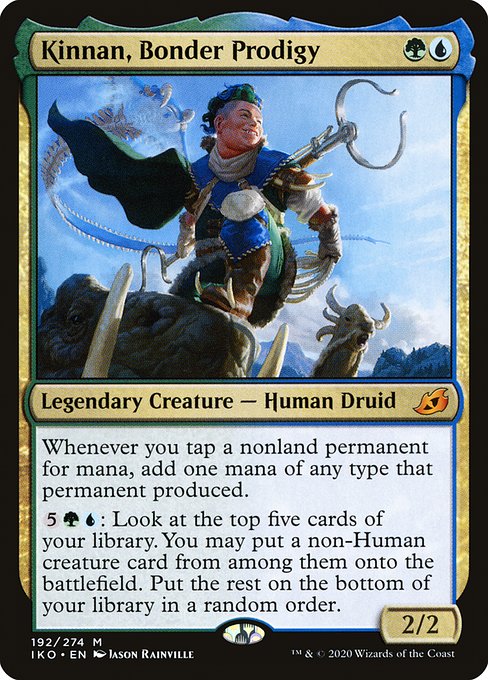
Kinnan, Bonder Prodigy
Mana and conversion
Trace how nonland mana becomes a usable payoff, including colored requirements after a colorless loop.

Yuriko, the Tiger's Shadow
Combat and access
Plan the unblocked attacker, return cost, and mana left for responses rather than assuming access from the command zone is automatic.
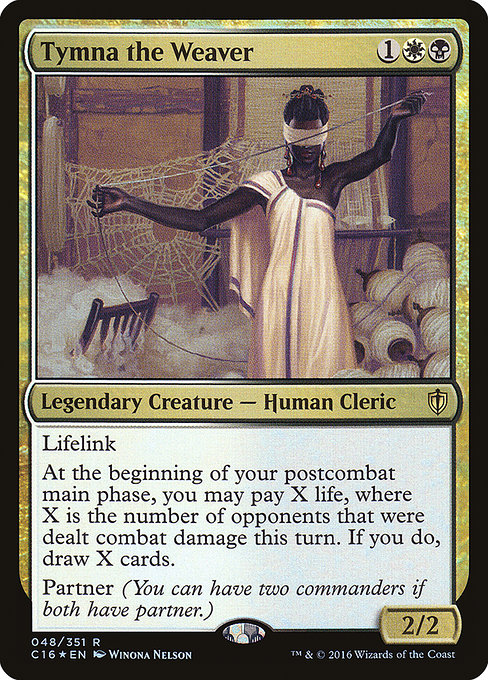
Tymna the Weaver
Postcombat resources
Count distinct opponents reached and decide which attacks justify their exposure.
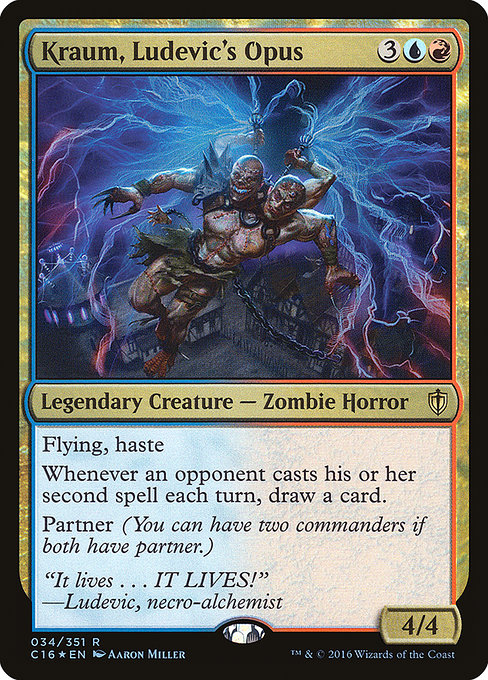
Kraum, Ludevic's Opus
Turn tracking
Follow each opponent's second spell separately while choosing how much mana to commit.
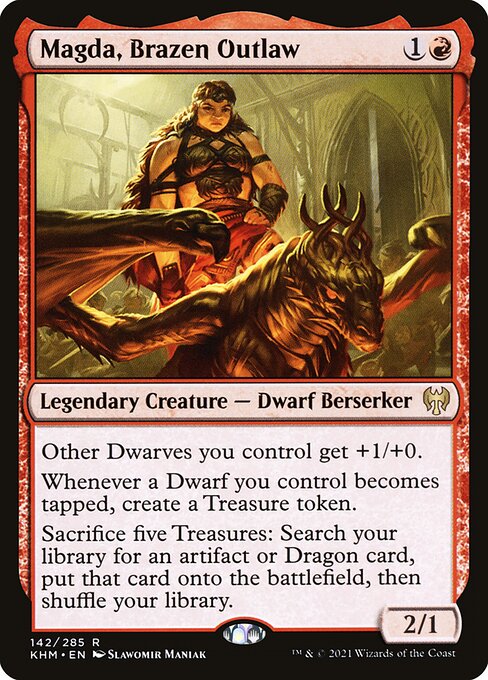
Magda, Brazen Outlaw
Tool selection
Practice the actual searched target and follow up for several disrupted board states, not just one ideal setup.
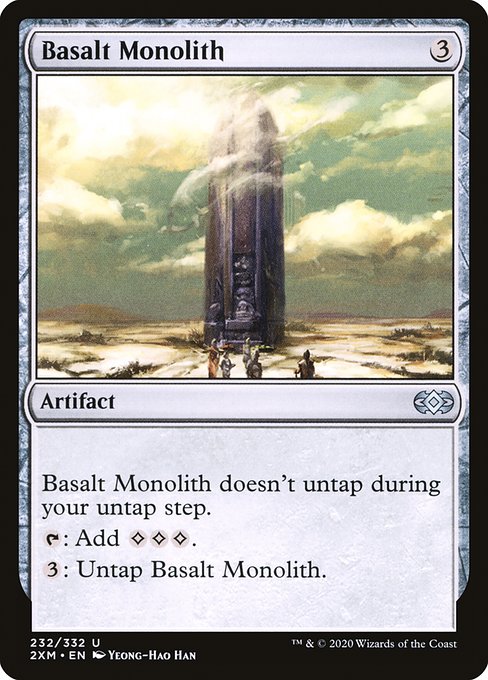
Basalt Monolith
Execution exercise
Its untap ability provides a real response window within an otherwise repeatable mana sequence.
First cEDH commander questions
Build your deck
Put these choices into a Commander list. Create a free account to save your deck and keep tuning it with Deckcipher.
FAQ
Is Kinnan always the easiest first cEDH deck?
No. His resource plan is visible, but different builds ask different mulligan and interaction questions. Choose a specific coherent list and learn its full win rather than treating the commander name as a difficulty rating.
Does Kinnan with Basalt Monolith win immediately?
The interaction can produce an arbitrarily large amount of colorless mana through repetition. You still need a legal payoff or conversion, and opponents can respond to the Monolith's untap activation.
Does Yuriko commander ninjutsu pay commander tax?
No. It is an activated ability rather than casting the commander. It still requires its printed costs and returning an unblocked attacker you control.
Can a beginner start with Tymna and Kraum?
Yes, particularly if the player enjoys resource management and interaction. Four colors, combat choices, and broad answers add work, so practice the actual opening sequences instead of relying only on general card strength.
Should I buy the most common staples first?
Choose and test the deck first. A costly card is useful only when it fills a needed role in the list you intend to play. Confirm any practice substitutes or proxies are acceptable in the intended setting.
Do cEDH decks use a separate banned list?
Ordinary cEDH uses Commander rules and its banned list. Check the format specified by an organizer, since similarly named one on one formats or digital formats can have different restrictions.