
Quick answer
Abzan staples should connect green development, white coverage, and black recovery with the resource your commander actually uses. Abzan Charm, Abzan Ascendancy, Eternal Witness, and a compatible death or counter engine are useful comparisons. Ghave, Karador, Nethroi, and Tayam need different setup. Choose the working exchange before adding more multipliers.
Abzan has several kinds of resilience
Abzan is white, black, and green. It can develop mana, recover creatures, protect a board, and turn deaths or counters into resources. Those strengths can produce durable decks, but resilience does not come from adding every recursion card available. A card that returns creatures to hand, a spell that returns them to the battlefield, and a commander that permits graveyard casting solve different stages of recovery.
Choose what the commander repeatedly spends. Ghave converts counters, mana, and creatures. Karador grants a limited graveyard-cast permission. Nethroi rewards a mutate event with a power-budgeted return. Tayam removes counters to mill and recover a small permanent. Each engine can use useful creatures and flexible interaction, but the supply and payment structure differ. One generic aristocrats package can leave several of them missing their actual requirement.
Build some independent action before maximizing synergy. A land-ramp spell, a draw spell that works with no creatures, or a cheap answer can function when the commander is unavailable. A hand full of multipliers and return spells may do nothing without the correct board and graveyard. The best staple package helps the normal turn and the recovery turn, not just the fully assembled engine.
Abzan-specific cards and decision points

Abzan Charm
Flexible instant
Can exile a creature with power three or greater, draw two at a life cost, or distribute two plus-one counters. Its creature-removal threshold leaves some important small threats untouched.

Abzan Ascendancy
Counters and replacement bodies
Adds counters to your existing creatures when it enters and creates a Spirit when a nontoken creature you control dies. Token deaths do not trigger that second ability.
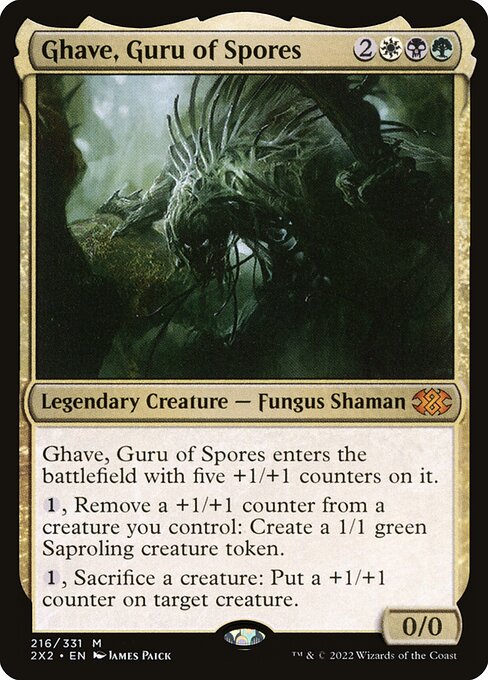
Ghave, Guru of Spores
Resource conversion
Its two activated abilities both require mana. Counters can become Saprolings and creatures can become counters, but that exchange is not automatically limitless.
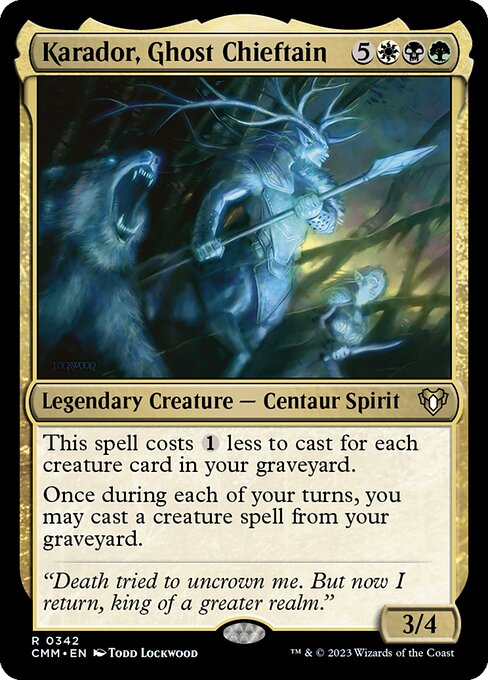
Karador, Ghost Chieftain
Graveyard casting
Creature cards in your graveyard reduce generic casting cost, and its permission lets you cast a creature there once during each of your turns. Costs and timing still apply.
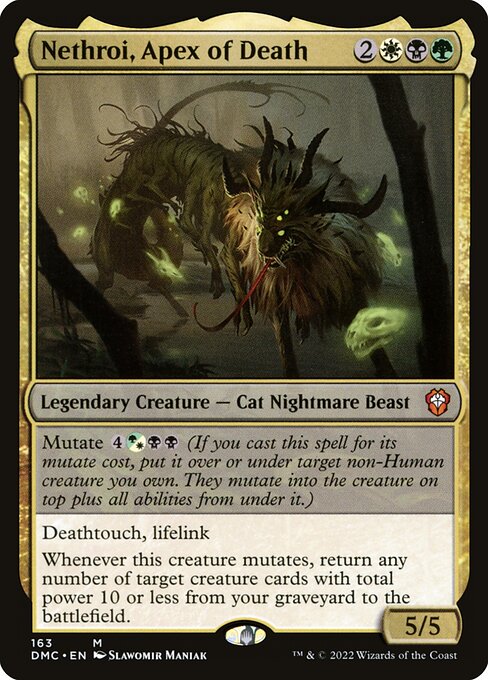
Nethroi, Apex of Death
Mutate recovery
Its mutate trigger can return targeted creatures within a total-power budget. Simply entering normally does not produce the same trigger.

Tayam, Luminous Enigma
Counter-fueled recovery
Gives other entering creatures vigilance counters and can remove counters for a paid mill-and-return ability. The recovered permanent must meet the mana-value restriction.
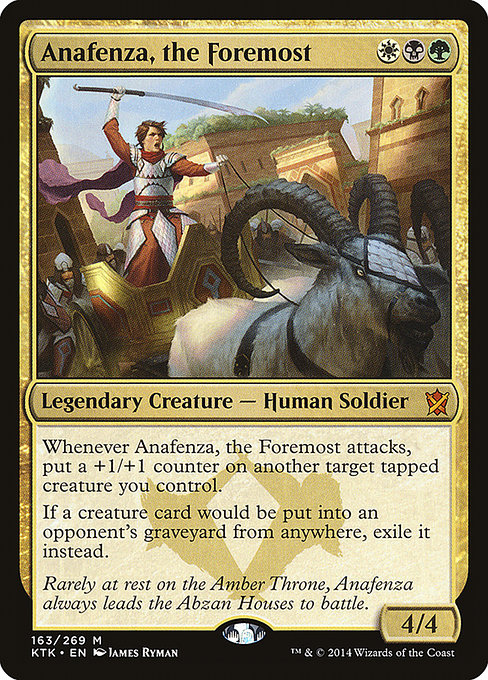
Anafenza, the Foremost
Pressure and graveyard restriction
Can add a counter through attacking and replaces specified opposing creature-card graveyard movements with exile. It does not exile every card type from every graveyard.
Use green development to pay the engine costs
Nature's Lore and Three Visits can find Forest cards, including legal typed duals. The land's own conditions still determine whether it enters tapped. Farseek lists Plains, Island, Swamp, and Mountain and puts its chosen land tapped. Abzan can use Plains and Swamp access, including duals that also have Forest. A plain basic Forest does not qualify for Farseek. Build the target package before treating these spells as complete fixing.
Sakura-Tribe Elder can supply a creature and then a tapped basic land through a sacrifice ability without a tap symbol. That can suit a death engine while preserving permanent mana after the creature is spent. Mana creatures can improve timing and later provide fodder, but sacrificing them also reduces future output. Land ramp can be a useful balance when the list otherwise loses its mana with every creature wipe.
The commander's printed cost may understate the first useful turn. Ghave needs mana after deployment to use its abilities. Tayam needs a separate payment and three removable counters. Nethroi needs the relevant mutate sequence rather than merely casting its ordinary creature form. Use Mana Base Calculator to review the colors and resources for that first useful action, not just the moment the commander reaches the battlefield.
Ghave needs a real resource balance
Ghave enters with five plus-one counters. One ability costs mana and removes a plus-one counter from a creature you control to create a Saproling. The other costs mana and sacrifices a creature to put a plus-one counter on a target creature. The supply moves between counters and bodies, but each repetition also spends mana. Without another resource source, the two abilities do not create an infinite engine by themselves.
A counter multiplier, token multiplier, mana-producing sacrifice outlet, or death payoff can change that balance in a particular package. Verify the exact cards and payments. A payoff that drains opponents does not automatically refund the mana. A token multiplier does not necessarily supply a counter. A card that works once each turn can limit repetition even when the other pieces appear reusable.
Keep enough actual production and draw before adding several multipliers. A hand with Ghave, two payoffs, and no mana after casting the commander can be slow. A more modest card that supplies a useful body or resource independently may improve more hands. Decide whether the intended finish is combat, repeated deaths, or a verified loop, then choose support for that route rather than every related synergy.
Tayam can spend more than plus-one counters
Tayam's activation removes three counters from among creatures you control as part of its cost. The wording is not restricted to plus-one counters. Vigilance counters provided by Tayam can therefore be a resource, as can other counters that meet the instruction. Removing a useful defensive counter has an opportunity cost even if it pays the ability. Count the battlefield after payment, not just the value returned.
The ability mills three and then returns a permanent card with mana value three or less from your graveyard. It does not target a card in advance through that text. A qualifying permanent milled during resolution can therefore become a choice for the return. The card must still be in the graveyard when you make the relevant choice, and the mana-value restriction excludes larger payoffs.
A list built around Tayam can favor useful cheap permanents and ways to replenish counters. An expensive generic recursion spell may be redundant, while a cheap resource piece can be part of the commander's repeatable range. Keep enough mana development as well as counters. An ability can have suitable return targets and still fail because the deck cannot repeatedly pay its mana cost.
Karador and Nethroi recover different packages
Karador becomes cheaper through creature cards in your graveyard, reducing generic cost rather than required white, black, and green. Its graveyard permission allows a creature cast once during each of your turns. It does not make that spell free or grant unrestricted off-turn casting. A creature returned directly to the battlefield by another effect is a different event and does not use that cast permission.
Nethroi's recovery happens when the creature mutates. Casting it normally as a creature does not create the mutate trigger. The return uses targeted creature cards with total power ten or less, so the composition of the graveyard matters. Several utility creatures with low power can fit a budget that would not fit several large attackers. Use the relevant power values rather than total mana value as the budget.
Both commanders need resources available in the graveyard, but they also need early development and independent cards. Self-mill is setup, not ordinary draw. A graveyard exile effect can strand several carefully selected targets. Keep some creatures you can cast normally and enough access to rebuild. A recovery plan becomes more resilient when it does not depend on one zone remaining untouched all game.
Counters can conflict with repeated creature recovery
A creature that leaves and returns is normally a new object without its previous counters. That can create useful entry value while removing an accumulated combat investment. A deck that repeatedly sacrifices creatures may prefer counters as expendable currency, while a deck building one large attacker may want to preserve them. Choose the resource role rather than assuming all counter and recursion cards reinforce one another.
Abzan Ascendancy provides a counter to each creature you control when it enters, then rewards your nontoken creature deaths with Spirits. Those Spirits can supply bodies, combat pressure, or sacrifice material, but their deaths do not trigger the Ascendancy's nontoken condition again. A token army can grow from the engine without being a self-replacing engine on its own.
Cathars' Crusade can turn creature entries into team counters, but costs five mana and adds trigger management. A smaller counter source may be better when the commander needs currency early. Conclave Mentor or Hardened Scales modifies a placement rather than supplying the first event. Compare actual counter production, repeated costs, and the deck's timing before adding another multiplier.
Use draw at the event your list reliably creates
Guardian Project rewards qualifying nontoken creatures entering, including the same-name check. Beast Whisperer rewards creature casts. Moldervine Reclamation rewards your creatures dying. Karador can naturally provide casts, while a return-to-battlefield engine may emphasize entries. A sacrifice package can support death draw, but a creature that gets exiled or bounced did not die. Choose the event the ordinary sequence actually produces.
Night's Whisper and Harmonize can provide access without the creature engine. Village Rites and Deadly Dispute need sacrifice material paid as an additional cost. Skullclamp can draw repeatedly when creatures die, but requires equip mana and suitable bodies. A deck may use several of these, yet should not count every conditional effect as a reliable refill after a complete reset.
White engines such as Welcoming Vampire and Tocasia's Welcome have qualifying conditions and once-per-turn limits. A batch of Spirits does not draw for every token from either. A way to produce creatures on several turns can be useful, but that is another condition to support. Keep enough independent access that the list can find its next producer when the engine is absent.
Cover small engines as well as large threats
Abzan Charm exiles a creature with power three or greater. It can answer many combat threats but miss a small utility commander or combo creature. Its draw mode offers flexibility at a life cost, and its counter mode can support the engine. Do not let that versatility replace a cheap creature answer whose target range covers the small threat you actually need to remove.
Swords to Plowshares, Anguished Unmaking, Assassin's Trophy, and Beast Within have different ranges, costs, and compensation. Trophy may give an opponent a basic land that is not forced tapped by the spell. Beast Within gives a token. Unmaking causes three life loss on resolution and cannot hit a land. Compare the problem rather than assuming every broad removal spell is interchangeable.
Anafenza can restrict specified opposing creature-card movements to graveyards while leaving your own resources alone. It does not exile every instant, sorcery, land, or enchantment card. Graveyard interaction can coexist with your recursion when its scope is appropriate. Use Interaction Checker to inspect the coverage, then keep the exact restrictions in a manual note beside the categories.
Protection and recovery should agree with the reset
Heroic Intervention can preserve your permanents through targeted effects and destruction, but not every nontargeting exile or sacrifice effect. Teferi's Protection and Clever Concealment phase permanents with different scope. Phasing does not reset counters through a leave-and-return event and does not produce new entry triggers. That difference can make it useful for preserving an existing counter investment.
Toxic Deluge reduces toughness at a life cost and can remove indestructible creatures. Farewell can exile selected categories, potentially including your graveyard. Living Death can exchange the creature battlefield with previously exiled graveyard cards through its sequence and help opponents too. A recursion deck should choose the reset with the actual graveyards and recovery route in mind rather than automatically selecting the broadest text.
If the army is made mostly of tokens, it may need fresh production after a wipe rather than another creature-return spell. If the important resource is a cheap permanent, Sun Titan or Sevinne's Reclamation can be relevant. If an expensive creature was exiled, ordinary graveyard recovery does not solve that problem. Keep the restart sequence as concrete as the ideal finish.
Make the mana base fit the active costs
Indatha Triome can supply the three colors and has basic land types, but enters tapped. Command Tower fixes differently and lacks those land types. Utility lands can create late value while making early green ramp or double-white protection harder. A three-color deck needs a sequence, not just an even distribution of land names by color.
Count activated costs as well as the printed curve. Ghave and Tayam can spend substantial mana after the commander resolves. Karador's permission still asks you to pay for the creature spell. A list with a low average mana value can remain mana-hungry through repeated activations and recasts. Cutting lands simply because the spells look cheap may undermine the engine's actual work.
A mana creature can also be sacrifice material, but spending it removes a source for future turns. A Treasure is one-use output. Land-based development may supply a durable base for the exchanges. Review the board after paying the costs and ask whether you can cast interaction or rebuild next turn. A useful engine should not routinely consume all the resources needed to continue.
Make focused replacements
| Current bottleneck | Comparison to test | Tradeoff |
|---|---|---|
| Ghave payoffs lack mana to repeat | A redundant multiplier to development or a verified resource piece | Less ceiling, more paid actions |
| Tayam lacks cheap useful return choices | An expensive low-fit payoff to a relevant small permanent | Different top end, more repeatable access |
| Nethroi setup has the wrong return budget | A poorly fitting target to a useful power-efficient creature | Different combat size, a more coherent recovery package |
| Counters disappear through constant recursion | Choose currency or preserved-attacker support explicitly | Less mixed synergy, clearer resource use |
Save the original list and compare the missing link. Use Mana Curve Analyzer to inspect setup, then add a manual note for repeated payments and alternate costs. Prices vary by printing. A producer, reliable source, or independent draw spell can improve more ordinary hands than another premium payoff that assumes the engine is already complete.
Frequently asked questions about Abzan staples
Build your deck
Put these choices into a Commander list. Create a free account to save your deck and keep tuning it with Deckcipher.
FAQ
Is Ghave infinite by itself?
No. Its counter-to-token and creature-to-counter abilities each require mana. Other cards can change the resource balance, but the exact package must supply every repeated cost and obey restrictions. A sacrifice payoff alone does not refund the missing mana.
Does Tayam remove only plus-one counters?
Its cost says three counters from among creatures you control, rather than only plus-one counters. Vigilance counters and other qualifying counters can pay it. Removing a useful counter can still reduce the board's defenses or combat value, so consider the result after payment.
Can Tayam return a permanent it just milled?
Its ability mills and then returns a qualifying permanent card without targeting one in advance through that text. A suitable card milled during the resolution can be chosen if it is available and meets the mana-value restriction. The entire sequence still needs the activation costs paid.
Does casting Nethroi normally reanimate creatures?
Its recovery trigger requires the creature to mutate. Entering normally does not supply that event. The mutate sequence has its own cost and target requirements, and the return targets must fit the total-power budget. Build for the actual trigger rather than the name alone.
Does Karador make graveyard creatures free?
No. It gives a limited permission during your turns to cast a creature from the graveyard. You still pay that spell's costs and follow timing. Karador's own cost reduction is a separate ability and reduces generic costs according to creature cards in your graveyard.
What is the main Abzan deckbuilding trap?
Combining counters, tokens, sacrifice, and recursion without choosing what each resource is meant to do. A creature that dies and returns normally loses its old counters. Build the complete exchange the commander needs, and retain independent action for games where the graveyard or board is disrupted.
Build Abzan around a workable recovery loop
Build your deck around counters, deaths, or graveyard casts with the costs visible. Create a free account to save the version and compare it across the connected tools. For each staple, name the resource it creates and the next action that uses it. Abzan becomes durable when ordinary cards connect development, recovery, and a finish without assuming every resource survives forever.