
Quick answer
Initiative is strongest when your deck can defend a visible advantage or repeatedly take it through entry effects. Track each player’s dungeon separately and plan the next legal room before chaining triggers.
Taking initiative starts a shared contest with individual progress
The initiative is a designation that one player can have. It does not exist in the game until an effect introduces it. Taking it causes an inherent triggered ability to have that player venture into Undercity. The designation is shared around the table, but each player's dungeon progress belongs to that player. There is no single communal marker that everyone pushes down one dungeon.
If you enter Secret Entrance and an opponent later takes initiative, that opponent normally starts their own dungeon. Your marker stays where you left it. When you take initiative back, you advance from your own position instead of borrowing the opponent's room or starting over automatically.
Use one visible initiative marker and separate dungeon markers for every participating player. This small preparation prevents the most expensive bookkeeping mistake: giving a player progress earned by somebody else.
The recurring reward happens during your upkeep
At the beginning of the upkeep of the player with initiative, that player ventures into Undercity through its inherent trigger. This is not an end-step card draw like monarch. Taking initiative also generates its own venture trigger, so an entry effect during your main phase can produce progress before your next upkeep arrives.
Resolve an initiative creature during your first main phase with no dungeon in progress. Taking initiative starts Secret Entrance and can find a basic land for your hand. If you keep the designation until your next upkeep, the upkeep trigger advances you to Forge or Lost Well. You did not have to cast another initiative card to earn that second room.
The first room improves access to a land but does not put that land onto the battlefield. A four-mana creature finding a basic is not automatically four-mana ramp. Separate card access, actual acceleration, and the value of later rooms when judging your curve.
Combat damage creates a transfer trigger
When one or more creatures a player controls deal combat damage to the player with initiative, their controller takes initiative through a triggered ability. Declaring an attack is insufficient. Noncombat damage is insufficient. The damage must reach the player, rather than only a planeswalker or battle that player controls. The transfer uses the stack and is not an immediate replacement for dealing damage.
Two ordinary creatures connecting with the same initiative holder in the same combat-damage step create one initiative-transfer trigger for their controller. With ordinary double strike, the first damage step can transfer initiative and produce one venture. If that transfer resolves normally, the defender no longer holds initiative, so damaging that defender again in the regular damage step does not transfer it again. A second transfer needs a new qualifying event, such as an intervening effect making that defender the holder again before the second damage event.
Blocking, preventing combat damage, or removing an attacker before damage can preserve initiative. Removing the original creature that introduced the mechanic does not erase the designation. Treat defense of the holder as a combat problem, not as protection of a particular source permanent.
Taking initiative again advances you again
An instruction to take initiative still works when you already have it. You do not gain a second designation, but the trigger for taking initiative happens again. This makes repeated entry effects valuable without requiring the table to steal the mechanic between each use. An existing venture trigger also normally remains on the stack if its controller subsequently loses initiative.
You hold initiative at Forge and resolve another creature whose entry makes you take initiative. Its instruction causes another venture trigger, letting you choose the next connected room when that trigger resolves. You can advance during your main phase even though no combat changed the holder.
A blink plan can use this property, but each blink spell still costs resources and each new entry must actually happen. Do not confuse one repeated trigger with permission to skip rooms or claim every branch reward at once. Your marker follows the arrows one venture at a time.
Existing dungeons change what venture into Undercity does
If you already own a dungeon in the command zone, venturing into Undercity advances that existing dungeon. It does not eject you from a different dungeon midway through. If you have no dungeon, that specific action starts Undercity. Ordinary venture into the dungeon cannot choose to enter Undercity from outside the game because Undercity has its own entry restriction.
A player working through Lost Mine of Phandelver can take initiative and advance Lost Mine. After completing and leaving it, a later venture into Undercity can start Undercity. Conversely, an ordinary venture instruction can advance an Undercity already in progress. Starting a dungeon and advancing one are different rules questions.
For a mixed dungeon deck, write the current dungeon's name beside the marker. A pile of initiative cards does not guarantee that the next room is an Undercity room when another dungeon is already active. The distinction matters when planning a particular final reward.
Choose a route for the board you actually have
Undercity begins at Secret Entrance, then branches through Forge or Lost Well. Forge puts two +1/+1 counters on a target creature; Lost Well scries two. Later choices include a targeted five-life loss, goad, a Treasure, drawing a card, or creating a 4/1 Skeleton with menace. The printed arrows limit which options follow your current room.
Forge can strengthen a creature that needs to survive combat, while Lost Well can improve a weak draw. A route through Stash can help fund a later spell, but you cannot jump from any arbitrary room directly to its Treasure. Arena targets a creature to goad, so check target legality rather than treating it as an automatic protective shield.
Map a likely route before beginning a long chain of ventures. Then revise the next legal choice when the board changes. For the simpler combat-based designation and its end-step reward, compare the <a href="/blog/monarch-in-commander-rules-and-interactions/">Commander monarch guide</a>.
The final room is powerful without casting its creature
Throne of the Dead Three reveals the top ten cards, puts a creature card from among them onto the battlefield with three +1/+1 counters, gives it hexproof until your next turn, and then shuffles. It does not cast that creature. An entry ability can trigger from the arrival, but an ability that requires casting the creature does not trigger from this instruction.
The revealed creature is not automatically attacking or hasty. It receives the specified counters and temporary hexproof, but you must still follow its normal combat restrictions. A top ten with no creature does not manufacture one from elsewhere in the library. The result depends on the actual cards revealed.
A low creature count makes the final room less dependable as a creature engine, even if the rest of the dungeon remains useful. Choose creatures whose entry or ongoing presence matters rather than filling the list with expensive cast-trigger cards that this room cannot fully exploit.
Completion does not end the initiative
A dungeon is completed when it is removed from the game after its final-room condition is satisfied. The initiative remains with its holder. A later qualifying venture can begin another Undercity when no dungeon remains. Completion is also remembered for cards that ask whether you have completed a dungeon; it is not erased merely because the completed dungeon left the command zone.
Finish Throne, resolve its room ability, and keep initiative through the following table rotation. Your next upkeep can start again at Secret Entrance. You do not need another initiative creature simply to reactivate the mechanic. The same player can complete more than one dungeon during a long game.
Allow the final room's triggered ability to finish before cleaning away the dungeon marker. Its presence can matter while that room ability is pending. Keeping the correct timing also prevents a hasty shortcut from creating a new dungeon earlier than the rules allow.
Removing an initiative creature does not switch the mechanic off
The inherent initiative triggers have no source permanent. Once introduced, initiative can continue changing hands after all the original initiative cards leave the battlefield. A creature's separate attack trigger, mana ability, or end-step reward is a different matter and may disappear when that creature is removed.
Destroying White Plume Adventurer after its entry trigger resolved can stop future untap triggers from that creature. It does not take initiative away from its controller. Removing Passageway Seer before its end step prevents that absent creature from collecting a new counter, but the player can still venture at their upkeep if they retain initiative.
Make removal decisions around the reward you need to stop. Sometimes the most efficient answer is to remove an evasive attacker or pressure the holder, while sometimes an especially strong support creature deserves the answer. These decisions are related but not interchangeable.
Build enough defense and a real finishing plan
Initiative rewards keeping a visible advantage, so the package benefits from creatures that can attack selectively and still defend. Vigilance, evasive attackers, disposable blockers, and useful entry effects can all contribute. The deck also needs interaction for an opponent who takes initiative with a much stronger board. Introducing the mechanic can benefit that opponent too.
An initiative creature in a mostly spell-based deck might provide one basic land and little further progress if you cannot protect the designation. A creature-heavy midrange deck may advance repeatedly while turning room rewards into combat pressure. Neither result follows from the word initiative alone; the surrounding list supplies the difference.
Compare the package with your existing draw and ramp slots rather than adding it on top of an already crowded curve. The <a href="/blog/how-to-build-a-commander-mana-base/">Commander mana-base guide</a> helps keep the opening turns functional before your dungeon engine starts.
Cards worth comparing before you choose a package
Examples and the jobs they do

White Plume Adventurer
Entry and defensive untaps
White Plume introduces initiative and untaps a creature on each opponent's upkeep.
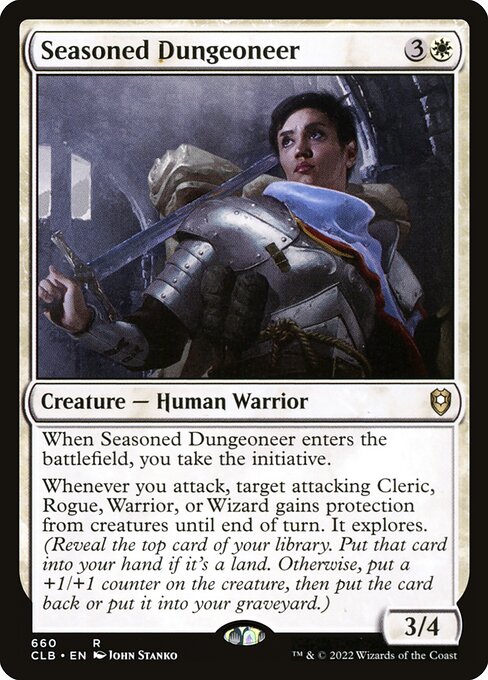
Seasoned Dungeoneer
Initiative with an attack reward
Dungeoneer supplies initiative on entry and rewards an eligible attacker.

Aarakocra Sneak
Evasive body and entry effect
Sneak brings initiative with a flying creature.

Undermountain Adventurer
Mana after the entry reward
Adventurer combines vigilance, initiative, and a tap mana ability.

Passageway Seer
Lifelink and retained-initiative growth
Seer adds an end-step counter while you have initiative.
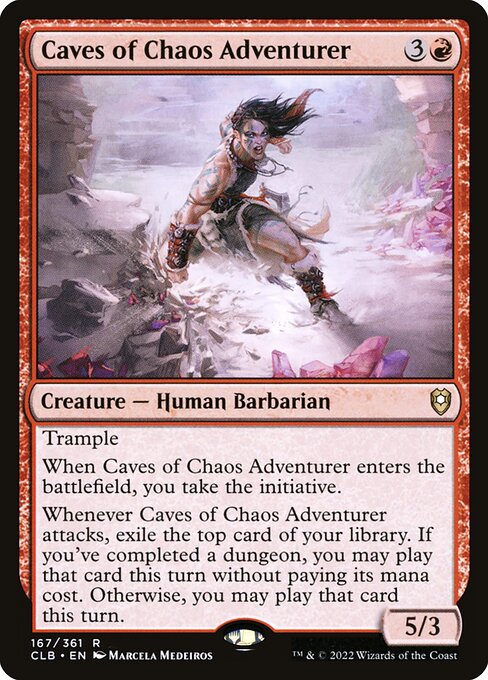
Caves of Chaos Adventurer
Attack-based card access
Caves provides initiative, trample, and an attack trigger that exiles the top card.
White Plume Adventurer
After you have completed a dungeon, its trigger untaps all your creatures instead. The trigger belongs to the creature, unlike initiative's source-free inherent abilities. A creature untapped during upkeep can block later that turn, but untapping does not itself grant permission to use a tap-symbol ability while summoning sick. Plan the defensive body and any mana ability separately.
Seasoned Dungeoneer
Its attack trigger targets an attacking Cleric, Rogue, Warrior, or Wizard, grants protection from creatures, and has that creature explore. It can select itself when it is an eligible attacking creature. Protection helps the selected attacker, not every attacker. Explore can find a land for hand or add a counter and filter a nonland; it is not an unconditional extra card each combat.
Aarakocra Sneak
Flying can help it reclaim initiative from a player lacking an appropriate blocker, while its entry value remains useful in a blink shell. A four-mana entry creature competes with other meaningful plays. The flying body must still survive combat and removal, and one successful entry is not a guaranteed full dungeon.
Undermountain Adventurer
It normally makes two green, or six green instead once you have completed a dungeon. Completion is the condition; merely entering the first room does not qualify. A newly entered creature normally cannot use its tap-symbol ability without haste. Vigilance means attacking does not tap it, but does not remove that restriction or make its mana immediately available on entry.
Passageway Seer
Its conditional trigger checks the stated initiative condition when triggering and again when resolving. Taking initiative back before end step can therefore matter to the counter plan. This is a reward on your end step, separate from the ordinary initiative upkeep venture. Lifelink can help recover combat losses, but does not let the creature take initiative through noncombat life gain.
Caves of Chaos Adventurer
Completing a dungeon changes its permission to allow playing that card without paying its mana cost for that turn. The permission still has a duration. A revealed land uses a land play and is not cast. A spell must satisfy applicable timing and other restrictions unless the actual permission changes them. Optional or mandatory additional costs also require their own handling.
Practice a complete initiative exchange
Start with your marker at Secret Entrance and initiative in your possession. An opponent attacks with two creatures and both deal ordinary combat damage to you in the same step. Their one initiative-transfer trigger goes on the stack. When it resolves, that player takes initiative and generates a venture trigger for their own dungeon. Your marker does not move during that exchange.
On your turn, resolve Seasoned Dungeoneer. Its entry trigger makes you take initiative, and the resulting venture advances your own marker to Forge or Lost Well. Choosing Forge requires a legal target creature for its room ability. You can strengthen a future attacker, but taking initiative itself did not make the creature attack or ignore summoning sickness.
Now keep initiative until your next upkeep. The inherent upkeep trigger advances you from the chosen branch along a printed arrow. This is the extra value your defense protected. If an opponent instead removed Dungeoneer during the preceding end step without changing the holder, you would still receive that upkeep trigger.
Build the package in <a href="/deck-builder?guest=1">Deckcipher's deck builder</a>, compare the cards against your current curve, and create an account to save the list. Write down which cards introduce initiative, which defend it, and which finish the game after the room rewards create an advantage.
A decision table for the interaction
| Position | Correct result | What to check |
|---|---|---|
| First take with no dungeon | Enter Undercity at Secret Entrance | Basic goes to hand |
| Take with an active dungeon | Advance your own dungeon | Do not copy another player marker |
| Retain until your upkeep | Venture through the inherent trigger | Removing the entry creature does not stop it |
| Complete final room | Dungeon leaves after its pending room ability | Initiative remains |
Frequently asked questions
Build your deck
Put these choices into a Commander list. Create a free account to save your deck and keep tuning it with Deckcipher.
FAQ
Does initiative progress belong to the whole table?
No. The holder designation is shared, but each player's dungeon and marker belong to that player. Taking initiative does not copy an opponent's room or reset your own unfinished dungeon.
Can I take initiative while I already have it?
Yes. Doing so causes its taking-initiative venture trigger again. You still have one initiative designation. Repeated entry effects can therefore advance your own dungeon without requiring a combat transfer first.
Does attacking the initiative holder make me take it?
Only qualifying combat damage creates the transfer trigger. An attack stopped by blocking or damage prevention does not satisfy that event. Damaging only a planeswalker or battle is also different from damaging the player.
Can ordinary venture start Undercity?
Not from outside the game. Starting Undercity requires venturing into Undercity. Once Undercity is already your active dungeon, an ordinary venture instruction can advance it. Taking initiative while another dungeon is active advances that existing dungeon instead.
Does finishing Undercity remove initiative?
No. Completion removes the dungeon under the normal rules, while initiative remains with its holder. A later upkeep venture can begin another Undercity if no dungeon is active. Cards that check completed-dungeon history can still recognize the earlier completion.
Does killing White Plume stop the upkeep venture?
Removing the creature stops future triggers from that creature, but initiative's inherent upkeep trigger is independent. If its controller still has initiative at the appropriate upkeep, that player can still venture.
Does Throne cast the creature it finds?
No. It puts a creature card onto the battlefield with the specified counters and temporary hexproof. Entry abilities can work, but cast abilities do not trigger merely from that placement. It also does not grant haste.
What happens when the holder leaves the game?
The active player takes initiative as the holder leaves. If the active player is the one leaving, or there is no active player, the next player in turn order takes it. Continue each remaining player's own dungeon progress correctly.