
How to upgrade Sauron, the Dark Lord
The best Sauron, the Dark Lord Commander upgrades make his ward, Amass, and Ring tempt text matter while keeping enough mana open to survive the table. Start with cheap looting, reanimation, and Orc or Army payoffs, then decide whether your budget supports premium engines like The One Ring and Orcish Bowmasters.
Recommended Sauron deck targets
What Sauron actually wants your deck to do
Sauron, the Dark Lord is not just a six-mana Grixis value commander. He asks you to play a game where opponents are punished for casting spells, your Army token becomes a real threat, and the Ring temptation trigger turns expendable creatures into card flow. That means the strongest Sauron lists usually avoid being pure control piles. You want to interact early, develop mana, discard or mill a few high-impact creatures, then use Sauron as the pivot that makes every spell war awkward for the table.
The first practical upgrade question is whether your list is trying to win with combat pressure, reanimation, spell velocity, or a blended midrange plan. Most casual Sauron decks should be blended. If you go too far into giant creatures, the opening hands become clunky. If you go too far into cantrips and control cards, the Amass text stops mattering. If you go all-in on expensive premium engines, the deck can become stronger but less appropriate for mid-power tables. Use the Bracket Calculator if your group discusses bracket expectations before games.
Core Sauron cards and roles
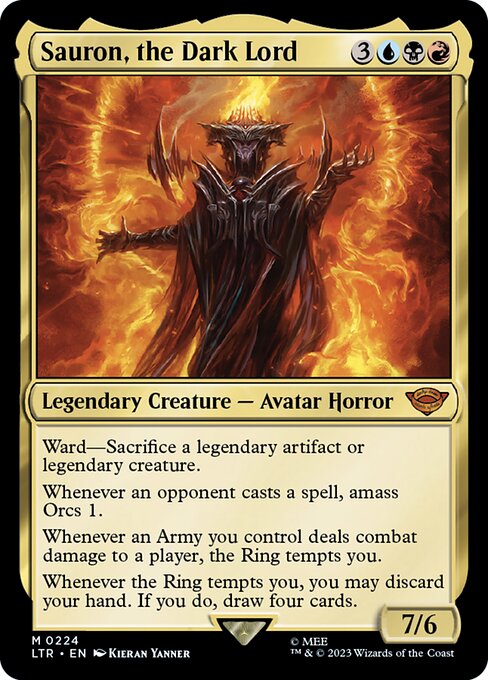
Sauron, the Dark Lord
Commander
The deck's payoff and protection engine. Build so you can cast him with interaction available on the following turn, not as your first relevant play.
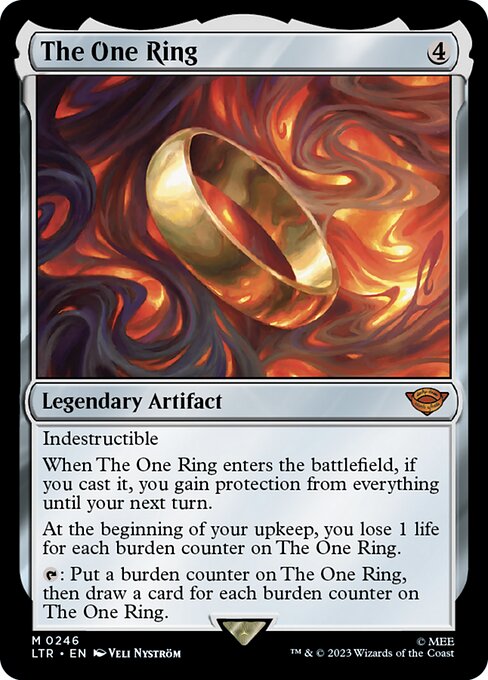
The One Ring
Premium draw engine
Excellent in slower pods because protection buys a turn and the draw scales. It is powerful enough to change table expectations and budget math.
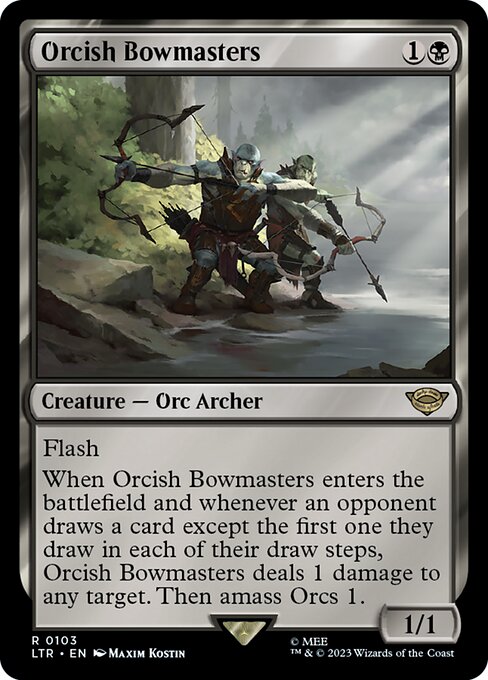
Orcish Bowmasters
Premium pressure and punish piece
Makes opposing draw spells dangerous and grows an Army. It is one of the cleanest upgrades, but not required for a functional Sauron deck.
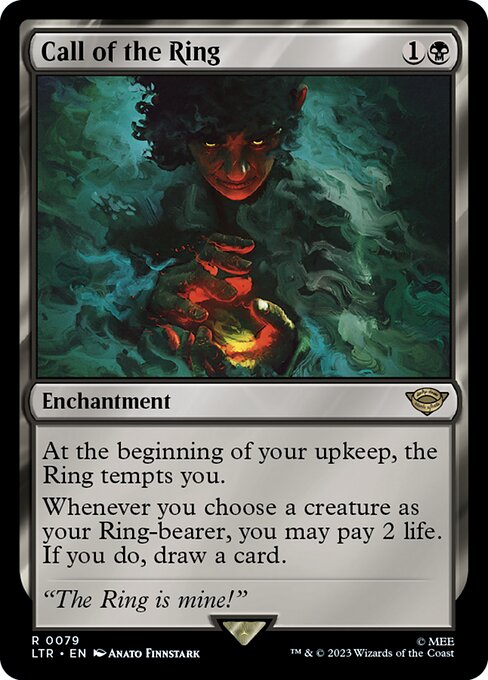
Call of the Ring
Budget Ring temptation engine
Turns life into repeated Ring temptation and card selection. Best when the deck has expendable tokens or recursive creatures to carry the Ring.
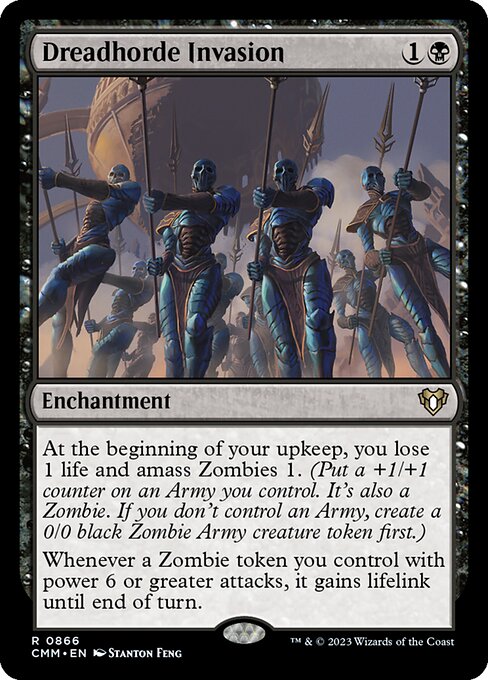
Dreadhorde Invasion
Army maker
Creates an Army every upkeep and gives Sauron a persistent board presence before the commander arrives.
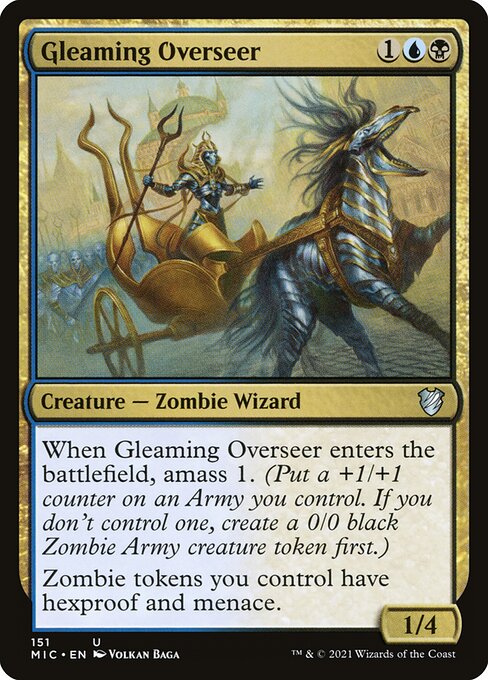
Gleaming Overseer
Army protection
Gives your Zombie Army menace and hexproof, making a single large Army much harder to answer cleanly.
Upgrade priority one: card flow that fills the graveyard
Sauron rewards you for turning dead cards into live cards. The most reliable budget path is to add low-mana filtering that discards reanimation targets, digs for lands, and smooths six-mana commander hands. Faithless Looting is the classic example because it is cheap, proactive, and still useful from the graveyard. Frantic Search is different: it costs three mana on the card, but untapping lands makes it a strong setup spell when you need to hold interaction or reanimation mana.
Do not evaluate these cards only as raw card advantage. In Sauron, the graveyard is a staging area. A hand with a big creature, a reanimation spell, and no discard outlet is often slower than it looks. A hand with Faithless Looting, three lands, and one payoff is usually much more functional. When upgrading a precon-style list, cut overcosted draw spells first. You generally want your early turns to fix the hand, not spend four mana drawing two cards while shields are down.
Card flow and graveyard setup

Faithless Looting
Cheap setup spell
Filters early hands, puts reanimation targets in the graveyard, and flashes back after Sauron has stabilized the board.

Frantic Search
Tempo-positive filtering
Discards two cards and untaps lands, which can let you loot into interaction or a reanimation spell without losing the turn.
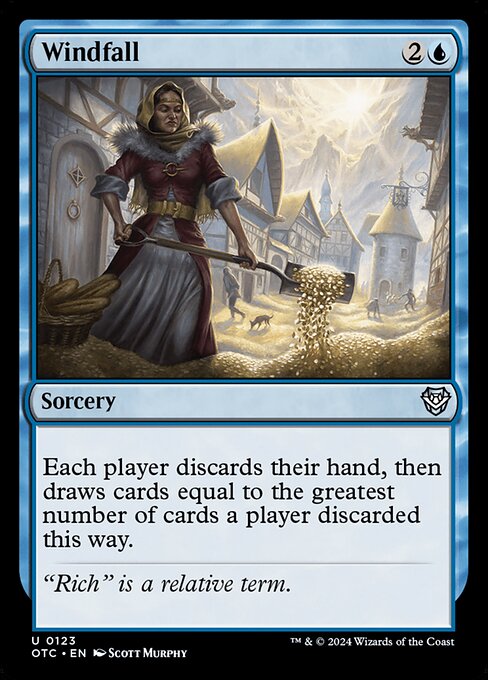
Windfall
Refill and disruption
Refills after dumping expensive creatures and can punish sculpted hands. Stronger when you can exploit the graveyard better than the table.
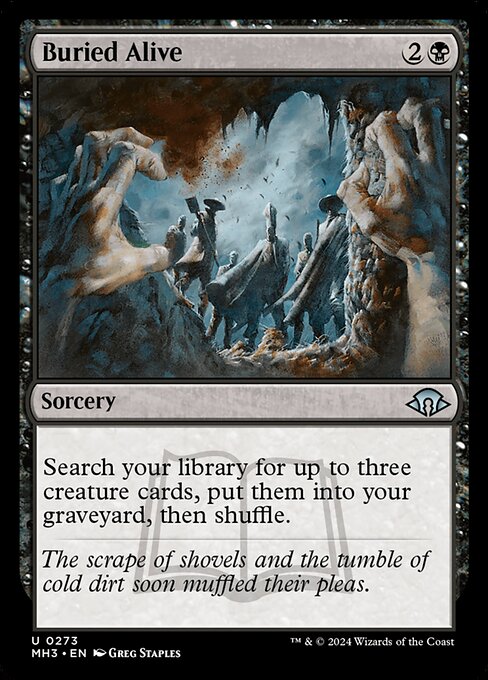
Buried Alive
Graveyard tutor
Finds three creatures for a reanimation package. Best when your deck has several targets worth reanimating, not just one trophy creature.
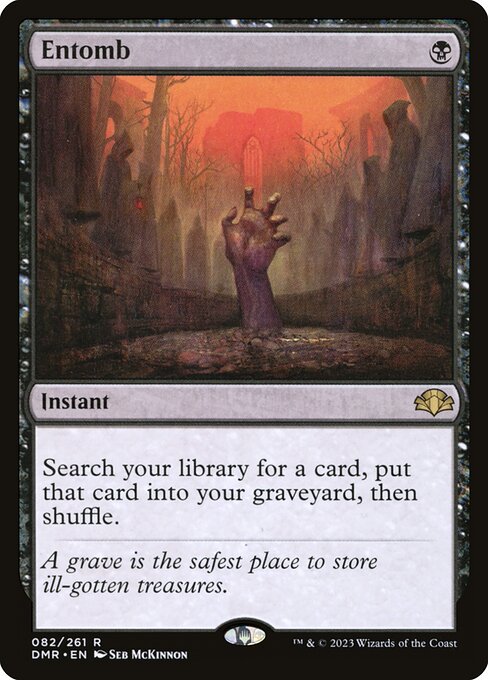
Entomb
Premium graveyard tutor
The cleanest one-card setup tool. It is powerful and efficient, but budget lists can often play more looting instead.
Premium graveyard setup versus budget consistency
Entomb is the cleanest upgrade, but Sauron can still function well if you replace it with redundancy instead of a direct one-for-one clone.
Entomb
Premium tutor
Puts the exact creature you need into the graveyard at instant speed. Best in tuned reanimator builds that can immediately convert it into pressure.
Buried Alive
Budget tutor package
Costs more mana but sets up multiple threats. It is better than Entomb when your list plays several reanimation spells and expects longer games.
Faithless Looting
Budget smoothing
Does not tutor, but it fixes hands and enables reanimation for one mana. Better for lists that need consistency more than a single perfect target.
Frantic Search
Budget tempo filter
Keeps mana available while discarding threats. Stronger in reactive Sauron lists that want to pass with instant-speed answers.
Upgrade priority two: reanimation that wins tempo, not just value
Reanimation is one of the most natural Sauron upgrade packages because your commander already supports long games and your colors give you strong discard tools. The mistake is adding too many expensive threats without enough ways to put them into the graveyard. A practical target is five to eight reanimation effects and six to nine creatures that are genuinely worth cheating into play. If the creature is only good when hard-cast on turn seven, it should probably be a flexible spell instead.
Reanimate is the premium rate card, while Animate Dead is a more affordable workhorse in many casual lists. Living Death is not just a mass reanimation spell. In Sauron, it can also reset opposing creature boards after you have stocked your graveyard through looting and trading. It is slower and more table-facing than the one-target options, so do not fire it off just because you can. The best Living Death turns happen after opponents have spent removal on your commander or Army and you can rebuild much harder than they can.
Reanimation package options
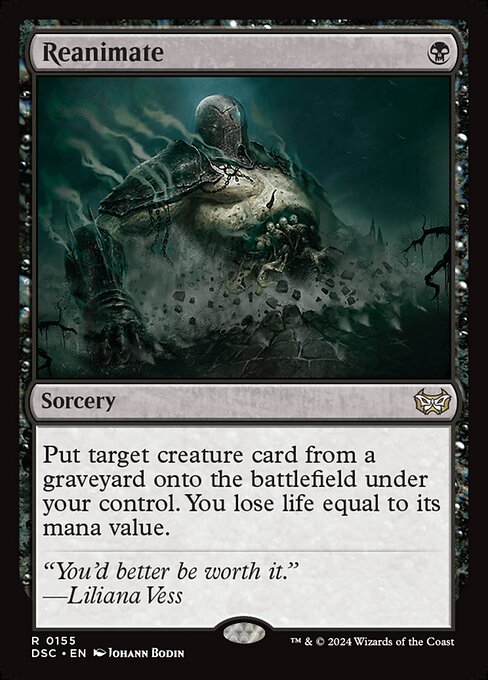
Reanimate
Premium tempo reanimation
The most efficient single-target option. The life loss matters less when it returns a creature that immediately changes combat or cards.

Animate Dead
Efficient budget reanimation
A strong two-mana option that fits mid-power budgets. Vulnerable to enchantment removal, but the rate is still excellent.

Living Death
Board reset and finisher
Combines a sweeper with mass reanimation. It is best when you have deliberately filled your graveyard and opponents have overextended.

Archfiend of Ifnir
Discard payoff
Turns looting and wheels into opposing board shrinkage. It gives Sauron a creature-based reason to keep discarding after setup.
Upgrade priority three: make the Army token matter
Sauron creates and grows an Army, but the token needs help to end games through three opponents. Your upgrades should answer two questions: can the Army connect, and can it survive the removal that naturally points at a single large token? Gleaming Overseer is a budget answer because menace and hexproof are exactly the keywords a large Army wants. Dreadhorde Invasion is slower, but it gives the deck an early board piece that scales with Sauron's Amass plan.
Orcish Bowmasters is the expensive ceiling because it both punishes card draw and adds Army counters. The card is not mandatory, but it changes combat math immediately. If your local tables play many wheels, cantrips, and treasure-fueled draw engines, Orcish Bowmasters is a much better upgrade than another six-mana threat. If your tables are creature-heavy and light on draw bursts, the budget Army protection cards may contribute more consistent damage.
Orcish Bowmasters upgrade path
Choose the premium punish card when your table draws many extra cards. Choose the budget Army cards when your games are more combat-focused.
Orcish Bowmasters
Premium Army pressure
Punishes opposing draw and grows an Army at instant speed. It is one of the strongest upgrades, but its price can dominate the budget.
Dreadhorde Invasion
Budget Army engine
Builds an Army over time and gives the deck an early permanent that benefits from later protection and combat support.
Gleaming Overseer
Budget Army protection
Protects the Army and improves attacks. It is less explosive than Orcish Bowmasters but helps your primary token actually end games.
Ring temptation and discard payoffs
The Ring tempts you is easy to underrate because it does not read like a normal draw engine. In Sauron, the first few temptations matter a lot. They help one creature attack through blockers, loot when the Ring-bearer connects, and eventually make combat awkward for opponents. Call of the Ring is a practical budget upgrade because it repeatedly triggers the mechanic without asking you to cast your commander first. It is especially good when your deck can spare life and has small creatures or tokens to carry the Ring before Sauron arrives.
Discard payoffs are where Sauron lists can become more personal. Archfiend of Ifnir pushes you toward looting, wheels, and reanimation. Notion Thief pushes you toward Windfall-style turns and a more controlling shell. Those cards are strong but political. A table may tolerate Call of the Ring and combat pressure, but Notion Thief plus Windfall can feel like a hard lockout if timed aggressively. Decide whether your pod wants that gameplay before making it a central plan.
Ring and discard payoff choices
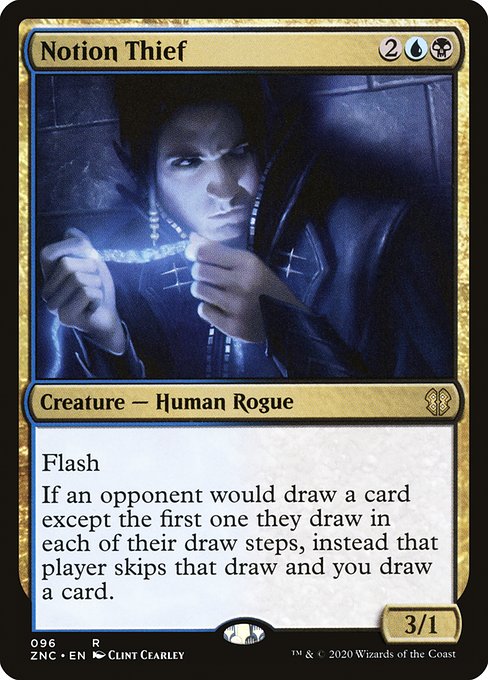
Notion Thief
Draw denial payoff
Pairs with wheel effects to swing card advantage hard. Powerful, but it increases the deck's perceived threat level.
Call of the Ring
Repeat temptation
Supplies steady Ring triggers and card selection. Best in builds that can use life total as a resource.
Archfiend of Ifnir
Discard control payoff
Converts looting and wheels into board control, giving discard-heavy builds a payoff that affects combat.
Windfall
Wheel effect
Refills your hand and fuels graveyard plans. Strongest when paired with discard payoffs or when your hand is already low.
Interaction and removal: protect the six-mana turn
Sauron costs six mana, so your interaction suite must keep you alive before he resolves and protect the advantage after he lands. A common mistake is filling the list with splashy Grixis spells while running only five or six cheap answers. In a four-player game, that is not enough. Aim for eight to ten spot interaction pieces, plus two or three sweepers or reset effects depending on how creature-heavy your pod is.
Claim the Precious is a flavorful and playable removal spell in lower-power Sauron decks because it destroys a creature and tempts you. It is not the most efficient removal available, but it contributes to the deck's actual plan. Orcish Medicine is another thematic option that can protect a key creature or surprise combat, while still interacting with the Orc or Army theme. These are not automatic includes in tuned lists, but they are useful budget choices when you want synergy instead of only generic efficiency.
Synergy interaction for budget Sauron
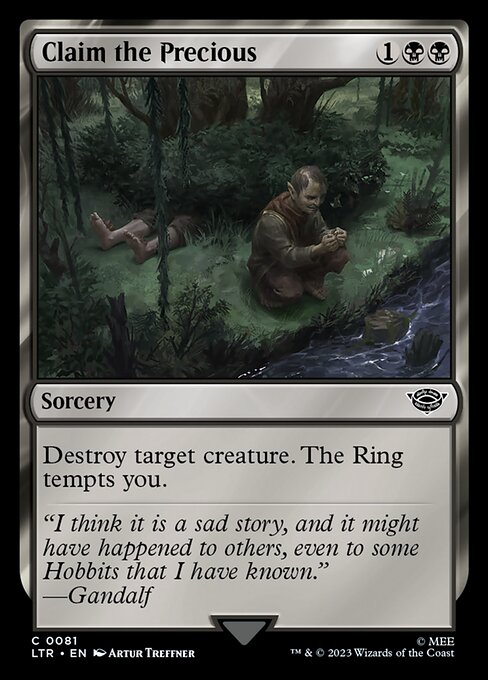
Claim the Precious
Removal plus Ring temptation
Destroys a creature and advances the Ring plan. Better in thematic mid-power lists than in highly tuned interaction suites.
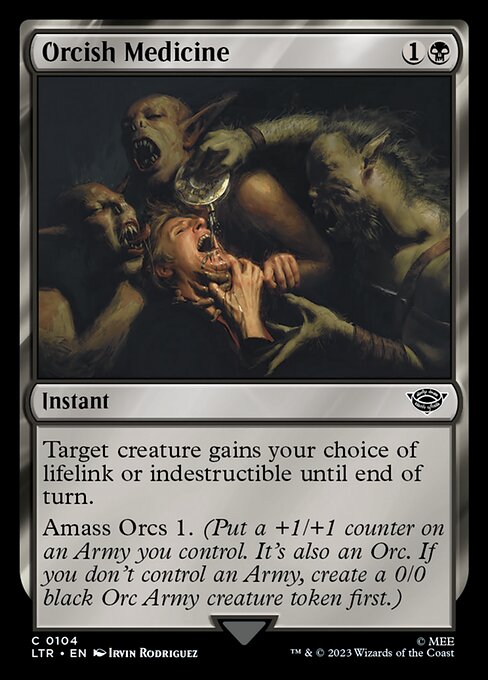
Orcish Medicine
Protection trick
Can protect an important creature or win combat while staying on-theme. Most useful when your board includes Orcs or a large Army.
Living Death
Reset button
Acts as a sweeper and graveyard payoff. It belongs in the interaction conversation because it can reverse a losing creature board.
Mana base upgrades and curve discipline
Grixis mana bases punish greed. Sauron wants black early for discard and reanimation, blue for filtering or permission, and red for looting. Then the deck wants six mana for the commander. If your opening hands often have tapped lands plus no two-mana play, the problem is not only land count. It is sequencing. Start with 36 to 38 lands, 10 to 12 ramp pieces, and enough untapped black and blue sources to interact by turn two or three.
Crumbling Necropolis is acceptable in budget lists because it fixes all three colors, but too many tapped lands will make the deck feel a turn behind. Choked Estuary is a reasonable upgrade if your mana base contains enough Islands or Swamps to reveal. Before buying lands one at a time, run the list through the Mana Base Calculator and check whether your sources match your actual early spells. If you are also changing many nonlands, the Commander Deck Audit can catch whether ramp and draw counts fell below functional levels.
Budget mana base examples

Crumbling Necropolis
Budget three-color fixing
Enters tapped, but fixes every Sauron color. Good for budget stability, weaker when your meta is fast.

Choked Estuary
Conditional untapped dual
Can enter untapped in a mana base with enough Islands and Swamps. Helps early black and blue sequencing.
Sauron upgrade decisions by budget
| Budget band | Best focus | What to avoid | Example cards |
|---|---|---|---|
| Under $25 | Consistency, looting, and theme interaction | Buying one flashy card while leaving the curve clunky | Faithless Looting, Frantic Search, Call of the Ring, Claim the Precious |
| $25 to $75 | Reanimation density and mana improvements | Too many seven-mana creatures without setup | Animate Dead, Buried Alive, Living Death, Choked Estuary |
| $75 to $200 | Premium engines only if they match your pod | Upgrading power past table expectations | The One Ring, Orcish Bowmasters, Reanimate, Entomb |
What to cut first
The easiest cuts are expensive cards that do not affect the board, fill the graveyard, protect Sauron, or pressure life totals. A six-mana commander deck cannot afford many spells that simply look powerful in isolation. If a card costs five or more and does not immediately draw cards, reanimate, remove something, or threaten lethal damage within two turns, mark it for review. Sauron already gives you a late-game engine, so the 99 should help you reach and exploit that point.
Also cut narrow tribal pieces that only work when you are already ahead. Sauron cares about Orcs and Armies, but he is not a simple typal commander where every on-type card is correct. Dreadhorde Invasion and Gleaming Overseer make the Army plan better on their own. A random expensive creature that only buffs Orcs after you untap may be worse than another discard outlet or removal spell. If you are unsure whether a card is pulling weight, import the list through Deck Import and compare your counts against the targets above.
Test your Sauron upgrade list
After choosing swaps, check price, curve, and deck structure before buying. Small mana and interaction fixes often outperform a single expensive staple.
Sample upgrade packages
For a budget midrange package, start with Faithless Looting, Frantic Search, Call of the Ring, Dreadhorde Invasion, Gleaming Overseer, Claim the Precious, Animate Dead, and Choked Estuary. This package does not try to imitate a high-dollar list card for card. It improves the deck's opening turns, gives the Army plan more texture, and adds a real reanimation angle without forcing the table into a premium arms race.
For a higher-power package, add Entomb, Reanimate, The One Ring, Orcish Bowmasters, Notion Thief, Windfall, Living Death, and Buried Alive. That version is much more explosive and much more threatening. It can generate huge card swings, punish opposing draw, and reanimate ahead of schedule. It should also be discussed before a casual game, because the jump from thematic Sauron to efficient Grixis reanimator-control is noticeable.
FAQ
Is Sauron, the Dark Lord better as reanimator or Amass?
Most Commander builds are best as a blend. Reanimation gives the deck tempo and lets looting spells matter, while Amass gives Sauron a built-in combat plan. A pure Amass build can be flavorful but may struggle to close games unless it protects and evades the Army.
Do I need The One Ring for a Sauron deck?
No. The One Ring is a powerful premium draw engine, but Sauron can function with cheaper card flow like Faithless Looting, Frantic Search, Windfall, and Call of the Ring. Add The One Ring only if the price and power level fit your pod.
Is Orcish Bowmasters worth it in Sauron?
Orcish Bowmasters is excellent when your opponents draw extra cards often, because it grows an Army while pressuring creatures and life totals. In slower creature-heavy pods, Dreadhorde Invasion or Gleaming Overseer may be better budget upgrades for the actual games you play.
How many lands should Sauron, the Dark Lord run?
Most casual Sauron lists should start at 36 to 38 lands with 10 to 12 ramp pieces. Because the commander costs six and the deck uses three colors, cutting too many lands for splashy spells usually makes the deck less explosive, not more.
What are the first budget cards I should add?
Start with Faithless Looting, Frantic Search, Call of the Ring, Dreadhorde Invasion, Gleaming Overseer, Claim the Precious, Animate Dead, and a mana base upgrade like Choked Estuary. That mix improves setup, theme, interaction, and color reliability.