
Quick answer
Plot separates a setup payment from a later spell cast. The normal plotting action cannot be countered as a spell, but the later cast can still be answered and must meet its timing, costs, and restrictions.
Plot pays now for a later casting opportunity
Plot lets you pay the stated plot cost and exile the card from the appropriate zone. It becomes plotted. On a later turn, its owner can use the plot permission to cast it from exile without paying its mana cost during their main phase while the stack is empty. This separates the setup payment from the eventual spell cast.
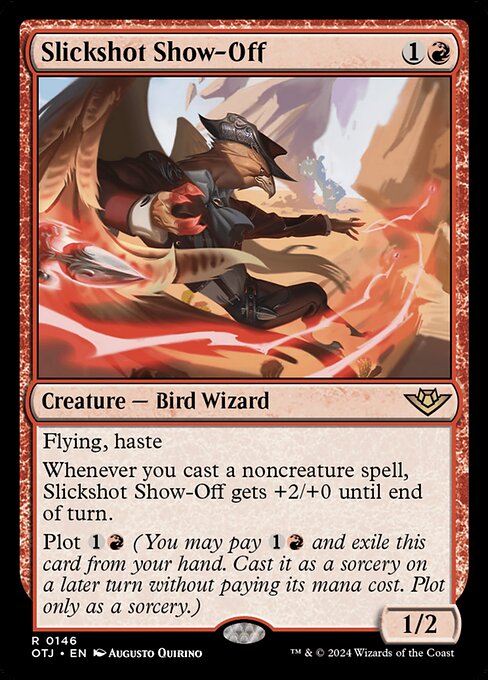
Plotting Slickshot Show-Off does not put the creature onto the battlefield and does not create a creature spell on the stack. You have paid for a future option and exposed the card in exile. The creature arrives only if you later legally cast it and the spell resolves.
Use plot to arrange a future turn, not as a label that makes a card immediately free. The mana already paid, the delay, and the visible information are all part of the card's real cost.
The ordinary plot action does not use the stack
Using a card's plot ability is a special action. You need priority during your main phase with an empty stack, but the plotting action itself does not use the stack. Opponents do not respond in the middle of that special action. Afterward, normal priority handling continues and other legal actions can occur.
An opponent cannot wait until you pay the plot cost and then counter the plotting action with an ordinary spell counter. That is different from answering a spell or ability that causes a card to become plotted. Jace Reawakened uses a loyalty ability, which is an ability on the stack before its plotting result happens.
Identify which method is moving the card into exile. The word plotted describes the resulting status, while the source of the instruction determines whether there was an answerable spell or ability first.
The plot cast has narrow timing permission
The standard plot permission is for a later turn, during your main phase while the stack is empty. It does not turn an instant into a free counterspell you can normally cast through plot on an opponent's turn. A creature cast through plot remains a creature spell; the phrase about sorcery timing does not change its card type.
A counterspell plotted in advance can be awkward because its usual useful target is on the stack, while the plot permission wants an empty stack. A modal spell may have another useful choice. Any genuinely separate permission to cast a card from exile must be evaluated on its own terms rather than attributed to plot.
Choose cards that are worth deploying on your own later main phase. A deck cannot assume ordinary reactive timing remains available through every unusual casting permission.
Free casting still has a cost calculation
Casting a plotted card without paying its mana cost uses an alternative cost. Mandatory additional costs still apply, and applicable optional additional costs can be chosen. You cannot combine that free alternative with another alternative payment method. An X in the mana cost is normally zero for this cast unless a specific rule or effect determines it.
A plotted spell that requires a sacrifice still needs something legal to sacrifice. A spell with targets still needs legal targets. If a tax increases the total cost, being plotted does not automatically remove that increase. A discount can apply to appropriate payable generic costs but does not generate negative mana or refund the earlier plot payment.
Keep a small amount of real mana available for the later turn. A plan described as casting every plotted card for zero can fail when the table imposes a tax or when the spell has an additional cost you ignored.
Fblthp plots from the top rather than from hand
Fblthp, Lost on the Range lets you look at the top card of your library, gives that card plot with a plot cost equal to its mana cost, and allows plotting nonland cards from there. After you move one card away, a different card can be on top. The permission can therefore support several legal plotting actions when you can pay and the top cards qualify.
A land on top is not a nonland you can plot through this instruction. A card with no mana cost is also different from a card whose cost is zero: a nonexistent cost cannot simply be paid as zero through Fblthp. A genuine zero-cost nonland card can present a different opportunity.
The commander expands access to cards, but it does not erase the mana payments or the later-turn delay. Include a way to use resources effectively when the top card is a land or the available plot cost is unaffordable.
Doc Aurlock distinguishes plotting from casting
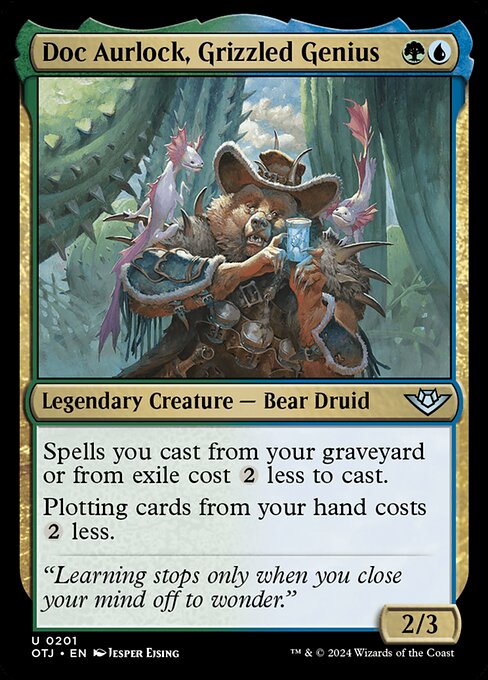
Doc Aurlock, Grizzled Genius reduces the cost of spells you cast from your graveyard or exile and separately reduces plotting cards from your hand. Those are two abilities affecting different actions. The hand restriction on the plotting reduction does not automatically include Fblthp plotting from the library.
A card in hand with a plot cost containing generic mana can benefit from the plotting reduction. A top-library plot through Fblthp is not a card being plotted from hand. Later, a plotted card cast from exile can meet Doc Aurlock's casting reduction, though a zero alternative mana payment leaves little generic cost to reduce unless other payable costs exist.
Read the action and zone before applying a discount. A thematic overlap between two commanders does not guarantee that every line of one card improves every line of the other.
Printed restrictions and later turns still matter
Jace Reawakened cannot be cast during your first, second, or third turns. A plot permission does not negate that casting restriction. His loyalty ability can make an eligible nonland card in your hand plotted, but that method does not mean you paid its ordinary plot ability cost or cast it already.
If a spell is prohibited from being cast at the current time, offering a way to cast without paying mana is not enough. Likewise, a restriction on casting spells from exile can prevent a later plotted cast. The card can be waiting visibly in exile without you currently having a legal way to use it.
Keep the planned turn attached to the card in your notes. Waiting one turn satisfies one condition of plot, not every condition imposed by the card, the battlefield, or a separate format rule.
Plot creates a visible plan with a setup burden
An openly plotted card gives opponents information about a later turn. That can help you sequence efficiently, but it also gives the table time to prepare a counterspell, attack your life total, or remove an engine needed for the follow-up. Paying in advance does not protect the later spell from ordinary interaction when you cast it.
A deck can spend one turn plotting several cards and then fail to survive until it can use them. Another can develop a modest board first, plot one useful threat, and retain an answer. The second sequence may be less spectacular but more reliable under pressure.
Balance future commitment with present development. Keep blockers, card access, and interaction that work now, and choose plotted cards whose later deployment actually creates a useful window for the rest of the hand.
Cards worth comparing before you choose a package
Examples and the jobs they do

Fblthp, Lost on the Range
Library planning
Fblthp can turn the top nonland card into a plotted future resource by paying a plot cost equal to its mana cost.

Jace Reawakened
Alternate plotting method
Jace has a loyalty ability that can exile an eligible nonland card from your hand and make it plotted.
Slickshot Show-Off
Compressed attack turn
Show-Off has flying and haste and grows in power for the turn when you cast noncreature spells.
Railway Brawler
Creature growth setup
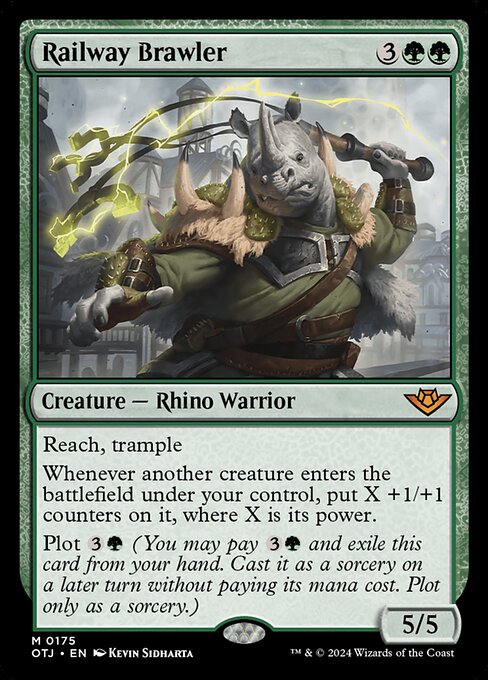
Brawler can be plotted in advance and later reward other creatures entering by adding counters based on their power.

Outcaster Trailblazer
Development and entry draw
Trailblazer supplies a mana on entry and can draw when another sufficiently powerful creature enters.
Doc Aurlock, Grizzled Genius
Two different reductions
Doc Aurlock reduces eligible casts from graveyard or exile and reduces plotting from hand.
Fblthp, Lost on the Range
Looking at the top and moving a card away can expose a new candidate. The card is plotted rather than cast from the library. Lands and unaffordable costs can stop the sequence, and the later cast still needs a legal main phase.
Jace Reawakened
That instruction is distinct from taking the card's own plot special action. The loyalty ability uses the stack, and Jace's own first-three-turn casting restriction still matters. As an ordinary planeswalker, he does not automatically qualify as your commander.
Slickshot Show-Off
Plot can separate the creature payment from a later turn containing those other casts. The pump requires actual later noncreature casts while its ability is available. Plotting those cards earlier did not cast them and did not supply the creature pump then.
Railway Brawler
A later turn can use more mana for follow-up creatures after the plotted cast. The deck still needs other creatures and a way to use the counters profitably. A counter trigger after entry does not retroactively change the power a different entry-trigger condition saw.
Outcaster Trailblazer
Plot lets you plan when that creature and its supporting mana arrive. Its draw condition concerns the other creature as it enters. Counting power added afterward by a separate trigger can make a rehearsal claim a draw that never actually triggered.
Doc Aurlock, Grizzled Genius
The two reductions can support related plans without being the same discount applied twice to one action. His plot-from-hand wording does not automatically discount a library plot through Fblthp. Colored requirements remain, and cost reduction does not refund mana already spent.
Rehearse the setup turn and the payoff turn separately
Start with a real opening hand and play the setup turn using the lands you actually have. Pay for a plot action and place the card face up in exile with a clear note of the turn it became plotted. Keep the remaining board and mana. Do not put the future creature onto the battlefield now or add future cast triggers to this turn. The point is to see what you gave up while preparing.
On a later legal main phase, cast the plotted card and give opponents their ordinary chance to answer that spell. If it resolves, continue with the rest of the turn using the mana still available. This is where the earlier investment can matter: a creature costing no mana now may leave room for another threat, protection, or card draw. If the only plan works when opponents skip all interaction, add a more realistic interrupted version before evaluating the package.
For Fblthp, use the actual top card rather than choosing the card you hoped would be there. Plot a legal nonland if you can pay, then examine the new top. Stop when the next action is illegal or unaffordable. A chain that starts with several zero-cost artifacts may be possible, but that is not evidence that every opening produces it. Keep both the convenient and awkward top-card positions in your notes.
For a creature package, imagine Railway Brawler and Outcaster Trailblazer on the battlefield when another 2/2 creature enters with no entry modifiers. Brawler can trigger and later add counters, but Trailblazer did not see a creature entering with power 4 or greater. The later growth does not retroactively create its draw trigger. Compare that with a creature genuinely entering at power 4. This demonstrates why planning the order matters beyond merely having enough mana for the cards.
Use the deck builder to label cards as present development or future plotted resources. Check supporting draw and interaction in the Commander deckbuilding checklist, and inspect actual colored sources with the mana base calculator. Create a free account through My Decks to save the list and the two-turn sequence. A plotted reserve should make a later turn stronger without making the current turn unable to survive.
When a game goes badly, identify whether the failure was paying the initial cost, surviving the delay, satisfying the later cast restrictions, or converting the resulting board into a finish. Those failures call for different edits. More plot cards do not automatically solve any of them. A cheaper setup card, an immediate answer, a different payoff, or an independent draw engine may be the more effective change.
A decision table for the interaction
| Position | Correct result | What to check |
|---|---|---|
| Normal plot action | Special action without stack | Requires main phase, priority and empty stack |
| Later plot cast | Actual spell from exile | Main phase and empty stack on a later turn |
| Plot from Fblthp library | Uses top-card permission | Not a plot from hand for Doc Aurlock |
| Cast for no mana cost | Alternative payment method | Mandatory additional costs still apply |
Frequently asked questions
Build your deck
Put these choices into a Commander list. Create a free account to save your deck and keep tuning it with Deckcipher.
FAQ
Can someone counter the normal plotting action?
The plot special action does not use the stack, so an ordinary counterspell cannot counter it. A separate spell or ability that makes a card plotted may use the stack and can be answered appropriately. Identify the actual source of the instruction.
Can I cast a plotted card on the same turn through plot?
No. The standard plot permission applies on a later turn, during your main phase with an empty stack. Any independent permission to use a card in exile must be read separately; it is not a benefit supplied by plot itself.
Does plotting a spell count as casting it?
No. Plotting moves the card into exile and creates a later opportunity. Cast triggers occur when you actually cast the spell later, if their sources and conditions are present. A payoff for casting from exile therefore cares about that later action.
Does a plotted instant retain normal instant timing?
The plot casting permission itself requires your main phase and an empty stack. The card remains an instant, but you do not automatically gain a free reactive cast on an opponent's turn through plot. A genuinely separate permission is another question.
Can Fblthp plot lands from the top?
His permission specifically allows nonland cards from the top. A land is not a legal plotting choice through that instruction. Looking at the top does not give an additional land play or permission to cast the next card for free.
Does Doc Aurlock reduce plotting from the library?
Its plotting reduction specifically says from your hand. Fblthp plotting from the library does not satisfy that zone requirement. The later cast from exile can meet a different reduction, but evaluate actual payable generic costs rather than assuming a refund.
Can I ignore a mandatory additional cost on a plotted cast?
No. Without paying the mana cost does not remove mandatory additional costs. You still need to pay them and follow actual restrictions and target requirements. Keep those resources in the plan for the later turn.
Does plot change a creature into a sorcery?
No. The timing instruction does not alter the card type. A plotted creature is cast as a creature spell at the permitted time. It does not count as an instant or sorcery merely because the permission uses a sorcery-style timing restriction.