
Quick answer
Offspring is a paid copy option, not an automatic second creature. Compare the extra mana with the copied ability, remember that a 1/1 body does not mean mana value 1, and distinguish recasting from simply blinking.
Offspring begins with an additional casting cost
Offspring lets you pay its additional cost as you cast the creature spell. Paying sets up the relevant entry ability to create a token copy that is 1/1. The extra token does not appear merely when you announce the spell. The creature normally must enter and its appropriate triggered ability must resolve before the copy is created.
Casting Warren Warleader normally costs two generic and two white mana. Paying its additional two-mana offspring cost brings that ordinary total to six mana before other modifications. If the creature spell is countered and never enters, you do not receive the offspring copy through its entry ability.
Compare the ordinary cast and the offspring cast as two options. Paying extra is useful when the second body matters enough to justify delaying another spell or leaving less mana for interaction.
The copy is small but retains relevant characteristics
The offspring token is a copy with a stated 1/1 exception. It can keep the original's relevant abilities, name, types, mana cost, and other copyable characteristics even though its base body is smaller. It does not copy every counter, equipment bonus, damage mark, or temporary effect affecting the original creature.
An offspring Coruscation Mage can still reward noncreature casts even though it is a 1/1. An offspring creature with flying can still have flying. Putting three +1/+1 counters on the original before the token is created does not automatically put those counters on the copy.
Choose creatures for abilities worth duplicating rather than assuming every large body gives an equally valuable offspring. A small token retaining an engine can matter more than a small version of an otherwise ordinary attacker.
The token mana value does not become one
Being a 1/1 is a power-and-toughness characteristic, not a mana value. An offspring token normally keeps the copied mana cost, so its mana value reflects that cost rather than its size. The extra offspring payment does not increase the original spell's mana value either. Cost paid, mana value, and body size are three different numbers.
An offspring copy of Jackdaw Savior is still based on the three-mana card even though it has a 1/1 body. Its death-triggered return asks for a creature card with lesser mana value, so the token being small does not let you return the three-mana original through that lesser-than check.
Keep the printed mana cost visible when a payoff checks mana value. Do not record every small token as a zero-mana or one-mana creature simply because that is convenient for a deck category.
Entry triggers and the offspring trigger are separate
The original creature can have an entry ability in addition to the offspring-created entry trigger. When several abilities you control trigger together, you order them on the stack. Creating the offspring copy later can generate its own appropriate entry triggers, which wait and are put on the stack at the correct time.
You may choose an order that resolves the original useful entry ability before making the copy, or an order that creates the copy earlier. The best choice depends on targets, resources, and other effects. Opponents receive normal opportunities to respond between separate resolutions, so one announced creature can become several answerable objects.
State which trigger is resolving and which creature or token caused it. This is clearer than saying the creature enters twice, because the original and its copied token are distinct permanents entering in different events.
Removing the original does not automatically erase the waiting copy
Once the offspring entry trigger exists on the stack, removing the original creature normally does not remove that trigger. The ability can use the relevant last known copyable information to create its token when it resolves. That is different from countering the original creature spell before it ever enters.
An opponent who destroys the original after its entry trigger is on the stack may still face the 1/1 copy afterward. An opponent who counters an appropriate triggered ability can attack the copy step directly. If the original had other entry triggers, those also remain separate objects to evaluate.
Protect the part of the sequence that matters. Sometimes keeping the original body is important; sometimes the token engine or an entry trigger is the real value and does not need another protection spell.
Blinking and reanimating do not repay offspring automatically
A creature returning directly to the battlefield is normally a new object that was not just cast with an offspring payment. Its ordinary entry abilities may trigger, but that does not mean the new object has the paid offspring history needed to create another token. Returning the card to hand and casting it again provides a new opportunity to pay.
Dour Port-Mage can support returning a creature to hand and rewarding a qualifying departure without dying. You still need the later mana to recast that card and pay offspring again. A blink effect can reuse other entry value, but it is not automatically the same engine as repeatedly casting with an additional cost.
Choose the support action that matches the resource you want. If offspring copies are the objective, casting access and mana matter. If ordinary entry triggers are enough, a different reuse package may be cheaper.
Multiple instances and legendary copies require careful counting
A creature spell can have more than one offspring ability. If you choose to pay more than one applicable offspring cost, each relevant ability can create its own copy after entry. The copies do not recursively create more offspring just because they copied the keyword: the required additional costs were not paid for those tokens.
Zinnia can grant offspring to a creature spell that already has an instance. Decide which costs you pay and keep them distinct. If the copied creature is legendary, the legend rule can require you to keep only one legendary permanent of that name. The extra copy still entered, but it does not grant permission to ignore that state-based action.
Evaluate the real remaining board after the triggers and state-based actions finish. A hypothetical pile containing several copies of the same legend can overstate how much permanent value the cast leaves behind.
Zinnia is a specific color identity and a specific payoff
Zinnia grants offspring to creature spells you cast and grows in power from other creatures you control with base power 1. The keyword package therefore connects small copied bodies to a command-zone attacker. The base-power wording matters: counters and temporary bonuses do not always change the underlying base-power value used for that count.
The commander has white, blue, and red identity. Tender Wildguide is a useful green example of a printed offspring card, but it does not belong in a Zinnia Commander deck under normal color-identity rules. A general mechanic guide can compare cards from several identities without recommending they all go into one list.
Build the actual commander deck with legal cards that work before and after the commander is present. Repeated two-mana add-ons can consume a turn quickly, so retain independent draw, early mana, and interaction.
Cards worth comparing before you choose a package
Examples and the jobs they do
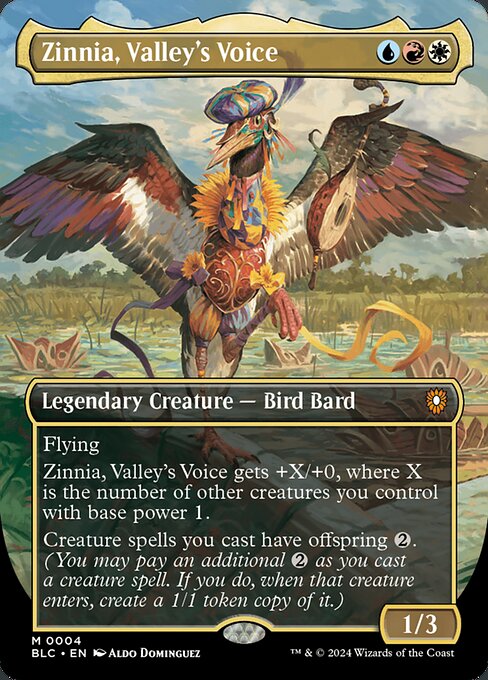
Zinnia, Valley's Voice
Jeskai offspring engine
Zinnia gives creature spells an offspring option and connects creatures with base power 1 to its own offensive size.
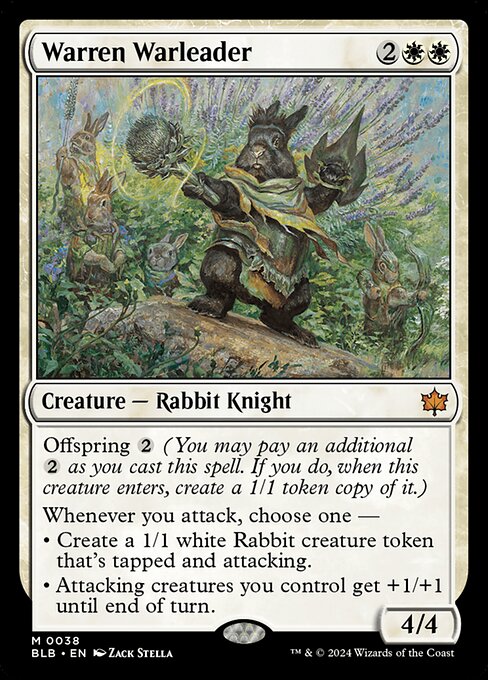
Warren Warleader
Combat choices
Warleader has printed offspring and gives a choice whenever you attack between a tapped attacking Rabbit and a temporary bonus for attacking creatures.
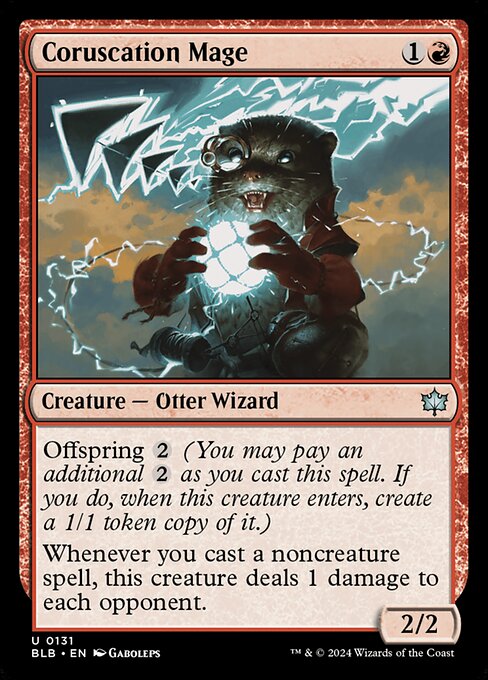
Coruscation Mage
Noncreature-cast pressure
Mage has offspring and deals damage to each opponent when you cast a noncreature spell.

Tender Wildguide
Mana or growth
Wildguide has printed offspring and separate tap abilities for mana or a counter on itself.

Dour Port-Mage
Departure and recasting support
Port-Mage rewards qualifying other creatures leaving without dying and can return another target creature you control to hand through its activated ability.

Jackdaw Savior
Flying death recovery
Savior rewards its own or another flying creature death with a targeted return of another creature card with lesser mana value.
Zinnia, Valley's Voice
The flying commander can use a wider small-creature board as pressure. The color identity excludes green and black examples. Do not treat a general list of offspring cards as a legal Zinnia decklist.
Warren Warleader
A copy can add another instance of that useful attack trigger. The created Rabbit is not declared as an attacker, and multiple copies do not force you to select the same mode. Resolve each ability according to its actual choices.
Coruscation Mage
A small copy retains that ability, which can give spell casts a meaningful payoff without requiring a large token body. The trigger needs actual casts while the ability is available. Merely copying a spell onto the stack is not normally casting another spell.
Tender Wildguide
A copied body can preserve those useful activated abilities. New creature copies normally face summoning sickness for tap-symbol abilities. It is a green card and needs an appropriate commander identity.
Dour Port-Mage
That can set up a later recast. Its activated ability taps Port-Mage and requires mana. The returned card must actually be recast to offer a new offspring payment, rather than simply being put directly onto the battlefield.
Jackdaw Savior
A small copied flyer can preserve the same recursion text. An offspring copy retains the copied mana value. Read lesser literally, and do not treat a token death as permission to return a target with equal mana value.
Choose whether the second body is worth this turn
Begin with a creature spell and enough mana for either its ordinary cast or its offspring option. Write the rest of the hand beside it. If paying offspring prevents you from making another development play or holding a necessary answer, compare the boards after both choices. A second engine body may be excellent, while a second ordinary attacker may be less urgent. The keyword is an option precisely because those positions differ.
For a clean stack rehearsal, cast a creature with an entry ability and pay offspring. Once it enters, put the relevant triggers on the stack in a chosen order. Resolve one at a time, create the token only from the appropriate resolved trigger, and handle any new entry triggers afterward. Then repeat with the original removed while its copy trigger waits. Keep last known characteristics and target requirements separate instead of assuming every object disappeared with the source.
Use Tender Wildguide as a timing example in a deck with legal green identity. Pay for the ordinary creature and offspring, then mark both new bodies as summoning sick. Do not spend the copy as immediate mana unless you have a relevant permission such as haste. On the following turn, compare the choice between using a tap ability for mana and putting a counter on the creature. The duplicated ability supplies flexibility across turns, not every benefit at once.
For Zinnia, sort creatures by what a small copy actually adds. A strong entry ability, static effect, or repeating trigger can survive the smaller body. A creature selected mainly for high printed power may add less than expected. Also record which cards have base power 1 rather than counting every creature with a temporary one-power result. The commander condition is narrower than simply having many tokens.
Put the legal package into the deck builder and check the supporting list with the Commander deckbuilding checklist. The mana base calculator can examine the colored costs needed before generic offspring add-ons. Create a free account through My Decks to save the version. Track whether missed offspring payments came from too little total mana, missing colors, or a better competing action, because those lead to different edits.
A free-cast effect can still leave a useful offspring decision. If the effect actually lets you cast the creature spell without paying its mana cost, you may normally choose an applicable optional additional offspring cost and pay it. The free alternative replaces the ordinary mana cost, not every additional cost. Compare that with an effect simply putting the creature onto the battlefield, where there was no casting process in which to choose that payment. Also apply relevant cost increases and reductions to the actual total rather than treating the offspring number as a separate untouchable price. The exact instruction creating the opportunity determines which line is available.
A decision table for the interaction
| Position | Correct result | What to check |
|---|---|---|
| Pay offspring during casting | An additional cost | Does not raise mana value |
| Create the token copy | A 1/1 copy with relevant abilities | Not a copy of every counter or temporary boost |
| Blink the creature | A new object returns | No new offspring payment occurred |
| Use a new creature tap ability | Normally restricted without haste | Keep summoning sickness separate from body size |
Frequently asked questions
Build your deck
Put these choices into a Commander list. Create a free account to save your deck and keep tuning it with Deckcipher.
FAQ
Is offspring part of the mana value?
No. It is an additional cost paid when casting. It changes the amount you pay, not the spell's printed mana cost or its mana value. The 1/1 token also does not become mana value 1 merely because its body is small.
Does countering the creature still give me a token?
If the creature spell never resolves and enters, its normal offspring entry trigger does not occur. Removing the creature after the trigger already exists is different, because the triggered ability normally remains on the stack independently.
Can an offspring token use a tap ability immediately?
Normally not if it is a newly controlled creature without haste and the ability has a tap symbol. Creature summoning-sickness restrictions still apply. Copying a useful mana ability does not automatically make the new body an immediate mana refund.
Does blinking the original make another offspring?
Not normally through the offspring payment history. The returned creature is a new object and was not cast with that additional cost. It can still have ordinary entry triggers. Returning to hand and recasting creates a new chance to pay offspring.
Can I pay two offspring costs on one spell?
If the spell has multiple instances, you may choose the applicable additional costs separately. Paying several can set up several copy triggers. The resulting copies do not automatically repeat the process forever because their own required casting costs were not paid.
Can I keep a legendary creature and its offspring?
The ordinary legend rule can require you to put all but one same-name legendary permanent you control into the graveyard. The copy can still cause an entry event, but offspring does not itself suspend the legend rule.
Can Tender Wildguide go into a Zinnia deck?
Not under ordinary Commander color-identity rules. Wildguide is green, while Zinnia has white, blue, and red identity. It appears here as a mechanic example for other eligible decks, not as a legal Zinnia recommendation.
Does every offspring deck need to pay the cost every time?
No. Keep the choice attached to the current turn. A useful creature now plus mana for an answer can be better than a copied creature that consumes the whole turn. Pay when the second body or ability improves the actual position.