
Quick answer
Choose the part of the precon you enjoy, record where it stalls, and make a small set of named replacements. Improve access to mana, cards, and useful answers before buying more finishers. Preserve a stock copy and test both versions. Calling All Angels provides a concrete four-card example here, but the same process works for other Commander precons.
Start with a sentence about what the deck should do
A precon upgrade starts with a decision: what do you want to keep doing? An Angel deck might want to cast flying creatures and win through combat. A Zombie deck might want to sacrifice creatures and rebuild. An artifact deck might care more about casting artifacts than attacking with a particular creature type. Write that plan in one sentence before looking at a shopping list. The sentence gives you a reason to keep some cards and cut others.
Include the experience you want, not only the win condition. Perhaps you enjoy big creatures but want fewer turns doing nothing. Perhaps the deck already wins enough, yet an early removal spell leaves you watching the game. Those are different upgrade briefs. A cheaper draw spell might improve the second problem more than another impressive threat. Changing the commander can also change the brief enough that the project becomes a new version rather than a simple tune-up.
Use the Commander precon finder to identify the exact product and stock list. Then put the version you actually own into the deck builder. A list copied from an upgrade video may already contain changes. Keep one saved version labeled stock and another labeled with the changes you are testing. That prevents an accidental duplicate purchase and gives every later comparison a clear starting point.
Observe a failure before naming a replacement
A lost game does not prove a deck needs upgrades in every category. Ask what stopped you from taking meaningful actions. Missing the third land, having five lands of the wrong colors, and drawing only seven-mana spells are all mana problems, but they call for different changes. Write down the hand, the turn, and the card that stayed uncast. A short record is more useful than a vague feeling that the deck was slow.
Do the same for card access. An empty hand after casting several threats suggests a different weakness from holding a draw engine that needs creatures after a wipe. Record whether the draw was absent, too expensive, or conditional on a resource you lacked. The useful upgrade is the one that works in the position where you repeatedly need help. A card with a spectacular best case can still be a poor fix for an empty battlefield.
Keep interaction failures specific too. If a graveyard deck won while your removal could only destroy creatures, adding another creature removal spell may leave the same gap. If an opponent resolved a powerful enchantment, distinguish having no answer from spending your answer earlier. Your first notes can be simple: wrong mana, no follow-up, no relevant answer, or unable to recover. They identify the next experiment without pretending to measure a win rate.
Sort cards by the jobs they actually perform
| Job | Question to ask | Common mistaken assumption |
|---|---|---|
| Mana access | Can this card help cast the spell on the turn I need it? | Every land and ramp card fixes every color |
| Card access | Does it draw now or require another event first? | Every draw engine refills an empty board |
| Interaction | Which threats can it legally answer, and when? | All removal covers the same targets |
| Protection | Which ways of losing a permanent does it stop? | Indestructible stops exile and sacrifice |
| Recovery | What resources remain after the board is cleared? | Protection and reanimation do the same job |
| Payoff | Does it advance the chosen plan without a perfect board? | The most expensive threat is the best finisher |
Cards can fill more than one role, but do not count that overlap as extra cards in the deck. A creature that draws on entry contributes a body and card access. It still occupies one slot and may be vulnerable to the same wipe as your other creatures. A modal answer offers a choice, not all its modes for one payment unless its instructions say otherwise. Keep your notes descriptive enough that the role count does not hide those costs.
Separate a card’s printed mana value from what you usually pay. Cost reduction can make an expensive-looking spell practical, but the reducer might be your commander. Try the same hand after that commander is removed. A deck that depends on a creature producing restricted mana should also count ordinary lands that can pay for its noncreature spells. This is where a curve chart helps you ask a better question, rather than making the decision for you.
Use Calling All Angels as a small worked example
The stock Calling All Angels precon is a useful example because its plan is easy to describe: develop Giada, cast Angels, and attack in the air. The published list contains 38 lands. It already includes Youthful Valkyrie, Inspiring Overseer, Swords to Plowshares, and several draw and mana cards. Those are starting resources to evaluate, not absent cards that an upgrade guide should tell you to buy again.
Giada costs one generic and one white mana. Her tap ability produces white mana that can only cast an Angel spell. That mana cannot pay for Chivalric Alliance, Generous Gift, or another non-Angel spell simply because it is white. Her other ability gives each other Angel you control additional entry counters according to the Angels you already control. Losing her can therefore affect both your casting sequence and the size of later creatures.
The following four replacements address four different jobs while preserving the commander and the flying-creature plan. They are an example of a test package, not a required purchase or a claim that the stock deck is incorrectly built. Every named cut appears in the stock list, and each nonbasic addition is absent. Replace one copy of each cut; adding a basic Plains is allowed even though the deck already contains Plains.
| Remove from the stock list | Add for this experiment | Benefit and cost |
|---|---|---|
| Temple of the False God | Plains | Earlier white mana; loses a conditional two-colorless-mana land |
| Invoke the Divine | Generous Gift | Broader permanent answer; loses four life gain and gives an Elephant |
| Secret Rendezvous | Chivalric Alliance | Continuing attack-based draw; loses immediate draw three and needs attackers |
| Defy Death | Selfless Spirit | Earlier protection against destruction; loses a reanimation spell and Angel counters |
First change: make the early land function
Temple of the False God can tap for two colorless mana only when you control at least five lands. Before that condition is true, its ability cannot be activated. Imagine an opening hand with two Plains and Temple as its three lands. Without another land, the third turn still has only two mana-producing lands. A card that looks like the third land on a decklist is not supplying the third mana in that position.
Replacing Temple with Plains preserves the land count at 38 and changes what those lands can do. Three Plains can provide three white mana on the third turn, assuming you made those land drops. Plains can also help cast non-Angel spells that Giada’s restricted mana cannot cover. This is a consistency experiment, not ramp: you have not added a land drop or increased the number of lands in the list.
The tradeoff becomes visible later. Once its condition is satisfied, Temple supplies two colorless mana from one land, which may help cast a large Angel’s generic cost. Plains supplies one white instead. Keep Temple if that later contribution repeatedly matters more in your games than the early restriction. The point is to evaluate both positions. A basic land can be a meaningful upgrade when early colored mana is the actual problem.
Second change: broaden one answer deliberately
Invoke the Divine costs three mana and destroys an artifact or enchantment while gaining you four life. Generous Gift also costs three, but it can target any permanent. That lets the same slot address a creature, planeswalker, or troublesome land as well. The target’s controller creates a 3/3 green Elephant token. You gain coverage and give up life gain, while leaving a new creature on the opposing battlefield.
That token matters when deciding whether the exchange is favorable. Removing an engine that would dominate the next several turns can be worth giving away a 3/3. Removing an ordinary creature solely to exchange it for another useful blocker may accomplish less. Generous Gift also uses destruction. An indestructible permanent can survive it, and its controller still receives the Elephant if the spell resolves with a legal target. Broader targeting does not mean unconditional removal.
Keep the rest of the removal package visible. Calling All Angels already includes Swords to Plowshares and other answers. This swap is not permission to cut them all for copies of the same effect, nor would Commander normally allow extra ordinary copies. A mixture of target coverage, timing, and a few appropriate sweepers is more useful than treating one flexible spell as a complete interaction package.
Third change: choose how the deck earns cards
Secret Rendezvous makes you and a target opponent each draw three cards for three mana. It can refill immediately and may support a deliberate table agreement, but the other player receives the same number of cards. Chivalric Alliance costs two mana and draws a card whenever you attack with two or more creatures. Its draw requires an attack event, so it is not an immediate replacement for three cards on an empty board.
For an Angel deck that can keep two creatures ready, Alliance offers a recurring way to replace spent cards. You must actually declare at least two attackers for that trigger. Two creatures sitting on the battlefield are not enough, and a creature put onto the battlefield already attacking was not declared as an attacker for that event. The engine also remains dependent on having a board and a reason to attack.
Alliance has a second ability: pay two mana and discard a card to make a 2/2 white and blue Knight with vigilance. That ability can turn an unwanted card into a body, but it does not increase your hand size. The blue token does not make the enchantment illegal in a mono-white deck; a token’s written color words are not blue mana symbols in the card’s color identity. The Knight is also not an Angel, so it does not receive Giada’s Angel entry benefit.
Test the swap after a wipe as well as while ahead. If the list can rebuild creatures but keeps running out of follow-up, Alliance may perform the job you wanted. If it repeatedly needs cards before it can field attackers, an independent draw effect or keeping Rendezvous may be more appropriate. The existing draw cards deserve the same examination. Do not turn one illustrative replacement into a rule that every deck must use attack-based draw.
Fourth change: compare prevention with recovery
Defy Death is a five-mana sorcery that returns a creature card from your graveyard to the battlefield and adds two +1/+1 counters if it is an Angel. Selfless Spirit is a two-mana flying creature that can be sacrificed to give creatures you control indestructible until end of turn. The lower-cost card can protect a developed board from a destruction effect. It cannot return creatures that are already gone.
Resolve the sacrifice ability before the destructive spell or damage happens. If an opponent casts a destroy-all-creatures spell, you can activate Spirit in response, assuming you have priority. The Spirit is sacrificed as the cost. Its ability can still resolve after the Spirit leaves, but an opponent can respond to the ability or use another answer afterward. The protected creatures survive destruction; the Spirit is not returned by its own ability.
Indestructible does not stop exile, being returned to hand, sacrifice instructions, or dying from zero or less toughness. A later creature entering after Spirit’s ability resolves does not automatically gain the ability from that resolved effect. Replacing Defy Death therefore changes the kind of resilience you have. It also introduces a Spirit rather than another Angel-related spell. Keep a recovery option elsewhere if removal regularly clears your board in ways this protection cannot stop.
Cards that illustrate the four decisions
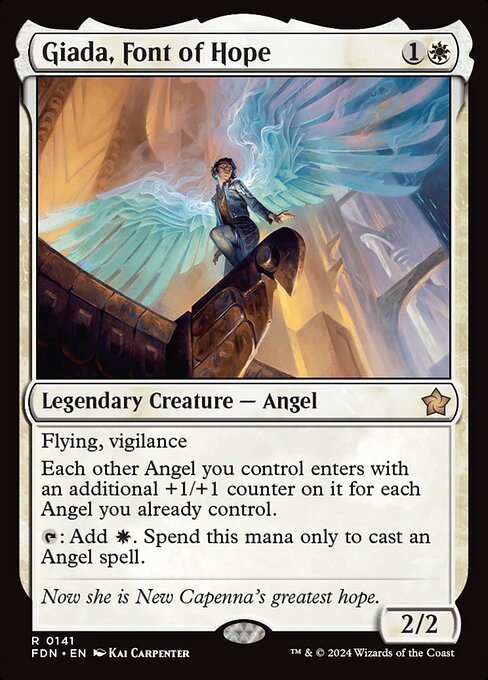
Giada, Font of Hope
Preserve the central plan
Restricted mana casts Angels. It does not pay for every white spell in this package.

Temple of the False God
Evaluate the opening turns
Needs at least five lands to activate, then produces two colorless mana.

Generous Gift
Broaden a removal slot
Can target any permanent, but destruction and the Elephant token remain real limits.
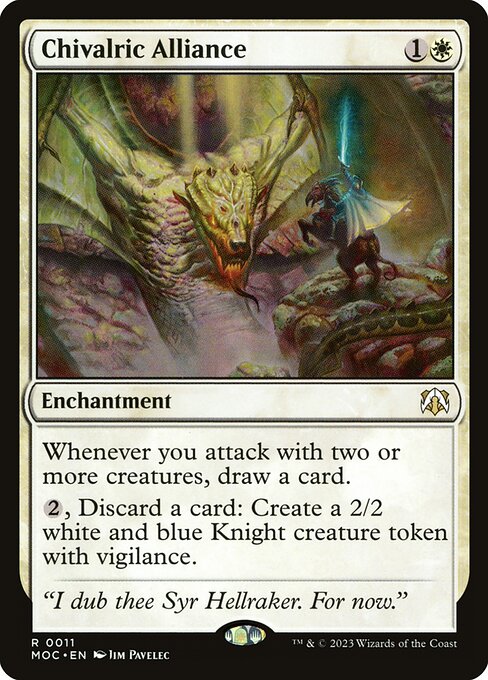
Chivalric Alliance
Earn cards through combat
Requires attacking with two or more creatures; the token ability spends a card.

Selfless Spirit
Protect an existing board
Sacrifice it before destruction resolves. It does not provide reanimation or stop exile.
Test one package and keep the comparison honest
Begin with a few opening hands and actual games using the same four changes. Check whether the early land works, whether the broader answer finds a worthwhile target, whether the draw engine triggers, and whether protection stops the removal you face. Record failures too. You are testing a hypothesis about your own deck, not proving that four cards raised its win rate by a particular percentage.
If a change fails, revise the job description before buying a more expensive version. Alliance stranded without attackers suggests a need for independent draw. Spirit watching an exile wipe suggests the protection type was wrong. Gift spending three mana on a threat an existing one-mana answer could handle does not invalidate its broader coverage, but it may change which slot you cut. Good notes keep a disappointing game useful.
Create a free account to keep both versions in My Decks, then use the Commander deck audit to review the surrounding list. Confirm color identity, card total, and any new combination that changes the deck’s speed. Tell your next table what changed. A handful of inexpensive swaps can alter play patterns, so the number of replaced cards alone does not establish a bracket or guarantee the same experience.
Build your deck
Put these choices into a Commander list. Create a free account to save your deck and keep tuning it with Deckcipher.
FAQ
What should I upgrade first in a Commander precon?
Start with a recurring failure you can describe: early mana, lack of cards, narrow answers, or poor recovery. Choose a small package that addresses that problem while preserving the part of the deck you enjoy. The first purchase need not be a finisher.
How many cards should I change at once?
There is no universal number. Four named replacements are manageable for a first comparison because you can notice what each addition and cut did. A major theme change may need more, but it becomes harder to identify why the deck improved or stalled.
Should I always remove Temple of the False God?
No. Compare its inability to produce mana before five lands with its later two-colorless-mana output. Replacing it with a basic can help an early-mana problem, but loses that later contribution. Keep the same land count unless a separate test justifies changing it.
Can Giada pay for all the white upgrades here?
No. Giada’s white mana can only cast an Angel spell. It cannot pay for Generous Gift, Chivalric Alliance, or Selfless Spirit, which is a Spirit. Ordinary white sources still matter even with a mana-producing commander.
Is protection a direct replacement for reanimation?
No. Protection tries to preserve creatures before an event; reanimation returns eligible cards afterward. Selfless Spirit stops destruction for affected creatures after its ability resolves, but cannot answer exile or return a dead creature. Defy Death performs a different job.
Do cheap upgrades automatically keep a precon in the same bracket?
No. Price and number of swaps do not establish the result. Consider the current optional bracket guidance, the deck’s combinations and expected speed, and the experience your group wants. Describe the actual changes before playing.