
Quick answer
To upgrade a precon while aiming to stay in the same bracket, first assess the original list, then fix specific problems without adding a faster finish, a restricted card, or a much more consistent engine. Keep the commander and main plan stable, use small batches with explicit tradeoffs, and review the resulting deck rather than trusting the word precon. Preserving a bracket is an objective you verify, not a promise attached to an upgrade list.
Define what you want to preserve
A precon upgrade can pursue several different goals. You might want fewer turns lost to tapped lands, a less crowded expensive end of the curve, or an answer to the enchantment that keeps shutting you out. Those are narrower goals than making the strongest possible version of the commander. Write down the frustrating situation you want to fix before searching for cards. It gives you a reason to stop upgrading when the problem improves.
Then describe the experience you want to keep. Perhaps your friends play slower combat decks, expect time to rebuild, and avoid compact early wins. A list that retains the same commander but finds a protected combo much more often may no longer deliver that experience. A familiar product name cannot explain what changed. You need a description of speed, resilience, and the way the deck closes games.
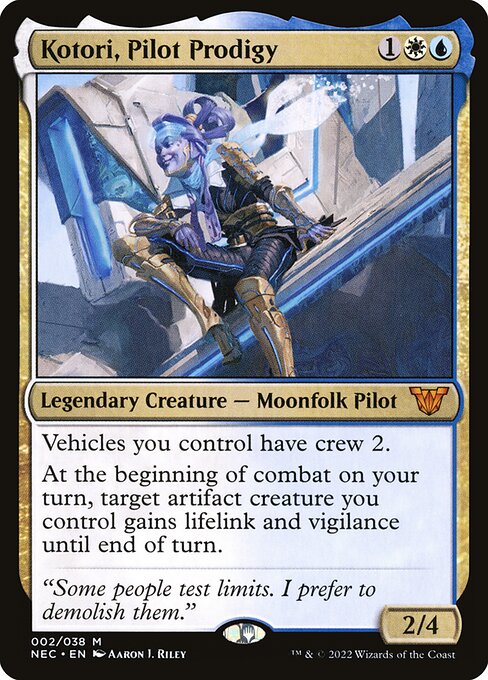
This guide uses Kotori, Pilot Prodigy and the stock Buckle Up list for a worked example. The aim is to keep the Vehicle combat identity while considering cheaper interaction, one mana-rock trade, and one land change. These are candidates to test rather than an official classification of the completed deck. Different pods may prefer the original cards, especially when they value splashy effects over early efficiency.
Establish the starting bracket before claiming to preserve it
Do not begin with the assumption that every precon is Bracket 2. The current official beta no longer treats the product label as an automatic placement. Assess the actual stock deck under the current criteria, including its Game Changers, combo potential, denial effects, extra turns, and intended pace. Only then does staying in the same bracket become a meaningful goal.
Game Changer limits are useful boundaries, but they are not a complete measure of strength. Brackets 1 and 2 exclude them, Bracket 3 allows up to three, and the higher brackets have no count limit. A deck with no listed Game Changers can still be deliberately optimized for a faster experience. Check the current guidance rather than relying on an old card-list screenshot or the bracket printed beside somebody else’s online deck.
Use the Commander bracket calculator to inspect a complete list and its explanations. If the original deck already has a card or play pattern outside the intended table’s expectations, decide whether to change that baseline too. It is more accurate to say you are adjusting a precon for your group than to claim you preserved a classification you never established.
Keep the commander stable during the first revision
Buckle Up contains both Kotori and Shorikai, Genesis Engine. They share blue-white color identity, but switching which one starts in the command zone changes the deck’s reliable resource. Kotori helps crew Vehicles and rewards an artifact creature at combat. Shorikai supplies a repeatable paid draw-and-discard activation and Pilot tokens. Having either card somewhere in the hundred is different from having access to it every game.
If the goal is a careful first upgrade of Kotori Vehicles, keep Kotori in the command zone while you evaluate the other changes. You can test Shorikai as a separate version later. That separation lets you understand whether an improvement came from the five replacement cards or from changing the command-zone engine. It also makes your pregame description more accurate.
Kotori gives Vehicles you control crew 2. It adds that crew option; it does not erase their printed crew abilities. A Vehicle with printed crew 1 can still use that cheaper option. The practical question is whether your board has enough usable creatures to crew the Vehicles you want to attack with. Filling more slots with Vehicles does not necessarily solve a shortage of pilots.
Choose improvements by the problem they solve
Start with a game note that points to a real decision. “I could not hold up a five-mana counterspell while developing” suggests examining expensive interaction. “I drew three Vehicles but had no creatures available to crew them” suggests the balance of bodies and payoffs. “My only colored source entered tapped” suggests a mana issue. Each diagnosis leads to different replacements, even though all three losses might feel like the deck was too slow.
Avoid changing every weak-looking card in one sitting. A spectacular spell that performed badly once may be a useful finisher in the right board state. A modest support creature may enable three other cards. Read the role of the cut alongside the role of the addition. If you cannot explain what the new card does for this particular deck, leave it on the candidate list until you can.
Keep a copy of the stock list in the precon finder and a working version in the deck builder. Check exact names before buying. Buckle Up already includes Swords to Plowshares, Generous Gift, Arcane Signet, Azorius Signet, and Fellwar Stone. Retaining those cards is sensible; purchasing an additional ordinary copy for the same singleton deck does not create another legal slot.
A five-swap package with real tradeoffs
Every cut below appears once in stock Buckle Up, and every proposed addition is absent from that stock list. The package keeps the commander, total card count, and land count unchanged. It does not add an automatic win condition. That makes it a useful comparison to inspect, but the completed list still needs a full bracket and gameplay review. No table of individual cards can establish that result by itself.
| Stock cut | Candidate addition | What changes |
|---|---|---|
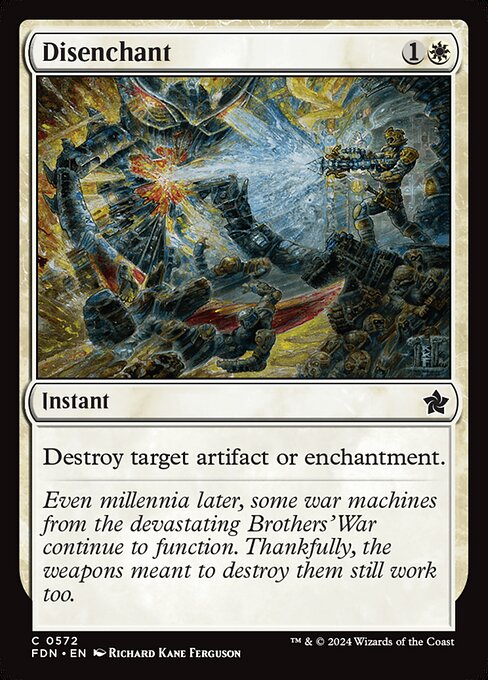
| Crush Contraband | Disenchant | Two-mana answer instead of four; loses exile and the option to answer both an artifact and an enchantment |
| Access Denied | Negate | Much cheaper noncreature protection; loses creature-spell coverage and Thopter production |
| Gold Myr | Mind Stone | Noncreature colorless ramp with a later draw option; loses white fixing and a body |
| Temple of Enlightenment | Adarkar Wastes | Untapped blue-white access; loses entry scry and can cost life for colored mana |
| Research Thief | Thirst for Knowledge | Earlier instant card selection; loses a flying body and repeatable combat-based draw |
These are alternatives, not five strict improvements. If your group has recurring indestructible artifacts, Crush Contraband’s exile may be worth the extra mana. If most threats are creature spells, Negate is a narrower answer than the counterspell it replaces. If the deck struggles to find enough crew power, removing Gold Myr and Research Thief may make a different problem worse. You can accept only the swaps that fit the evidence from your own games.
The table also shows why counting “five upgrades” says very little about power. Some replacements improve efficiency by surrendering late-game value. Others improve immediate mana at a cost to selection or life. The meaningful comparison is what the whole package lets you do, and what it no longer supports. Keep those losses in your notes so you can reverse a change for a clear reason.
Inspect the additions before buying
Disenchant
Efficient permanent interaction
Destroys one target artifact or enchantment. It does not exile, and it does not preserve Crush Contraband’s two-target option.

Negate
Cheap noncreature answer
Counters a noncreature spell. It cannot replace the creature-spell coverage of Access Denied in every matchup.

Mind Stone
Noncreature mana support
Taps for colorless and can later be sacrificed through its paid tap ability to draw. It supplies no white or blue mana.

Adarkar Wastes
Untapped color access
Can produce white or blue while dealing damage to you, or colorless without that damage. It gives up the Temple’s entry scry.

Thirst for Knowledge
Instant selection
Draws three, then discards two unless you discard an artifact card. Choose the discard based on your hand and recovery options.
Keep the pilot and Vehicle balance visible
Gold Myr is not just a mana symbol. It is an artifact creature that can contribute to crew costs and interact with creature-based effects. Mind Stone is a noncreature artifact by default. That can help it survive a creature-only destroy effect, but it cannot crew a Vehicle unless something makes it a creature. The exchange changes both resource resilience and available bodies.
A newly cast Gold Myr normally cannot use its own tap-symbol mana ability immediately because it is a creature. A newly cast, unanimated Mind Stone normally can. Crew has a different payment rule: newly entered creatures can be tapped to pay a Vehicle’s crew cost, since the activation does not use those creatures’ own tap-symbol abilities. Keep these distinctions separate when comparing a turn, rather than treating every form of tapping as summoning sickness.
Kotori’s combat trigger needs an artifact creature you control as its target when the trigger goes on the stack. An uncrewed Vehicle is normally not a legal target. If you want that Vehicle to receive lifelink and vigilance, arrange for it to be a creature before the trigger needs its target, such as by crewing during your main phase. Waiting until after you have already chosen the trigger’s target will not let you swap in a newly crewed Vehicle.
Make card draw fit the pace of the deck
Research Thief can turn artifact-creature combat damage to players into repeated cards. It is strongest when you already have attackers that can connect. Thirst for Knowledge costs less and works at instant speed without asking you to deal combat damage. It offers selection immediately, but it does not leave a creature behind or promise another card next combat. Choose based on whether you need earlier hand repair or a continuing engine.
Discarding an artifact to Thirst may be less painful when you have suitable recovery, but do not call every discard free value. Emry can give permission to cast a targeted artifact card from your graveyard that turn; you still pay the costs and obey the applicable timing rules. Graveyard removal can also remove the card before you use it. The presence of recursion does not turn your graveyard into an untouchable second hand.
Teshar, already in the stock deck, rewards casting historic spells by returning a qualifying small creature. It does not return every discarded artifact, since its target is a creature card with mana value three or less. Keep your card roles precise when planning a recovery sequence. A cheaper draw spell helps only if you can use the cards it finds and afford the resources you put into the graveyard.
Audit the interactions that inexpensive swaps can create
Artifact precons often contain cost reducers, recursion, sacrifice effects, and cards that reward artifacts entering. An apparently minor addition can connect several existing pieces. Review the new card with all of those categories before deciding it is a harmless budget swap. Search for repeated sequences that return you to the same position with extra mana, cards, tokens, or damage.
You do not need to add a famous expensive staple for a deck to become more consistent. Redundant cheap pieces can make an occasional engine show up in ordinary games. Tutors can change how often you assemble it. A lower curve can leave more mana available to protect it. If your stated aim is to preserve a slower game, examine those combined effects rather than focusing exclusively on whether a purchase appears on a restricted-card list.
If you find a line that conflicts with your target experience, decide whether to remove a piece or choose a different version of the deck. Hoping not to draw the combination is a poor design solution. If the group wants to try the stronger line, explain it and reassess the intended matchup. Staying honest about a changed plan is more useful than defending the original bracket label.
Test the package against specific questions
Use sample hands to inspect development, then actual games to inspect interaction and finishing power. For Kotori, ask whether the hand casts the commander with both colors, supplies a Vehicle, and leaves enough creatures or other support to crew it. A hand full of efficient spells may still fail the combat plan. Note why it fails instead of merely recording a mulligan or a loss.
During games, record the exchange the new card made. Did Negate stop a threatening noncreature spell while you developed, or did you wish it could counter a creature? Did Mind Stone’s immediate mana matter, or did losing the Myr’s white source strand a card? Did Thirst repair a weak hand, or did the deck run out of repeatable draw after the first board wipe? The answers can justify keeping some changes and reversing others.
Use modest samples honestly. A handful of opening hands or a few games can expose a recurring failure, but it does not establish a precise new win rate or prove that the deck can never produce a faster finish. Continue the comparison as opponents and draws vary. If several changes are hard to evaluate together, return part of the list to stock and test a smaller package.
Describe the revised deck clearly before playing
A useful introduction would be: “Kotori Vehicles from Buckle Up, with a few cheaper answers and a land change. I kept the Vehicle combat plan and traded away some expensive value. I want this version to fit the same slower games, so tell me if the revised starts feel out of place.” Add any relevant combo, denial, or extra-turn information from your complete list. The example package is not a substitute for reading the rest of the deck.
After the game, ask about the experience that matters. Did people have time to develop? Were your answers interactive, or did a repeated pattern prevent someone from participating? Did the deck’s finish match what you described? A bracket number helps organize the conversation, but the practical details tell you whether the upgrades preserved the game you wanted to play.
Build your deck
Put these choices into a Commander list. Create a free account to save your deck and keep tuning it with Deckcipher.
FAQ
Can I guarantee a precon upgrade will stay in the same bracket?
No universal guarantee applies to a set of purchases. Assess the stock baseline, inspect the complete revised list under current criteria, and consider its intended speed and play patterns. A small, carefully tested package can support that goal without certifying the result.
Are all unmodified precons Bracket 2?
No. Current guidance separates preconstructed products from automatic Bracket 2 placement. Check the actual product list and current criteria before choosing a starting bracket. The packaging does not override the cards and gameplay inside.
Does a cheap upgrade count as low power?
Price and power measure different things. An inexpensive card can complete a strong engine or make an existing one much more consistent. Check interactions, redundancy, and the expected finish, not just the cost of the card.
Should I switch Buckle Up from Kotori to Shorikai first?
Treat that as a separate version to evaluate. Both are in the product, but moving a different engine into the command zone changes reliable access and development. Keeping Kotori stable makes the first card-swap comparison easier to understand.
Does Kotori replace a Vehicle’s printed crew cost?
No. Vehicles you control gain crew 2 in addition to their other abilities. You can choose an available crew ability, including a printed crew 1 ability when that is cheaper. Make sure the creatures you intend to use are untapped and have enough total power.
Is Mind Stone strictly better than Gold Myr?
No. Mind Stone is normally usable for mana immediately and is not a creature by default, but it makes only colorless and cannot ordinarily help crew. Gold Myr makes white and supplies a creature body, although its own tap-symbol ability normally needs it to get past summoning sickness.
How many upgrades are safe to make at once?
There is no count that guarantees a bracket. Use a batch small enough that you can explain each change and observe the tradeoffs. One engine piece can matter more than several modest replacements. Keep the stock version so you can undo a change cleanly.
What should I do if the upgrades make the deck faster than intended?
Review which changes improved the early engine or protection, then reverse or replace the pieces that conflict with your target game. Alternatively, keep that version for a stronger pod and maintain a separate slower list. Explain the current version honestly when choosing a game.