
Quick answer
Experience counters are counters on a player.
Experience belongs to the player
Experience counters are counters on a player. They do not sit on the creature that awarded them, and they have no built-in ability of their own. A card refers to the number you have when it tells you what to do. They are not mana, poison, or +1/+1 counters, and there is no general rule that spends them when you receive a benefit.
If Meren of Clan Nel Toth leaves the battlefield while you have four experience counters, you keep four experience counters. Recasting Meren does not restart at zero. However, her absence still matters because you need her abilities to generate more counters and turn the existing count into recurring creatures. Keeping the number is different from keeping an active engine.
Put the experience marker beside your life total. Keep +1/+1 counters physically on creatures. Distinct locations prevent a common mistake when Ezuri creates creature counters based on a player counter total.
The commander decides what earns experience
Meren awards experience when another creature you control dies. Ezuri, Claw of Progress cares about another creature with power 2 or less entering under your control. Mizzix of the Izmagnus cares about an instant or sorcery spell with mana value greater than your existing experience count. These are different triggers, so the same support package will not suit every experience commander.
A small creature entering may trigger Ezuri before it is sacrificed and subsequently triggers Meren, if both are present under your control. You can gain experience from each qualifying event. A creature dying while Meren is still in your command zone does not earn experience from her, even if you plan to cast her immediately afterward.
Choose the event your ordinary cards already produce. Small creatures, sacrifice outlets, and a spell curve that climbs naturally are useful only when they match the commander you actually selected.
Meren checks the count when her trigger resolves
At the beginning of your end step, Meren targets a creature card in your graveyard. On resolution, if its mana value is no greater than your experience count, you return it to the battlefield. Otherwise it goes to your hand. The target is chosen when the ability goes on the stack, while the comparison uses the count when it resolves.
With three experience counters, you can target a four-mana creature and then sacrifice another creature before the end-step ability resolves. If that death earns a fourth experience counter and the experience trigger resolves first, Meren can return the four-mana card to the battlefield. Exiling the targeted card from the graveyard still stops that return.
Know which resource the table can attack. Removal may interrupt future experience generation, and graveyard interaction can stop the immediate return. Existing experience counters do not make either vulnerability disappear.
Mizzix reduces generic costs rather than colored requirements
Mizzix reduces the generic portion of your instant and sorcery spells by the number of experience counters you have. The reduction does not remove colored mana symbols. A spell with an X cost can be announced with a chosen X value and then have the generic total reduced, while other casting costs and restrictions still matter.
A spell that normally costs three generic mana and one blue can have its generic portion reduced to zero with three experience counters. You still owe the blue mana. Do not treat the counters as a pool of blue or red mana you may spend elsewhere, and do not claim every spell becomes entirely free.
Keep enough colored sources to cast your interaction after discounts. A list rich in colorless utility lands can fail even when Mizzix makes the visible mana total seem small.
Different cards can use the same experience total
Experience counters have no commander-specific label. If several permanents you control refer to your experience counters, they use the same total. A five-color experience deck can therefore have one card generate counters and another card reward them, provided every card is legal within the commander's color identity.
Daxos the Returned can use experience you gained from a different qualifying experience ability. That does not make every experience legend a natural inclusion in one list. An enchantment-heavy Daxos plan and a creature-sacrifice Meren plan still compete for deck space, colors, mana, and the cards that start their engines.
Build around overlapping actions rather than a collection of matching words. A card that shares the resource but needs a completely separate setup may be the least effective card in the deck.
Proliferate needs a counter to exist first
Proliferate can add one experience counter to a player who already has an experience counter. It does not create the first experience counter on a player with none. When you choose a player with multiple kinds of counters, proliferate adds one of each kind that player has, which can make the decision dangerous if poison is involved.
If you have one experience counter and two poison counters, proliferating yourself increases both types. If you have zero experience counters, choosing yourself for some other counter does not invent an experience counter. A sacrifice creature such as Cankerbloom can interact with Meren, but the death trigger must resolve in the right order for a newly earned counter to be present.
Treat proliferate as acceleration after the engine starts. It should not replace every card that can earn the initial experience naturally.
Persistent progress still needs a way to finish
Experience scales a reward, but a large counter total is not automatically a win condition. Meren still returns one targeted creature per end-step trigger. Daxos still needs mana to activate his token ability. Ezuri still needs a creature worth putting counters on and a way for that creature to matter in combat.
A Meren deck can have ten experience counters and still lose to a graveyard exile effect if its only plan is to return one threat. An Ezuri deck can build one enormous attacker and still be stopped by an ordinary blocker when it lacks evasion. The counter total describes capacity, not a finished position.
Choose a closing plan that uses the same supporting cards. Recurring removal, evasive pressure, a sacrifice finish, or a resilient creature engine should connect to the early game instead of arriving as an unrelated package.
Track the trigger conditions at the table
Experience abilities often care about another creature, the power a creature has at a particular moment, or the mana value of a spell. Those details decide whether a trigger exists. State the event and update the player total only after the relevant trigger resolves. Removing the source after a trigger has gone on the stack does not normally erase that existing trigger.
With Ezuri, examine a creature as it enters, including continuous effects that change its power. With Meren, sacrificing her alone does not qualify as another creature dying for her own trigger. If she dies simultaneously with other creatures, her ability can see the other qualifying deaths using the appropriate last known information.
Before a large sacrifice or creature-entry sequence, explain which abilities will trigger. This is faster and more reliable than deciding how many experience counters should have been added several actions later.
Cards worth comparing before you choose a package
Examples and the jobs they do

Meren of Clan Nel Toth
Creature recursion
Meren links other creature deaths to experience and turns that count into a recurring graveyard resource at your end step.
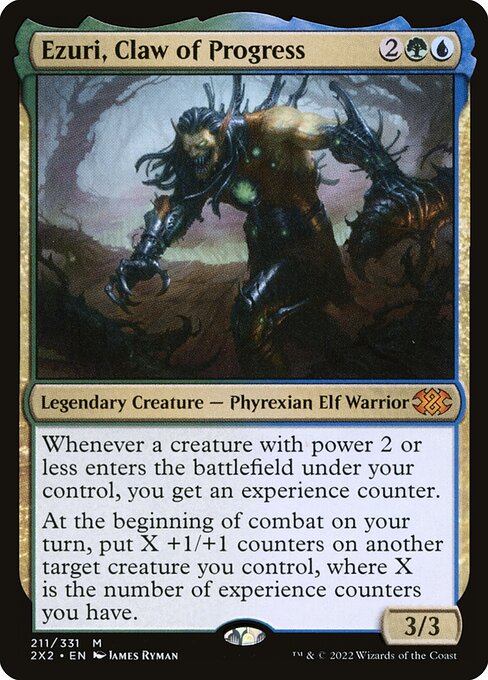
Ezuri, Claw of Progress
Creature growth
Ezuri rewards other small creatures entering and converts your experience total into +1/+1 counters on another target creature at the beginning of combat on your turn.
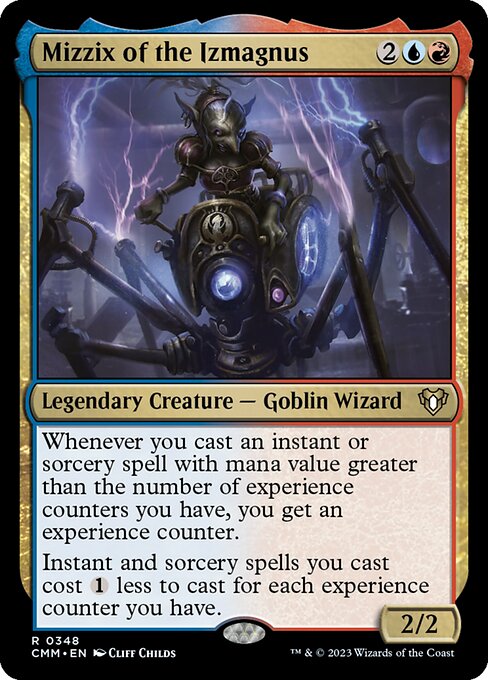
Mizzix of the Izmagnus
Spell cost reduction
Mizzix rewards a rising spell mana value and discounts later instant and sorcery spells.
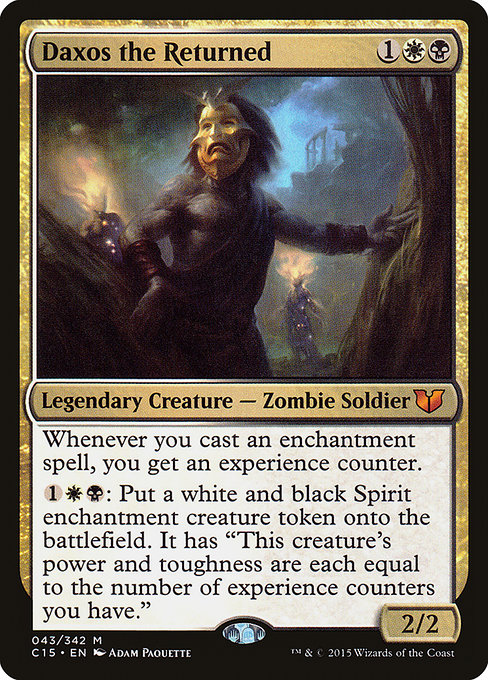
Daxos the Returned
Enchantment payoff
Daxos awards experience when you cast an enchantment spell and can create Spirit enchantment creature tokens whose power and toughness track your experience count.

Kalemne, Disciple of Iroas
Combat pressure
Kalemne gains experience from casting creature spells with mana value 5 or greater, then grows through a bonus based on your count.
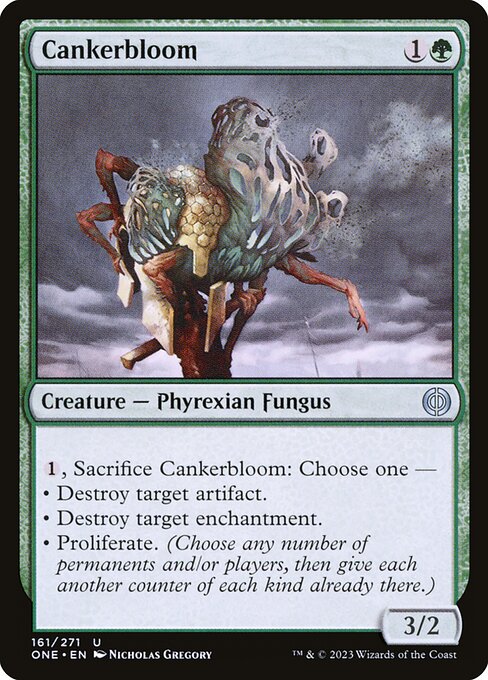
Cankerbloom
Flexible support
Cankerbloom can sacrifice itself to destroy an artifact or enchantment, or to proliferate.
Meren of Clan Nel Toth
Low-cost creatures with useful abilities can keep working even before the count reaches an expensive target. The tradeoff is dependence on creatures dying while Meren is present and on having a legal graveyard target. Keep mana and cards available to recover when either piece is disrupted.
Ezuri, Claw of Progress
Evasive small creatures can do two jobs across the setup and payoff turns. He cannot put his combat counters on himself through that ability. A deck needs useful recipients, enough small entries to gain experience, and a reason the enlarged creature can connect.
Mizzix of the Izmagnus
Generic-heavy spells make the discount visible, while cheap colored interaction protects the engine when the table responds. The commander does not remove colored costs or grant permission to cast a spell at an unusual time. A hand full of spells can still stall without the right lands.
Daxos the Returned
Casting and merely putting an enchantment onto the battlefield are different actions. His activated ability still requires mana. An enchantment list needs its setup and recurring token costs to fit the same curve rather than treating the experience reward as free board development.
Kalemne, Disciple of Iroas
Double strike and vigilance make additional power matter in a straightforward combat plan. The expensive creature requirement can overload an opening hand. Keep early mana development and avoid confusing a discounted casting cost with the spell's actual mana value.
Cankerbloom
In a Meren deck its death can earn experience, and correctly ordering the death trigger can make the new counter available before proliferate resolves. It does not proliferate counters from nothing. The removal mode may be the better use even when adding experience looks attractive, especially when an opposing permanent prevents your engine from working.
Build an experience engine that survives interruption
For Meren, separate small creatures with immediate effects from expensive return targets. The first group helps the deck function while experience is low. The second becomes attractive once you can return it directly. A hand containing only the second group can fail before Meren earns anything. Do not solve that hand by adding more graveyard payoffs. Lower the setup cost and keep enough ways to cast useful creatures normally. Your experience total makes later recursion stronger, but it does not let you skip the opening turns.
For Mizzix, write down both the actual mana cost and the colored symbols that remain after a realistic discount. A spell reduced from six mana to two colored mana is excellent only when you have those two colors available. For Ezuri, count small entries and useful combat recipients separately. A recipient that is enormous but cannot attack profitably may contribute less than a modest evasive body. A single experience category in your notes should never replace those commander-specific questions.
Open the deck builder and mark the action that earns your first experience counter. Then mark the action that uses your fourth counter. If the two plans require unrelated cards, consider narrowing the package. Check the early colored requirements with the mana base calculator, and compare the surrounding draw and protection through the Commander deckbuilding checklist. Create a free account from My Decks to save the version and the changes you are testing.
Rehearse Meren with three experience counters, a four-mana creature card in the graveyard, and one expendable creature in play. Put the end-step trigger on the stack and choose the target. Now sacrifice the expendable creature and place the experience trigger above the return. Resolve the experience first, then resolve the return. Repeat the example with the sacrifice before Meren is present. The difference explains why the commander timing matters even though the experience total is persistent.
Try the same position with an opponent exiling the target in response. Keep the experience counters where they are and finish the stack. You have retained long-term progress but lost that return. This is the board state your recovery cards must address. A creature in hand, another legal graveyard option next turn, or independent draw can matter more than another proliferate spell. Do not reset the exercise after disruption, because that would hide the most important weakness being tested.
During actual games, note whether you missed the first counter, lost the source before an important event, or had a large count with nothing useful to do. Those are three different failures. A cheap qualifying creature can solve the first, better sequencing or protection may address the second, and a more coherent payoff can address the third. Increasing the number on your die does not solve every experience problem. Keep a specific reason for each edit rather than changing the whole package after one commander removal spell.
A precise spell and creature timing exercise
Suppose you control Mizzix with three experience counters and cast an instant whose mana cost is X plus two blue mana. You choose X as five. Its mana value on the stack is seven, even though Mizzix reduces the generic payment by three and you pay only two generic plus two blue. Seven is greater than your current experience count, so the cast qualifies for Mizzix to award another counter. That trigger resolves separately from the spell. Removing Mizzix after the trigger exists does not erase that trigger, though it can stop discounts on later spells.
For Ezuri, evaluate a creature power as it enters, including applicable entry modifications and continuous effects. A creature entering with power three does not qualify simply because its printed base power is two. If it qualifies on entry and later grows before the experience trigger resolves, that later change does not undo the trigger. At beginning of combat, his other ability needs another target creature you control. Choose a legal recipient and do not assume the counters can be moved to a different creature if opponents remove the target. An experience total and a usable recipient are separate resources.
A decision table for the interaction
| Position | Correct result | What to check |
|---|---|---|
| Commander leaves | Player keeps experience counters | Future source abilities may be absent |
| Proliferate at zero experience | No first experience counter | A source must start that counter kind |
| Meren target exceeds experience | Return goes to hand | Compare when the return ability resolves |
| Mizzix discount | Reduces generic cost | Colored symbols remain payable |
Frequently asked questions
Build your deck
Put these choices into a Commander list. Create a free account to save your deck and keep tuning it with Deckcipher.
FAQ
Do experience counters disappear when my commander dies?
No. They remain on you, the player, when the commander changes zones. The card that produces or uses them may be gone, so you can retain the total without receiving any immediate benefit. Recasting the commander lets its abilities refer to the counters you already have.
Do I spend experience counters to use Meren?
No. Meren compares your experience total with the target's mana value. Her ability does not remove the counters. A different card could explicitly instruct you to remove counters, but there is no default rule that spends experience when a payoff happens.
Can proliferate give me my first experience counter?
No. You need to have an experience counter already for proliferate to add one of that kind. First produce experience with an appropriate card ability. Also check the other counters you have, because choosing yourself adds one of every kind present.
Can multiple experience commanders share counters?
Yes. They refer to the experience counters you have, rather than a separate named pool for each creature. You still need a legal deck color identity and enough practical overlap between the cards to justify putting them into the same deck.
Does Meren return a creature if I have too little experience?
Her end-step ability can still target a creature card in your graveyard. If its mana value is greater than your experience total when the ability resolves, it returns to your hand instead of the battlefield. That fallback can be useful when rebuilding.
Can removing Meren stop a trigger already on the stack?
Removing her does not normally remove an existing triggered ability from the stack. The return can still happen if its target remains legal. Removing her earlier can prevent future triggers, and exiling the target can answer the return directly.
Are experience counters the same as creature counters?
No. Experience counters are on a player. Ezuri can use that number to create +1/+1 counters on a creature, but those are distinct markers in different places. Moving or removing a creature counter does not reduce the player's experience total.
How many proliferate cards should an experience deck use?
Start with ways to earn experience through actions the deck already wants to take. Add proliferate when it improves an active engine or supports other useful counters. A fixed count is less helpful than checking whether the opening hand can produce the first counter and keep playing after removal.