
Quick answer
Identify the copied object and the copy’s timing first. Printed or modified copiable values transfer; counters and commander designation usually do not. Entry, spell-copy, and cast events remain distinct.
Begin with what is being copied
Copy effects can create a token, make a permanent enter as another permanent, change an existing permanent, or put a spell copy onto the stack. Those operations share rules about copiable information but have different timing and consequences. A token creature entering is not a creature spell being cast, and an existing creature changing appearance has not entered again.
Clone resolving as a creature gives you a permanent that enters as the selected creature. Rite of Replication instead resolves as a sorcery and creates creature tokens. Reverberate copies an instant or sorcery spell already on the stack. Calling all three copying a card is too vague to identify their targets, responses, or triggers.
Read the action first: enter as, create a token copy, become a copy, copy a spell, or cast a copy. Then identify what the effect is allowed to copy. This first pass usually resolves more confusion than starting with the final creature’s displayed power.
Counters, Equipment and temporary boosts are normally not copied
A copy normally acquires the original’s copiable characteristics, including its name, mana cost, types, rules text, and printed power and toughness as modified by applicable copy effects. It does not normally copy counters, tapped status, attached Auras and Equipment, damage marked on the permanent, or ordinary temporary boosts from other effects.
A printed 2/2 creature with three +1/+1 counters and a temporary +3/+3 boost can appear as an 8/8 on the battlefield. An ordinary copy of its copiable 2/2 base does not enter as an 8/8 with the same counters. An Equipment attached to the original also remains attached there rather than duplicating onto the new creature.
Separate the original’s printed or copied identity from effects layered on afterward. A copy can still be enhanced by your own applicable anthem after entering, but that is a fresh application of the anthem to the copy, not a duplicated history of every effect that touched the original.
Copy exceptions become part of what later copies can receive
A copy effect can specify exceptions, such as removing legendary or adding an ability. Those exceptions can become part of the resulting copiable values. Copying that modified copy can therefore produce a different result from copying the untouched original. A counter placed as part of entry is still a counter rather than automatically a new printed characteristic.
Spark Double can copy a creature you control while making the result nonlegendary and adding an entry counter. A later ordinary copy of that nonlegendary result can also be nonlegendary because the copy exception changed its copiable characteristics. It does not simply duplicate the actual +1/+1 counter already sitting on Spark Double.
Keep the exact except clause beside the copied characteristics. Do not assume every benefit is equally transferable. Removing legendary through a copy exception, receiving a counter, and being affected by a separate continuous buff are three different mechanisms even if all improve the visible creature.
A Clone choice is not necessarily a target
Clone’s entry-copy replacement does not target the creature it copies. Hexproof and shroud do not by themselves prevent that non-targeting choice. The choice happens as the creature enters through the resolving process, rather than being a target announced when Clone was cast. Other copy effects can explicitly target and follow different restrictions.
An opponent can remove a desirable creature while Clone is still a spell on the stack, reducing the available options. Once Clone is entering and its controller makes the actual choice, there is no ordinary priority window inserted between that choice and the same entry event. A legal existing creature must still be available when the choice is made.
Rite of Replication explicitly targets a creature, so its target is chosen during casting and can become illegal before resolution. Do not import Clone’s non-targeting protection interaction into a targeted token-copy spell. The presence or absence of the word target changes real response opportunities.
Entering as a copy can produce entry abilities
A permanent entering as a copy already has the copied characteristics as it enters. Appropriate entry-triggered abilities can trigger, and relevant as-it-enters or enters-with abilities can apply. The permanent does not enter first as a blank Clone and then acquire its text after the entry event has passed.
Copying a creature with a card-drawing entry ability can create that ability for the new entry. By contrast, an existing creature that becomes a copy without leaving and reentering does not trigger a new entry merely from changing its characteristics. The two situations can end with similar-looking boards but different resources gained.
When building around entry value, prioritize effects that actually create the relevant entries. A repeatable copy-changing permanent may be powerful for other reasons while failing to provide the entry triggers you expected. Count the event supplied by the card, not just the creature it resembles afterward.
The legend rule checks name and control
An ordinary copy of a legendary permanent generally also copies its name and legendary supertype. If one player controls two or more legendary permanents with the same name, the legend rule normally makes that player choose one and put the others into their owners' graveyards. This is a state-based action, not a sacrifice and not destruction.
Copy an opponent’s legendary creature while each player controls only one of that name. The legend rule does not force either player to lose it merely because the names match across different controllers. Copy your own same-named legend without an exception, and your own collection can instead need the rule’s choice.
Indestructible does not prevent the rule from putting the unchosen permanent into the graveyard. Entry triggers from the new copy can still have triggered before the state-based check removes an extra legend. Do not erase those events simply because one body did not remain on the battlefield.
Sakashima and Spark Double solve the legend problem differently
Sakashima of a Thousand Faces retains its other abilities when copying another creature you control, including its ability making the legend rule not apply to permanents you control. Spark Double instead makes its copied result nonlegendary. One effect changes application of a rule to your permanents; the other changes a characteristic of a particular copied object.
If the only effect suspending your legend rule disappears while you control several same-named legendary permanents, the normal state-based check applies again. You must keep one and put the rest into the graveyard. A nonlegendary Spark Double result does not become legendary merely because an unrelated Sakashima leaves.
This distinction matters to removal protection. A deck relying on Sakashima to preserve a large legendary board can lose several bodies when the last relevant rule-suspending effect ends. Consider the resulting board before committing every extra copy to one fragile permission.
A copy of a commander is not automatically a commander
Commander designation belongs to the actual card designated before the game, rather than being an ordinary copied characteristic. A main-deck Clone copying your commander does not become another commander. Conversely, Sakashima designated as your commander remains that commander while copying an ordinary noncommander creature.
If your commander Sakashima copies another creature, combat damage it deals is still damage from that same Sakashima commander for the special loss condition. A separate token copying the appearance of Sakashima is not automatically another commander. Its ordinary damage can reduce life without contributing as a newly designated commander.
For two-commander decks, keep each actual commander’s damage and cast histories separate even if their current names match through copying. The <a href="/blog/partner-in-commander-rules-and-deckbuilding/">partner guide</a> explains that bookkeeping and why copying text cannot add a third commander.
Spell copies retain casting decisions without a new cast
Copying a spell on the stack normally copies decisions including its modes, targets, chosen X, and whether additional or alternative costs were used. The copy is placed on the stack without being cast. An effect may permit new targets, but does not automatically permit new modes or a new X. Choices normally made during resolution are handled then.
Reverberate copying a kicked Rite of Replication produces a spell copy that is also kicked. It can therefore create five tokens on resolution without paying Rite’s kicker again for that stack copy. The five tokens are copies of the target creature; they are not five creature spells you cast, and the creature tokens do not inherit a target creature’s past kicker payment.
An effect saying cast a copy is different: it actually follows casting instructions and can trigger cast rewards. Read that verb before deciding whether a draw engine, storm count, or another cast-based payoff sees an event. Ordinary stack copying does not add a cast merely because the copy is itself a spell.
Copies and originals can be answered separately
After a spell copy exists on the stack, countering or removing the original does not normally remove that separate copy. Each spell checks its own targets and resolves independently. However, if an opponent removes the original targeted spell before Reverberate resolves, Reverberate can lose its legal target and fail to produce the intended copy.
With a kicked Rite on the stack, resolve Reverberate first to create the copied Rite. An opponent countering the original Rite afterward still leaves the copied Rite to be answered. If both Rite spells target the same creature and that creature becomes illegal for both, both can fail to resolve. Separate spells do not guarantee separate successful outcomes.
Choose copies for the actual deck plan rather than treating them as universal answers. Creature-copy packages need suitable boards; spell-copy packages need useful spells and mana at the same time. Keep independent threats and interaction so the deck still functions when no attractive object is available to copy.
Cards worth comparing before you choose a package
Examples and the jobs they do
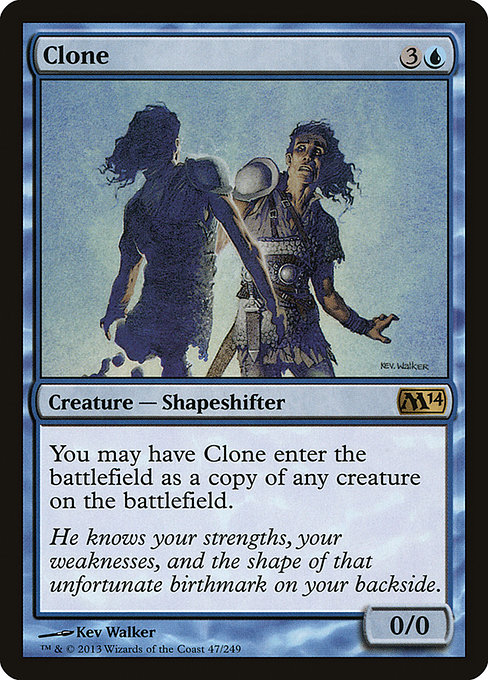
Clone
A non-targeting creature-entry copy
Clone can enter as any existing creature on the battlefield.
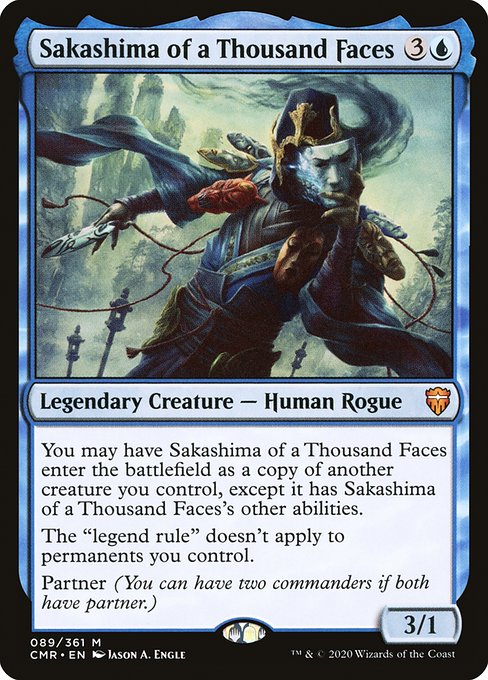
Sakashima of a Thousand Faces
Legend-rule suspension with partner
Sakashima copies another creature you control while retaining its other abilities.
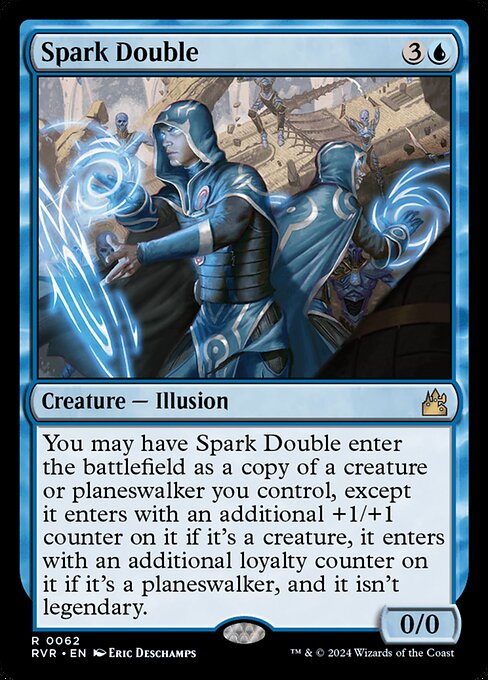
Spark Double
A nonlegendary creature or planeswalker copy
Spark Double copies a creature or planeswalker you control and changes its result to nonlegendary.

Rite of Replication
Targeted token copies with a kicker option
Rite creates one token copy of its target, or five instead if the spell was kicked.
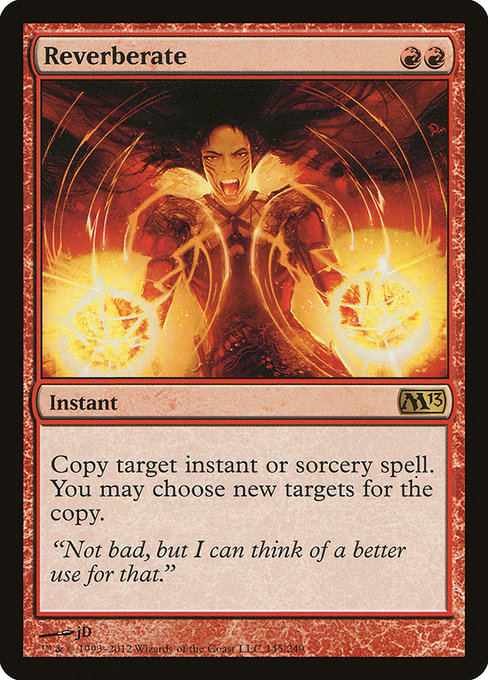
Reverberate
A copy of an instant or sorcery on the stack
Reverberate targets an instant or sorcery spell and can choose new targets for the resulting copy.
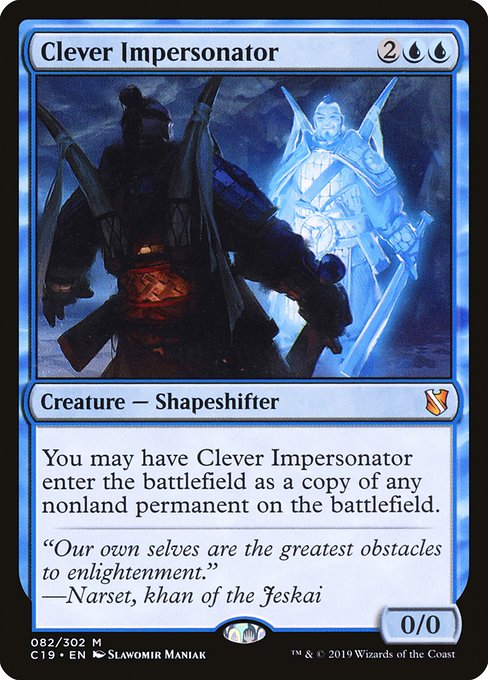
Clever Impersonator
A broader nonland permanent choice
Impersonator can enter as any nonland permanent on the battlefield.
Clone
Its replacement choice does not target and is made during entry. Declining to copy can leave its ordinary 0/0 body to the normal state-based checks unless another effect keeps it alive. It can copy an opposing creature, but does not steal the original. Choose a creature whose copied characteristics solve a problem now rather than assuming the largest displayed number includes transferable counters.
Sakashima of a Thousand Faces
That retention includes partner and the rule-suspending effect. A later appropriate copy of the resulting modified copiable values can receive those retained abilities too. The entry permission is limited to your creatures, unlike Clone. Keep a suitable original available, and plan what happens if the last legend-rule exception leaves.
Spark Double
It also enters with an additional relevant counter depending on whether the result is a creature or planeswalker. It does not target through that entry-copy choice. The nonlegendary exception and the extra actual counter have different copying treatment. Copy the copiable result without automatically duplicating counters already present on it.
Rite of Replication
Its four-mana base cost and five-mana kicker normally require nine mana for the kicked cast before modifications. The target must still be legal at resolution. Five legendary copies can produce multiple entry events even if the legend rule leaves only one appropriate same-named permanent. Do not confuse creating five bodies with keeping all five indefinitely.
Reverberate
It can target an opponent’s qualifying spell as well as your own. It does not normally reopen the original mode or chosen X. Its red-red payment is a real colored requirement. A deck full of colorless acceleration still needs two red sources or another appropriate way to pay the symbols.
Clever Impersonator
It can copy an appropriate enchantment, artifact, creature, or planeswalker rather than only a creature. Its own original creature type does not force the result to remain a creature. A copied planeswalker follows its entry loyalty rules rather than copying existing loyalty counters. Copy a permanent for its real rules text and role, with the legend rule still considered when the result is legendary.
Practice copying a kicked Rite and protecting the real target
You cast Rite of Replication targeting a useful nonlegendary creature and pay its five-mana kicker in addition to the normal four-mana cost. With the spell still on the stack, you cast Reverberate targeting Rite. If Reverberate resolves with a legal target, it creates a separate kicked Rite spell copy and offers its permitted target choice.
Without other changes, allowing both Rite spells to resolve can create five tokens from the copy and five from the original. Countering just the original after the copy exists still leaves the other spell. Removing the only creature targeted by both can instead leave both spells without a legal target. Announce target choices clearly so the table knows which response can stop which result.
Next replace the target with a legendary creature and remove any legend-rule exception from the board. The tokens can enter and create relevant entry triggers, while the normal state-based check still limits the same-named legendary permanents you keep. This is not a sacrifice outlet, though putting creatures into the graveyard can satisfy appropriate death triggers.
Build the package in <a href="/deck-builder?guest=1">Deckcipher’s deck builder</a> and create an account to save it. Compare the package’s mana demands with the <a href="/blog/how-to-build-a-commander-mana-base/">mana-base guide</a>, and keep enough original threats that your copy cards have useful work when opponents present an unhelpful board.
A decision table for the interaction
| Position | Correct result | What to check |
|---|---|---|
| Clone entering | Non-targeting choice | Can bypass hexproof targeting restriction |
| Rite on the stack | Targeted spell | Target must remain legal |
| Copy modified Spark result | Nonlegendary exception is copiable | Actual old counters are not copied |
| Copy commander appearance | No new commander designation | Actual designated card retains its status |
| Copy kicked Rite spell | Kicked information carries over | No new cast event from ordinary copying |
Frequently asked questions
Build your deck
Put these choices into a Commander list. Create a free account to save your deck and keep tuning it with Deckcipher.
FAQ
Do copies receive the original’s counters?
Not ordinarily. Counters, marked damage, attachments, tapped status, and normal temporary boosts are not copiable values. A separate enters-with ability or copy exception can produce its own result, but does not mean the old counters themselves were copied.
Can Clone copy a creature with hexproof?
Its ordinary entry-copy choice does not target, so hexproof alone does not prohibit it. A copy spell that explicitly targets, such as Rite of Replication, must instead follow its own targeting restrictions. Read the actual effect.
Does becoming a copy trigger entry abilities?
Not if the permanent simply remains on the battlefield and changes characteristics. Entering as a copy or creating a token copy can produce a real entry. The event, not the final resemblance, determines whether entry abilities trigger.
Can I copy an opponent’s legendary creature?
Yes when the copy effect permits it. The legend rule normally compares same-named legends controlled by the same player, not one original under an opponent and one copy under you. Your own existing same-named legends can still matter.
Is a token copy of my commander a commander?
No, commander designation is not copied. An actual commander remains a commander while copying another creature, but an ordinary token or main-deck Clone does not acquire that designation by copying its appearance.
Does Reverberate copy Rite’s kicker payment?
A copy of the kicked spell on the stack carries that casting information, so its Rite effect can create five tokens. A token copying a creature permanent does not thereby inherit the creature’s historical kicker payment. These are different objects being copied.
Are ordinary spell copies cast?
No. They are placed on the stack and remain spells, but normally create no new cast event. An instruction explicitly telling you to cast a copy is different and can produce cast-based triggers under its actual rules.
Does countering the original remove its copy?
Once a separate copy exists, countering the original does not normally remove it. If the original disappears before a targeted copying spell resolves, that copying spell can instead lose its target and fail to create the copy. Timing determines which situation applies.