
Quick answer
A companion provides one outside-game card-access option in exchange for a real construction restriction. Check the whole starting deck, then budget three mana to hand plus the separate casting cost.
A companion begins outside the game, not in the command zone
Companion allows you to reveal one eligible card you own from outside the game before play begins when its condition is satisfied by your starting deck. It is distinct from choosing a commander. Your Commander deck still contains exactly 100 cards including its commander or commanders, while a legal companion is an additional card outside that starting deck.
Keruga, the Macrosage can be the revealed companion of a suitable deck, or it can instead be a card inside a legal deck. Those configurations use different rules. When Keruga is merely in the 99 or is the commander, its companion condition does not impose a construction restriction by itself.
Decide which role the card occupies before making cuts. A creature with companion printed on it is not automatically your companion wherever it appears. Avoid moving it between the main deck and outside-game area without checking the changed requirements.
The restriction checks the entire starting deck
A companion’s condition applies to the starting deck before the commander is set aside. That includes the commander, or both commanders when a legal pair is used. Checking only the 99 or 98 library cards can miss a disqualifying commander. Each companion describes its own condition, so read the exact words rather than applying a generic creature-only check.
A Keruga companion requires each starting-deck card to have mana value three or greater or be a land card. A two-mana commander fails that condition even if every other nonland costs at least three. A partner pair must have both cards satisfy the condition, not just the partner you expect to cast first.
Validate after the final commander choice and again after importing upgrades. One attractive cheap answer can invalidate an otherwise suitable Keruga list. The restriction is a construction cost paid across the whole list, not simply a fee attached to accessing the companion.
Pay three to move it to hand through a special action
Once during the game, during a main phase of your turn with priority and an empty stack, you may pay three generic mana to put the revealed companion into your hand. This is a special action, not an activated ability and not a spell. It does not use the stack. You cannot take it as an ordinary response to a pending spell.
With Keruga outside the game and three available mana during your main phase, take the special action and put it into hand. An opponent cannot counter that action with a spell that counters activated abilities. Once the action is complete, the game continues with the appropriate priority and later actions can still be answered normally.
The access payment does not cast Keruga and does not pay any portion of its creature spell’s cost. Budget the three-mana action and the later casting separately. An effect giving creature spells flash does not by itself make this outside-game special action available during an opponent’s turn.
Casting the creature is a second, ordinary transaction
After the companion reaches your hand, cast it through an applicable permission and pay the relevant spell cost. It is now a card in the game. It can be countered as a spell unless another effect prevents that, and it follows the usual zone changes after resolving or being answered. The once-per-game companion action does not become a reusable recovery ability.
Keruga costs three generic and two green-blue hybrid mana to cast. Without discounts, bringing it to hand for three and casting it requires eight mana across those actions. You can spread them across turns. If it later dies, it goes through ordinary handling for that card rather than returning outside the game for another three-mana access payment.
A companion is not your commander merely because you had guaranteed pregame access to it. It does not automatically move to the command zone when removed, acquire commander tax, or deal commander combat damage. Those features belong to cards actually designated as commanders.
Color identity and ordinary legality still matter
The companion must fit within your commander’s color identity and otherwise be permitted by the format. A companion condition does not override those checks. Hybrid symbols contribute their colors under the current rules used here, and mana symbols in ordinary rules text can add colors to identity even when the casting cost appears narrower.
Jegantha, the Wellspring has a red-green hybrid symbol in its cost but a five-color mana ability in its text. Its color identity is therefore all five colors. A two-color commander cannot use Jegantha as a companion simply because the companion creature could be cast using one of those colors.
Check the actual card’s current identity and its Commander legality, then check any role-specific restriction. A broadly legal card can still be prohibited specifically as a companion, as Lutri currently demonstrates. Do not substitute a different format’s ban announcement for the Commander decision.
Lutri’s 2026 status distinguishes three roles
As of the October 25, 2026 review, Lutri, the Spellchaser is allowed in a Commander deck or as a commander but remains banned as a companion. The February 9, 2026 Commander announcement explicitly created that distinction. Its ordinary singleton-friendly companion condition does not make the outside-game role legal.
You can build a legal blue-red deck with Lutri in the main list and use its flash and spell-copy entry ability under their actual conditions. You cannot then move it outside the starting deck and reveal it as a companion. Likewise, a Lutri commander deck is using commander access, not the separate three-mana companion action.
This is a case where old advice that Lutri cannot appear anywhere in Commander is outdated, while advice that the card is fully unbanned without a role distinction is incomplete. Keep the specific date and role in mind when reviewing an old list or importing its companion section.
Keruga trades early cheap spells for later access
Keruga’s condition allows land cards and nonlands with mana value at least three. Its entry ability draws for each other permanent you control with mana value three or greater. These are different checks: qualifying nonpermanent spells can fit the starting deck, but do not become permanents that increase the entry draw just by having been cast earlier.
If Keruga enters while you control three other qualifying permanents, its entry ability can draw three cards. Ordinary lands with mana value zero do not each add a card. Keruga also does not count itself because the ability says other. An opponent can change the number of relevant permanents before the trigger resolves.
The construction question is whether the lost cheap plays are worth the later guaranteed access. A deck may need alternate early development or a deliberately slower table. Do not assume the companion repairs a hand that cannot interact or develop before its larger spells become available.
Jegantha and Zirda ask for different audits
Jegantha checks whether a starting-deck card repeats the same mana symbol in its mana cost. A cost containing two green symbols fails, while a cost with one green and one blue does not fail for that reason. Generic amounts are symbols too, but a single three-generic symbol is not three separate one-generic symbols. Check actual printed mana costs rather than merely counting colors.
Zirda instead requires every permanent card in the starting deck to have an activated ability. Nonpermanent instants and sorceries are not subject to that permanent-card condition. Land mana abilities can qualify, but the deck still needs to check its other permanent cards, including the commander. A triggered or static ability is not automatically an activated one.
Zirda’s battlefield discount applies to abilities you activate that are not mana abilities, reducing their mana payment by two while retaining at least one mana. It does not reduce spells, every sacrifice requirement, or Jegantha’s mana ability. Distinguish the construction restriction from the creature’s later benefit.
Kaheera and Gyruda shape different card pools
Kaheera requires each creature card in the starting deck to be a Cat, Elemental, Nightmare, Dinosaur, or Beast. A creature needs an allowed type, not all five types, and the condition does not require every noncreature card to acquire a creature type. The commander still must satisfy the creature requirement when it is a creature card.
Gyruda requires the starting deck to contain only cards with even mana values. Ordinary lands have mana value zero, which is even. Its entry mills four cards for each player and can put an even-mana-value creature from those milled cards onto the battlefield under your control. It does not freely select an arbitrary creature from an entire graveyard.
Choose the companion that preserves the cards your main strategy needs. A theme can make a condition comparatively easy, while a single central commander or engine can make another condition impossible. Guaranteed access has value only if the compliant deck still performs its intended job.
Audit every new upgrade before saving the list
A companion list can drift out of compliance through a perfectly ordinary upgrade. An efficient two-mana answer can break Keruga, a repeated colored symbol can break Jegantha, and a useful creature of the wrong type can break Kaheera. The new card being stronger in isolation does not resolve the construction conflict.
First compare the deck with the companion and its restrictions. Then compare the unrestricted list with the companion included as an ordinary card or omitted. Sometimes the better upgrade is to retire the outside-game role and keep the main strategy flexible. That choice is valid and does not require abandoning the creature’s other abilities.
For a paired commander configuration, review the <a href="/blog/partner-in-commander-rules-and-deckbuilding/">partner construction guide</a>. For costs that appear differently on double-faced cards, use the <a href="/blog/mdfcs-in-commander-rules-and-deckbuilding/">MDFC guide</a> and apply the actual characteristics used in the starting deck.
Cards worth comparing before you choose a package
Examples and the jobs they do
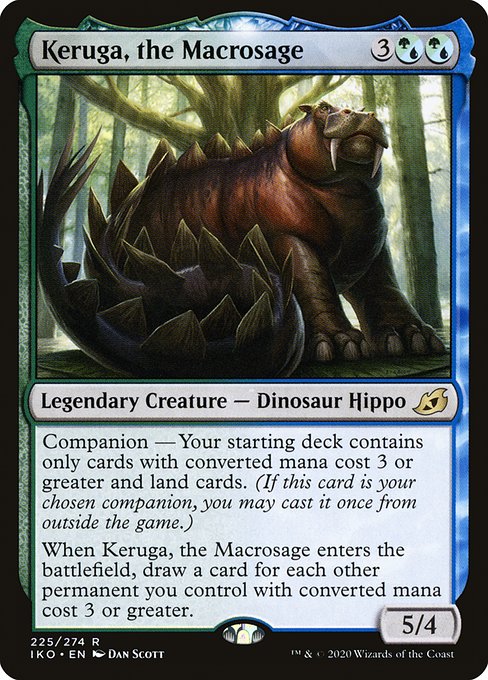
Keruga, the Macrosage
A higher-curve construction challenge
Keruga rewards qualifying other permanents when it enters.
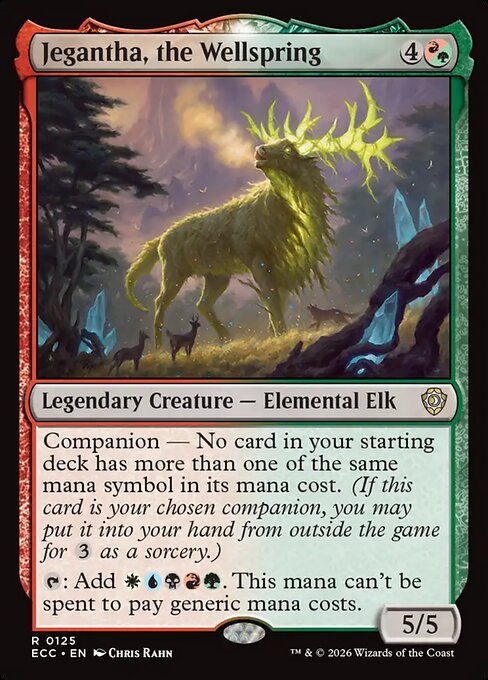
Jegantha, the Wellspring
Five-color mana with restricted spending
Jegantha can tap for one mana of each color.
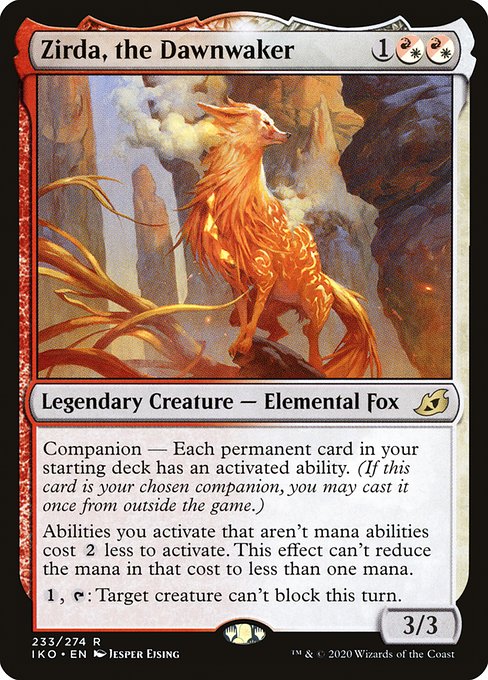
Zirda, the Dawnwaker
Nonmana activation support
Zirda reduces eligible activation payments while keeping at least one mana in the cost.

Kaheera, the Orphanguard
A type-focused option
Kaheera supports its listed creature types with a bonus and vigilance.
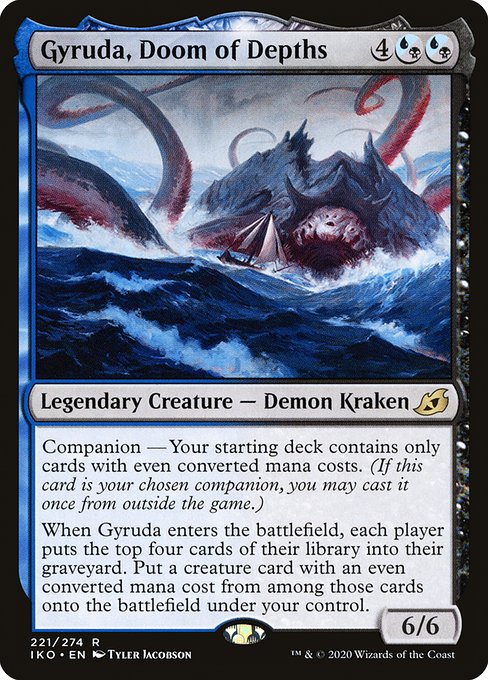
Gyruda, Doom of Depths
Even-value construction and entry payoff
Gyruda mills four cards for each player and can select an even-value creature among the milled cards.
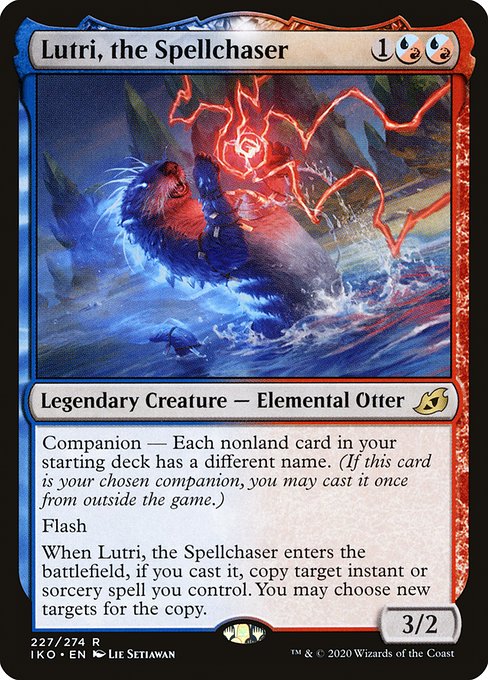
Lutri, the Spellchaser
Legal creature with a banned companion role
Lutri is legal as a card in the deck or as commander under the reviewed 2026 announcement.
Keruga, the Macrosage
Its companion role excludes nonland starting-deck cards below mana value three, including an undersized commander. The draw engine and the construction rule are separate pieces of text. A board with many cheap tokens is not automatically a large Keruga draw. Tokens have their own mana-value rules, and an ordinary created token without a copied mana cost generally does not supply a qualifying three-mana permanent.
Jegantha, the Wellspring
That mana cannot be spent to pay generic costs. The creature’s full color identity is five colors, and a newly entered Jegantha normally needs haste or time under your control before using its tap ability. Do not promise that its five mana casts any five-mana spell. A cost with a large generic portion needs other usable mana, while a suitable set of colored requirements can use its output more directly.
Zirda, the Dawnwaker
Its companion condition checks each permanent card for an activated ability. Its own tap ability can make a targeted creature unable to block for the turn. The discount does not turn mana abilities into cheaper engines, and it does not pay colored symbols or other requirements without regard to the actual reduction rules. Build around activations that benefit from the specific reduction.
Kaheera, the Orphanguard
The companion restriction applies to creature cards in the starting deck, so a tempting off-type utility creature can invalidate the role even if the main tribal package fits. Several types are allowed, making mixed qualifying decks possible. Choose creatures for their jobs rather than filling slots solely because they pass the type test.
Gyruda, Doom of Depths
Its hybrid cost contributes both blue and black to identity under the current rules. Its condition checks mana value, not the mana actually paid after a discount. A cost reduction does not convert an odd printed mana value into an even starting-deck card. Review the whole list and avoid assuming that paying four for a five-value spell makes it Gyruda-compatible.
Lutri, the Spellchaser
Its companion role remains prohibited. Its entry spell-copy ability also requires that you cast it, so blinking it is not automatically another copy. Keep the role distinction visible when sharing a list. A legal commander section does not validate an outside-game companion section containing the same name.
Practice the two payments and an upgrade audit
You begin a turn with Keruga revealed outside the game and five usable mana. During your main phase with an empty stack, paying three puts Keruga into hand and leaves two mana. You cannot normally cast its five-mana creature spell with the remaining two. Saving it for a later turn is legal; the access action did not guarantee an immediate battlefield presence.
On a later turn you cast Keruga while controlling two qualifying other permanents. Its entry trigger can draw two if those remain the relevant qualifying permanents when the trigger resolves. If an opponent removes one before resolution, reassess the actual board rather than locking in a count announced earlier.
Now suppose you want to add a one-mana answer to the list. The card may be efficient, but it breaks Keruga’s companion condition unless another applicable rule supplies an exception. Compare a compliant answer with removing the companion role. The right choice depends on what keeps the main strategy functional, not on preserving a badge in the list.
Audit the entire list in <a href="/deck-builder?guest=1">Deckcipher’s deck builder</a> and create an account to save the compliant version and its unrestricted comparison. Record why the companion is worth the exclusions, and revisit that reason whenever a new upgrade changes the deck.
A decision table for the interaction
| Position | Correct result | What to check |
|---|---|---|
| Companion in the 99 | Ordinary card in starting deck | Its own companion restriction is not imposed |
| Reveal outside game | Entire starting deck must comply | Includes commander or both partners |
| Pay three special action | Moves revealed card to hand | Separate spell cost remains |
| Lutri after February 2026 | Legal deck card or commander | Still banned as companion |
Frequently asked questions
Build your deck
Put these choices into a Commander list. Create a free account to save your deck and keep tuning it with Deckcipher.
FAQ
Does my commander have to meet the companion restriction?
Yes. The starting-deck check includes the commander before it is set aside, and includes both commanders in a legal pair. A compliant 99 or 98 does not fix a commander that violates the chosen companion’s condition.
Can an opponent counter the three-mana companion action?
The special action does not use the stack and cannot be countered as an activated ability. It must be taken with priority during your main phase and an empty stack. The later creature spell is a separate action that can normally be answered.
Does paying three cast the companion?
No. It puts the revealed card into your hand once during the game. You still cast it separately and pay the spell’s relevant costs. The access payment and casting cost can be spread across turns.
Does a companion return to the command zone when it dies?
Not simply because it was a companion. Once brought into the game, it follows ordinary zone handling for that card. Companion does not grant commander status, commander tax, or an automatic second outside-game retrieval.
Must I follow Keruga’s condition if Keruga is my commander?
Not because of its printed companion ability alone. That condition matters when revealing the card from outside the game as the chosen companion. Using it as commander or an ordinary main-deck card uses its other applicable rules without imposing its own companion condition.
Is Jegantha legal with a two-color commander?
Its five-color identity prevents that companion configuration. The mana ability includes all five colored symbols, regardless of how you would pay its hybrid casting cost. The companion must fit the actual commander’s color identity.
Is Lutri still banned everywhere in Commander?
No. Under the February 9, 2026 announcement, Lutri is allowed in the deck or as commander, while remaining banned specifically as a companion. This guide’s dated review preserves that distinction.
Can I use Yorion’s larger-deck condition?
Ordinary Commander requires exactly 100 cards in the starting deck, so its requirement for a deck exceeding the minimum by twenty cards cannot be met. That prevents its companion use in the normal format, without by itself forbidding the card from an otherwise legal deck.