
What a Commander interaction checker is for
A commander interaction checker helps you see whether your deck can actually answer the problems Commander games produce: fast commanders, protected engines, graveyard loops, stacks of triggers, and multiplayer politics. The useful answer is not just “play more removal.” It is knowing which zones, permanent types, timing windows, and table situations your current list can and cannot cover, then making concrete swaps that fix those blind spots.
The practical definition of interaction in Commander
In Commander, interaction means any card or play pattern that changes an opponent's ability to execute their plan. That includes spot removal, counterspells, sweepers, graveyard hate, artifact and enchantment answers, protection, combat tricks, tax effects, and sometimes political pressure. A commander interaction checker is valuable because Commander is not a two-player format where one removal spell trades with one threat and the math is done. You are preparing for three opponents, multiple command zones, multiplayer turn cycles, and board states that can change completely before you untap.
The biggest mistake is counting every answer as if it answers every problem. A hand with Counterspell looks safe against a spell on the stack, but it may do nothing once a permanent has resolved. Swords to Plowshares answers creatures cleanly, but it cannot stop a noncreature engine. Beast Within is flexible, but still one card. Wrath of God resets many creature boards, but it does not touch artifacts, enchantments, or graveyards.
A good interaction check asks four questions: what can I answer, when can I answer it, how much mana must I hold up, and what happens if I draw the answer after the threat has already resolved? Those questions are more useful than a single raw count.
Core examples used in this guide
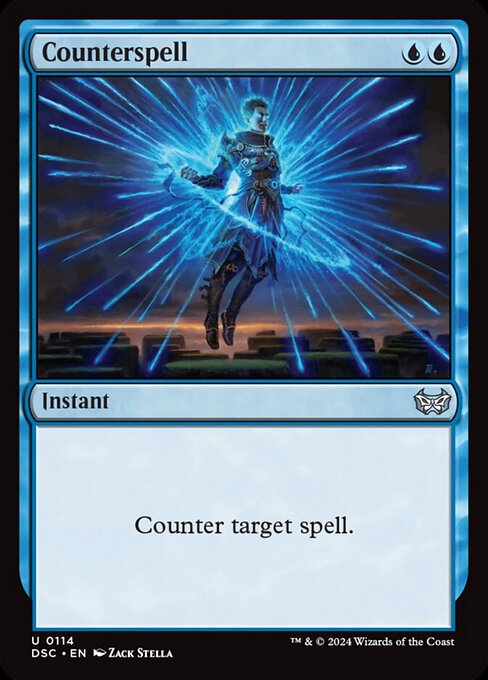
Counterspell
Stack interaction
A clean example of answering a spell before it resolves. It is strong when held at the right time, but weak once a permanent is already on the battlefield.

Lightning Bolt
Damage based interaction
A simple way to discuss targeting, damage, and limits. In Commander it is efficient, but its three damage ceiling matters.
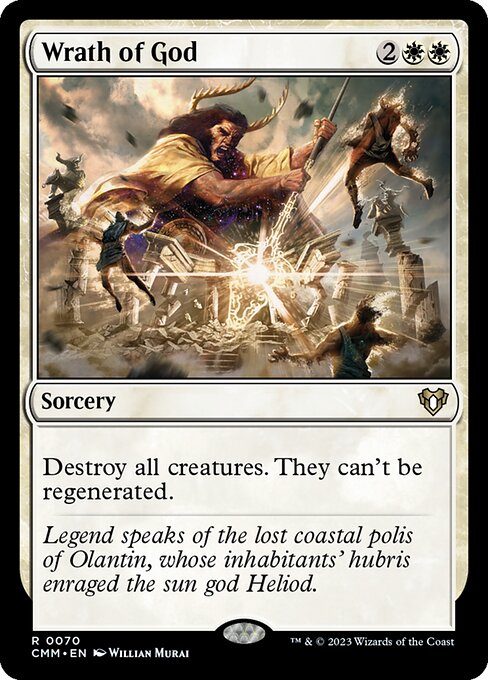
Wrath of God
Creature sweeper
A classic board wipe that demonstrates destruction, regeneration prevention, and the difference between destroy effects and other removal.
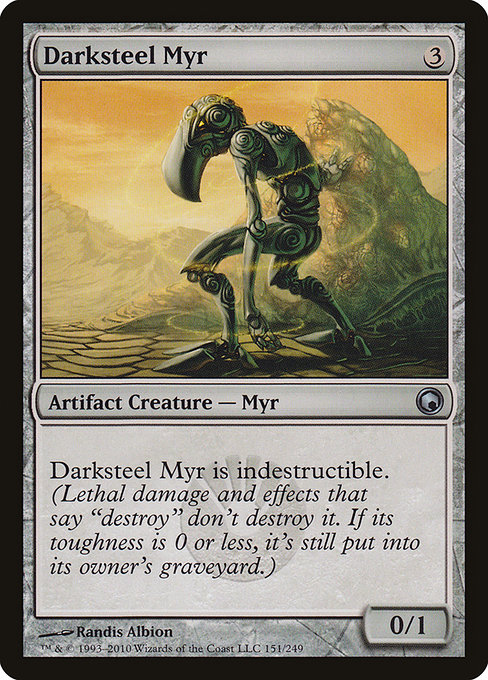
Darksteel Myr
Indestructible example
A compact example for why destroy based sweepers do not remove indestructible creatures.

Leyline of Anticipation
Timing modifier
Shows how instant speed permissions change sequencing, bluffing, and when a deck can commit threats.

Swords to Plowshares
Exile removal
Efficient creature interaction that answers many commanders without relying on damage or destruction.

Beast Within
Flexible permanent answer
A useful benchmark for broad coverage, with the real tradeoff of giving an opponent a creature token.
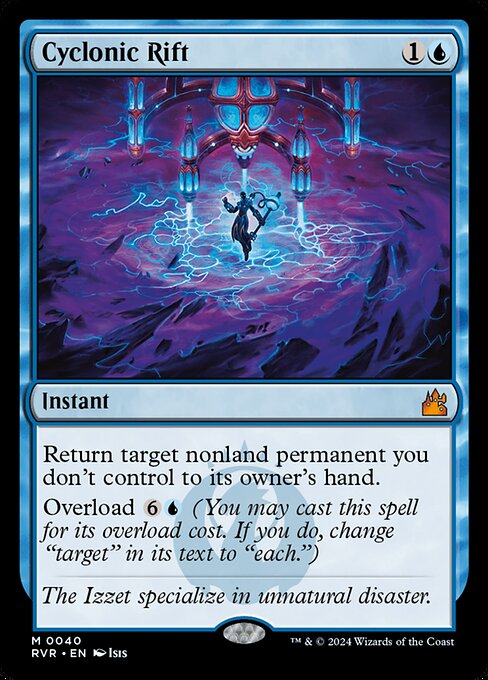
Cyclonic Rift
Asymmetric reset
Illustrates the difference between removing, bouncing, and buying a decisive turn in multiplayer.
What the Commander Interaction Checker should tell you
The best use of the Commander Interaction Checker is not to chase a perfect score. It is to expose mismatch. If your deck wants to win around turn eight, but has only two early answers and no way to interact with graveyards, the checker should make that tension visible. If your deck is trying to play reactively, but most of your interaction costs four or more mana, the issue is timing.
A practical checker should separate interaction into categories instead of merging everything into one number. Creature removal, artifact removal, enchantment removal, stack interaction, graveyard interaction, board wipes, and protection do different jobs. Protection matters because Commander games often turn on whether you can preserve your own board through an opposing sweeper or force through a key turn.
Interaction categories to check before a Commander game
| Category | What it answers | Common failure mode | Deck-building question |
|---|---|---|---|
| Creature spot removal | Commanders, combo creatures, attackers, utility creatures | Too much damage based removal that fails against large creatures | Can I answer an early must-kill commander with one or two mana? |
| Artifact and enchantment removal | Mana rocks, stax pieces, value engines, protection pieces | Only answering creatures while noncreature permanents take over | Do I have ways to remove noncreature engines after they resolve? |
| Stack interaction | Spells before they resolve, sweepers, combo pieces, haymakers | Holding counters for too long or having none when the winning spell appears | Which spells are actually worth countering in my pod? |
| Board wipes | Wide creature boards, token armies, stalled boards | Wipes are too slow or do not answer protected threats | Can I reset the board without destroying my own win plan? |
| Graveyard interaction | Recursion, reanimation, flashback style value, loops | Ignoring graveyards until the turn they win | Can I interact before the graveyard player untaps with a full setup? |
| Protection | Opposing removal, sweepers, combat blowouts | Protective cards sit dead because the deck has no board worth saving | Am I protecting a real engine or just adding insurance? |
A simple target range for most casual Commander decks
There is no universal interaction count because commanders, colors, and table expectations change the answer. Still, many casual and mid-power decks should start by testing around ten to fourteen interactive cards, then adjust based on how proactive the deck is. A fast synergy deck might run fewer direct answers because it is trying to force the table to respond. A slower value deck usually needs more because it plans to see more turns and will face more opposing engines.
Within that range, balance matters more than hitting an exact number. A first draft might include four to six pieces of spot removal, two to three ways to answer artifacts or enchantments, two board wipes, and one to three pieces of stack, graveyard, or protection interaction depending on color identity. Blue decks can lean more on Counterspell style effects. White decks may lean on Swords to Plowshares, Generous Gift, Farewell, and sweepers. Green decks often need to make sure their answers are not all aimed at artifacts and enchantments while creatures slip through.
The checker becomes more useful after you import or build a real list. Use the Commander Deck Builder to build and save your deck, then review the interaction profile instead of guessing from memory. Most players overestimate how much interaction they run because they remember the best answers and forget the cards that only work in narrow board states.
Build your deck, then check the answers
Create or import your Commander list, save it to your account, and use the interaction review to find missing answer types before game night. Create a free account to save your deck and return to these choices.
Worked interaction package: a sample Simic value deck
Imagine a mid-power Simic value deck led by a draw-and-ramp commander. The deck wins through creatures, +1/+1 counters, and a late Craterhoof-style combat turn. The pilot says the deck has “plenty of answers” because it runs twelve interactive cards.
Illustrative interaction package to review
| Card | Primary tags | Speed | Role and rules note |
|---|---|---|---|
| Counterspell | Stack interaction | Instant | Clean answer while a spell is on the stack. |
| Negate | Stack interaction, noncreature | Instant | Good against wipes and engines, but misses creature commanders. |
| Swan Song | Stack interaction, cheap | Instant | Excellent early answer to enchantments, instants, and sorceries. |
| Beast Within | Flexible permanent answer | Instant | Broad coverage, leaves a 3/3. |
| Krosan Grip | Artifact/enchantment removal | Instant | Split second stops casting spells and activating nonmana abilities while this spell is on the stack. Triggered abilities and mana abilities can still function. |
| Return to Nature | Artifact/enchantment/graveyard | Instant | Flexible, but only hits one graveyard card. |
| Pongify | Creature removal | Instant | Efficient creature answer, gives an Ape. |
| Rapid Hybridization | Creature removal | Instant | Efficient creature answer, gives a Frog Lizard. |
| Reality Shift | Creature exile | Instant | Exiles, which matters against indestructible and recursion. |
| Cyclonic Rift | Bounce, reset | Instant | Powerful tempo reset, not a permanent answer. |
| Aetherize | Combat protection, bounce | Instant | Punishes attacks but does not stop noncombat wins. |
| Bane of Progress | Artifact/enchantment sweeper | Creature | Powerful, but symmetrical and sorcery-speed. |
The twelve-card package has useful coverage, but a manual role review shows weaknesses. Three spells focus on creature removal, and Beast Within supplies another broader permanent answer. Counterspell, Negate, and Swan Song give three different stack answers. Artifact and enchantment coverage is strong. Return to Nature supplies only one-card graveyard interaction, and the package has no dedicated spell that preserves your own permanents through a destroy-based sweeper. Bouncing attackers can prevent combat damage, but it does not solve every board or noncombat win.
The action plan is not “add five more answers.” The deck already has enough interactive slots for a mid-power creature deck. The fix is to move slots from redundant or low-fit interaction into missing jobs. Because the deck wins through creatures, it wants protection so it can commit a board without folding to the first opposing sweeper.
Before-and-after changes from the sample audit
| Current card | Problem | Replacement | Why this fixes the blind spot |
|---|---|---|---|
| Aetherize | Only works against attacking creatures. | Heroic Intervention | Protects the deck's own creature board from destroy wipes and targeted removal. |
| Return to Nature | Flexible but shallow graveyard coverage. | Soul-Guide Lantern | Its enters ability exiles one card from any graveyard. Its sacrifice ability exiles each opponent's graveyard, leaving yours alone. |
| Bane of Progress | Can destroy the pilot's own ramp and engines. | Force of Vigor | Can destroy up to two artifacts or enchantments. On an opponent's turn you may exile a green card from your hand instead of paying its mana cost. |
| Negate | Fine card, but the list often taps out on its own turn. | Resculpt | Adds exile for an artifact or creature after it resolves, but trades away a noncreature counterspell and gives the target's controller a 4/4 token. |
| Cyclonic Rift | Keep, but tag correctly as tempo reset rather than permanent removal. | No cut | The pilot should know it may need a follow-up win or answer. |
After those four one-for-one swaps, the package still has twelve cards. It gains permanent protection and broader graveyard coverage, but it also loses a counterspell and the mass artifact/enchantment reset supplied by Bane of Progress. It still lacks a general creature sweeper. If creature swarms are the recurring problem, test Evacuation in an appropriate slot and accept that it also returns your creatures. Improving one gap does not make the package complete; keep the alternatives tied to the problems your pod actually presents.
Worked example 1: Counterspell, Lightning Bolt, and deck construction
If an opponent casts Lightning Bolt, it goes on the stack and targets something legal. Before it resolves, players receive priority. If you cast Counterspell targeting it and Counterspell resolves, Lightning Bolt is countered and does not deal damage. The Commander lesson is that stack interaction only works during the window when the spell is still on the stack.
The deck-building decision is when that answer is worth a slot and when it is worth spending. A draw-go control, spellslinger, or combo-protection deck may want four to seven stack answers. A Simic creature deck may be fine with two or three because it wants to tap out for board development. A high-power blue deck often wants cheap or free interaction because the decisive fight happens early.
Worked example 2: Wrath of God and indestructible creatures
Wrath of God says to destroy all creatures and that they cannot be regenerated. That does not remove an indestructible creature such as Darksteel Myr. Indestructible means destroy effects do not destroy it, whether the destruction comes from lethal damage or an instruction that says destroy. “Cannot be regenerated” does not change that.
The construction lesson is to avoid treating every sweeper as the same card. Destroy wipes are strong, but they fail against indestructible boards and can feed death triggers. Exile wipes answer more recursive threats. Bounce wipes such as Cyclonic Rift buy time, but opponents may redeploy. Toughness-reducing effects such as Toxic Deluge can remove indestructible creatures by putting them at zero or less toughness.
Worked example 3: Leyline of Anticipation and timing windows
Leyline of Anticipation allows you to cast spells as though they had flash. This is a casting permission; it does not actually give cards the flash keyword. It does not pay costs, make illegal targets legal, or turn itself into removal. It changes sequencing: you can wait longer before committing a threat, represent interaction more credibly, and decide after other players reveal more information.
Leyline is strong in draw-go control, flash decks, and lists that regularly pass with mana up. It is a trap in low-resource creature decks that empty their hand quickly or decks that would rather spend four mana on draw, ramp, protection, or a real answer. Treat it as timing support when reviewing your list, rather than adding it to the removal total.
Color-specific interaction patterns
How colors usually cover interaction gaps
| Color | Reliable coverage | Common weakness | Practical checker note |
|---|---|---|---|
| White | Creature exile, enchantment/artifact removal, sweepers, protection | Stack interaction and repeatable card advantage | Use Swords to Plowshares, Path to Exile, Generous Gift, Farewell, and efficient wipes. |
| Blue | Counterspells, bounce, tempo, spell protection | Permanently removing resolved creatures and enchantments | Balance counters with bounce or color-pair answers so resolved permanents do not lock you out. |
| Black | Creature kill, sacrifice, discard, graveyard interaction | Artifacts and enchantments | Feed the Swarm can destroy a creature or enchantment, while Toxic Deluge addresses creatures rather than artifacts or enchantments. Consider colorless answers for the remaining permanent types and graveyard hate that fits your own plan. |
| Red | Artifact removal, damage, impulsive tempo, narrow stack disruption | Large creatures and enchantments | Use Chaos Warp, Abrade, Vandalblast, Blasphemous Act, and Deflecting Swat with care. |
| Green | Artifact/enchantment removal, fight effects, flexible permanent answers, protection | The stack and clean creature removal without conditions | Prioritize Beast Within, Krosan Grip, Force of Vigor, Song of the Dryads, and Heroic Intervention. |
| Multicolor | Flexible answers that combine strengths | Mana requirements and overloading on expensive gold cards | Choose interaction that your mana can cast early. |
Color identity should explain your interaction package, not excuse every blind spot. Mono-black may not remove enchantments cleanly, but it can use discard, sacrifice, fast creature kill, and colorless tools. Mono-green may not counter spells, but it can remove most noncreature permanents and protect its own board.
How to run an interaction audit step by step
Start by separating your cards into roles. Do not count ramp, draw, and threats as interaction unless they actually answer or prevent an opposing action. Then tag every interactive card by what it answers: creatures, artifacts, enchantments, planeswalkers, graveyards, the stack, combat, or your own board.
- Count your true interactive cards first, excluding cards that merely advance your own plan.
- Split those cards by zone: stack, battlefield, graveyard, and combat.
- Split battlefield answers by permanent type: creatures, artifacts, enchantments, planeswalkers, and broader permanent answers.
- Check mana value and color requirements so you know which answers are realistic in the first four turns.
- Identify whether your board wipes work when you are behind, ahead, or facing protected threats.
- Compare your answer types to your actual pod: graveyard loops, equipment commanders, enchantress engines, spell combo, token boards, or stax pieces.
- Make swaps that preserve your total slot budget while fixing missing categories.
After that pass, compare the results to your deck's plan. A proactive creature deck may accept fewer counterspells if it can pressure the table. A control deck needs interaction across more categories because it is volunteering to answer the table. A graveyard deck may need protection and stack interaction more than extra creature removal because its own engine is vulnerable to one well-timed hate card.
If you want a broader structural review, run the list through the Commander Deck Audit after the interaction pass. Interaction can look fine in isolation while the deck still fails because the mana curve is too high, the draw count is too low, or the win conditions do not close the game.
Balancing interaction with ramp, draw, and win conditions
Interaction is necessary, but too much interaction can make a deck passive. If you spend the whole game answering one card from each opponent, you can still lose to the player who develops the most durable engine. Commander rewards decks that can answer threats while still moving toward a win.
A useful compromise is to make some cards perform double duty. Flexible removal reduces dead draws. Protection can function as interaction when it blanks an opposing board wipe or removal spell. Bounce can clear blockers, save your own permanent, or delay an opponent's engine. The point is to select answers that match how your deck actually wins.
Common mistakes the checker should catch
The first mistake is overcounting removal that is too narrow for the table. If your only answers hit creatures, you may lose to artifacts, enchantments, and graveyard engines without ever having a meaningful decision. The second mistake is loading up on expensive interaction. Four mana answers can be powerful, but if your first relevant play against a fast commander comes on turn four, the game may already be shaped around that threat.
The third mistake is ignoring multiplayer incentives. In Commander, every one-for-one answer spends one of your cards against one opponent while two other players keep developing. That does not make one-for-one removal bad. It means you should spend it on cards that actually matter.
How interaction changes by bracket and table expectation
Interaction expectations change with the kind of Commander game you are trying to play. Lower power casual tables often give players more turns to deploy expensive answers. Higher power tables punish slow answers more severely. A card that is acceptable at five mana in one pod may be uncastable in another because the relevant fight happens on turns two through four.
Use the Commander Bracket Calculator to sanity check the environment you are building for. A relaxed table still needs answers, but it may not need to optimize every slot toward cheap efficiency. A sharper table should treat interaction as part of the core engine: stop opposing wins, protect your own winning turn, and avoid spending mana inefficiently.
Resolving interaction disputes during a game
A commander interaction checker helps before the game, but rules questions still happen at the table. When they do, use a repeatable procedure instead of arguing from memory.
- Identify the spell or ability being used, including its controller.
- Confirm modes, targets, additional costs, alternate costs, and restrictions.
- Put the spell, activated ability, or triggered ability on the stack in the correct order.
- Pass priority in turn order. The top object resolves only when all players pass in succession without taking an action.
- Resolve that one object, then handle state-based actions and waiting triggers before the active player receives priority again.
- Allow a new round of actions and passes before the next object can resolve. The stack does not automatically empty after the first resolution.
- After each resolution, apply state-based actions and check triggered abilities.
- If the table is still unsure, look up current Oracle text and rules language.
For the earlier examples, the sequence matters. Counterspell can target Lightning Bolt while Lightning Bolt is on the stack, not after it has resolved. Wrath of God destroys creatures, but Darksteel Myr is not destroyed because it is indestructible. Leyline of Anticipation changes when you may cast nonland cards, but it does not make illegal targets legal.
Concrete next steps for tuning your list
Take your current deck and write down the first five opposing plays that usually beat you: a commander that must be removed twice, an enchantment engine that sits in play, a graveyard that rebuilds after a wipe, a protected creature board, or a spell-based win that happens on the stack. Then check whether your interaction package can answer each problem before it has already generated enough value.
Make one change at a time. If you are weak to artifacts and enchantments, add flexible permanent interaction before another creature kill spell. If you lose while holding expensive answers, lower the curve. If your deck wins by assembling a board, include protection instead of assuming every answer should point at opponents. The goal is not to answer everything; it is to have agency in the games your pod actually plays.
FAQ
What is a commander interaction checker?
A commander interaction checker is a deck review tool that helps identify what your Commander deck can answer. It looks at categories like creature removal, artifact and enchantment answers, counterspells, board wipes, graveyard interaction, protection, timing, and mana cost so you can see practical blind spots before playing.
How many interaction cards should a Commander deck run?
Many casual and mid-power decks should start testing around ten to fourteen interactive cards, then adjust for commander, color identity, speed, and pod expectations. Proactive combo decks may run fewer but cheaper answers. Battlecruiser and slower control decks may run more. The category mix matters more than the exact number.
Does Counterspell stop Lightning Bolt?
Yes, if Counterspell is cast while Lightning Bolt is still on the stack and Counterspell resolves. Once Lightning Bolt has resolved, Counterspell cannot undo the damage.
Does Wrath of God destroy Darksteel Myr?
No. Wrath of God destroys creatures, but Darksteel Myr has indestructible, so it is not destroyed by destroy effects.
Does Leyline of Anticipation count as interaction?
Not by itself. Leyline of Anticipation changes when you can cast your nonland cards, which can make your interaction and threats easier to sequence. It should be counted as timing support, not as removal, a counterspell, or a direct answer.
Should every Commander deck run counterspells?
No. Counterspells are strongest in decks with blue mana, instant speed play patterns, and a plan to hold up mana. Nonblue decks can still interact through removal, sweepers, graveyard hate, protection, discard, tax effects, and flexible permanent answers.
Why do I still lose when my deck has a lot of removal?
You may have the wrong kind of removal, answers that cost too much, too little card draw, or no clear way to win after trading resources. In Commander, one-for-one answers must be spent carefully because two other opponents keep developing while you answer one player's card.