
Quick answer
Turbo rewards an executable early plan, not only speed on paper. Count colored mana, graveyard fuel and interaction through the final winning condition, then rehearse what remains if the attempt is stopped.
Turbo builds toward an early meaningful window
A turbo plan prioritizes reaching a powerful resource engine or a winning sequence early, before opponents establish enough resources to control every exchange. Speed comes from the complete sequence: mana, access to a payoff, the ability to convert its result, and enough interaction for the chosen window. A hand full of cheap spells is not automatically a fast hand.
A ritual with no payoff may only exchange one card for temporary mana. A payoff without the required colored sources may sit unused. A winning package without protection can fail against a single answer. Evaluate what the opening actually does rather than adding the mana values of its cards and calling the result explosive.
Choose a specific route before tuning slots. This primer uses legal black-red-blue examples, including Rograkh and Silas, Ad Nauseam, and graveyard-based conversions. It explains their decisions without claiming every turbo commander uses exactly the same engine or every game must end on a promised turn.
Count net mana and preserve the required colors
Burst mana is useful only if it produces more usable resources at the moment you need them. Dark Ritual spends one black to produce three black, a net increase of two mana before other effects. Its output is black, so it can cover black and generic requirements but does not automatically pay blue symbols in a later spell.
A hand that reaches five total mana but only one black may still fail to cast Ad Nauseam, which costs three generic and two black. A sequence that spends the only blue source on generic setup can leave Thassa’s Oracle stranded despite apparently sufficient total mana. Write the actual symbols at each step.
Separate reusable sources from one-shot acceleration. Spending a ritual and sacrificing an artifact can produce a strong window while leaving very little after an answer. The list needs a reason to accept that resource exposure and a realistic next turn if the attempt fails.
Mulligan for a plan the hand can execute
A useful turbo opening contains a castable payoff or an efficient route to one, the mana to reach it, and a view of the table’s likely interaction. Different seats and opposing commanders can change how much protection the same hand needs. An empty label such as keep any fast mana ignores whether the cards form a coherent sequence.
Compare a hand with lands, a ritual, a payoff and a usable defensive card against a hand with several accelerants but no access to more cards. The second may look faster in a list viewer while relying on a favorable draw to accomplish anything. Record the actual turn, colors, and resources each opening can produce without assuming a specific top card.
Practice the multiplayer mulligan procedure used for the game and make bottoming decisions around the retained plan. Repeatedly going lower is not a universal rule that every six-card hand is superior to every seven. Keep notes on why the hand works rather than copying a confident slogan about aggressive mulligans.
Ad Nauseam converts life into cards during one resolution
Ad Nauseam reveals the top card, puts it into your hand, and causes life loss equal to its mana value, with the option to repeat. This is not ordinary drawing, and opponents do not receive priority between each repeat during its resolution. You decide whether to continue using the resources and risks visible after each revealed card.
A low mana curve can allow more cards before life becomes dangerously low, but average mana value does not guarantee a safe next reveal. A single expensive card can cost more life than the remaining total. Paying less to cast an expensive printed card through another effect does not necessarily reduce its mana value for this reveal.
Plan what the resulting hand must contain: enough mana, a route to a finish, and resources for protection. Resolving Ad Nauseam after spending every source is different from resolving it with mana available. An end-step cast may let you untap next turn, but it also gives the table an intervening opportunity and still needs the correct timing.
Protection has costs beyond the printed mana payment
Force of Will can use its alternative payment of one life and exiling a blue card from hand. Those are real resources, and the spell still needs a legal target. Pact of Negation can counter a spell without an immediate mana payment, but creates a next-upkeep obligation to pay three generic and two blue or lose the game if you do not.
A hand containing Force but no expendable blue card does not automatically have free protection. A hand using Pact to defend an engine that does not finish may face its payment before rebuilding. Decide which cards can actually be spent while preserving the route you intend to protect.
Interaction timing matters as much as quantity. One opponent can force a resource trade that exposes the next crucial spell to another opponent. Avoid counting a single counterspell as proof of an uncontested win. Track who still has mana and which kinds of answers remain relevant at each stage.
Lion’s Eye Diamond needs its special timing respected
Lion’s Eye Diamond has an activated mana ability that discards your hand and sacrifices the artifact to produce three mana of one color, with an activation restriction requiring instant timing. You cannot activate it in the middle of casting a spell as though it were an ordinary mana ability available during that payment process. Its discard is part of the cost.
With a key spell only in hand, sacrificing Diamond first normally discards that spell before you can cast it. An established Underworld Breach can make some discarded nonlands available from the graveyard through escape, but only if the actual mana and graveyard fuel support those casts. Discarding the hand is not automatically harmless.
Choose the color of its output for the next costs, not the card you used several steps earlier. Three blue can support an upcoming Brain Freeze and preserve a blue resource, while another sequence may need a different color. Write down the color remaining rather than recording only three floating mana.
Breach supplies permissions with repeated graveyard costs
Underworld Breach gives each nonland card in your graveyard escape for its mana cost plus exiling three other cards from your graveyard. Each escaped cast needs those other cards available when paying costs. The spell being escaped cannot pay its own three-other-card requirement, and cards already exiled as fuel cannot pay a later escape.
Breach can permit replaying Diamond and Brain Freeze, but a graveyard containing only those two cards is not enough to begin the advertised cycle. The deck needs additional fuel, appropriate mana, and enough subsequent milling to sustain later casts. Breach also has an end-step sacrifice trigger, so its ongoing permission has a natural timing boundary.
Do not call every three-card collection an unconditional win without naming the starting state. Graveyard restrictions, casting restrictions, and artifact-activation restrictions can stop different parts. The <a href="/blog/cedh-stax-primer/">cEDH stax primer</a> explains why the relevant answer depends on the exact action.
Brain Freeze grows from casts, not from counting its own copies
Brain Freeze targets a player to mill three and has storm. Its storm trigger creates a copy for each spell cast before it that turn. The count includes spells other players cast and spells later countered, but normal spell copies were not cast. Brain Freeze’s own storm copies do not each create another cast event and recursively increase the count.
If Breach was your first spell and an escaped Diamond your second, casting Brain Freeze as the third spell produces two storm copies in the uncomplicated example. The two copies and original can mill a total of nine cards when they resolve successfully. You can assign permitted targets for the copies, and must account for where the fuel needs to go.
Milling an opponent’s empty library does not itself force an immediate loss under the normal draw-from-empty rule. A finish needs the actual final condition, such as a relevant draw event or your own Oracle line. Name the conversion rather than stopping the explanation at a large mill number.
Oracle and Consultation use the trigger as the window
Thassa’s Oracle costs two blue. Its entry trigger uses devotion to blue and can win when that number is at least the number of cards in your library. A common Consultation sequence resolves Oracle, puts its entry trigger on the stack, and then casts Demonic Consultation before that trigger resolves, naming a card absent from the library to exile the remaining cards.
In the ordinary sequence without other modifications, Consultation exiles the top six and continues looking for the named absent card until the library is exhausted. Oracle’s pending trigger can then see an empty library. Removing Oracle alone does not necessarily stop that result: zero devotion is still at least zero cards when the library is empty.
The sequence remains interactable. Countering a relevant spell, countering the entry trigger, or applying another appropriate restriction can change the result. Do not confuse cannot stop it with ordinary creature removal alone may be insufficient. The correct answer depends on what is still on the stack and which condition the defender can disrupt.
Choose a real window and retain a recovery plan
Turbo play involves judging when opponents are less able or less willing to stop a meaningful attempt. That judgment uses visible mana, prior interactions, board restrictions, seat order, and the likely consequences of waiting. It does not require pretending to know hidden hands or assuming an opponent has no answer because they have not used one yet.
Sometimes passing with an engine available is stronger than spending every resource into a fully prepared table. Sometimes delaying lets an ability engine or restriction take over and closes your best opportunity. Rehearse both choices from the same opening and identify what changes if the first key spell is answered.
This guide was reviewed on October 25, 2026 using current Commander legality and dated competitive context, rather than a promise of an exact win rate. Build the route in <a href="/deck-builder?guest=1">Deckcipher’s deck builder</a> and create an account to save it. Use the <a href="/blog/cedh-metagame-overview/">metagame overview</a> to prepare for action types, not to replace the decisions required by the actual table.
Cards worth comparing before you choose a package
Examples and the jobs they do
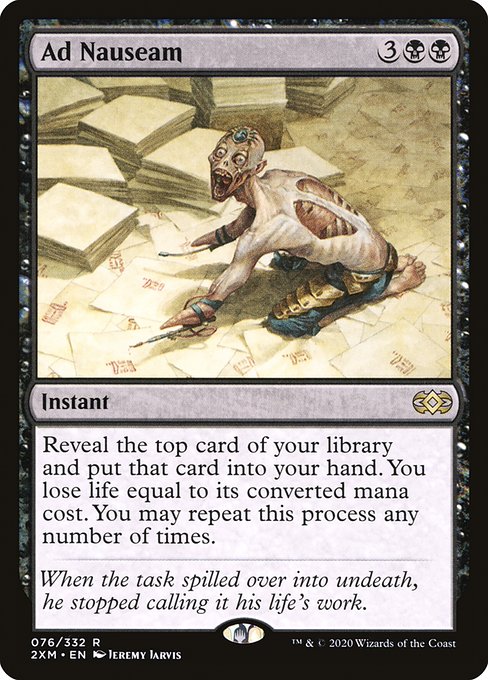
Ad Nauseam
Life-based access to a large hand
Ad Nauseam places revealed cards into hand and charges their mana values as life loss.
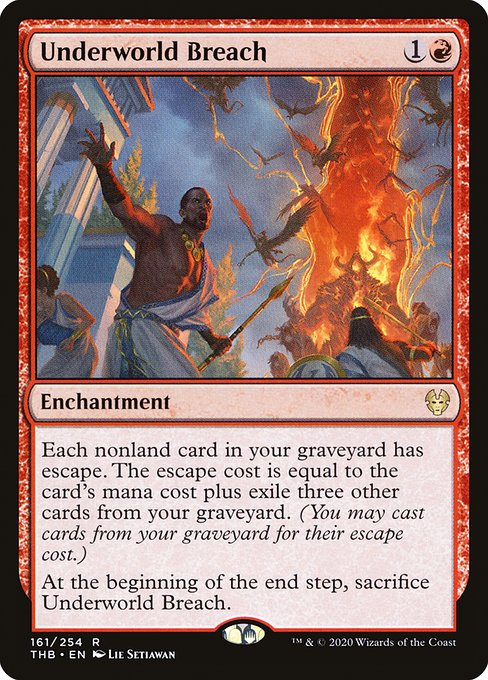
Underworld Breach
Repeated nonland escape permission
Breach offers graveyard casts with a separate three-other-card exile payment each time.
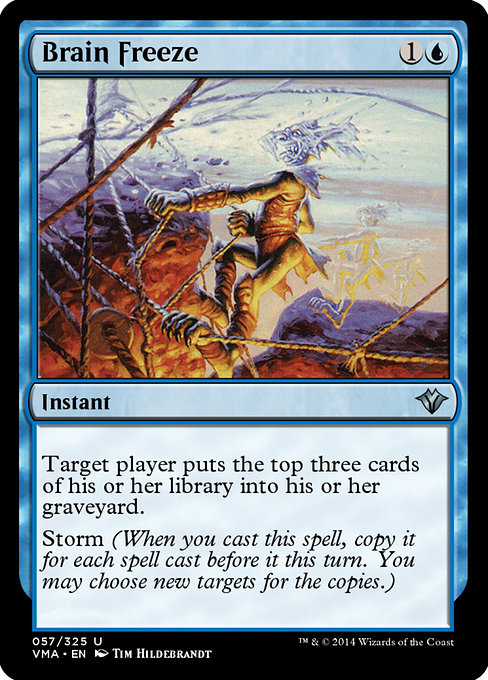
Brain Freeze
Storm-based milling and fuel
Brain Freeze can mill you to feed escape or target an opponent where appropriate.
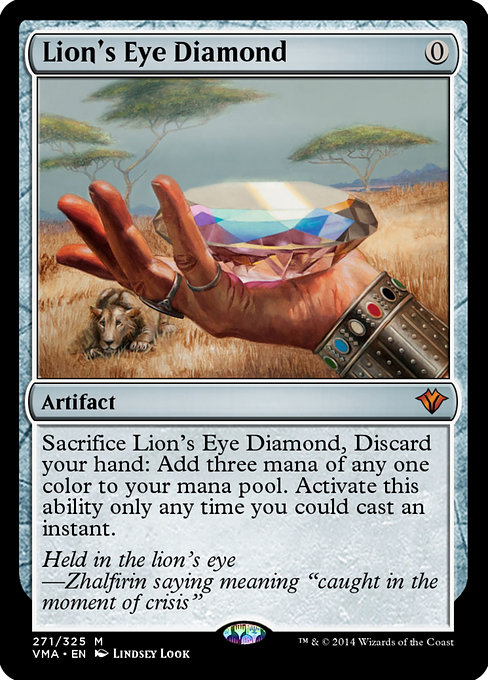
Lion’s Eye Diamond
Burst mana with hand sacrifice
Diamond produces three mana of one chosen color while discarding the hand and sacrificing itself.
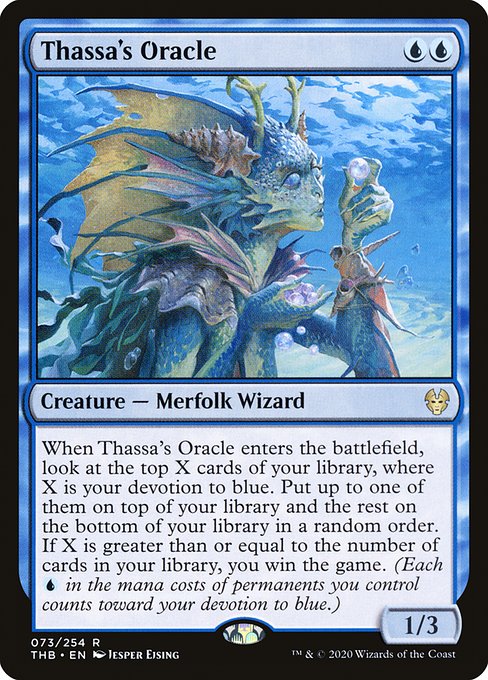
Thassa’s Oracle
A conditional library-size finish
Oracle evaluates its entry ability using devotion and the library count at the relevant resolution.
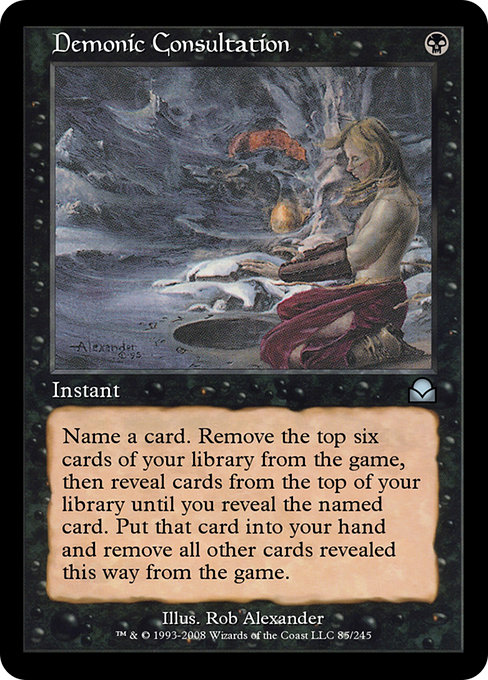
Demonic Consultation
A risky library-exile tool
Consultation names a card during its resolution and can exile the remaining library when the named card is absent.
Ad Nauseam
Its repeat choices happen during one resolution. It does not trigger every ability that specifically watches cards being drawn. Protect the remaining life and mana needed to use the result. A large new hand can still fail to convert if its required colors or essential graveyard access are unavailable.
Underworld Breach
Lands can help pay that graveyard fuel cost even though Breach does not grant them escape as lands. Its end-step sacrifice limits the engine’s duration. Preserve the exact finisher and mana resources while choosing fuel. Exiling a necessary card to pay for an earlier convenience spell can destroy the route even when the graveyard still contains many cards.
Brain Freeze
Storm counts earlier casts from the whole turn, not just your spells, and its copies normally do not add further casts. Decide where each permitted target belongs. Self-milling can improve resources while also creating risk if the attempt is stopped before an empty-library finish is secured.
Lion’s Eye Diamond
Its activation timing restriction prevents treating it as a normal mid-casting payment source for the spell still in hand. An established graveyard permission can make the discard useful, but only with sufficient fuel and correct payment sequencing. Check restrictions on artifact activations before relying on the output.
Thassa’s Oracle
The body and the pending trigger are separate objects for interaction. Its printed cost is blue-blue, not one generic and one blue. A naked Oracle without the needed library condition is not automatically a win attempt. Preserve the distinction between deploying the creature, resolving its trigger, and meeting the actual condition.
Demonic Consultation
It is also a card-access spell under its actual instructions, but the six-card initial exile and continuing search make careless use dangerous. The spell does not itself say you win. Pair the resulting state with a real finish, enough mana, and an understanding of what happens if the follow-up is countered.
Practice the first Breach cycle with explicit fuel
Begin with Breach already resolved as your first spell this turn. Diamond and Brain Freeze are in your graveyard with six other cards, and no relevant restriction applies. Escape Diamond by exiling three other cards. After it resolves, activate it at a legal time for three blue, discarding any remaining hand and sacrificing the artifact.
Escape Brain Freeze for one generic and one blue by exiling three other graveyard cards, preserving Diamond. One blue remains from the three produced. Brain Freeze is the third spell cast this turn in this simplified sequence, so its two storm copies plus the original can mill nine cards into your graveyard. Those new cards can provide fuel for later actions, but you must still pay each later escape and preserve the actual finishing card.
Now introduce a defender who stops artifact activations before you can use Diamond, or an effect preventing the graveyard casts. The same named cards no longer establish the same available actions. Identify the response point before calling the sequence deterministic, and know which recovery or removal card your saved list actually includes.
For a separate practice, resolve Oracle and respond to its entry trigger with Consultation using the correct blue-blue plus black requirements across the two spells. Announce the pending trigger, let players respond normally, and resolve the actual library-size comparison. Rehearsing the stack and payments is more useful than memorizing an abbreviated combo label.
A decision table for the interaction
| Position | Correct result | What to check |
|---|---|---|
| Dark Ritual | One black becomes three black | Net gain two; no blue supplied |
| Ad Nauseam | Reveal and put into hand | Life loss uses mana value, not paid cost |
| Escape through Breach | Mana cost plus three other graveyard cards | Each later cast pays again |
| Brain Freeze third spell | Two storm copies plus original | Nine cards milled if all resolve |
| Oracle with empty library | Zero devotion can still satisfy zero cards | Removal alone may not stop pending trigger |
Frequently asked questions
Build your deck
Put these choices into a Commander list. Create a free account to save your deck and keep tuning it with Deckcipher.
FAQ
Is turbo just casting the most spells?
No. The goal is a meaningful early engine or winning sequence. Mana, access, conversion and protection must fit together. Several cheap spells without a payoff or the required colors can leave a hand that does very little.
Does Ad Nauseam draw cards?
It reveals cards and puts them into hand, causing life loss based on mana value. That differs from a draw event. Its repeat decisions occur during resolution, without an ordinary priority window between individual reveals.
Can I sacrifice Diamond while paying for a spell in hand?
Its special activation restriction prevents activating it during the casting payment process like an unrestricted mana ability. Activating first discards your hand as a cost. Another permission such as established escape can change what remains accessible afterward.
Do Breach, Diamond and Freeze always win immediately?
Not without a sufficient starting state and an actual finish. Escape costs require additional graveyard cards each time, the casts require the right mana, and restrictions can stop the sequence. Explain the fuel and conversion instead of naming only three cards.
Do Brain Freeze copies increase storm again?
Ordinary storm copies are put onto the stack without being cast, so they do not recursively increase the cast count. Storm counts spells cast before the original Brain Freeze during that turn, including opponents' spells and later-countered spells.
Can removing Oracle stop an empty-library trigger?
Removing the creature alone is not necessarily enough. With zero cards remaining, zero devotion still satisfies the comparison. The defender needs an answer that actually prevents the relevant condition or ability from producing the win.
Is Pact protection free if the first attempt fails?
It requires no immediate mana payment, but its next-upkeep trigger requires three generic and two blue or you lose if you do not pay. A failed attempt can leave that obligation arriving before you rebuild. Include it in the recovery plan.
Should I copy an old fast-mana list exactly?
Check current multiplayer Commander legality first. Mana Crypt, Jeweled Lotus and Dockside Extortionist remain banned at this review. Historical primers can still teach concepts while including cards or lines that need current verification.