
Quick answer
Choose stax pieces by the actions they stop and the actions your own deck keeps. A useful restriction arrives in time, preserves development, and creates a path to victory rather than only a longer game.
Choose the action you need to restrict
Stax uses persistent restrictions or taxes to change which actions the table can take efficiently. The useful question is specific: which opponent, which action, and which turn does this card affect? A restriction on casting several spells is different from a restriction on activated abilities, artifact mana, or creatures entering from a library.
Rule of Law can slow a plan that needs several spells in one turn while leaving an established creature's activated ability available. Cursed Totem can shut down that creature activation while doing little to a hand containing a ritual and a card-drawing instant. Neither card is a universal answer to the word combo.
Begin with the opposing route to a win, then select the relevant restriction. A list filled with famous hate cards can still miss the table's actual actions. Your own plan also needs to operate under the restrictions you intend to establish.
Stax needs a route from delay to victory
Preventing a win attempt buys an opportunity; it does not automatically turn that opportunity into your win. Your deck needs development, resource access, and a finish that remains legal under its own pieces. The more turns you give the table, the more important it becomes to know who benefits most from the slowed game.
A spell-limiting piece can suppress a fast chain while another player uses an existing mana engine and commander activation to accumulate resources. If your own hand cannot develop faster than that player, the restriction may have transferred the advantage rather than secured it for you. Evaluate the resulting board rather than congratulating the card for stopping one opponent.
Write a simple plan for the first restriction, the next development play, and the eventual finish. If the third step requires removing your own restriction, include a real way to do that and enough mana to continue afterward. A lock without progress can leave you dependent on opponents making mistakes.
Rule of Law limits casts, not every game action
Rule of Law prevents each player from casting more than one spell each turn. An earlier spell still counts if it was countered, because it was cast. Activated abilities, ordinary triggered abilities, and copies placed directly onto the stack are not additional casts. An effect explicitly instructing a player to cast a copy is different from merely creating a spell copy.
A player who used their spell during the current turn cannot normally cast another counterspell in that turn while the restriction applies. A player with an unused spell may still interact. The limit resets for the next turn, not after each priority pass or each spell resolves. All players must track who has already cast a spell.
This can create a protected-looking window for an ability-based plan without making it unanswerable. Removal abilities and relevant triggered abilities can remain available. Before using your one spell, ask whether you need it for development, protection, or an immediate answer.
Drannith Magistrate controls casting origin
Drannith Magistrate prevents opponents from casting spells from anywhere other than their hands. It therefore restricts normal command-zone casts and casts from graveyards, libraries, or exile when another permission would allow them. It does not simply turn off the commander's abilities when that commander is already on the battlefield.
An opponent's commander already in play can still activate an ability unless another rule or effect stops it. A creature put directly onto the battlefield by an effect was not cast, so Magistrate's casting-origin restriction does not by itself stop that event. A card returned to hand can later be cast from that hand if no other restriction applies.
Use Magistrate when command-zone access or nonhand casting is a relevant bottleneck. Its asymmetry is valuable, but it does not replace every graveyard or library restriction. Different actions can begin in the same zone and still require different answers.
Collector Ouphe and Cursed Totem cover different engines
Collector Ouphe prevents activated abilities of artifacts from being activated, including their mana abilities. Cursed Totem does the same for creatures. Neither card has a general exception allowing a mana ability because it is useful for paying costs. These rules can hit your own permanents as well as opposing ones.
An ordinary Treasure's mana ability is an activated ability of an artifact, so Ouphe stops it. A creature that taps for mana is restricted by Totem. An ordinary nonartifact, noncreature land is not covered by either just because it makes mana. A permanent with both relevant types can fall under both restrictions.
Build the mana base around what survives your chosen piece. An artifact-heavy opening can strand your own resources after Ouphe resolves, while a creature-mana opening can suffer the same problem with Totem. Count functioning sources after the restriction, not only the impressive total visible before it.
Grafdigger’s Cage distinguishes casting from placement
Grafdigger's Cage stops creature cards in graveyards and libraries from entering the battlefield and prevents players from casting spells from those zones. It does not prohibit every graveyard action or every card entering from every zone. Its creature-placement restriction and its casting restriction are separate sentences with separate coverage.
Winota's library-based Human placement is stopped by Cage because the creature card would enter from the library. Tayam returning a creature permanent from the graveyard is also blocked, while an otherwise eligible noncreature permanent can present a different result. Drannith Magistrate alone does not create those same placement restrictions.
This can be a strong matchup card and a serious deckbuilding conflict. A Winota list cannot treat Cage as free disruption without confronting its own blocked commander reward. Check the exact finish and recovery route against every sentence on the proposed piece.
Choose commanders that exploit the remaining actions
A commander can support stax by supplying resources without repeated spell casts, finding appropriate permanents, generating combat pressure, or turning a stalled board into a finish. That does not make every ability-based commander compatible with every piece. A restriction on activated abilities can disable the very engine you selected to operate under a spell limit.
Tayam can use three mana and three counters from among your creatures to mill and return an eligible low-value permanent without casting that returned card. This can work under a spell-count restriction, but Cursed Totem stops Tayam's creature activation. Cage can also interfere with a creature return. Compatibility is conditional, not a commander-wide immunity to stax.
Winota can create pressure through attack triggers and library placement, avoiding additional creature casts for those entries. It still needs non-Human attackers, appropriate Humans to find, and a legal battlefield-entry route. A deck's own restrictions should strengthen this sequence rather than accidentally close it.
Sequence disruption before the window closes
A powerful restriction arriving after an opponent has already executed the relevant action may do little. An artifact-activation restriction does not undo mana already produced, and removing access to future casts does not ordinarily counter a spell already on the stack. Development speed matters alongside the text of the piece.
If an opponent has already cast a key spell from exile, resolving Magistrate later does not retroactively make that spell uncast. You may need an immediate answer to the existing spell first. Conversely, deploying the appropriate restriction before the opponent gets another main-phase window can force a different line.
Mulligan for a relevant playable sequence, rather than any hand containing a hate permanent. Check the mana to cast it, the turn it arrives, the opponents it constrains, and the follow-up that advances your own board. A slow hand with three incompatible pieces is not automatically safer than a focused hand with one timely piece.
Current context rewards matching the restriction to the engine
This primer was reviewed on October 25, 2026. In the dated competitive field inspected for that review, both multi-spell plans and commanders with significant activated or triggered engines were represented. The presence of different action types is the practical reason to diversify relevant interaction rather than build only around one broad label.
A Rule of Law effect can leave an established Thrasios activation available. Cursed Totem can instead prevent that creature activation. Kinnan's existing mana-support trigger and its activated creature ability also need to be distinguished: restricting creature activations does not erase every triggered ability printed on the card. Read the precise engine before selecting the answer.
Use the <a href="/blog/cedh-metagame-overview/">dated cEDH metagame overview</a> as a preparation framework, then adjust for the actual players and lists you expect. An event result or a popular commander name does not prove that every version uses the same route or has the same weakness.
Practice communication and a controlled exit
Persistent restrictions increase the number of rules the table must track. State the actual affected action, mark which players have cast spells under a spell limit, and announce when a restriction leaves. Accurate shared information helps everyone make legal choices and keeps the game moving without relying on surprise from misunderstood text.
Before removing your own Rule of Law to attempt a multi-spell finish, check opponents' available mana, cards, and permitted actions. Removing a restriction can reopen their interaction as well as your sequence. If the finish is interrupted, know whether you can restore pressure or whether you have simply released the table with an empty hand.
Build the list in <a href="/deck-builder?guest=1">Deckcipher's deck builder</a> and create an account to save each configuration. Keep the main engine, matchup pieces, and recovery plan visible. The <a href="/blog/cedh-turbo-primer/">turbo primer</a> explains the multi-spell windows that some restrictions are designed to challenge.
Cards worth comparing before you choose a package
Examples and the jobs they do
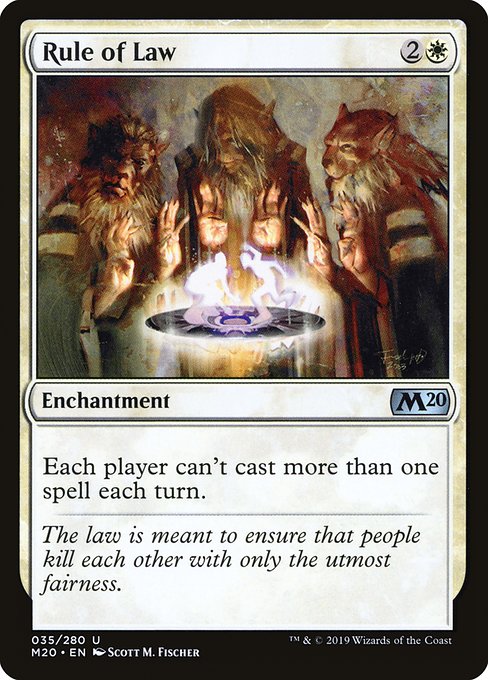
Rule of Law
A spell-count restriction
Rule of Law limits each player to one spell each turn.
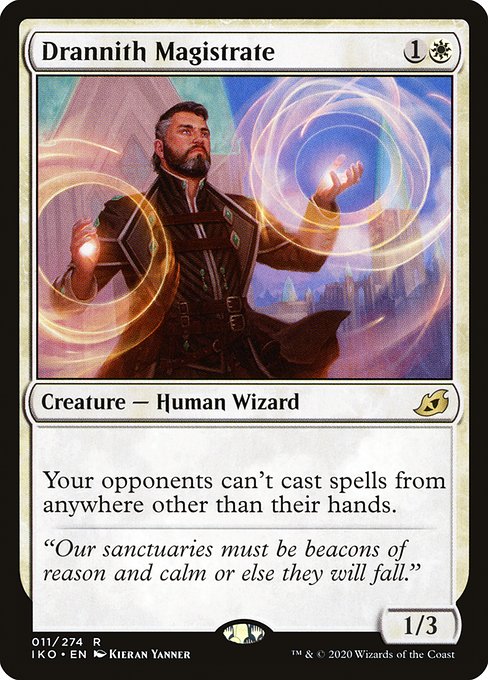
Drannith Magistrate
Nonhand casting restriction
Magistrate applies to opponents and blocks casts from outside their hands.
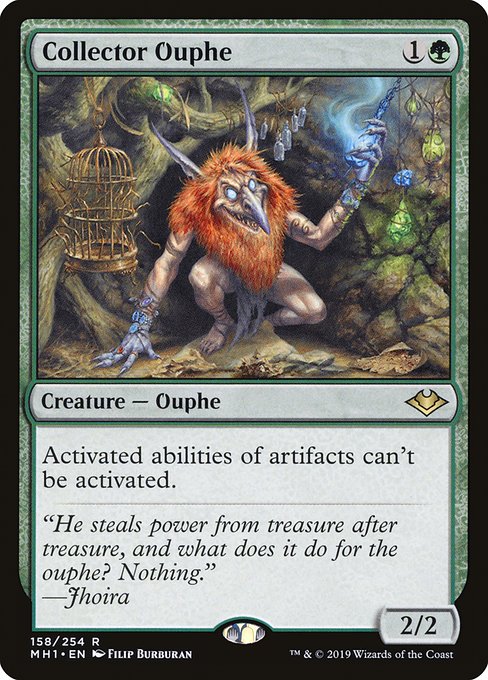
Collector Ouphe
Artifact activation restriction
Ouphe shuts off artifact activated abilities including mana abilities.

Cursed Totem
Creature activation restriction
Totem stops activated abilities of creatures, including creature mana abilities.
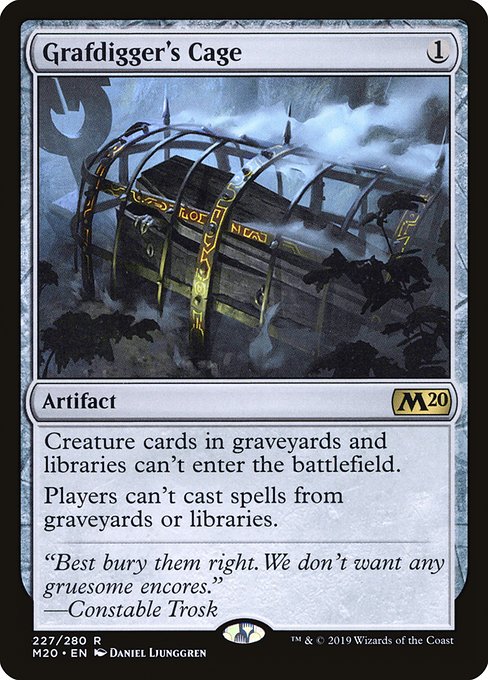
Grafdigger’s Cage
Library and graveyard restrictions
Cage prevents the specified creature entries and casts from libraries or graveyards.
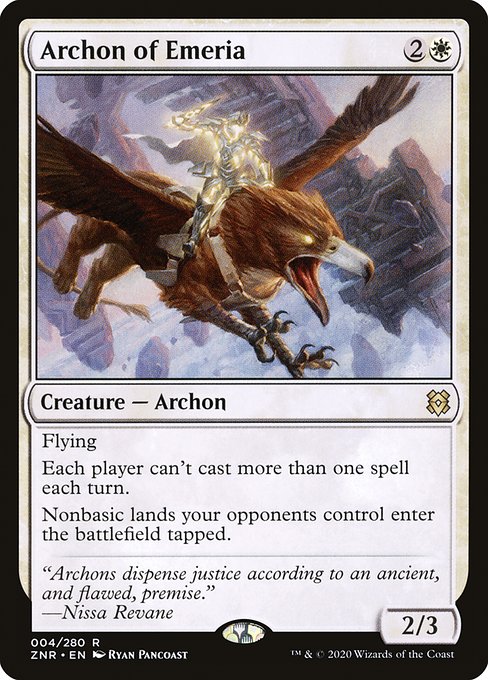
Archon of Emeria
Spell limit with opposing land pressure
Archon combines a one-spell-per-turn restriction with tapped entry for opposing nonbasic lands.
Rule of Law
A countered spell still used the cast, while a normal copied spell was not newly cast. The rule constrains your protection spells as well as the opposing chain. Make sure your development and finish can operate with that one-spell allocation. A piece is easier to exploit when the rest of your plan uses actions it leaves available.
Drannith Magistrate
It does not stop an already-present commander from using abilities or a creature being put onto the battlefield without a cast. Deploy it before the access you need to deny. It cannot retroactively counter a spell already cast, and a card moved to hand can present a different route.
Collector Ouphe
Treasures and mana rocks can become unusable resources while it remains present. It does not generally stop artifact static or triggered abilities merely because their source is an artifact. A creature body makes it accessible to some creature plans and vulnerable to creature interaction. Its symmetry still requires you to build sources that function after it resolves.
Cursed Totem
It can constrain an activated commander engine without preventing all creature attacks, static text, or triggers. An artifact restriction and a creature restriction can overlap on an artifact creature. Do not assume a permanent is exempt merely because another one of its card types is outside the restriction.
Grafdigger’s Cage
Its text does not encompass every reanimation-like effect from every zone, nor every noncreature permanent returned without casting. Compare its two sentences with your own recovery and finish. A cheap piece can still be the wrong choice if it blocks the route your deck uses to convert the slowed game into victory.
Archon of Emeria
Its flying creature body can also participate in combat, while removal can undo both continuing restrictions. The nonbasic-land clause applies to opponents rather than all players, but the spell limit includes you. Treat those scopes separately when planning a turn.
Practice a restriction that helps the wrong player
Imagine one opponent preparing a multi-spell hand, another already using a creature-based activated engine, and a third relying on artifact activations. Resolving Rule of Law can pressure the first plan while leaving many of the second and third plans' actions available. Your decision needs to include all three opponents, not only the player whose hand looked fastest.
Now compare Collector Ouphe. It can restrict the artifact plan but also switch off your own rocks and Treasures. If your lands still cast the next development play while the opposing artifact engine stalls, the exchange may favor you. If you lose your only functioning colored mana, the same piece can strand your hand and hand the initiative to somebody else.
Finally compare Cursed Totem against the established creature engine. It can prevent relevant activations while leaving its source's unrelated triggers and static text intact. Specify what remains available. Accurate action-by-action analysis gives you a reason to keep or replace a card that a simple stax count cannot supply.
Write these possible boards beside a saved version of the deck and rehearse the actual payments. The goal is a repeatable decision process: relevant restriction, functioning mana, next resource play, and a legal finish. Replace cards whose only justification is that they make the deck look more disruptive.
A decision table for the interaction
| Position | Correct result | What to check |
|---|---|---|
| Rule of Law | Restricts spell casts each turn | Activations can remain available |
| Drannith Magistrate | Opponents cast only from hand | Direct battlefield placement is different |
| Collector Ouphe | No artifact activations | Includes artifact mana abilities |
| Cursed Totem | No creature activations | Includes creature mana abilities |
| Grafdigger’s Cage | Specified creature entries and zone casts blocked | Can conflict with Winota or Tayam |
Frequently asked questions
Build your deck
Put these choices into a Commander list. Create a free account to save your deck and keep tuning it with Deckcipher.
FAQ
Does stax need its own win condition?
Yes. Delay must create an advantage you can convert into a finish. A restriction that stops one opponent while another develops a stronger engine can change the likely winner without helping you. Build a real development and recovery plan.
Does Rule of Law stop commander activations?
It limits spell casts, not activated abilities as a category. A commander already on the battlefield can still use a legal activation unless another effect stops it. Cursed Totem can provide a different restriction on creature activations.
Does a countered spell use the Rule of Law cast?
Yes. The spell was cast even if it was countered later. Copying a spell directly onto the stack is normally not a new cast, while an instruction to cast a copy is different. Track the actual event.
Can I use Treasure under Collector Ouphe?
Its ordinary mana ability is an activated ability of an artifact and cannot be activated while Ouphe applies. The restriction includes mana abilities. Check your remaining lands and other functioning sources before resolving your own copy.
Does Drannith stop Winota putting Humans onto the battlefield?
Not by its casting-origin restriction alone, because that instruction does not cast the Human. Grafdigger's Cage can stop the creature card entering from the library. Similar-looking access effects can need different answers.
Is Tayam automatically compatible with every stax piece?
No. Its activation can operate under a spell limit, but a creature-activation restriction can stop it and Cage can block a creature return. Check the exact action and returned permanent rather than labeling the whole commander immune.
Should every deck play the same set of hate cards?
No. The intended table, your own engine, timing, and available recovery determine the useful restrictions. Choose pieces that stop relevant actions while preserving a better route for you. Popularity alone does not establish compatibility.
Can I use old lists with banned fast mana?
Check current Commander legality before importing. As reviewed here, Mana Crypt, Jeweled Lotus, and Dockside Extortionist remain banned. A Competitive Brawl or Duel Commander update is not automatically a change to multiplayer Commander's list.