
Quick answer
A budget reanimator deck needs a way to put useful creatures into the graveyard, a way to return them, and targets that matter when they arrive. Sefris can connect those stages through dungeon progress, but the deck still needs real card access, three-color mana, and an endgame beyond repeated setup.
Build the three stages before buying a giant creature
Reanimator decks turn a graveyard into a source of creatures. The useful sequence is access, return, and payoff: place the right creature in the graveyard, use a legal return effect, and receive an effect worth the setup. A hand with only expensive targets cannot execute that sequence. A hand with only looters and recursion may produce activity without a meaningful finish.
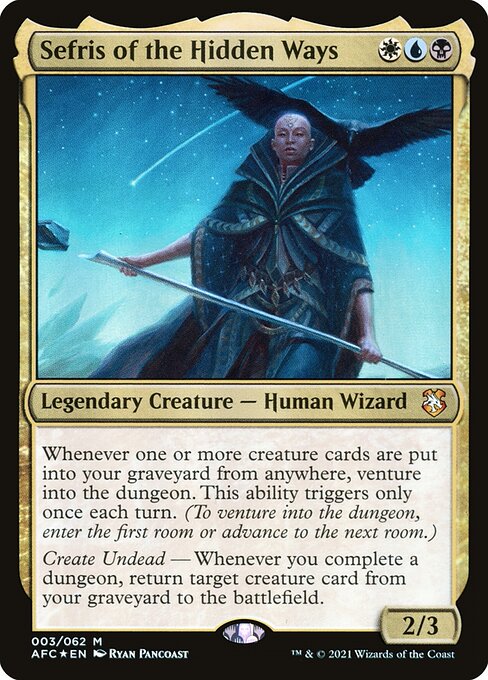
Sefris of the Hidden Ways gives a white blue black build a command zone connection. Creature cards entering your graveyard from anywhere can trigger a venture into the dungeon, limited to once each turn. Completing a dungeon creates a separate ability returning a target creature card from your graveyard. That can make ordinary discard and deaths contribute to a longer resource plan.
The limitation is each turn, not once per table round. A legal discard on an opponent's turn can provide another opportunity if you have not triggered the ability that turn. Several creature cards entering together still create one qualifying trigger for that event, and the once each turn limit then applies. Do not multiply a large mill by every creature card found as though there were no cap.
Choose a value based finish or a deliberate combo package before buying targets and tutors. A low cost collection can still create a compact loop. This framework emphasizes useful entries and recovery while keeping ordinary turns functional. The budget tools can compare roles after the sequence is clear, rather than treating the largest creature as automatically the best purchase.
Looters supply selection and turn timing
Merfolk Looter draws a card and then discards through a tap ability. It can improve the hand while placing a creature card into the graveyard. That is selection, not a net extra card in hand. You need the creature eligible to use its tap symbol ability, so a newly cast Looter normally waits unless haste or another applicable permission helps.
Once active, holding the activation for an opponent's turn can help Sefris use a different turn's once each turn trigger. The decision has a cost: you delay seeing the drawn card and may expose the Looter to removal before using it. Choose the timing for the actual hand and board rather than automatically waiting for the last possible moment in every game.
Likeness Looter provides a similar draw and discard activation with a separate graveyard copy ability. Becoming a copy is not entering the battlefield again. It does not automatically reproduce a copied creature's enters trigger. The copy ability has a mana requirement based on its target and sorcery timing, so treat it as another optional role rather than free access to every large creature in the graveyard.
A looter is useful when the hand has cards worth exchanging. If all your resources are gone, an empty hand draw then discard may force you to discard the new card unless another rule changes the situation. Keep actual draw alongside the filtering. The deck should be able to find lands and answers while setting up the graveyard, not exchange every usable card for an impressive but inaccessible pile.
Self mill creatures can do more than fill the graveyard
Stitcher's Supplier mills three on entry and when it dies. That can provide creature cards for Sefris while leaving a body available for a later sacrifice cost. It does not guarantee that any particular target is milled. If a death and the subsequent mill occur in the same turn, Sefris's limit still matters. You cannot count every stage as another venture after the ability has already triggered that turn.
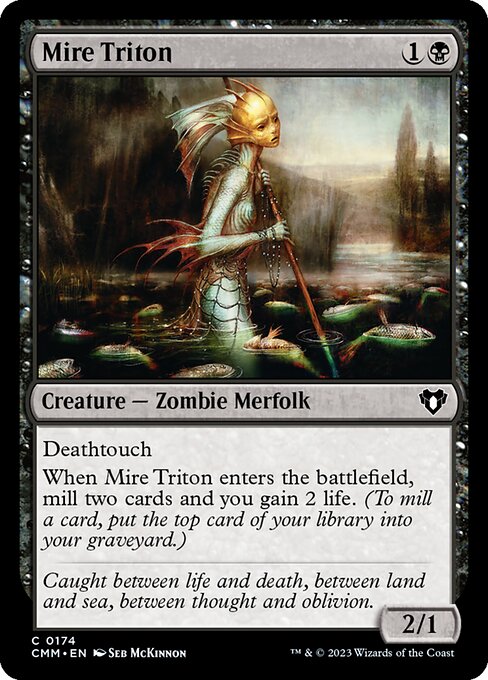
Mire Triton combines a small deathtouch body, milling, and life gain on entry. It can help defend while supplying the graveyard, making it more useful in an ordinary early turn than a card that only mills. The exact graveyard result remains variable. A useful body does not make the milled noncreature cards automatically accessible through Sefris's creature return ability.
Creature tokens are not creature cards for Sefris's wording. A token dying can trigger appropriate general death abilities, but it does not supply the same creature card event here. Returning a card from the graveyard can provide a body and entry value, yet moving it out of the graveyard is not another creature card entering that graveyard. Track the direction and type of each zone change.
Keep self mill proportional to the return plan. If the deck regularly mills the removal and lands it needs while finding too few useful targets, adjust the creature package and access rather than simply adding more milling. A graveyard can be large without offering the next legal action. The useful question is which creature can return and what it accomplishes when it does.
| Stage | Example | What the deck still needs |
|---|---|---|
| Select and discard | Merfolk Looter | An eligible tap activation and a card worth placing in the graveyard |
| Mill with a body | Stitcher's Supplier | Useful creatures actually found among the variable mill |
| Direct graveyard setup | Buried Alive | A later legal return effect and mana for it |
| Return a target | Unburial Rites | A legal creature card and the actual casting cost |
| Dungeon payoff | Sefris completion trigger | Completed dungeon and a legal creature card target |
| Useful arrival | Sun Titan | A relevant entry effect and a plan for subsequent turns |
Understand return spells and their actual costs
Victimize chooses two creature card targets in your graveyard when cast. It sacrifices a creature during resolution and returns the chosen cards tapped if its instructions are satisfied. The sacrifice is not an additional casting cost. A creature currently on the battlefield cannot be selected as one of those graveyard targets simply because you intend to sacrifice it later through the spell.
Dread Return returns a target creature card and has a flashback cost of sacrificing three creatures. When casting it with that flashback cost, choose a legal graveyard target before paying the sacrifice cost. The three creatures are real material spent, and a counterspell does not refund them. Flashback also changes where the spell goes when it leaves the stack, so it is not indefinite reuse from the same graveyard position.
Unburial Rites offers a normal cast and a white flashback payment. That makes it potentially useful when milled, unlike a noncreature spell with no relevant graveyard permission. Both versions need normal spell timing and a legal target. The flashback option does not mean every reanimation spell in the deck can be used from the graveyard.
Read whether a returned creature enters tapped and whether it is cast or simply put onto the battlefield. Enters triggers can work from direct return. Cast triggers do not happen merely because the creature arrived. A large tapped recovery board may still be unable to block the next attack, while a smaller untapped return could matter immediately. Compare the actual spell's terms with the danger you are trying to answer.
Buried Alive and dungeon progress are access, not victories
Buried Alive searches for up to three creature cards and puts them into your graveyard. It can select a useful return target, a recovery creature, and another role according to the deck. It does not put those creatures directly onto the battlefield. Reserving mana and a return effect for the next step is part of using the card well.
The three selected cards arriving together do not override Sefris's once each turn trigger limit. That event can supply a venture when the condition and limit permit, rather than one venture for each card. A deliberate combo pile may have other interactions, but those must be verified from the actual pieces instead of assuming the search spell is a one card win in every Sefris list.
Ordinary venture into the dungeon and venture into Undercity are different instructions. Sefris's basic venture text does not automatically start the Undercity just because you like that dungeon's rooms. Use the legal dungeon choices and the progress already underway. An initiative package is another construction choice with its own cards and rules, not a default benefit of every venture card.
Completing a dungeon can generate Sefris's targeted return ability. Opponents can interact with that ability or its target at legal opportunities. Removing Sefris after the trigger exists does not simply erase it, while removing the graveyard target can make the return fail. Keep those pieces separate so dungeon progress does not become an unexplained promise of an unanswerable creature.
Choose targets that create useful arrival value
Angel of Despair can destroy a target permanent through its enters ability. That can answer a problem while establishing a flying body. The target must be legal and destruction has its normal limits. A large creature with a relevant entry can provide value even before it attacks, but its high normal casting cost still matters in games where the return plan is interrupted.
Meteor Golem supplies a similar practical role with a narrower target: a nonland permanent an opponent controls. It cannot remove a land through that ability. As an artifact creature it may interact with different recursion and opposing answers, but it still needs a legal target and does not solve every permanent type in every situation. Name the actual problem the entry is supposed to answer.
Sun Titan returns a target permanent card with mana value three or less through its enters or attacks trigger. It is not limited to creature cards, so a useful land or support permanent can be an appropriate recovery target. The attack trigger requires a real attack declaration; returning the Titan does not automatically create that extra trigger. Vigilance helps later combat without granting immediate attack haste.
Select a limited payoff group. Too many expensive targets make opening hands clumsy, and too many utility targets can leave the deck generating value without closing. Think about what the creatures accomplish together: clear blockers, recover resources, then attack with a board that matters. A reanimation spell is only as strong as the legal target and board situation it actually has.
Reanimator roles to price before premium targets

Merfolk Looter
Repeatable selection
Can support a different turn's Sefris trigger once eligible, while still needing real draw elsewhere.
Mire Triton
Setup and defense
A deathtouch body can make a small mill card useful before the engine is complete.

Victimize
Material exchange
Targets are already in the graveyard before the resolution sacrifice.

Unburial Rites
Graveyard usable spell
Its own flashback provides access that unrelated milled spells do not inherit.

Meteor Golem
Arrival answer
Targets an opposing nonland permanent, not every permanent without restriction.

Sun Titan
Recovery body
Can retrieve a qualifying permanent rather than only another creature.
Three colors and graveyard hate deserve real slots
Sefris needs white, blue, and black to be cast. A colorless accelerator cannot replace any of those required pips. An opening with several tapped dual lands may have all colors eventually and still deploy the commander later than intended. Inspect the turn sequence rather than labeling every land that can make two colors equally fast.
Basic lands and practical fixing can support a budget mana base when chosen for the actual early spells. A looter on turn two asks for blue before some later white payoff. A black self mill creature asks for a different first source. The mana base calculator helps inspect the color plan, while actual hands show which requirements conflict.
Do not assume creature density makes mana support unnecessary or that every reanimator deck needs the same number of rocks. Compare whether the card accelerates the commander or merely adds generic mana for later targets. A useful looter and a useful rock solve different problems. Choose the mix your hand tests and intended curve can support.
Keep interaction and a route through graveyard hate. An opponent can remove a target in response to a return spell or exile the whole supply before a dungeon payoff resolves. The interaction checker helps identify protection and opposing engine coverage. A list that can cast some threats normally and draw from hand has a better recovery floor than one that treats every graveyard card as permanently safe.
Test the whole sequence before upgrading the ceiling
Rehearse a hand that casts a looter before Sefris, then uses a legal discard of a creature card on a later turn. Mark whether Sefris has already triggered that turn and advance only the correct amount. Do not skip directly from one discarded creature to a completed dungeon unless the actual room progress and other effects justify it.
Next test a direct reanimation turn with a useful target already in the graveyard. Pay the real cost, handle sacrifice timing where relevant, and resolve the entry ability with a legal target. Then remove the graveyard target in a second version. The contrast reveals whether the hand retains another play or has committed all its resources to one vulnerable object.
For budget replacements, preserve the needed job rather than only choosing another huge creature. An inexpensive entry answer can replace a premium threat while losing a particular resilience or finishing ability. A direct draw spell can improve a stalled hand more than another large target. Price actual printings and shipping, then use the deck building checklist to preserve ordinary resource roles.
Build your deck and create a free account to save an initial Sefris list and a revised target package. Record whether the bottleneck was setup, return access, colored mana, or ending the game. Reanimator becomes reliable when its ordinary resource turns lead somewhere useful and a disrupted graveyard does not erase every remaining action.
Budget Reanimator questions
Build your deck
Put these choices into a Commander list. Create a free account to save your deck and keep tuning it with Deckcipher.
FAQ
Does every creature death trigger Sefris?
Her wording needs one or more creature cards entering your graveyard and is limited to once each turn. Creature tokens are not creature cards for that condition. Several cards arriving together do not create unlimited ventures, and an earlier trigger that turn can use the opportunity.
Can Sefris trigger on opponents' turns?
Yes, a qualifying event during a different turn can use that turn's opportunity. You need a legal way to cause the event, such as an eligible looter activation. Once each turn is not the same as once per table round or permission to activate a newly controlled tap creature immediately.
Does returning a creature cast it?
Not unless the effect specifically instructs a cast. Direct return can trigger enters abilities but does not create ordinary cast triggers. Read each target and whether it enters tapped when deciding if the return can defend you immediately.
Can Victimize target the creature it will sacrifice?
Not when that creature is still on the battlefield as you cast the spell. Its two targets must already be creature cards in the graveyard. The sacrifice happens later during resolution, so plan graveyard targets and a separate battlefield body.
Does Sefris automatically venture into Undercity?
Ordinary venture and venture into Undercity are different instructions with different rules. The commander's basic text does not grant every dungeon option by default. An initiative package needs its own cards and should be treated as a deliberate addition to the plan.
What should a budget upgrade fix first?
Identify the missing stage: graveyard access, return, useful targets, mana, draw, or a finish. Another premium creature does not help a hand with no legal return or required colors. Compare current printing and delivery costs after the role is clear.