
Quick answer
Blood usually filters one card into another rather than increasing hand size. The discard is part of the activation cost, the draw comes later, and an empty hand cannot pay the normal discard cost.
Blood turns a card into another card
A normal Blood token is a colorless artifact with an ability costing one mana, tapping it, discarding a card, and sacrificing the token to draw a card. The exchange improves card selection but does not normally increase your hand size. The discard is a cost, so you need a card available before you can activate it.
With one card in hand and an untapped Blood, paying the activation cost discards that card. After the ability resolves you draw one replacement. You have not gained an extra card overall, and a countered ability leaves the discarded card gone without the replacement draw.
Count Blood as filtering unless another effect makes the discard or sacrifice produce additional resources. Calling every Blood token card draw can conceal a deck that runs out of cards.
Costs are paid before anyone responds
The normal Blood ability uses the stack. You pay mana, tap and sacrifice the token, and discard a card when you activate it. Players can then respond to the ability before the draw. They cannot remove the already sacrificed token to prevent the activation, and they cannot force you to reconsider a discard that was already paid.
If you discard a creature you hope to reanimate, an opponent can use graveyard interaction before the Blood draw resolves if they have a legal opportunity. The Blood activation does not shield the discarded card. A separate discard trigger can also go on the stack and change the order in which effects happen.
State the discarded card clearly. This is public information once it enters the graveyard, and it may determine whether opponents want to respond before the rest of the sequence continues.
Blood is not inherently red
An ordinary Blood token is a colorless artifact even though its name and illustration evoke red. Making Blood does not change a commander color identity, and the token does not produce red mana through its built-in ability. Its draw activation uses one generic mana, which can be paid with an appropriate mana source of any color.
A deck with access to a Blood producer can use the token even if red mana is unavailable. It still needs a card to discard and an untapped token. A different permanent might grant Blood another ability, so inspect that text rather than assuming the token always does only one thing.
Choose cards for their actual legality and function. The color identity of the card in the deck matters; the name of a token it creates does not add a new color requirement.
Animated Blood has a tap restriction
A normal Blood is not a creature and can generally activate immediately. If it becomes a creature, the tap symbol means summoning sickness may prevent the built-in activation. A sacrifice outlet on another permanent can still use a newly created Blood if that outlet's own costs and conditions allow it.
Animating an artifact reserve for combat can turn some fresh Blood into resources you cannot tap this turn. Sacrificing a Blood to Anje, Maid of Dishonor uses Anje's ability rather than the token's draw ability, so it asks for different costs and produces a different reward.
Before combining artifact animation with filtering, decide which tokens you want to attack with, which can tap, and which will be consumed by a separate outlet. A single undifferentiated counter pile hides those choices.
Discard can be the engine rather than the downside
A reanimation deck may want a creature in the graveyard, a madness deck can use discard to access a different casting permission, and some commanders reward discarding a card. Those effects can turn Blood filtering into development. The discard trigger and the Blood draw remain separate pieces with separate timing.
With a madness card, discarding it through Blood can lead to the madness process and an opportunity to cast the card for its madness cost. You still need the required mana at that time. Discarding a card with flashback does not cast it automatically; it leaves a later option governed by that card and normal timing.
Include discard payoffs only when the deck has enough useful cards to discard. A hand containing three expensive rewards and no expendable card can make Blood look less flexible than it was in the ideal example.
Creating and spending Blood support different plans
A producer such as Bloodtithe Harvester gives you a body and a token at once. A repeatable producer can turn creature entries or combat events into a reserve. A spender can convert that reserve into filtering, damage, or removal. These are separate functions, and not every Blood-themed card performs all of them.
Bloodtithe Harvester can use its sacrifice ability to reduce a target creature's toughness based on the Blood you control when the ability resolves. Spending the Blood first may reduce that effect. Conversely, holding every token for removal can leave your hand stuck with cards you cannot currently use.
Decide whether the immediate problem is the hand, an opposing creature, or the ability to keep producing material. The correct token use changes with that problem rather than following one fixed activation habit.
Artifact synergies can make a modest token valuable
Blood contributes to artifact count, enters as an artifact, and can be sacrificed. A deck can exploit those properties without treating the token own ability as its main attraction. However, Academy Manufactor does not replace Blood creation because its listed token kinds are Clue, Food, and Treasure.
Mayhem Devil can reward sacrificing Blood even when you sacrifice it to a different outlet. An artifact-entry payoff can care about Blood entering before any discard takes place. A generic token multiplier can increase the number created if it applies, but that does not change each token's activation requirements.
Choose the support card for the event the deck reliably produces. A card that only improves Food or Treasure will not necessarily help a Blood engine just because all three are artifact tokens.
Filtering should improve a real next action
The best Blood activation often turns an excess land into a needed spell, puts a recursion target into the graveyard, or helps find a land drop before committing the rest of your mana. Activating every token immediately can consume a full turn while leaving the battlefield unchanged.
If your hand already contains the land and removal you need, keeping the Blood may be better than spending mana merely to see another card. If your only card is an answer needed before your next turn, discarding it speculatively can expose you to the threat you already knew about.
Judge filtering by the decision it enables. Keep notes on which cards were genuinely expendable and which activation costs prevented you from interacting. That tells you whether the deck needs more independent card advantage or just better sequencing.
Cards worth comparing before you choose a package
Examples and the jobs they do
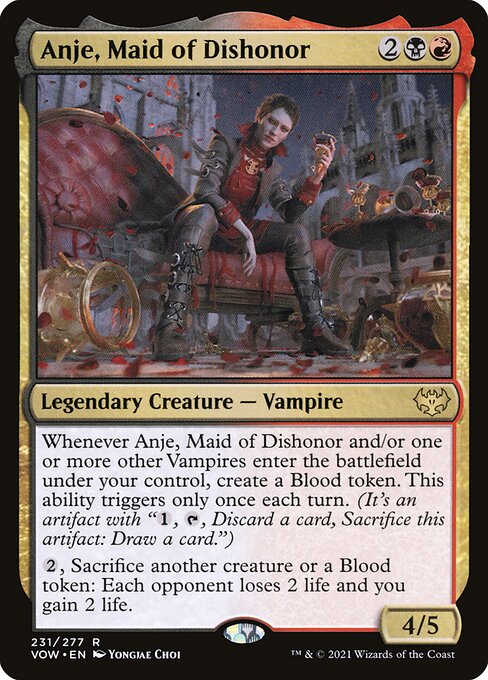
Anje, Maid of Dishonor
Token production and drain
Anje can produce Blood from qualifying Vampire entries once each turn and can sacrifice a creature or Blood to drain opponents through her activated ability.
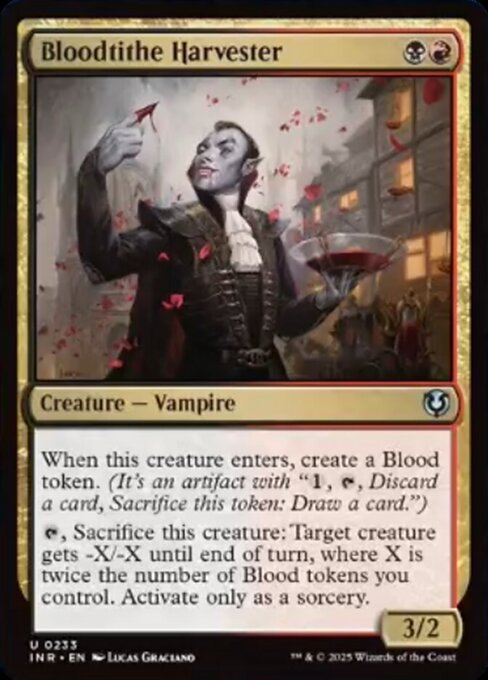
Bloodtithe Harvester
Removal flexibility
Harvester creates Blood on entry and can sacrifice itself to reduce a target creature power and toughness by twice your Blood count for the turn.
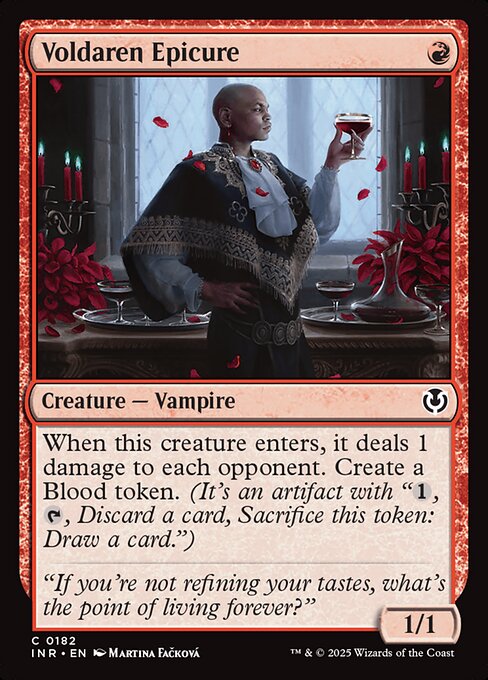
Voldaren Epicure
Cheap material
Epicure creates a Blood token and deals a small amount of damage to each opponent when it enters.

Falkenrath Forebear
Graveyard recovery
Forebear creates Blood when it deals combat damage to a player and can use Blood to return from the graveyard through its own activated ability.
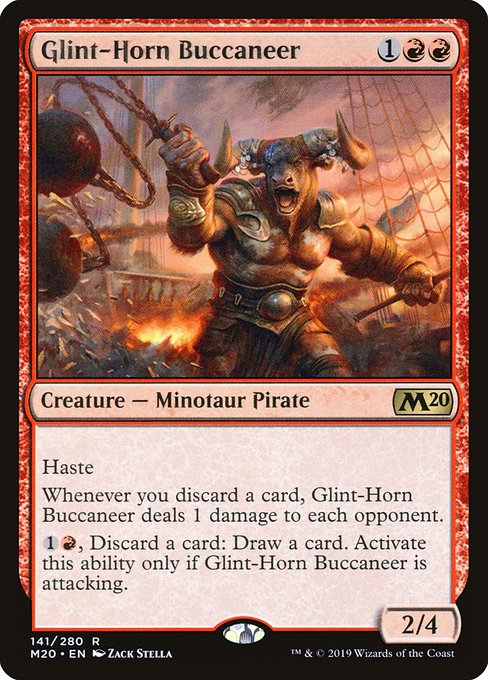
Glint-Horn Buccaneer
Discard payoff
Buccaneer can turn discarding into damage to each opponent.
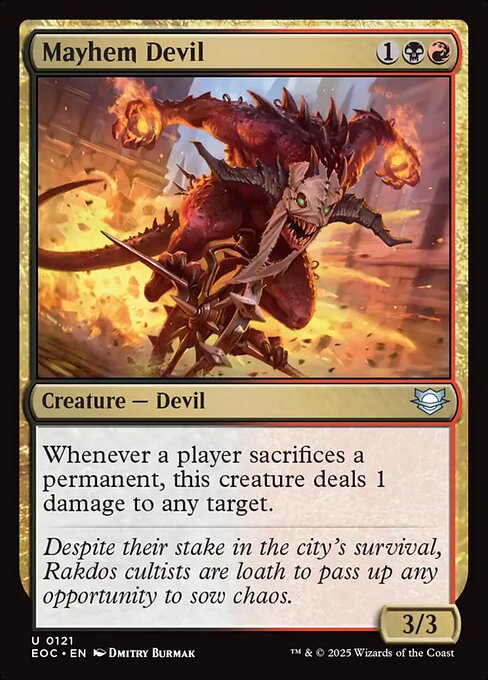
Mayhem Devil
Sacrifice payoff
Devil rewards a player sacrificing a permanent, so sacrificing Blood can generate an additional damage trigger.
Anje, Maid of Dishonor
The token reserve supports a finish beyond merely replacing cards. The once-per-turn production limit matters, and the drain ability has its own mana cost. Sacrificing Blood to it does not also draw a card through the token ability.
Bloodtithe Harvester
The stockpile can therefore influence how large a threat it answers. The activated ability has timing and tap requirements, and the Blood count is checked as the effect resolves. Spending tokens in advance may weaken the removal you were planning.
Voldaren Epicure
It supplies a creature and an artifact from a low initial mana investment. The effect is a modest starting resource rather than an ongoing draw engine. It works best when the body, entry, damage, or artifact also serves the commander plan.
Falkenrath Forebear
It gives the token another strategic purpose. It cannot block, and the graveyard ability has its own cost. Keeping enough Blood for recovery competes with spending the same tokens on filtering.
Glint-Horn Buccaneer
A Blood activation already requires a discard, which makes that cost an additional payoff event when the creature is present. The Buccaneer does not make a Blood activation costless or increase your hand size on its own. Its separate activated ability and any combo claims need their own complete conditions.
Mayhem Devil
The same permanent can provide a resource for one cost and still cause several appropriate triggered abilities. The trigger has a target and uses the stack. Removing the Devil can stop future triggers, while existing triggers normally remain and should be resolved in a clear order.
Build Blood around a valuable discard
Blood is strongest when the card you discard is genuinely expendable or is more useful in the graveyard. That can be an excess land after development, a creature you can reanimate, or a madness card you can afford to cast at the appropriate time. It is weaker when the only available discard is the answer you need for the next opponent. Before adding more token makers, inspect which cards you expect to throw away and what the list receives in exchange.
Do not confuse selection with recovery from an empty hand. If every Blood activation spends a card and returns one, repeated filtering can improve quality without increasing quantity. An independent draw engine, a recursion effect, or a payoff triggered by discarding may be necessary to build lasting advantage. Keeping a dozen Blood tokens does not let you activate one with zero cards in hand. A different Blood spender can make that reserve useful, but its own requirements must be present.
Sort these functions in the deck builder, then save the list with a free account through My Decks. Use the Commander deckbuilding checklist to distinguish filtering slots from unconditional card advantage. The mana base calculator can check the lands needed to cast your spells while Blood activations compete for spare mana. None of those tools changes the requirement to have a card available for the discard cost.
Practice an activation with a creature card in hand and a reanimation spell ready for later. Announce the activation and put the draw ability on the stack. Then pay its costs, including discarding the creature, tapping the Blood, and sacrificing it. Give the other players a response window only after the activation is complete. An opponent can attack that graveyard target before you receive the replacement card. The intended reanimation line therefore needs to account for interaction rather than treating Blood as a private move between your hand and battlefield.
Repeat the position with Bloodtithe Harvester and several Bloods. Work out the removal ability using the token count when it resolves. Then compare a line that spends two Bloods on filtering first. Those draws may find something useful, but they can make the Harvester answer smaller. The count uses only Blood tokens you control when the ability resolves. An opponent creating Blood under their own control does not increase it. An opponent removing your Blood before resolution can reduce it, so do not lock in the earlier number.
During games, record what you discarded and why. A dead expensive card becoming a castable land or answer is a successful selection event even without gaining quantity. Discarding a useful card and then lacking an answer may reveal an activation habit rather than a deckbuilding failure. If you repeatedly have no disposable card at all, consider more independent draw before more Blood production. The best edit addresses whether the bottleneck is mana, hand size, token supply, or the absence of a payoff for the discard.
Madness creates a separate choice before the Blood draw
When you discard a card with madness, the madness rules can exile it instead of putting it into the graveyard and create a triggered ability offering the madness cast. If the discard happened while paying a Blood activation cost, finish activating that ability, then place the relevant waiting trigger on the stack in the proper order. The madness opportunity can therefore occur before the Blood draw resolves. You cannot assume the future drawn card or mana from a later action is already available.
If you cast the card through that opportunity, pay its madness cost and obey applicable restrictions. Declining the cast does not preserve a permanent permission to cast it from exile later; follow the madness instructions for the card instead. Also distinguish madness from an ordinary graveyard keyword. A card with flashback discarded to Blood usually waits in the graveyard for a later legal cast. It is not cast automatically by the discard. Plan the activation with the mana you truly have available and keep the Blood draw, discard trigger, and resulting spell as distinct objects.
A decision table for the interaction
| Position | Correct result | What to check |
|---|---|---|
| Blood activation | Pay one, tap, discard, sacrifice | Discard happens before the replacement draw |
| Empty hand | Normal activation unavailable | A required discard cannot be paid |
| Separate Blood spender | Use that spender result | No extra built-in Blood draw |
| Madness discard | A separate triggered opportunity can arise | Do not use a future Blood draw to pay earlier costs |
Frequently asked questions
Build your deck
Put these choices into a Commander list. Create a free account to save your deck and keep tuning it with Deckcipher.
FAQ
Does a Blood token draw an extra card?
By itself it filters: you discard a card as a cost and draw one on resolution. Your hand size normally returns to its previous number. Other discard or sacrifice payoffs can make the exchange advantageous, but they are separate effects.
Can I use Blood with an empty hand?
You cannot activate its normal ability without a card to discard because discarding is a required cost. Having enough mana and an untapped token is not enough. A different card may let you sacrifice Blood for another purpose with different requirements.
Can I use newly created Blood immediately?
Normally yes, because a standard Blood is not a creature. If an effect makes it a creature, the tap symbol in its ability can be restricted by summoning sickness. A separate ability that sacrifices Blood follows its own costs.
Does Blood make red mana?
No. Its standard ability filters a card and produces no mana. An ordinary Blood is also colorless, regardless of the token name or art. A separate effect can grant an additional ability, but that would be stated by the effect.
Can I discard after seeing the card I draw?
No. The discard is paid when you activate the Blood ability. The draw happens later when it resolves. Choose the card you can afford to lose before making the payment, and account for any graveyard or discard triggers that follow.
Does Academy Manufactor work with Blood?
No. Manufactor names Clue, Food, and Treasure creation. Blood is not included in that replacement. Broad artifact and token effects may still apply, but matching the word artifact alone does not make the Manufactor ability apply.
Can I sacrifice Blood for two different abilities?
No. A token used to pay one sacrifice cost is gone and cannot pay a second cost. Appropriate triggers can reward that same sacrifice, which is different from activating two abilities with a single token.
Should every Vampire deck use Blood cards?
Only when the producer or token function helps the actual plan. Some Vampire decks want combat pressure, some want sacrifice engines, and some need independent draw. A themed token is useful when it fixes a problem the deck has, rather than merely sharing a creature association.