
The best red Commander staples are role players, not automatic 99-card taxes
Red commander staples are strongest when they solve red's actual deckbuilding jobs: efficient damage control, flexible permanent answers, explosive mana, rummage-style card flow, artifact pressure, and damage-based finishing. Start with cards like Blasphemous Act, Chaos Warp, Vandalblast, Jeska's Will, Ruby Medallion, Valakut Awakening, and Professional Face-Breaker, then cut anything that does not match your commander, curve, and table speed.
Core red Commander staples to evaluate first

Blasphemous Act
Board wipe
Costs one generic mana less for each creature on the battlefield. Its red pip remains, and its thirteen damage does not destroy indestructible creatures.

Chaos Warp
Universal answer
One of red's cleanest ways to answer enchantments, planeswalkers, large creatures, and other permanents red may otherwise struggle to remove.

Vandalblast
Artifact sweeper
Efficient as a one-for-one and punishing when overloaded in pods built around mana rocks, Equipment, Treasures, or artifact engines.

Abrade
Flexible spot removal
A practical early-game answer that kills many utility creatures or removes a key artifact without being dead in either matchup.
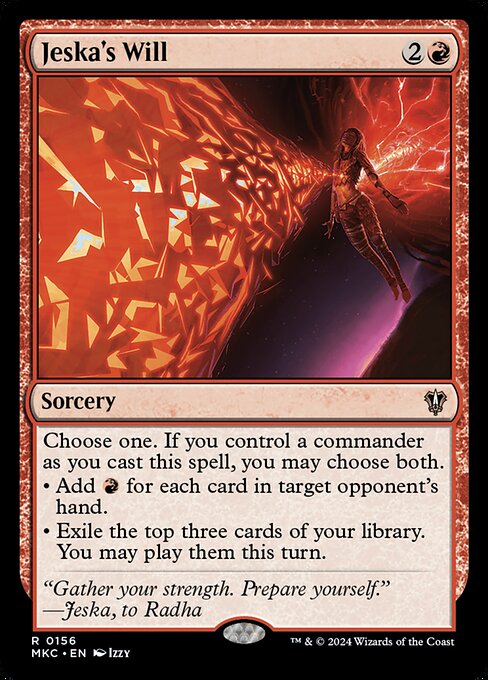
Jeska's Will
Burst mana and impulse draw
Best when your commander is easy to keep on the battlefield and your deck can convert a single explosive turn into a major advantage.

Ruby Medallion
Cost reducer
Red spells cost one generic mana less. It cannot reduce required colored pips, so compare the actual reducible costs and number of spells you expect to cast.
What actually makes a red card a Commander staple?
A red staple is not just a famous red card. In Commander, a staple has to perform a job that many red decks repeatedly need across different commanders, tables, and board states. Red's best jobs are not identical to white's sweepers, blue's permission, black's tutors, or green's land ramp. Red plays best when it turns tempo into pressure, converts short bursts of mana into real progress, punishes artifacts, clears creature boards efficiently, and digs through cards without pretending to be a long-game draw color.
That definition matters because many players ask for must-have red cards and then end up with a pile of individually powerful cards that do not serve the same plan. A Magda, Brazen Outlaw artifact deck wants Treasures, artifacts, and cheap interaction. A spellslinger list wants mana compression and ways to keep casting. A creature combat deck wants removal that opens attacks and payoffs that turn damage into resources. A multicolor deck may only need three or four red cards, but those cards should solve problems the other colors do not solve cleanly.
Red staples that define common deckbuilding jobs
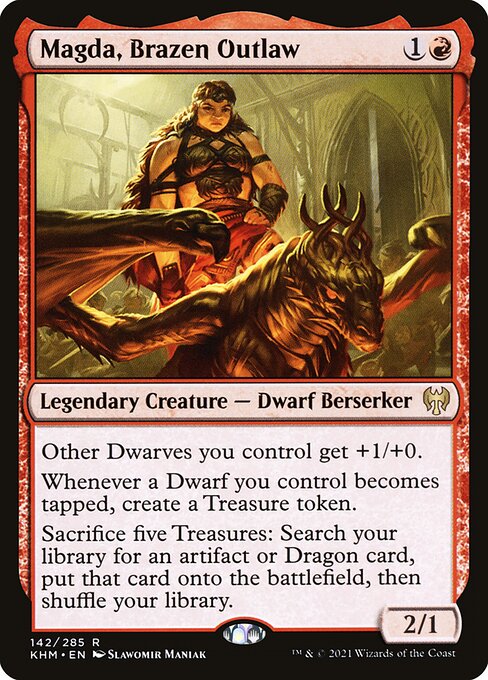
Magda, Brazen Outlaw
Artifact and Treasure commander example
Shows why red staples change by shell: artifact density, Treasure production, and cheap interaction matter more than generic burn.
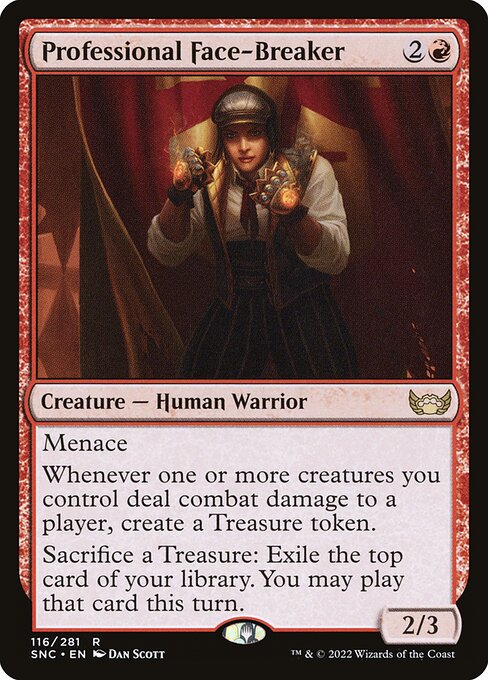
Professional Face-Breaker
Combat resource engine
Turns creature damage into Treasures and card access, making it a strong fit for token, go-wide, and attack-focused red decks.
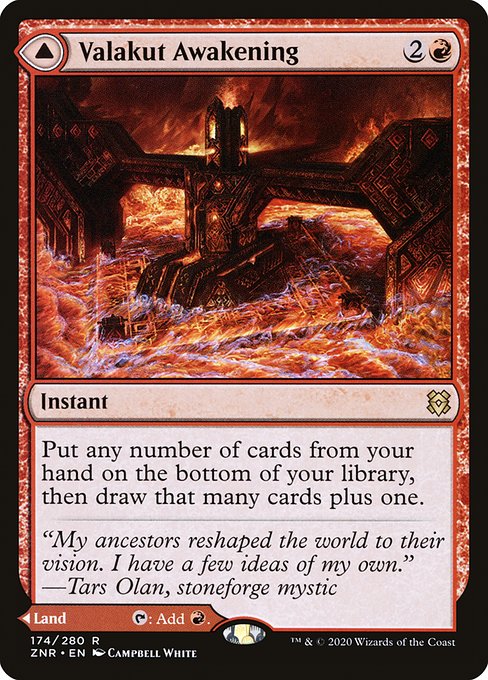
Valakut Awakening
Modal card selection
Helps red decks turn dead cards into fresh looks while doubling as a land when you need to hit mana early.

Faithless Looting
Cheap filtering
Best when discarded cards still matter, such as graveyard decks, flashback plans, reanimation support, or hands with too many lands.
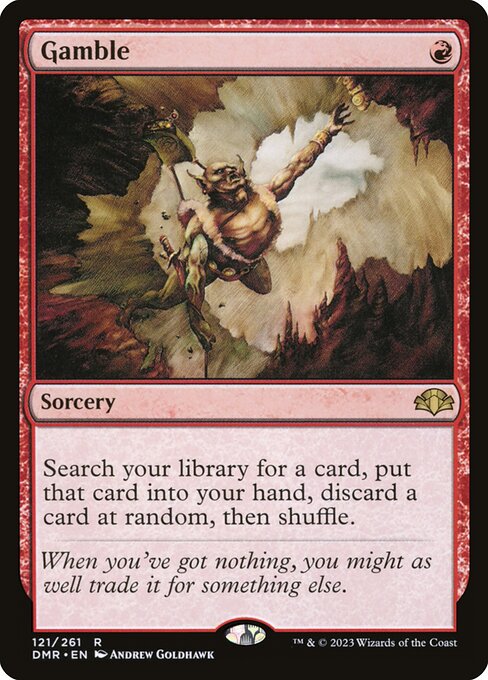
Gamble
One-mana tutor
Powerful but risky unless your deck can tolerate discard, use the graveyard, or tutor at a moment when your hand size protects the target.
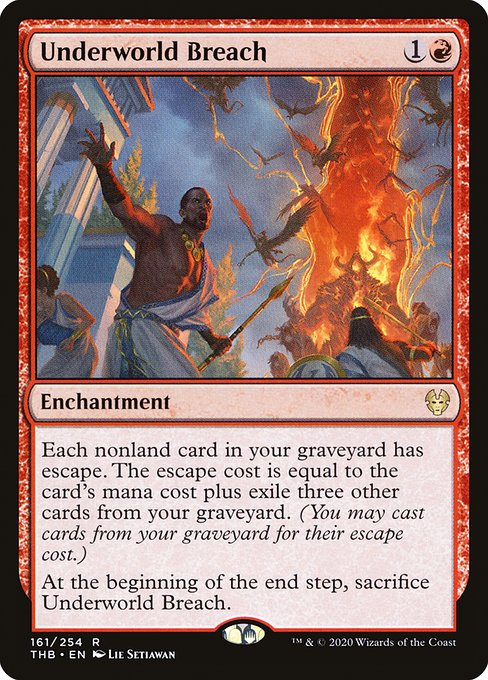
Underworld Breach
Graveyard recursion engine
High ceiling in spell-heavy lists with cheap cards and graveyard fuel, but not a casual value card every red deck can support.
The first red staple category: removal that covers red's blind spots
Red removal is easy to misbuild because direct damage feels familiar, but Commander creatures often outgrow small burn quickly. Lightning Bolt is efficient and iconic, yet it is not automatically better than a modal spell in a four-player format. It shines when your local games contain low-toughness commanders, utility creatures, early mana creatures, or planeswalkers at low loyalty. If your tables are full of six-toughness value creatures, indestructible threats, and enchantment engines, you need different answers.
Chaos Warp is the red answer that most often survives this scrutiny because it solves permanent types red cannot normally touch. The drawback is real. Giving an opponent a random reveal can feel awful when it hits a haymaker, but the important comparison is not against perfect removal from another color. The comparison is against losing to the permanent you could not otherwise answer. In mono-red, that tradeoff is usually acceptable. In multicolor, Chaos Warp is strongest when your other colors still leave gaps, especially against enchantments or resolved noncreature engines.
Blasphemous Act earns staple status for a different reason: it changes the mana math of a crowded Commander board. Paying one mana to reset ten creatures is a huge swing, especially for decks that can rebuild faster or use damage triggers. The common mistake is jamming it into every creature deck without asking whether your own board is usually the one ahead. If your red deck wins by keeping five creatures in play and attacking, Blasphemous Act is still playable, but you should plan for when to hold it rather than fire it off just because it is cheap.
Removal staples and when to choose each one

Lightning Bolt
Cheap precision damage
Strong when one mana matters and your targets are commanders, utility creatures, or planeswalkers that actually die to three damage.
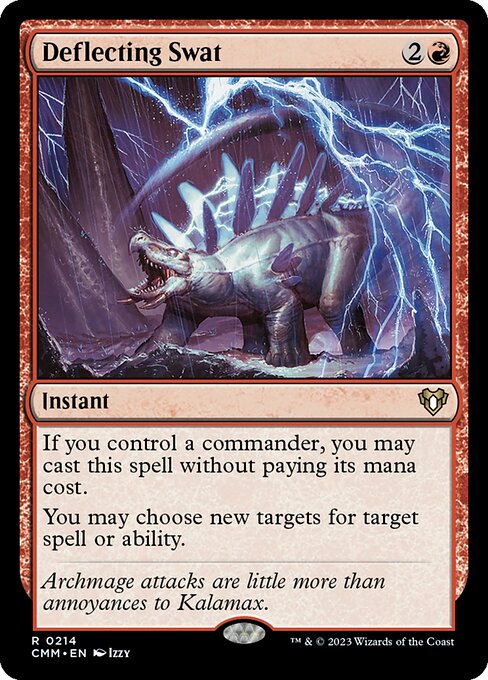
Deflecting Swat
Protection and stack interaction
Excellent in commander-centric decks that can keep their commander out and need to protect a key turn without leaving mana open.
Blasphemous Act
Efficient sweeper
Costs one generic mana less for each creature on the battlefield. Its red pip remains, and its thirteen damage does not destroy indestructible creatures.
Chaos Warp
Catch-all permanent removal
A key mono-red safety valve for enchantments, large creatures, planeswalkers, and other permanents that damage cannot answer.
Abrade
Modal interaction
Useful when your deck wants interaction that is live against both early creatures and artifact-based acceleration.
Vandalblast
Artifact reset
One of red's best ways to punish artifact-heavy tables while leaving your nonartifact board intact.
Artifact hate is one of red's clearest Commander advantages
Vandalblast can destroy one artifact you do not control for its normal cost, or all artifacts you do not control when overloaded. That makes it useful both as an early answer and a later resource swing. Count what opponents actually have before waiting for overload: removing the single artifact that enables a win can be better than saving the spell for a larger number. It does not destroy your own artifacts, including your mana rocks and Treasures.
The decision is not whether artifact hate is good. The decision is how much your deck can afford and how symmetric your plan is. If you are building Magda, Brazen Outlaw with a heavy artifact package, Vandalblast is still powerful because overload only hits artifacts you do not control. If your deck relies on your own artifacts and you choose broader artifact sweepers outside this list, you need to ask whether you are destroying your own mana. Red can punish artifacts, but it should not accidentally punish itself.
Red ramp is about burst windows, not just permanent mana
Red's ramp identity in Commander is often misunderstood. Green decks accumulate lands and keep them. Red decks often create a turn where they suddenly have enough mana to cast a commander, chain spells, overload a key card, or present a win attempt. That means red ramp should be evaluated by timing. A card that makes five mana once can be better than a permanent reducer if your deck is built to spend all five mana immediately. The same card can be mediocre if your hand has no payoff.
Jeska's Will asks you to choose a mode as you cast it, and lets you choose both if you control a commander. Its mana mode counts the cards in a target opponent's hand as it resolves. Its card-access mode exiles three cards that you may play only that turn. Choose the opponent carefully, and remember that the mana is red. Ruby Medallion does a different job: it reduces only generic mana in the cost of red spells. It cannot remove a required red pip. Check which spells in the actual list have generic portions to reduce rather than counting every red card as a guaranteed saving.
Mana Geyser sits at the highest-risk end of the scale. It is spectacular when opponents tap out and your deck can convert a huge red mana pool into a decisive turn. It is clumsy when your hand is reactive, your table plays cautiously, or your deck has too many colored requirements outside red. Treat it as a payoff enabler, not generic ramp. If your deck cannot explain what it does with eight or more red mana at once, it probably does not need Mana Geyser.
Red mana acceleration staples

Mana Geyser
Explosive ritual
Best for big spell turns, storm-like chains, or decks that can convert one large mana burst into a win or dominant board.
Jeska's Will
Burst mana plus card access
Strongest when your commander is consistently in play and your deck can use both mana and impulse cards immediately.

Birgi, God of Storytelling
Spell-chain engine
Rewards decks that cast many spells in one turn and can use impulse draw or cheap spells to keep the chain going.
Card flow in red rewards planning your turn before you cast
Red card advantage often asks you to use cards quickly. That is not a weakness if your deck is built for it, but it punishes sloppy sequencing. Impulse draw, rummage, and wheel-style effects are strongest when you know your land drop, your mana ceiling, and your priority targets before you start revealing or discarding. If you cast a red card-flow spell with only one mana left and no clear follow-up, you may turn card advantage into temporary information that disappears.
Valakut Awakening is one of the safest red staples because the opportunity cost is low. It can be a land early or a hand refresh later. It is especially good in decks that draw the wrong half of their deck, such as a combat list holding too many top-end payoffs or a spell deck holding too many lands. Faithless Looting is more specialized. It is excellent when discarded cards are resources, but merely acceptable when every card in hand must be preserved. If your deck has no graveyard synergy, you still may play it for efficiency, but you should understand that it is card selection more than raw card advantage.
Wheel of Misfortune asks a different question: can your deck exploit a refilled hand better than the table can? In aggressive red decks, the answer is often yes because you empty your hand quickly. In slower multicolor value decks, the answer may be no because you help opponents find removal and combo pieces. This is where staple discourse gets noisy. A wheel can be powerful and still wrong for a deck that does not pressure life totals or immediately spend the new cards.
Red card-flow staples

Wheel of Misfortune
Hand reset
Players secretly choose numbers. Players who did not choose the lowest discard their hands and draw seven; those who chose the highest also take that much damage. It is not an automatic table-wide redraw.

Thrill of Possibility
Instant-speed rummage
A simple option when you want to hold up interaction and turn a weak card into two fresh cards before your turn.
Valakut Awakening
Modal hand refresh
Excellent in almost any red deck that wants a land early and a way to fix clunky hands later.
Faithless Looting
Efficient filtering
Best when the discard is upside or when finding specific card types matters more than preserving raw card count.
Damage payoffs are staples only when your deck creates repeatable damage
Red has many cards that reward damage, tokens, and combat, but these are the easiest staples to overgeneralize. Impact Tremors and Purphoros, God of the Forge can end games quickly in token decks, but they are not equally good in a list that casts one creature per turn. The key question is trigger volume. If your deck routinely creates three or more bodies at a time, these cards convert normal development into a win condition. If your deck makes one creature every round, they become slow chip damage.
This is also where board wipes interact with your win plan. A token deck may use Blasphemous Act defensively after an opponent stabilizes with larger blockers, then rebuild and finish with damage triggers. A creature-light spellslinger deck may not care about the combat board at all and would rather hold removal for hate pieces. The same red staple can play offense, defense, or combo support depending on what your deck naturally produces.
Red damage payoffs and pressure tools
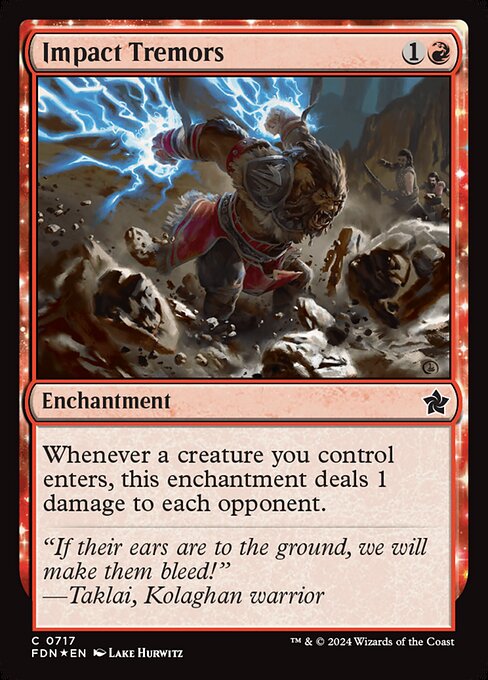
Impact Tremors
Token damage payoff
Efficient when your deck creates many creatures over multiple turns and wants a low-cost noncombat finisher.
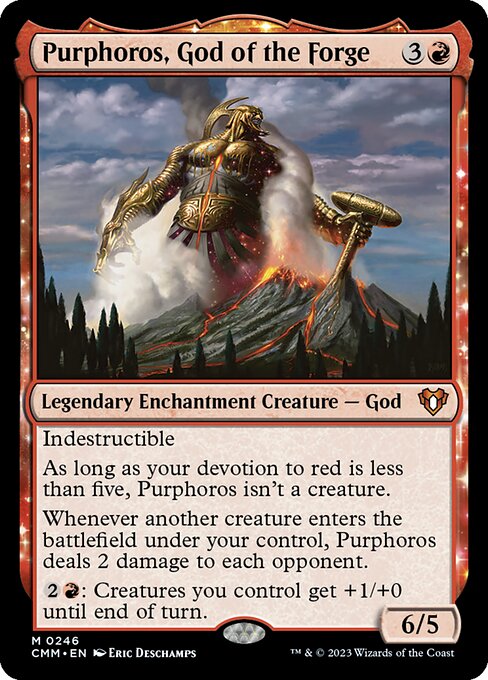
Purphoros, God of the Forge
High-ceiling token finisher
More expensive than smaller payoffs but devastating when each token wave deals large chunks of table-wide damage.
Professional Face-Breaker
Attack incentive engine
Rewards connecting with creatures and turns combat damage into both mana and card access.
How to choose red staples by archetype
The fastest way to improve a red deck is to stop ranking staples in a vacuum. Instead, group them by archetype and expected turn pattern. A mono-red aggro deck usually wants cheap interaction, a board reset it can recover from, and card flow that prevents running out of gas. A spellslinger deck wants reducers, burst mana, and graveyard recursion. An artifact deck wants artifact synergy, protection from opposing artifacts, and ways to turn Treasures into cards. A multicolor deck often wants only the red cards that cover holes its other colors cannot cover.
Do not assign a quota to red cards simply because the commander has red in its identity. In a two-color creature deck, red may supply artifact removal and combat payoffs while the second color supplies card draw. In a three-color spell deck, red may provide the central engine. Assign each role across the whole list, then compare the candidates that fit that role. Use the Commander Deck Audit to inspect the draft, while remembering that an automatic category is a prompt for review rather than proof of a card's best use.
Upgrade order for most red Commander decks
If you are upgrading from a rough list or a precon-style shell, start with flexible interaction before flashy engines. A deck that cannot answer a problem permanent will lose with powerful cards in hand. Chaos Warp, Abrade, and Vandalblast give red decks practical coverage against common Commander problems. After that, add card flow that matches your plan. Valakut Awakening is a low-risk include because it can occupy a land slot, while Faithless Looting asks for more graveyard or filtering synergy.
Next, upgrade your mana pattern. If your deck casts many red spells, Ruby Medallion and Birgi, God of Storytelling can create repeatable advantage. If your deck wants one decisive turn, Jeska's Will and Mana Geyser may be better. Finally, add finishers or engines that fit how you win. Impact Tremors and Purphoros, God of the Forge belong in decks that create repeated creature entries. Underworld Breach belongs in decks that fill the graveyard and can use cheap spells profitably.
How many red staples should you run?
There is no universal number, but there is a useful process. First, decide which jobs red is responsible for in your deck. In mono-red, red must cover removal, card flow, mana acceleration, and finishing power, so you will naturally play more red staples. In a two-color deck, red may provide artifact hate, burst mana, and pressure while the other color handles card draw or removal. In a three-color deck, red may be a splash for only the most efficient effects.
Second, count categories rather than names. A typical casual-to-focused mono-red deck might want eight to ten ramp or mana-advantage cards, eight to twelve draw or selection effects, eight to ten interaction pieces, and six to ten finishers or payoff cards depending on commander function. Not all of those need to be red staples, but the staple list helps identify the most efficient candidates. If a card does not improve a category your deck is short on, it is probably not your next upgrade.
Third, check bracket expectations and table comfort. Some red cards create explosive turns that may feel much stronger than the rest of a casual deck. If you are trying to keep a lower-powered game, use the Bracket Calculator and the Commander Game Changers Checker as part of your pregame process. The goal is not to weaken red. The goal is to make sure your upgrade choices match the games you are trying to play.
Build your deck
Create a free Deckcipher account to save this Commander list and compare each change with the connected tools.
FAQ
What defines a red staple in Commander?
A red staple is a card that solves a recurring red deckbuilding job across many Commander decks. The best examples provide flexible removal, artifact pressure, burst mana, card selection, combat resources, or damage-based finishing. A card can be powerful without being a staple for your specific deck.
What are the most effective red staples in Commander decks?
The most broadly useful red staples include Blasphemous Act for efficient board control, Chaos Warp for answering difficult permanents, Vandalblast for artifact-heavy tables, Abrade for flexible early interaction, Jeska's Will for burst turns, Ruby Medallion for red-heavy spell decks, and Valakut Awakening for low-risk card selection.
Are any red staples overhyped?
Some red staples are overplayed outside their best shells. Ruby Medallion is much weaker in low-red multicolor decks, Mana Geyser needs a clear payoff for a huge mana turn, Underworld Breach needs graveyard fuel and cheap spells, and Wheel of Misfortune can help opponents as much as it helps you if your deck cannot use the new hand immediately.
How do red staples fit into different EDH strategies?
Aggro decks want cheap interaction, pressure, and refill. Spellslinger decks want cost reduction, impulse access, and recursion. Artifact decks want Treasure support and artifact hate that does not damage their own plan. Token decks want table-wide damage payoffs. Multicolor decks usually want flexible red cards that cover gaps rather than every famous red card.
Is Lightning Bolt a Commander staple?
Lightning Bolt is a strong efficiency card, but it is not automatic in every Commander deck. It is best when your expected targets actually die to three damage, such as utility creatures, small commanders, and low-loyalty planeswalkers. In metas defined by large creatures, flexible cards like Abrade, Chaos Warp, or Blasphemous Act may matter more.
How many red staples should a mono-red deck play?
A mono-red deck often plays more red staples because red must handle nearly every job: removal, mana, card flow, and win conditions. Instead of forcing a fixed number, count roles. Make sure the deck has enough interaction, card access, mana acceleration, and finishers, then choose the red staples that strengthen the weakest categories.
How do I avoid adding the wrong red staples to a multicolor deck?
Start by asking what red uniquely contributes to that color combination. In many multicolor decks, the best red inclusions are Chaos Warp, Abrade, Vandalblast, Valakut Awakening, or a plan-specific card like Jeska's Will. Avoid red-density cards unless your list contains enough red spells to make them consistently profitable.
Check the details before a burst turn
Professional Face-Breaker triggers when one or more creatures you control deal combat damage to a player. Several creatures connecting with the same player in one combat still produce one trigger for that player. Connecting with different players can produce separate triggers. Its Treasure sacrifice ability exiles the top card and permits you to play it that turn; it does not draw the card or waive the mana cost. This makes evasion and spare mana important parts of the package.
Blasphemous Act deals damage rather than destroying creatures outright. Indestructible creatures survive that damage, and protection or prevention can matter. Chaos Warp asks its target's owner to shuffle that permanent into their library, then reveal the top card and put it onto the battlefield if it is a permanent card. It is a broad answer, but it can replace the original problem with another permanent. Abrade can either damage a creature or destroy an artifact, not both modes at once. These differences decide which spell you hold for the next threat.
Turn the red shortlist into actual cuts
| Problem in the list | Candidate change | What you give up |
|---|---|---|
| Small burn misses your targets | A narrow damage spell to Chaos Warp | The target may be replaced by a revealed permanent |
| Artifact engines dominate your games | A redundant threat to Vandalblast | A threat slot becomes conditional interaction |
| Hand filtering matters more than another finisher | An extra large creature to Valakut Awakening | Its land face enters tapped |
For the next red upgrade, track the cards exiled by one access spell and the mana left to use them before its permission ends. If good cards repeatedly expire, compare a cheaper curve or a longer permission window before adding more exile access. Then inspect the board left after a burst turn: a ritual is spent, a cost reducer needs later spells, and an artifact answer cannot repair an empty hand. Build your deck with the resource pattern your commander actually repeats. Create a free account to save the version and choose the next cut from the cards that leave that sequence without a useful follow-up.