
Quick answer
The best precon upgrade under $25 is usually a small package that fixes the deck’s ordinary turns. The examples here improve Undead Unleashed, Riders of Rohan, or Buckle Up with verified one-for-one swaps. Their card subtotals are below $25 at the review snapshot, leaving room to check delivery costs. You do not need to spend the full amount when a few inexpensive changes solve the problem.
Make the twenty-five-dollar limit a checkout limit
A $25 upgrade budget is easy to lose in small orders. Four inexpensive cards from four sellers can cost more to deliver than the cards themselves. Decide whether your limit includes shipping and tax before comparing recommendations. In this guide it is a total spending limit to protect, rather than a target to fill with as many cards as possible. Reserve room for checkout costs before adding another speculative payoff.
The price examples use USD nonfoil reference prices observed October 25, 2026, for specific printings. They are not claims about the cheapest copy in every market or a guarantee that a particular seller has stock. If you shop in another currency, compare the actual local delivered total. A zero or missing price in a card database is not evidence that the card is free. Leave an unpriced candidate out of a claimed subtotal until you have a real quote.
Start with the exact precon you own. A recommendation for a card already in the box is not a new upgrade unless you are replacing a missing copy. Check a used or previously altered list separately. Save the current cards in the deck builder and compare the stock product in the precon finder. A clear before-and-after list prevents a cheap purchase from becoming an illegal duplicate.
Pick one package according to the deck’s problem
| Deck and purpose | Cards in the example | Card subtotal at the review snapshot |
|---|---|---|
| Undead Unleashed: earlier Zombie engine | Cryptbreaker, Carrion Feeder, Headless Rider, Plague Belcher, Lazotep Reaver | $8.35 for five cards |
| Riders of Rohan: cheaper support and flexible answers | Coppercoat Vanguard, Generous Gift, Wear // Tear, Adarkar Wastes | $4.70 for four cards |
| Buckle Up: cheaper reactive options and one land | Disenchant, Negate, Thirst for Knowledge, Adarkar Wastes | $1.02 for four cards |
These are alternatives for different decks. Buying all three packages is not the suggested plan for a single precon. The point is to find the change that matters to the deck you already play. The unusually small Buckle Up subtotal is also a reason to compare local singles or an existing order: a dedicated delivery charge could dominate the purchase. Saving the rest of the budget is a successful outcome.
Every addition in these packages is absent from the corresponding stock list, and every cut discussed below appears in that stock list. Each swap preserves the total number of cards. Land replacements preserve land count, while spell replacements preserve the number of nonland slots. That bookkeeping does not prove the deck is balanced, but it avoids quietly changing several other variables while testing a small upgrade.
Undead Unleashed: buy earlier decisions, not more expensive Zombies
Wilhelt wants useful Zombies to die and resources to keep the next turn moving. The stock deck has several expensive effects, so the first package exchanges a little high-end spectacle for earlier support. The five reference prices are Cryptbreaker at $1.22, Carrion Feeder at $3.05, Headless Rider at $3.29, Plague Belcher at $0.62, and Lazotep Reaver at $0.17. Together they total $8.35 before delivery and tax.
Replace Curse of Unbinding with Cryptbreaker, Eater of Hope with Carrion Feeder, Open the Graves with Headless Rider, Ruthless Deathfang with Plague Belcher, and Dread Summons with Lazotep Reaver. These are purposeful trades rather than strict improvements. You give up theft, a large flying threat, broader death support, opposing sacrifice pressure, and scalable milling. If one of those effects is central to the games you enjoy, retain it and buy only the changes that address a recurring problem.
Cryptbreaker gives the deck an early Zombie and two different resource options. One ability spends mana, a tap, and a discard to create a Zombie. The other taps three untapped Zombies to draw a card and lose a life. Newly created Zombies can help pay that second ability because it does not use their own tap-symbol abilities. This is particularly helpful when you have decayed bodies that cannot block and do not need to attack immediately.
Carrion Feeder gives you a sacrifice outlet without a mana activation cost, but it cannot block. Headless Rider rewards nontoken Zombie deaths with ordinary Zombie bodies, while Plague Belcher drains each opponent when another Zombie you control dies. Lazotep Reaver supplies an early Zombie plus amass Zombies 1. If you already have an Army, amass grows it instead of necessarily making another body. Count what the board actually gains rather than assuming every card always produces two new creatures.
Choose the Zombie package in stages if delivery is awkward
If you only find one or two of the cards locally, start with the missing function. No controllable outlet suggests Carrion Feeder. Too little early card access suggests Cryptbreaker. A board that produces many deaths but struggles to finish suggests inspecting Plague Belcher, while checking its entry requirement to place two -1/-1 counters on a creature you control. A purchase order should follow the deck’s bottleneck rather than the order in which the cards appear in a list.
Do not add a second Undead Augur, Diregraf Captain, or Diregraf Colossus to complete this package. Stock Undead Unleashed already has those cards. It also contains Rooftop Storm. That last detail matters if you later consider Gravecrawler: a recursive Zombie beside a free-casting effect and a suitable outlet can create repeated sacrifice lines. A small price does not make such a package automatically appropriate for a slower table.
Keep the decayed restriction visible during testing. Wilhelt does not normally replace a Zombie that had decayed when it died. A decayed token can still be sacrificed for another card’s benefit, but it is not an endless chain of replacements from Wilhelt alone. If the upgrades feel weaker than expected, confirm the rules sequence before spending more on a second set of payoffs.
Riders of Rohan: improve the turn around Éowyn
The four-card Human package uses Coppercoat Vanguard at $0.30, Generous Gift at $1.26, Wear // Tear at $2.79, and Adarkar Wastes at $0.35. That totals $4.70 at the review snapshot. The cards address different needs: a cheaper Human, a broad permanent answer, artifact or enchantment removal, and untapped blue-white access. You can separate the purchases if only one of those needs is urgent.
The corresponding stock swaps are Dearly Departed for Coppercoat Vanguard, Champions of Minas Tirith for Generous Gift, Taunt from the Rampart for Wear // Tear, and Tranquil Cove for Adarkar Wastes. You lose flying and the graveyard counter benefit, a monarch-support Human, a mass goad finisher, and a little entry life gain. In particular, do not remove Taunt casually if stalled combat is the problem you most need to solve. A cheaper answer and a finishing attack are different jobs.
Coppercoat Vanguard is useful after Éowyn is on the battlefield because another Human entering during your turn can enable her beginning-of-combat reward. Éowyn’s own entry does not satisfy another. Vanguard gives the other Humans you control +1/+0 and ward {1}, not itself. It can support the board without requiring six mana, but the ward tax does not stop an opponent who can pay it or an effect that does not target.
Wear // Tear also needs a precise role count. Wear destroys an artifact for one generic and one red mana; Tear destroys an enchantment for white. Fuse can let you cast both halves from your hand by paying both costs. That is flexibility in one card, not two independent answers you can use on separate turns after spending it. Keep enough red and white sources to use the mode the current game actually requires.
Do not spend the Human budget on cards already included
Riders of Rohan already includes Swords to Plowshares, Path to Exile, Arcane Signet, Sol Ring, and Talisman of Conviction. Retain useful stock support before buying another printing. If you want an additional creature answer, find a different legal card rather than purchasing a second Swords for the same deck. An upgrade recommendation should be checked against the actual hundred, even when the suggested card is widely played.
The land trade deserves a separate note. Adarkar Wastes enters untapped and can make colorless without dealing damage to you, or white or blue while dealing 1 damage to you. It does not supply red. Replacing Tranquil Cove changes one opening-turn decision; it does not rebuild a three-color mana base. Test the colors needed for Éowyn and your early spells before removing basics or other colored lands.
Keep a finisher and a recovery plan. Replacing several expensive cards with efficient support can improve ordinary hands, but a board of small Humans still needs a way to make attacks matter. If the deck develops smoothly and then cannot push through blockers, the next useful revision may be a different finishing slot rather than another cheap creature. Spend the remaining budget only after you know which problem remains.
Buckle Up: very cheap cards can carry real tradeoffs
The Vehicle package compares Disenchant at $0.08, Negate at $0.33, Thirst for Knowledge at $0.26, and Adarkar Wastes at $0.35. The reference subtotal is $1.02. The corresponding cuts are Crush Contraband, Access Denied, Research Thief, and Temple of Enlightenment. This package is intentionally small. It asks whether cheaper spells help you develop Vehicles while retaining mana for useful action.
Disenchant costs less than Crush Contraband, but it destroys rather than exiles and normally answers one artifact or enchantment rather than the original card’s option to answer both. Negate costs less than Access Denied, but it cannot counter a creature spell and does not leave Thopters. Those losses matter. A group full of threatening creatures or indestructible engines may give you a reason to keep the stock answer instead.
Thirst for Knowledge draws three and then requires two discards unless you discard an artifact. It offers earlier instant-speed selection, while Research Thief can supply a flying body and continuing cards from artifact-creature combat damage. Trading the creature away can affect crew availability. Count your usable bodies after the changes rather than assuming that a less expensive draw spell improves every part of the deck at once.
Keep Kotori as commander for this comparison. Switching to Shorikai at the same time changes the reliable command-zone engine and makes it harder to identify the effect of the four swaps. You can build a separate Shorikai version later if that play pattern appeals to you. The fact that both legends are in the box does not make the switch irrelevant to the deck’s consistency or your table’s expectations.
Small purchases with clearly defined jobs
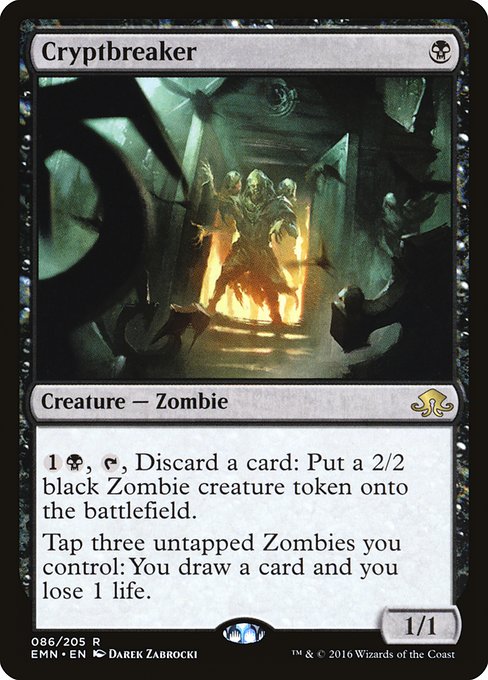
Cryptbreaker
Zombie development and cards
A flexible early support card, provided the deck can supply untapped Zombies and spare resources for its distinct abilities.
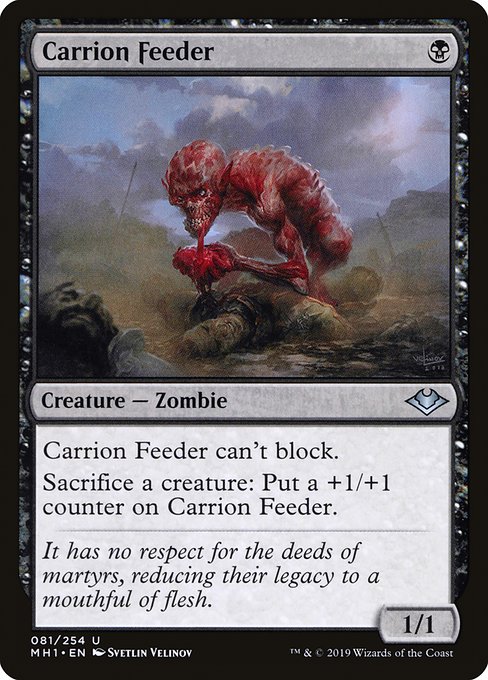
Carrion Feeder
A controllable sacrifice outlet
Turns creatures into counters on itself without a mana activation cost. It cannot block, so retain actual defenders.
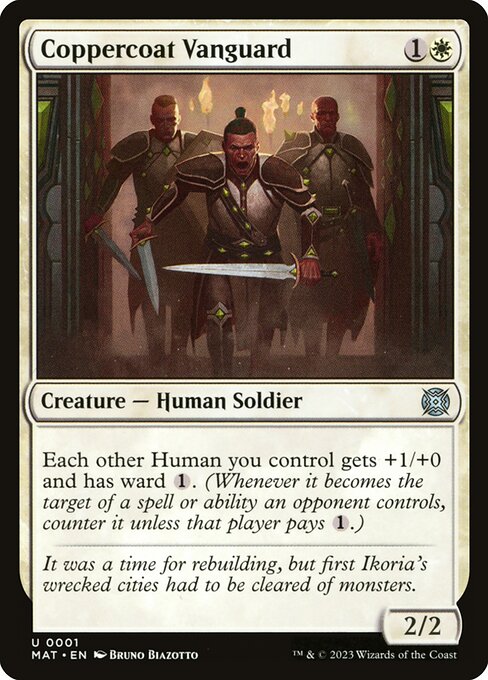
Coppercoat Vanguard
Cheaper Human support
Helps other Humans and can enable a later Éowyn combat trigger. It does not give itself the ward or power bonus.
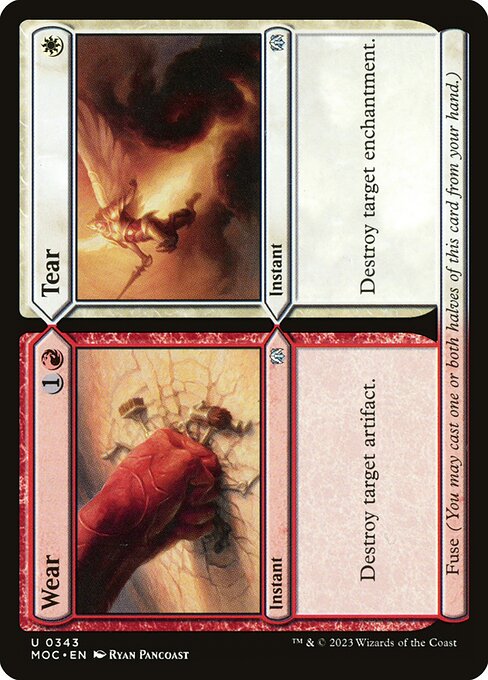
Wear // Tear
Modal permanent interaction
Choose the relevant half, or fuse both from your hand when you can pay both costs and have suitable targets.

Negate
Efficient noncreature countermagic
Useful when the threat is a noncreature spell. It deliberately gives up the broader coverage of Access Denied.

Thirst for Knowledge
Earlier hand selection
Works without combat damage but asks you to discard. Recovery options and available crew bodies affect the comparison.
Check the cart, then test the named change
Before checkout, total the actual copies you selected. Confirm the card name, printing, condition, language, quantity, currency, and delivery cost. If the subtotal has risen enough that the full package exceeds $25, remove a lower-priority change or keep the stock card. Do not replace a functional card with an unsuitable cheap substitute solely to preserve the appearance of buying the entire list.
Use the deck price calculator for a broader list comparison and the budget alternatives tool when a specific candidate becomes expensive. These are aids to choosing cards, while the seller’s actual cart determines what you pay. Keep the initial list and record each cut. Create a free account to save the version, then use the same mulligan rules and intended table speed when testing it.
After games, ask a narrow question: did Cryptbreaker provide a usable early decision, did the cheaper Human help an Éowyn turn, or did holding Negate change the turn you could develop? Also record the function you missed from the cut. A modest package succeeds when it solves the intended problem at a cost you can afford. There is no requirement to turn the unused balance into more cards immediately.
Build your deck
Put these choices into a Commander list. Create a free account to save your deck and keep tuning it with Deckcipher.
FAQ
Are these complete Commander decks for $25?
No. These are upgrade packages for precons you already own. The examples do not include the cost of buying the base product. Each package is an alternative for a different deck, with its own verified cuts and additions.
Do the subtotals include shipping and tax?
No. The displayed amounts are dated USD reference card prices before checkout costs. Protect the overall $25 limit by checking the delivered cart and leaving room for those costs. A different currency or printing can produce a different total.
Must I buy every card in a package?
No. Start with the function the deck is missing. You may need an outlet, an answer, or one better land more than the full set of changes. Keep a useful stock card when its replacement does not solve a real problem for your games.
Why are some packages far below $25?
The budget is a ceiling rather than a requirement to spend. Several useful commons and uncommons have small reference prices, and a narrow fix may need only a few cards. Delivery can still dominate a tiny order, so compare local availability or an existing purchase.
Can these cheap upgrades change the bracket?
Yes. Price does not establish bracket fit. Assess the complete revised list, including interactions with stock cards, speed, consistency, and intended finish. In particular, inspect recursive creatures beside free-casting effects and sacrifice outlets.
How do I avoid buying a duplicate stock card?
Compare the exact product list with your current deck before ordering. Alternate artwork normally does not create a different card name for singleton construction. Replace a missing physical card if needed, but do not count a second ordinary copy as an additional legal upgrade.
What if a reference price is no longer available?
Use the actual delivered price in your decision. Keep the stock card, choose a suitable alternative, or postpone the change when the available copy exceeds your limit. The dated examples explain the package rather than guaranteeing a seller’s future inventory.
What is the first thing to test after upgrading?
Test whether the changed cards are castable on the turns they are meant to help, then play games to see whether the tradeoff is worthwhile. Track the role the cut removed as carefully as the benefit of the new card. A small sample diagnoses problems without proving a new win rate.