
Quick answer
Build red-green-white-blue Commander decks around the resource pattern their commanders reward. Kynaios and Tiro share development, Omnath sequences landfall, and Aragorn rewards colored casts. Green fixing, independent card access, white removal, blue protection, and a deliberate finish connect those plans. Four colors offer options, but the useful staples are the ones that support the same turn.
Choose a commander plan before a four-color package
A no-black four-color deck has white, blue, red, and green available. Those colors can support lands, creatures, spells, protection, and resource sharing. They do not all want the same opening hand. A collection of individually strong cards can spend several turns fixing mana and still have no productive action when its commander arrives.
Kynaios and Tiro of Meletis can support a controlled flow of extra resources. Omnath, Locus of Creation rewards landfall sequencing. Aragorn, the Uniter connects colored casts to several distinct effects. Bruse Tarl, Boorish Herder with Thrasios, Triton Hero offers a partner structure that combines combat support with a paid mana outlet. Pick the pattern the deck can reliably produce before deciding which shared staples deserve slots.
Write one ordinary turn for that commander. Include the first spell, land play, colored payments, and the mana left for interaction. Then write a turn without the commander. If that second turn has no useful draw or development, some support slots should become independent resources. A four-color identity widens the menu, while a coherent engine tells you what to order.
Different engines within red-green-white-blue
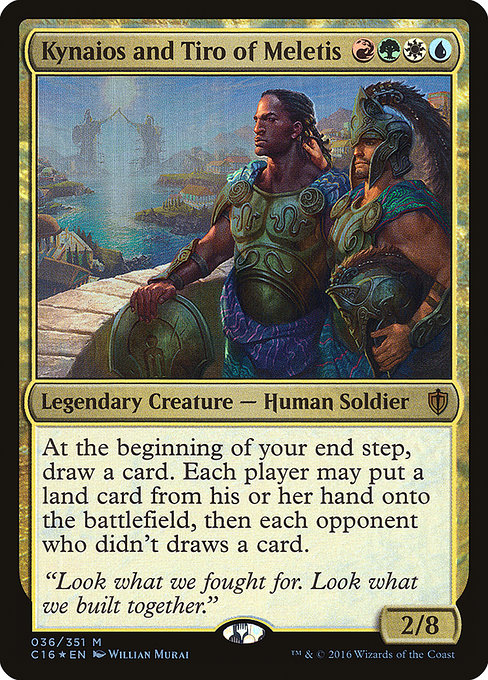
Kynaios and Tiro of Meletis
Shared end-step resources
At your end step you draw, each player may put a land from hand onto the battlefield, and each opponent who did not do so draws. Plan around the actual choice each player receives.
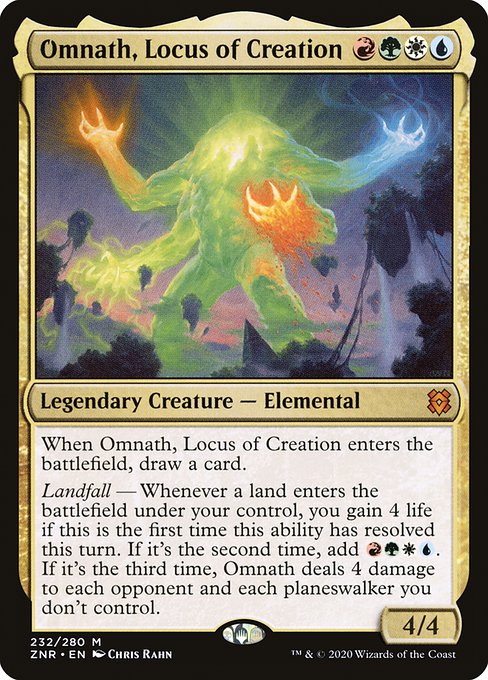
Omnath, Locus of Creation
Sequenced landfall
Entry draws a card. Landfall resolutions in a turn have different first, second, and third rewards, so a landfall package needs sequencing as well as land access.

Aragorn, the Uniter
Colored cast engine
White, blue, red, and green casts have different triggers. A multicolored spell can trigger several, but its colors and its actual casting matter.
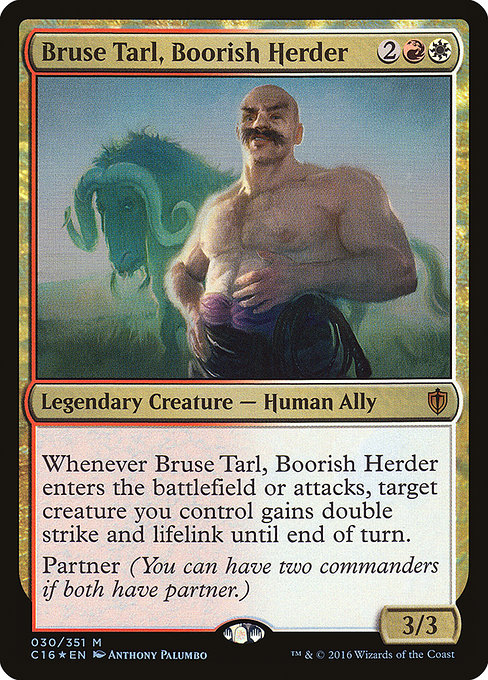
Bruse Tarl, Boorish Herder
Combat support partner
Entry or attacking can give a targeted creature you control double strike and lifelink for the turn. It still needs a useful creature and a route through blockers.
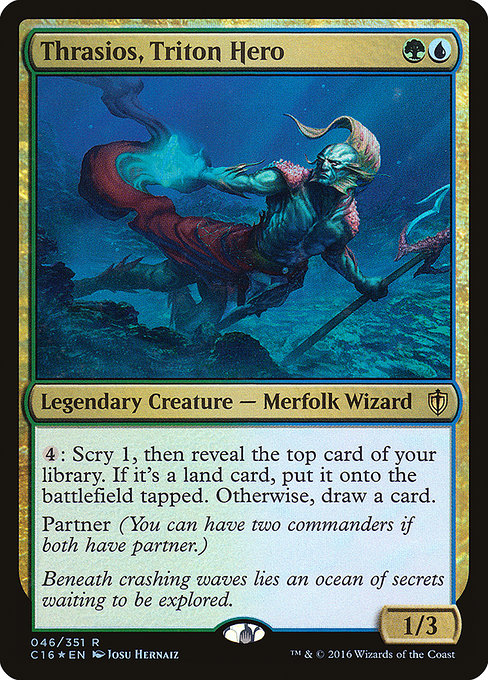
Thrasios, Triton Hero
Paid resource outlet
Its four-mana activation scries, then reveals the top card. A land goes onto the battlefield tapped; a nonland is drawn. The payment belongs in your development plan.
Make early green fixing serve later colored costs
Start by identifying the first green payment and the commander's remaining colors. Nature's Lore and Three Visits can find Forest cards, including suitable typed duals. Their instructions do not force the land tapped, but the land's own entry conditions still matter. Farseek finds a Plains, Island, Swamp, or Mountain card and puts it tapped. A dual with one of those types can be useful even if it also has Forest.
Birds of Paradise provides any color through a creature. Sakura-Tribe Elder can become a tapped basic land and may contribute to creature or sacrifice interactions before doing so. These options expose mana in different ways. A table that repeatedly removes creatures can make land-based development attractive, while a creature engine can find extra value in a body. Neither category replaces a working land count.
Use Mana Base Calculator to inspect the actual colored sequence. A land that eventually produces any color may still enter tapped on the turn interaction matters. A colorless accelerator can pay generic costs without paying a commander that needs four distinct colors. Keep utility lands, early green sources, and later double-pip support spells visible as different constraints.
Fixing and reliable shared support

Nature's Lore
Typed land development
Finds a Forest card. Check the chosen land's own entry conditions and whether its types supply the later missing colors.

Farseek
Typed color access
Finds a Plains, Island, Swamp, or Mountain card tapped. A basic Forest alone is not a legal target for its instruction.

Birds of Paradise
Flexible creature mana
Produces a mana of any color when it can tap. Creature vulnerability and the usual tap restriction affect the first useful turn.

Sakura-Tribe Elder
Basic land development
Sacrifices to find a basic tapped. A deck can value its body separately from the later land.

Arcane Signet
Commander-identity fixing
Can supply a color in your commander identity. Two partner commanders contribute to that identity together.

Beast Within
Broad permanent answer
Destroys a targeted permanent and gives its controller a Beast. The replacement and indestructible both affect the outcome.

Swords to Plowshares
Efficient creature exile
Exiles a targeted creature and gives its controller life equal to its power. It is not an answer to every permanent type.
Understand what Kynaios and Tiro give opponents
Kynaios and Tiro trigger at the beginning of your end step. You draw a card, then each player may put a land card from hand onto the battlefield. Each opponent who did not put a land this way draws a card. Your first draw is assured by that instruction; declining your optional land does not give you the additional draw reserved for opponents.
That structure makes the quality of opponents' choices important. A player with a land can develop it. A player without one can receive another card. The effect is not a promise of cooperation, and it does not guarantee everyone receives the same resource. Consider who can use extra mana immediately, who is rebuilding, and who already has a threatening engine before adding more symmetrical resource cards.
Support should explain why your deck benefits from the exchange. More land access, useful end-step mana, resilient development, or a finish that converts accumulated resources can provide that explanation. Another group draw effect is less attractive when the deck is already letting opponents see plenty of cards. You still need answers that can stop the strongest use of those resources.
Sequence Omnath by landfall resolutions
Omnath, Locus of Creation draws when it enters. Its landfall trigger gives four life if that ability is resolving for the first time in the turn, adds red-green-white-blue mana on the second resolution, and deals four damage to each opponent and each planeswalker you do not control on the third. The text tracks resolutions in the turn, so do not simplify it into every land producing mana.
A land played normally and another land entering through a search effect can reach the second reward. The mana must still be used within the game's normal mana rules unless another effect changes them. Plan the spell or activation it will pay for before spending the search effect. A hand that supplies extra landfall but no productive mana use may gain less than its card count suggests.
The sequence resets each turn, including opponents' turns. A land entering during another player's turn can begin a new sequence, but the first reward is life rather than the second reward's mana. More than three resolutions do not repeat the listed rewards automatically. Support cards should create useful events and resources, not rely on a mistaken repeating cycle.
Give Aragorn spells worth casting without the triggers
Aragorn, the Uniter creates a Human Soldier from a white cast, scries two from a blue cast, deals three damage to a targeted opponent from a red cast, and gives a targeted creature plus four power and toughness for the turn from a green cast. The red trigger targets one opponent. A multicolored spell can produce more than one of these triggers according to its colors.
This rewards careful overlap. A useful white-blue answer can support both interaction and two triggers, while a poor spell does not become efficient merely because it has several colors. Colored costs can also compete with holding protection. Compare the actual function, timing, and payment before replacing a simple answer with a demanding gold card.
Casting matters. A copy placed directly on the stack is not normally cast, and putting a creature onto the battlefield is different from casting that creature spell. Color identity also differs from a spell's actual colors. Evaluate the cast event Aragorn sees, then decide whether the resulting token, scry, damage, or pump helps the current board. A large trigger count is not a substitute for a finish.
Choose draw that survives the commander being answered
A commander can supply cards and still need backup. Guardian Project can reward qualifying nontoken creature entries. Beast Whisperer rewards creature casts instead. A list that puts creatures straight onto the battlefield may support the first engine while missing the second. A spell-oriented Aragorn deck can miss both if the actual creature count is low.
Toski, Bearer of Secrets draws from your creatures dealing combat damage to players. It needs connections, not merely a full battlefield. Kynaios and Tiro decks that defend without attacking may prefer resources that do not ask for combat. Bruse decks can use combat more naturally, but double strike still does not provide evasion. Count the conditions that turn the engine on.
Keep some access available after a wipe or at a modest board size. A draw engine that arrives after the battlefield has been cleared should have a realistic next action. Large conditional enchantments and several finishers can leave a hand unable to rebuild. Use Commander Deck Analyzer to inspect role coverage, then check the conditions manually rather than treating every draw label as equivalent.
Card access and defensive boundaries
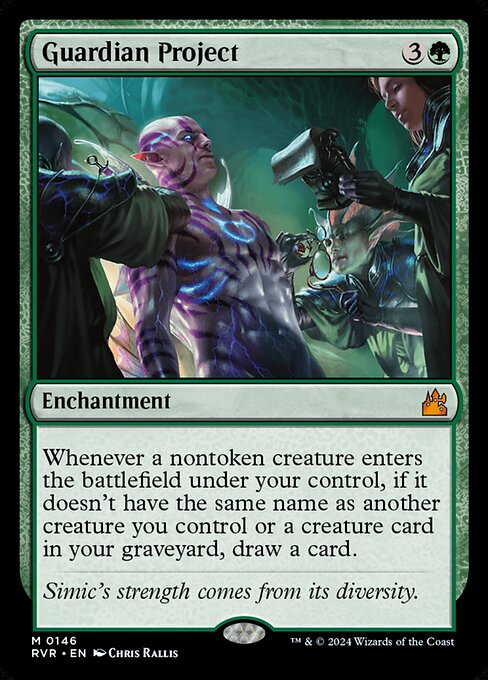
Guardian Project
Creature entry draw
Checks qualifying nontoken creature entries and same-name conditions. It does not simply draw for casting any creature.
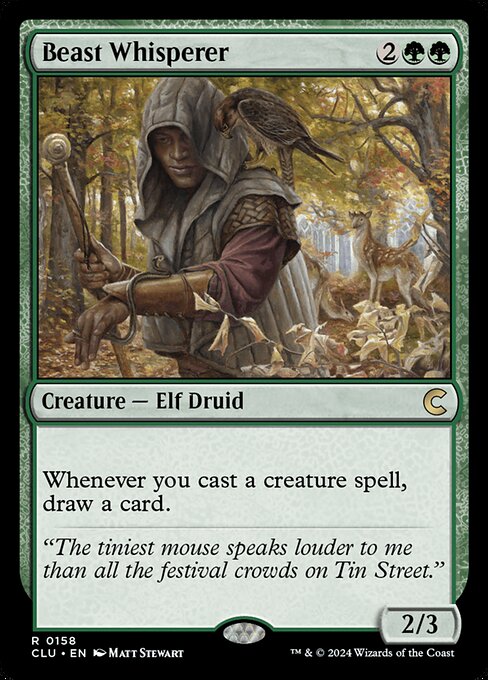
Beast Whisperer
Creature cast draw
Rewards casting creature spells. A token entering or a creature returned directly does not supply that cast.
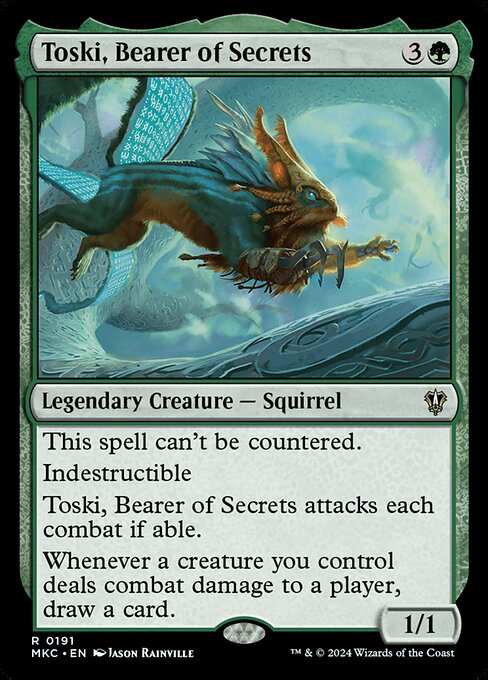
Toski, Bearer of Secrets
Combat card flow
Draws from your creatures dealing combat damage to players. It cannot replenish an empty army by itself.

Propaganda
Attack tax
Taxes creatures attacking you. It does not tax attacks aimed at your planeswalkers or stop noncombat damage.

Ghostly Prison
White attack tax
Asks for mana per creature attacking you. An opponent able to pay can still attack, so it is a deterrent with a payment condition.
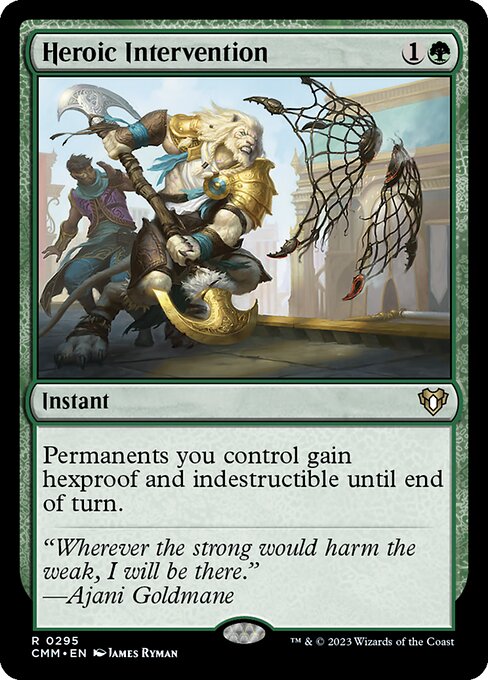
Heroic Intervention
Permanent protection
Gives your permanents hexproof and indestructible for the turn. It does not answer every exile, sacrifice, or toughness-reduction effect.
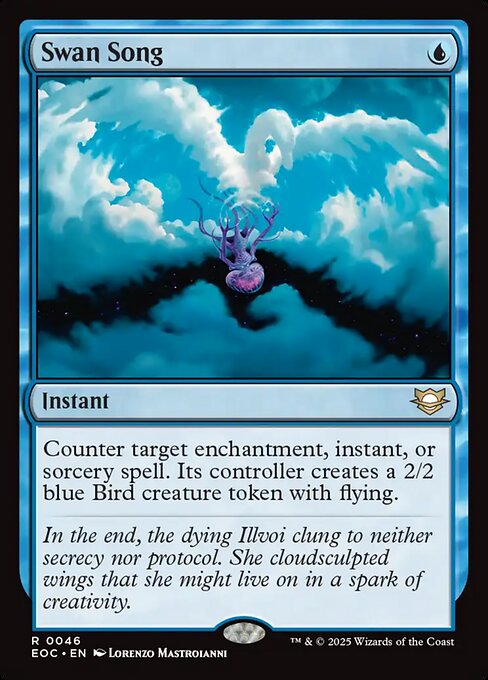
Swan Song
Narrow stack interaction
Counters an enchantment, instant, or sorcery spell and gives its controller a Bird. An enchantment creature or enchantment artifact can qualify; activated abilities and spells lacking all three listed types cannot.
Combine permanent answers with relevant stack interaction
Swords to Plowshares and Path to Exile can address creatures through exile with different compensation. Beast Within and Generous Gift can destroy a broader range of permanents while leaving a creature token. Green and white offer artifact and enchantment removal, and red can contribute artifact answers or damage. Choose for the threats you need to answer rather than assigning each color a compulsory slot.
Blue can protect a key sequence or stop a spell that permanent removal cannot repair afterward. Swan Song has a specific set of spell types. Arcane Denial has a different cost and delayed card compensation. Neither automatically covers an activated ability. Review the interaction window and target requirements before assuming several cheap-looking cards form a complete answer package.
The four-color mana base must support those answers at useful times. Casting a commander and leaving an arbitrary untapped land does not necessarily leave the right protection available. Test a turn where the commander is removed in response to your next spell. The useful package is the one you can cast with that real sequence, not the one with the lowest combined mana values on paper.
Use pillowfort cards as a payment problem
Propaganda and Ghostly Prison can discourage wide attacks by charging mana for each creature attacking you. They do not prevent an opponent from paying. They also do not protect a planeswalker attacked directly, remove an attacker already on the battlefield, or stop a noncombat win. A defensive deck still needs actual interaction and a way to end the game.
These enchantments can fit a resource-sharing deck when the aim is to buy turns for a specific engine. Their value changes if you are also supplying opponents extra mana. More development can make the tax easier to pay. Compare the next defensive enchantment with an answer to the permanent making those attackers dangerous, or with card access that finds that answer.
Avoid counting all defensive effects as interchangeable protection. A tax, a fog, a counterspell, and indestructible solve different situations. If the deck keeps surviving combat and losing to a noncombat engine, another combat deterrent is unlikely to solve the problem. Name the event that ends the game, then choose a card capable of affecting that event.
Make upgrades and cuts match the selected engine
| Observed problem | Useful change | Cut or reconsider |
|---|---|---|
| Commander colors arrive late | Improve typed-land targets and early fixing | A colorless utility land with infrequent use |
| Kynaios resources help opponents more | Add independent interaction and a clear conversion plan | Another symmetrical draw effect without a benefit to your sequence |
| Omnath reaches extra landfall but stalls | Keep a productive use for second-resolution mana | A landfall payoff requiring a board you rarely make |
| Aragorn hand is too demanding | Favor useful spells with manageable colored costs | A weak multicolor card included only for triggers |
| Partner mana accumulates unused | Reserve activation timing and needed colors | An expensive support card that competes with every activation |
| Defense buys time without a finish | Connect resources to a defined attack or other legal finish | A redundant attack tax in an already defensive list |
Upgrade the failed link first. An additional high-impact payoff feels attractive, but cannot fix a hand without the required colors or a board without a useful attacker. Replacing one costly support spell with a flexible answer may create more functional turns. The right cut is often a card whose condition overlaps the engine's weakness rather than a card that is weak in every possible deck.
Keep finishes compatible with the way you develop. A creature pump effect needs enough creatures and an actual attack. A paid resource engine needs mana remaining after development. A landfall plan needs access to the required land entries. Describe the board and payments that finish requires, then retain enough interaction to reach it without making every earlier draw a narrow setup piece.
Frequently asked questions about no-black four-color staples
Build your deck
Put these choices into a Commander list. Create a free account to save your deck and keep tuning it with Deckcipher.
FAQ
Does Kynaios and Tiro always draw everyone two cards?
No. You draw one from the end-step instruction, each player may put a land from hand onto the battlefield, and each opponent who did not put a land this way draws. The extra opponent draw is conditional. Your own decision to decline a land does not grant that additional opponent-only draw.
Does every Omnath landfall trigger make mana?
No. Its landfall resolutions in each turn have separate first, second, and third rewards. The second produces the listed four colored mana. Later resolutions do not automatically repeat the sequence. Track the resolutions and the turn rather than counting every entering land as the same resource.
Does Aragorn damage every opponent from a red spell?
Its red-cast trigger deals three damage to a targeted opponent. That is one target, not every opponent. A multicolored spell may also trigger its other relevant color abilities. Check the actual spell colors and cast event before assigning the full result.
Do Propaganda and Ghostly Prison defend planeswalkers?
Their taxes apply to creatures attacking you. A creature attacking your planeswalker is not attacking you, so these instructions do not impose that payment for the planeswalker attack. Keep appropriate board interaction if protecting planeswalkers is part of the plan.
Should every four-color deck play the same draw engines?
No. Creature casts, qualifying entries, combat damage, and paid activations need different support. Choose engines that work with the events your deck actually produces. Preserve some card access that can help when the commander is removed or the main board has been cleared.
What should I fix before adding another finisher?
Check early colored mana, independent card access, relevant interaction, and the resources the finish assumes. A second payoff can remain unused for the same reason as the first. Fix that missing connection, then choose a finish suited to the commander's normal board.
Build a resource plan with a clear destination
Build your deck around the turn your no-black commander actually rewards. Create a free account to save the list and revisit it with the connected tools. Record which cards develop mana, supply cards, stop a threat, or finish the game. Then check that the four-color package turns shared resources and conditional triggers into actions you can meaningfully use.