
Quick answer
Five-color Commander staples should make a specific plan easier to cast, protect, and finish. Start with early colored access, useful card flow, and relevant interaction. Then choose support for legendary spells, Dragons, exact two-color cards, paid abilities, or another defined engine. Access to every color does not make every powerful card a useful addition to the same deck.
Choose what five colors let your commander do
A five-color Commander deck can use white, blue, black, red, and green cards within the format's other deckbuilding rules. That access creates options, but also more ways to make an opening hand awkward. Several excellent cards with unrelated requirements can produce a deck that develops slowly and depends on one expensive commander to connect the pieces.
Kenrith, the Returned King offers several paid abilities. Sisay, Weatherlight Captain searches legendary permanents. Jodah, the Unifier rewards legendary spells cast from hand. The Ur-Dragon supports Dragon spells and attacks. Niv-Mizzet Reborn looks for cards of exact color pairs. These commanders share an identity, not a construction template. The best support depends on which event and resource the deck is built to repeat.
Choose that engine before choosing a complete set of staples from every color. A useful test is whether a proposed card contributes to development, access, interaction, the engine, or a finish in the same ordinary game. If it needs a separate package to function, those extra slots and payments belong in its cost. A broad identity works best when the actual list has a clear center.
Five-color commanders with different construction needs

Kenrith, the Returned King
Paid resource toolbox
Its white casting cost differs from its five-color identity. Its abilities require additional mana and have distinct recipients and effects.
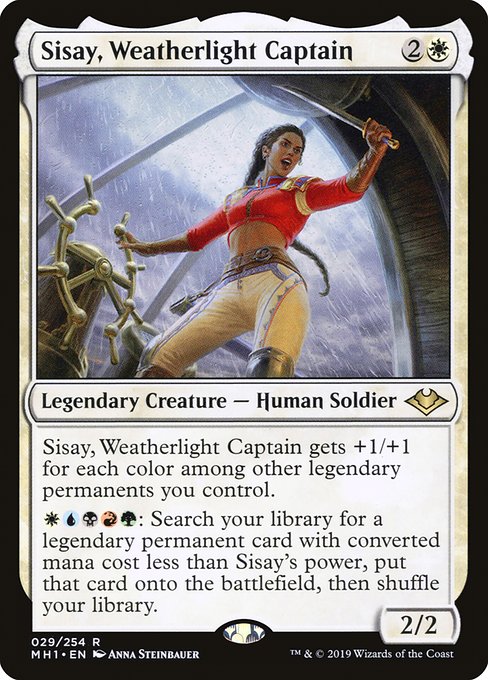
Sisay, Weatherlight Captain
Legendary permanent search
Its five-color activation searches a legendary permanent with mana value less than Sisay's power. The card enters rather than being cast.
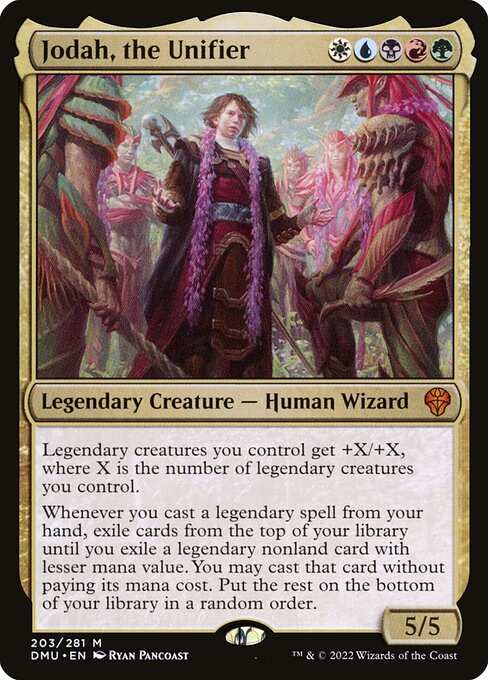
Jodah, the Unifier
Legendary cast engine
Rewards legendary spells cast from hand with a chance to cast a legendary nonland of lesser mana value. The original cast condition matters.
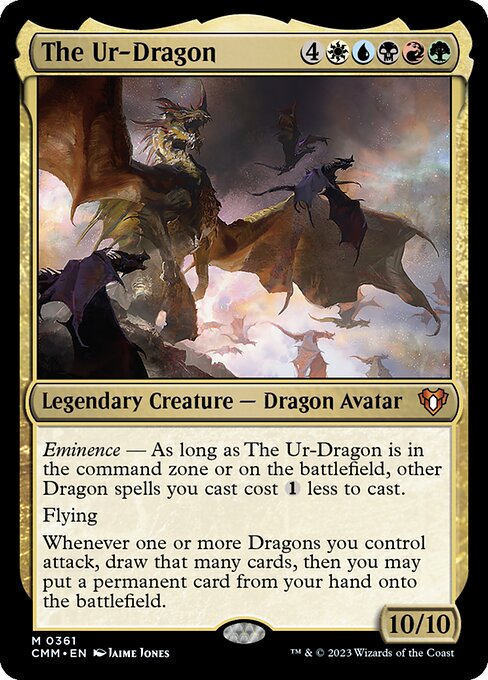
The Ur-Dragon
Dragon development and attack reward
Eminence reduces other Dragon spells by one generic mana from the command zone or battlefield. Its separate attack trigger needs it on the battlefield.
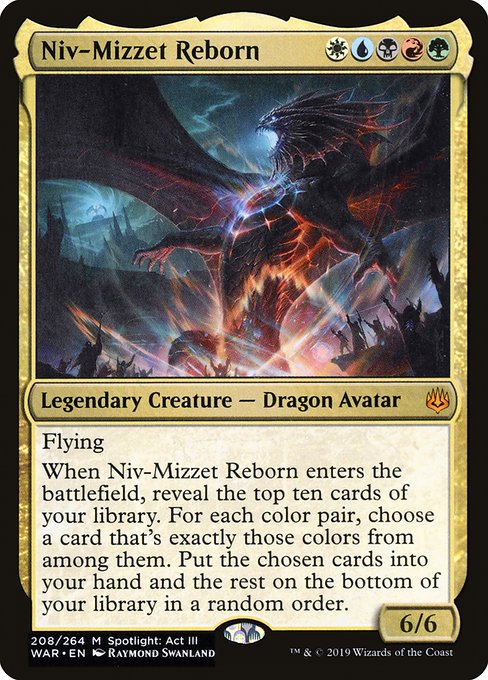
Niv-Mizzet Reborn
Exact color-pair selection
Its entry reveal can choose cards exactly matching each two-color pair. Monocolored and three-color cards do not meet that instruction.
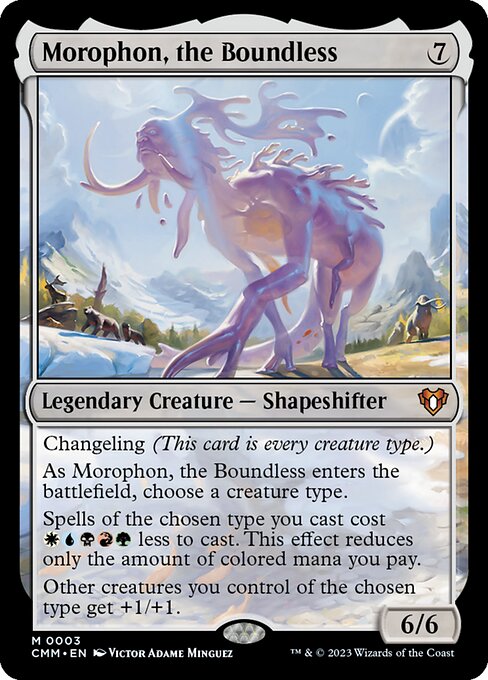
Morophon, the Boundless
Creature-type colored discount
The chosen type's spells receive a reduction of one of each colored mana, limited to colored payments. Generic costs are not reduced by that instruction.
Build the mana sequence before the expensive spells
Five colors do not require the same number of sources for each one. A base-green list may need green early to find lands, then other colors for its commander and support. Kenrith can be cast with white and generic mana, while its later abilities need other payments. Jodah, the Unifier needs one of every color to cast. Those sequences deserve different mana plans.
Nature's Lore and Three Visits can find a Forest card, including appropriate typed duals. Farseek finds a Plains, Island, Swamp, or Mountain card tapped. The targets must actually be present in the deck. A dual that produces two colors but lacks the needed land type cannot be found just because it looks like useful fixing. Also inspect the land's own tapped-entry conditions.
Use Mana Base Calculator to review early payments and later repeated pips. Command Tower and Arcane Signet can provide colors from the commander identity, while other sources have different restrictions. Do not count a colorless accelerator as a source of all five colors. It may help generic payments and still leave a five-pip commander uncastable.
Tapped lands can provide broad access at the cost of timing. A slower table and a higher curve may tolerate that exchange better than a list trying to deploy early threats and hold interaction. Keep the tradeoff concrete: which land enters on which turn, and what spell is delayed? A mana base can be financially modest without ignoring the need for a functional first action.
Fixing options and what they actually supply

Command Tower
Identity-based land
In a five-color commander identity it can produce any of the five colors. It does not produce several mana from one tap.

Arcane Signet
Two-mana color access
Produces one mana of a color in the commander identity. Its artifact vulnerability differs from developed lands.

Birds of Paradise
Early creature fixing
Produces one mana of any color when able to tap. The usual tap restriction and creature removal affect its first useful turn.

Nature's Lore
Typed land development
Finds a Forest card. Choose actual targets that connect early green to later missing colors.

Farseek
Complementary typed access
Finds a listed Plains, Island, Swamp, or Mountain card tapped. A basic Forest by itself does not meet that instruction.

Chromatic Lantern
Land flexibility and one mana
Gives your lands a tap ability for one mana of any color and can itself tap for one. It does not untap lands or increase every land's output.

Cultivate
Basic land development and access
Finds up to two basics, putting one tapped onto the battlefield and the other into hand. It needs basics remaining in the library.
Give Kenrith useful payments rather than every possible theme
Kenrith has five activated abilities with different costs. Red gives all creatures trample and haste for the turn, including opponents' creatures. Green puts a +1/+1 counter on a targeted creature. White gives a targeted player life. Blue lets a targeted player draw. Black returns a targeted creature card from a graveyard to the battlefield under its owner's control.
That last phrase matters. Returning an opponent's creature does not steal it for you. The blue ability also targets a player rather than automatically drawing for the controller. The broad set of recipients can support negotiation or a defined resource sequence, but the card does not promise that every activation benefits only your board. Plan the actual target and payment.
A deck can choose one main use and retain the others as flexibility. Mana left after development can become cards, or a creature plan can use the red activation for a timely attack. Adding counter, lifegain, reanimation, and political subthemes together can crowd out the mana and interaction those abilities require. Build the ordinary paid sequence before describing any repeatable finish, and write out every resource needed for a loop.
Make Sisay searches useful at the current power
Sisay's power increases for each color among other legendary permanents you control. The word other excludes Sisay from providing her own colors for that bonus. Count colors present among the relevant permanents, not the number of legendary cards. Several permanents sharing one color do not create several different colors for that calculation.
Her white-blue-black-red-green activation finds a legendary permanent card with mana value less than her power. Equality is not sufficient. A power increase can expand the available search range, while removal of a supporting permanent can change the range before resolution. Keep useful options at the power your deck normally supports rather than filling the library only with the largest possible destinations.
The searched permanent goes directly onto the battlefield. It is not cast, so a cast trigger is not supplied by this action. Entry abilities can matter instead. A legendary card also needs to be a permanent card for the search instruction. Keep those limits visible when comparing a generic legendary package with the specific search paths Sisay can actually use.
Support Jodah with legendary casts and manageable costs
Jodah, the Unifier increases the size of your legendary creatures according to the number of legendary creatures you control. Its other ability triggers when you cast a legendary spell from your hand, then looks for a legendary nonland card with lesser mana value to cast without paying its mana cost. A legendary creature returned directly to the battlefield does not supply that hand-cast event.
This ability resembles some other free-cast engines but has its own text. Treat the from-hand requirement, legendary nonland requirement, and lesser mana value as real constraints. A card with equal mana value is not a hit. Spells cast through the trigger are normally being cast from exile, so the original from-hand condition prevents simply assuming they restart the same trigger chain.
Choose legendary spells that are useful when drawn and cast normally. A large collection of expensive legends can leave the opening turns inactive. Cheaper legends that develop resources, supply cards, or answer threats help the deck reach Jodah with a follow-up available. The creature bonus also needs actual combat access and protection to become a finish rather than just large numbers on the board.
Distinguish Dragon discounts from Dragon attack rewards
The Ur-Dragon's eminence reduces other Dragon spells you cast by one generic mana while it is in the command zone or on the battlefield. The word other means the ability does not discount The Ur-Dragon itself. A generic reduction does not remove a colored pip. A Dragon with mostly colored payments may therefore receive less practical help than one with a large generic portion.
Its attack ability functions from the battlefield. When one or more Dragons you control attack, it draws that many cards, then may put a permanent card from your hand onto the battlefield. The choice is a permanent, not only a Dragon or creature. That reward needs The Ur-Dragon present and a legal attack; eminence in the command zone does not grant it remotely.
A Dragon deck still needs early mana and usable card access before its largest creature arrives. Discounts do not replace colored fixing, and several expensive Dragons can compete with protection in the same turn. Choose support that makes the first useful threat and the following attack possible. A second top-end reward may be a weaker upgrade than a reliable source or an affordable answer.
Respect Niv-Mizzet and Morophon's precise restrictions
Niv-Mizzet Reborn reveals ten cards on entry. For each color pair, it chooses a card exactly those colors from among the reveal and puts the chosen cards into hand. A card of three colors does not qualify for several pairs, and a monocolored card does not fill a pair. Card colors are the test here, which differs from a card's Commander color identity.
This gives exact two-color cards an additional role, but weak cards remain weak draws outside the reveal. Keep important fixing and interaction even when they do not qualify. A deck can improve its chance of useful selections without making every slot a demanding gold spell. The reveal also does not draw those selected cards, so draw-specific effects need a separate text check.
Morophon chooses a creature type as it enters and reduces spells of that type by one of each colored mana. The instruction only reduces colored payments. A spell with a large generic cost can still be expensive afterward, while multiple pips of one color can leave a remaining colored payment. Include the discount as written rather than assuming all creatures of the type become free.
Choose answers by timing and opportunity cost
Five colors offer broad interaction, but a deck rarely needs a showcase from every one. Swords to Plowshares can exile a creature cheaply with life compensation. Anguished Unmaking can exile a nonland permanent and causes you to lose three life on resolution. Beast Within can destroy a permanent while leaving a Beast. These options differ in scope, payments, and what they leave behind.
Swan Song covers enchantment, instant, and sorcery spells on the stack. It does not stop every creature or ability. Permanent removal used after resolution cannot always undo the effect that already occurred. Keep answers for the windows your opponents' threats create, and retain enough available mana to use them after the deck's own development.
A flexible three-color answer can be harder to hold up than a simple single-color answer. The full mana base may eventually cast both, but an early hand may not. Use Commander Deck Analyzer to inspect coverage and curve, then examine actual targeting and costs. Labels help organize choices; individual instructions determine which threat can be stopped.
Compact answers and independent resources

Swords to Plowshares
Creature exile
Efficiently addresses a targeted creature and grants life to its controller. Reserve other coverage for noncreature engines.

Anguished Unmaking
Nonland exile
Exiles a targeted nonland permanent, and you lose three life when the spell resolves. The life loss is not a casting-cost payment. It cannot exile a land.

Beast Within
Broad destruction
Can target a permanent, with a Beast for its controller. Destruction does not overcome indestructible by itself.
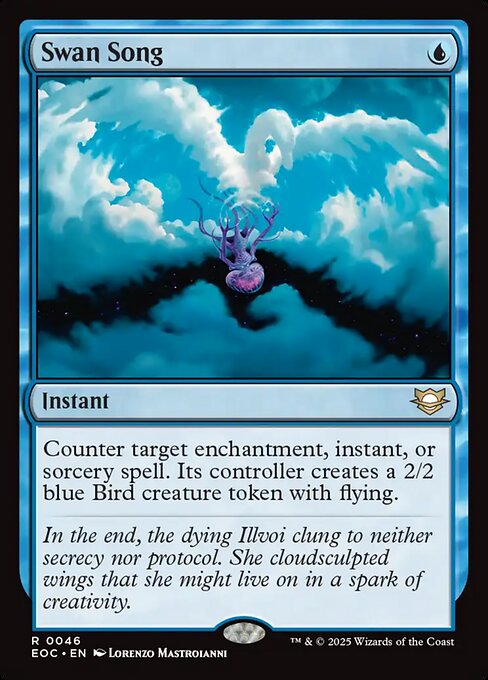
Swan Song
Specific spell answer
Counters its listed spell types and supplies a Bird. It is not blanket permission against every spell or ability.
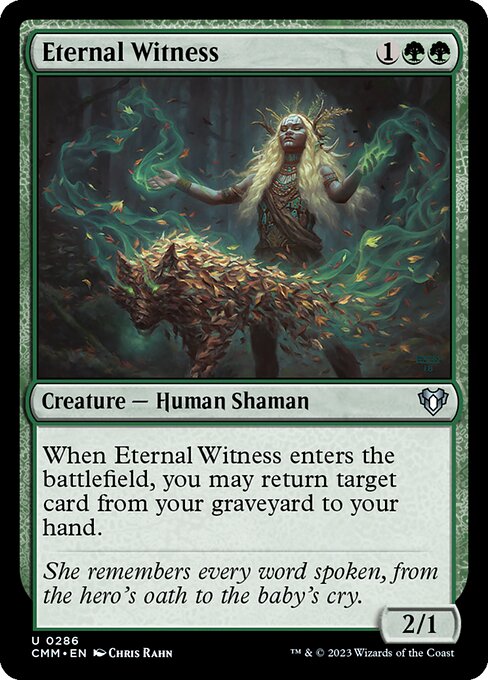
Eternal Witness
Graveyard recovery
Returns a targeted card to hand through an entry trigger. It cannot recover a card that is no longer in the graveyard when needed.
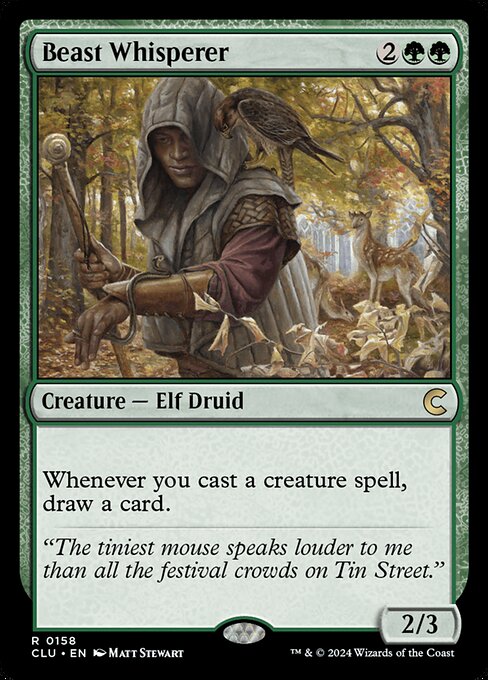
Beast Whisperer
Creature cast access
Rewards creature casts. It can miss creatures put directly onto the battlefield by a search, entry engine, or reanimation.
Upgrade the failed connection and keep a finish
| Commander plan | Keep visible | Common cut candidate |
|---|---|---|
| Kenrith activations | Mana remaining after development and intended targets | A subtheme without enough useful paid actions |
| Sisay legendary search | Current power and useful lower-mana-value permanents | A large legend that never fits the normal search range |
| Jodah hand casts | Affordable useful legends and a follow-up spell | An expensive legend included only for its potential hit |
| The Ur-Dragon | Early colors and a meaningful first attack | Another top-end Dragon before fixing the first turns |
| Niv-Mizzet Reborn | Useful exact-pair cards with independent roles | A poor gold card selected only to complete a pair |
| Morophon creature type | Remaining colored and generic payments | A discount assumption that ignores the real spell costs |
Review one failed turn and change the card most directly connected to it. If colors repeatedly arrive late, remove an infrequently useful colorless land or a slow source before adding another payoff. If the commander draws cards but the deck cannot use them, inspect curve and colored costs. If the list develops well and stalls, choose a finish suited to that actual board.
A finish can use large legendary creatures, Dragon attacks, a defined sequence of abilities, or another legal plan. State the resources and interaction it needs. Do not call a sequence unlimited without accounting for every payment and repeatable source. A clear route also makes cuts easier: a card that neither advances the route nor helps reach it is competing with resources the deck actually needs.
Frequently asked questions about five-color staples
Build your deck
Put these choices into a Commander list. Create a free account to save your deck and keep tuning it with Deckcipher.
FAQ
Must a five-color deck use equal amounts of each color?
No. Color identity grants access, while the spells and abilities chosen determine actual source needs. Early green fixing and a later five-color commander create a different sequence from a mostly white Kenrith list. Build the colors around the payments you expect to make.
Can Kenrith take an opponent's creature from a graveyard?
Its black activation returns the targeted creature card under its owner's control. Returning an opponent's card therefore does not make it yours. You can target appropriate cards in different graveyards, but the owner-control instruction determines where the creature returns.
Can Sisay find a card equal to her power?
No. The legendary permanent card must have mana value less than Sisay's power. The current power and the available legal permanent cards matter. A change to her supporting legendary board can alter which cards satisfy that instruction when it resolves.
Does Jodah trigger from legends put onto the battlefield?
Its ability needs a legendary spell cast from your hand. Putting a legend directly onto the battlefield does not cast it. A legendary spell cast from another zone also does not meet that from-hand requirement, even if another card legally permits that cast.
Does The Ur-Dragon draw while in the command zone?
Its eminence discount works from the command zone or battlefield, but the attack-triggered draw ability needs it on the battlefield. Do not combine those two locations into one general command-zone reward. The attack event and number of attacking Dragons determine the battlefield trigger.
Does Niv-Mizzet Reborn select three-color cards?
Its entry instruction selects a card exactly matching each color pair. Three-color and monocolored cards do not satisfy an exact two-color pair. Useful cards outside those pairs can still belong in the deck, but they are not selections for that particular ability.
Build five colors around one connected plan
Build your deck with a clear commander engine and the mana that supports its actual payments. Create a free account to save the list and revisit changes with the connected tools. Keep fixing, independent access, interaction, and a defined finish beside the exciting five-color cards. Broad access is most useful when each addition improves a turn the deck is prepared to take.