
The best budget replacement depends on what Smothering Tithe does in your deck
The best budget alternatives for smothering tithe in commander are not one-for-one copies. Use Monologue Tax if you want Treasure acceleration, Archaeomancer's Map if you need reliable land development, Keeper of the Accord if your table ramps ahead, and Mangara, the Diplomat if the card’s real job was keeping resources flowing.
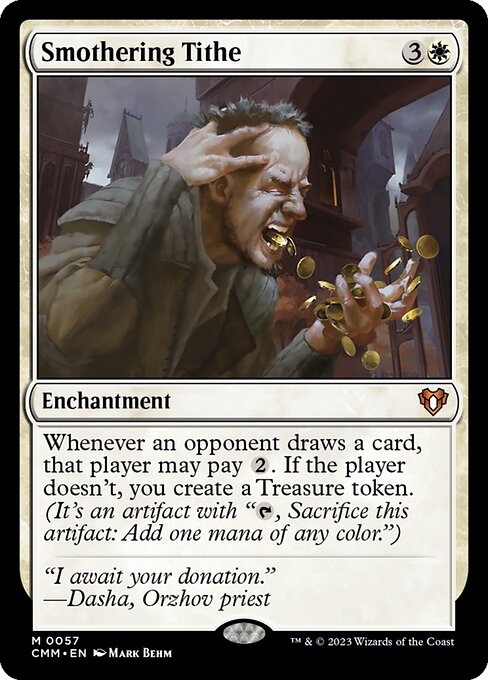
Smothering Tithe
Premium benchmark
The original comparison point: a four-mana white enchantment that turns opponents' extra cards into Treasure unless they pay. It is strongest in multiplayer games because three opponents create many more trigger windows than one.
What you are actually replacing
Smothering Tithe is expensive because it compresses several Commander jobs into one slot. It ramps, fixes colors through Treasure, punishes wheels and mass draw, scales with three opponents, and asks almost nothing else from your deck. That is a rare package, so the right budget replacement starts with identifying which job matters most in your list.
If your deck is a white control deck that wants to leave mana open, the replacement should create resources without needing attacks. If your deck is a slower midrange list that often falls behind on lands, a catch-up land engine is usually better than a weaker Treasure card. If your deck mainly wanted a permanent that makes opponents think twice about drawing extra cards, you may want a tax or draw-punisher effect rather than pure ramp.
A common mistake is replacing Smothering Tithe with the cheapest card that says Treasure. That can work, but it often misses why the original was in the list. The strongest budget swaps are role-accurate: they either make mana at a useful turn window, keep you from falling behind, or turn opponents' normal Commander actions into extra resources.
How to judge a replacement
Best direct budget alternatives
The closest budget options are cards that create mana or material when opponents take common game actions. They are not as explosive as Smothering Tithe, but they can still give white decks extra mana without forcing you to dedicate many slots to narrow ramp pieces.
Smothering Tithe budget swaps by closest role
These are the first cards to compare if you want the replacement to live in the same part of your curve and support a similar resource plan.
Smothering Tithe
Premium mana engine
Best when your deck can use Treasure immediately, expects long multiplayer games, or plays with wheel and draw-heavy tables.

Monologue Tax
Budget Treasure tax
The most direct cheaper substitute when you want Treasure from opponents casting spells. It usually makes fewer Treasures, but it comes down a turn earlier.

Archaeomancer's Map
Land catch-up engine
Better than a weaker Treasure card in white decks that miss land drops or want guaranteed mana development over several turns.
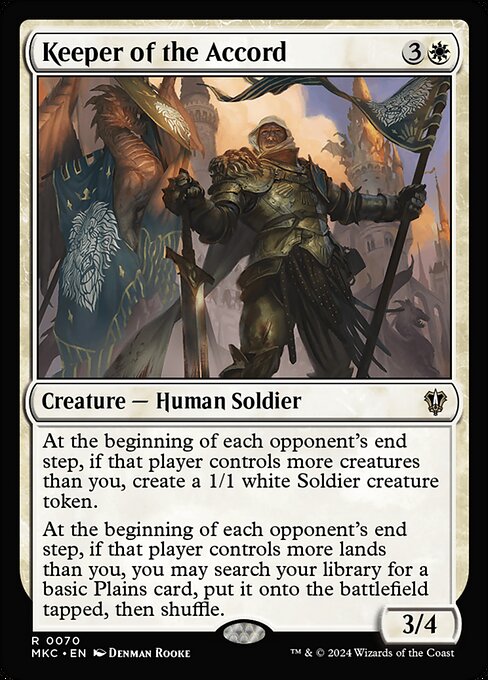
Keeper of the Accord
Catch-up ramp and board maker
Strong in metas where green decks and Treasure decks pull ahead on lands. The Soldier tokens matter in go-wide and sacrifice shells.

Mangara, the Diplomat
Card-flow replacement
Not ramp, but a strong substitute when the real problem is running out of gas while opponents cast multiple spells or attack you.
Monologue Tax is the easiest card to slot in if your deck simply needs a cheaper Treasure source. The tradeoff is trigger quality. It only cares about the second spell each opponent casts each turn, so it performs best against proactive tables with cheap ramp, cantrips, and value engines. In slower pods where players cast one large spell per turn, it can sit there doing very little.
Archaeomancer's Map is less flashy, but it solves a very real white Commander problem: being behind on lands. It is especially useful in decks that keep land-heavy opening hands, play a high commander mana value, or expect green opponents to ramp early. It does not explode after a wheel effect, but it turns more opening hands into keepable hands.
Keeper of the Accord is slower and more removable because it is a creature, yet it creates two kinds of catch-up value. The land mode helps when opponents are ahead on mana, and the token mode gives blockers or sacrifice material when opponents build wider boards. It is a better fit for midrange and token shells than for spell-heavy control lists.
Pick by deck need, not by card text
A good replacement should match the pressure point in your deck. If your opening hands often have enough lands but not enough acceleration, prioritize Treasure. If your deck regularly stumbles on land drops, prioritize land-based catch-up. If you lose because your hand empties after stabilizing, a draw engine is a cleaner swap than a small mana rock.
Which budget replacement should you choose?
| Your deck problem | Best budget direction | Why it works | Watch out for |
|---|---|---|---|
| You need bursts of colored mana | Monologue Tax | Treasure can pay for any color and helps double-spell after opponents start chaining spells. | Weak if your pod usually casts one spell per turn. |
| You fall behind on lands | Archaeomancer's Map | It improves land drops and rewards patience against faster mana development. | It does not help much if everyone develops at the same land pace. |
| Green decks outscale you | Keeper of the Accord | It catches up on lands while also making bodies against wider boards. | It dies to creature removal before generating value. |
| You run out of cards | Mangara, the Diplomat | It pressures opponents for overextending and helps you keep interaction available. | It does not ramp you into expensive spells. |
| Your table is creature-heavy | Trouble in Pairs | It can turn opponents' attacks, extra draws, and multiple spells into cards. | It costs more mana and is not a ramp piece. |
Additional role-players worth considering
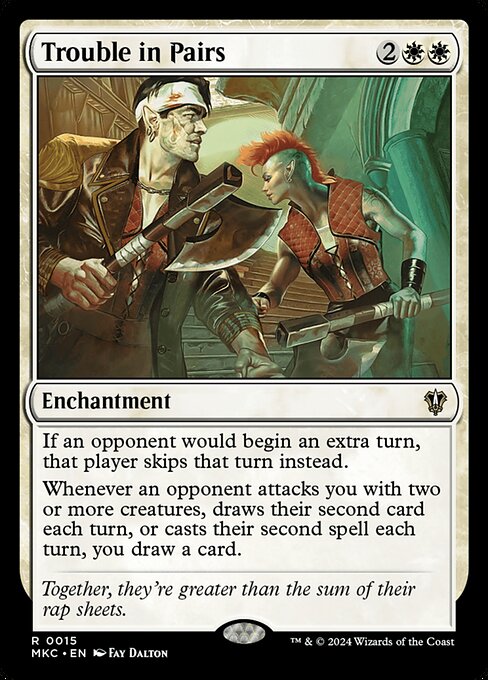
Trouble in Pairs
High-ceiling card advantage
Best when your pod attacks, draws extra cards, or casts multiple spells often. It replaces the value pressure of a premium enchantment better than it replaces the mana.
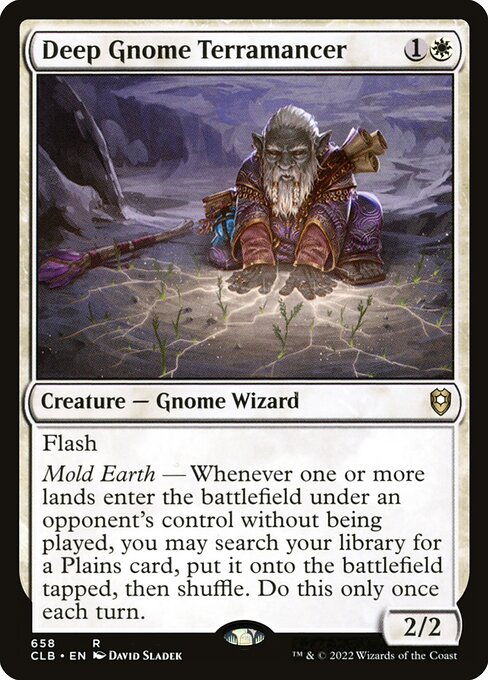
Deep Gnome Terramancer
Fetch and ramp punisher
Excellent against land-search effects and fetch-heavy tables. It is meta-dependent, but the flash timing makes it much harder to waste.

Claim Jumper
Early land catch-up
A strong budget body when opponents are likely to develop ahead of you. It is less explosive later, but very helpful in opening turns.
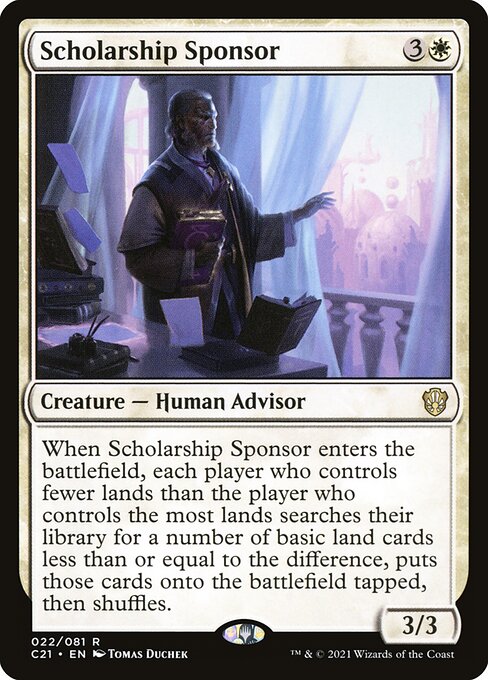
Scholarship Sponsor
Mass catch-up ramp
Works best when you expect to be behind on lands and can time it so you gain more than the table. It is poor when you are already ahead.
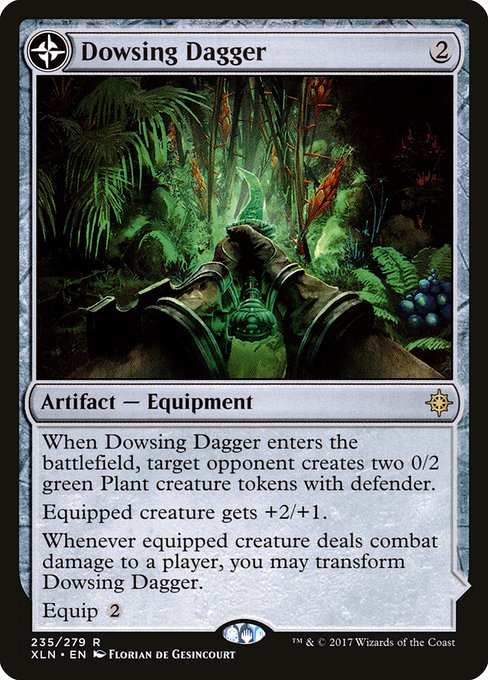
Dowsing Dagger
Combat-based burst ramp
Good in decks with evasive creatures that can reliably connect. The flipped land can create a large mana jump, but the setup cost is real.
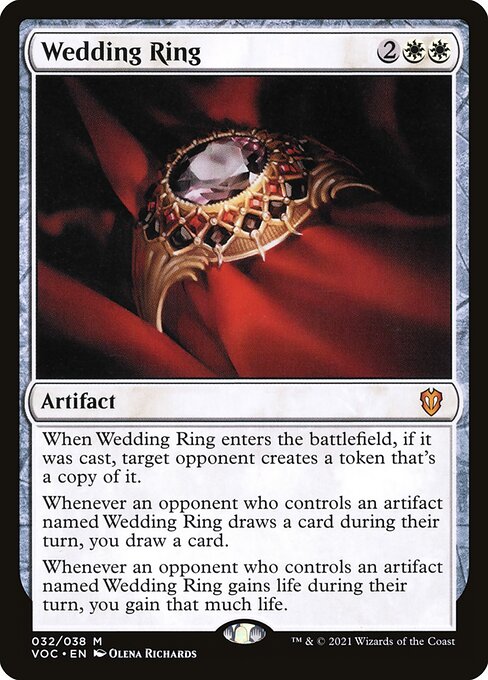
Wedding Ring
Political draw engine
Useful in slower pods where paired card draw will matter over several turns. It is not a mana replacement, but it can mimic the resource snowball.
When Monologue Tax is the right replacement
Monologue Tax is closest in feel because it turns opponents' activity into Treasure. It is strongest in mid-power Commander, where players frequently cast a ramp spell plus a value spell, or a cheap setup spell plus their commander. If you expect multiple opponents to double-spell by turn four or five, it can generate enough mana to matter.
The key tradeoff is that Monologue Tax rewards spell density, not card draw. That means it does not punish an opponent for drawing five cards unless those cards become extra spells. It also does not snowball as hard when opponents are willing or able to slow down. Treat it as a tempo bridge, not a guaranteed economy engine.
When land catch-up is better than Treasure
Many white decks do not need a weaker copy of Smothering Tithe. They need to make land drops through turn five. Archaeomancer's Map, Keeper of the Accord, Deep Gnome Terramancer, Claim Jumper, and Scholarship Sponsor all help in that space, but they ask different things from your table.
Archaeomancer's Map is the cleanest option for consistency because it provides immediate material and can keep working if opponents move ahead. Deep Gnome Terramancer is more explosive in the right meta, especially when opponents search for lands repeatedly, but it can be quiet against decks that ramp with artifacts or Treasures. Claim Jumper is better early than late, while Scholarship Sponsor is a timing card that can be excellent from behind and embarrassing from parity.
These land-based cards also change how you build the rest of the deck. If you add multiple catch-up effects, you should still maintain a healthy land count rather than cutting lands aggressively. Catch-up ramp is strongest when it helps you recover from normal Commander development, not when it is forced to fix a greedy mana base.
Check whether your deck needs ramp or price cuts first
Before buying replacements, run your list through Deckcipher tools to find expensive slots, ramp gaps, and mana-base issues.
When card draw is the better substitute
Sometimes the premium enchantment was not really in the list to cast huge spells. It was there because it let you keep pace while opponents advanced their boards. In that case, Mangara, the Diplomat, Trouble in Pairs, and Wedding Ring may be more useful budget replacements than another ramp card.
Mangara, the Diplomat is strongest when opponents attack you with multiple creatures or cast multiple spells while you are holding up interaction. It is also a creature, which means it can block, be recurred, and be removed. Trouble in Pairs has a bigger ceiling in busy multiplayer games, but the mana value matters. If your deck is already crowded at four mana, adding another four-mana value permanent can make your early turns clunky.
Wedding Ring is more political and slower. It can be good in a casual pod where the chosen opponent draws regularly and the table does not immediately remove value artifacts. It is a poor choice if your games are fast, combat-heavy, or light on patience. Do not choose it because it looks symmetrical and cute; choose it because your table gives it time.
How many replacements should you run?
You usually do not replace one premium staple with one budget card and call the job finished. Smothering Tithe is powerful because it can create a lot of resources from one slot. If you cut it from a deck that relied on that output, consider adding two cheaper cards that split the job: one mana piece and one card-flow piece.
For example, a white midrange deck might use Archaeomancer's Map for land development and Mangara, the Diplomat for staying stocked. A more proactive deck with evasive attackers might prefer Monologue Tax plus Dowsing Dagger because it can convert both table activity and combat into mana. A slower control shell may choose Keeper of the Accord and Trouble in Pairs because both reward opponents for moving ahead too quickly.
That split is also better for budget management. Instead of spending most of an upgrade budget on one expensive enchantment, you can cover multiple structural needs and then use the Deck Price Calculator to see whether the next upgrade should be ramp, lands, or interaction. If you want more staple swaps by role, the Commander Budget Alternatives page is the most relevant place to continue.
Bracket and power-level implications
Replacing a premium resource engine usually lowers a deck’s consistency more than its raw ceiling. That can be a good thing if your pod is trying to keep games in a lower or mid-power band. The important part is transparency: tell the table whether your deck still has explosive Treasure lines, or whether you moved toward slower land-based catch-up.
If your deck already has fast mana, tutors, and compact win conditions, a budget replacement will not automatically make it casual. On the other hand, if the deck is mostly battlecruiser creatures and fair removal, swapping into slower value engines may bring the experience closer to what the table expects. Use the Bracket Calculator and Pod Check when the question is not just price, but whether the deck will feel fair at the table.
My practical shortlist
- Start with Archaeomancer's Map if your deck is slower, land-hungry, or often behind green decks.
- Choose Monologue Tax if your table double-spells often and your deck can spend Treasure efficiently.
- Choose Keeper of the Accord if you want both catch-up ramp and bodies for blocking, sacrifice, or go-wide payoffs.
- Choose Mangara, the Diplomat if your real issue is card flow rather than mana production.
- Add Trouble in Pairs only when your curve can support another four-mana value engine and your pod triggers it often.
- Use Deep Gnome Terramancer as a meta call when opponents search for lands regularly.
If you want the closest feel, start with Monologue Tax. If you want the best general budget decision for many casual white decks, start with Archaeomancer's Map. If you want the best two-card replacement package, combine one catch-up ramp card with one draw engine rather than forcing a single card to imitate a premium staple.
Find the right budget swap for your list
Compare your deck’s expensive cards against cheaper Commander role-players, then check whether the final list still has enough mana.
FAQ
What is the closest budget alternative to Smothering Tithe in Commander?
Monologue Tax is the closest in role because it creates Treasure from opponents' spellcasting. It is not as explosive, but it fills the same general slot for decks that want a cheaper tax-based mana engine.
Is Archaeomancer's Map better than Monologue Tax?
Archaeomancer's Map is better when your deck needs land consistency or often falls behind on mana. Monologue Tax is better when your pod casts multiple spells per turn and you specifically need Treasure.
Can Mangara, the Diplomat replace Smothering Tithe?
Mangara, the Diplomat can replace the card-advantage role, not the ramp role. Use it when the expensive card was mainly helping you keep up with opponents, not when you needed large bursts of mana.
Should I run more than one budget replacement?
Often yes. Smothering Tithe covers several jobs at once, so a budget deck may need one mana card and one draw or catch-up card to replace its overall function.
Is Keeper of the Accord still good in Commander?
Keeper of the Accord is good in the right shell. It is strongest when opponents ramp ahead or build wider boards, and weaker in metas where it is removed before your end step.