
Quick answer
Azorius staples should connect white permanent answers with blue card access and stack interaction. Start with a reliable mana base, efficient removal, and draw that suits your commander. Dovin's Veto and Supreme Verdict are useful multicolor options, while Soulherder is a blink engine rather than a universal white-blue card.
Give white and blue different responsibilities
Azorius means white and blue. The combination can counter a spell before it resolves, exile a creature afterward, and rebuild a hand while leaving mana open. That coverage makes it easy to assemble a deck that answers everything but never develops a reason for the game to end. Choose the proactive plan before choosing the counterspell suite: blink, flying creatures, artifacts, tokens, or a deliberate control finish all ask for different support.
A blink deck can use creatures as its draw and removal package because it intends to repeat their entry abilities. A flying-creature deck may want cheaper noncreature answers so it can keep deploying evasive attackers. An artifact deck may value mana rocks and artifact recursion more than another general-purpose creature. The same colors provide the menu, but the commander determines the useful order.
Use the word staple to mean a card worth comparing for a recurring role. It does not mean the card belongs in every Azorius list. A deck that taps out for a commander on turn four has different protection needs from a deck that passes with mana open. A deck that wins in combat should preserve enough threats after adding answers. Be willing to cut an excellent spell when it competes with the reason you chose the commander.
Azorius candidates and their limits

Dovin's Veto
Stack interaction
Counters a noncreature spell and cannot itself be countered. It does not answer a creature spell or an activated ability.
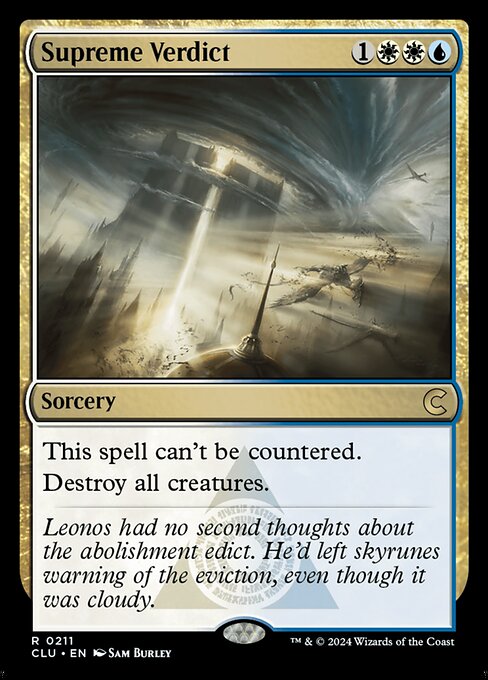
Supreme Verdict
Creature reset
Cannot be countered and destroys all creatures. Indestructible can prevent destruction, and a legal regeneration shield can replace it; protection from a color does not stop this untargeted destruction.
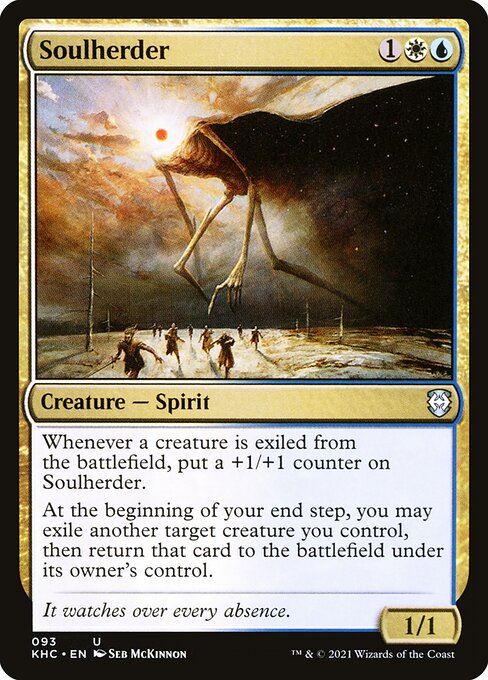
Soulherder
Blink engine
Its end-step trigger blinks another creature you control. It needs worthwhile creatures to reuse and does not protect the board at any moment you choose.
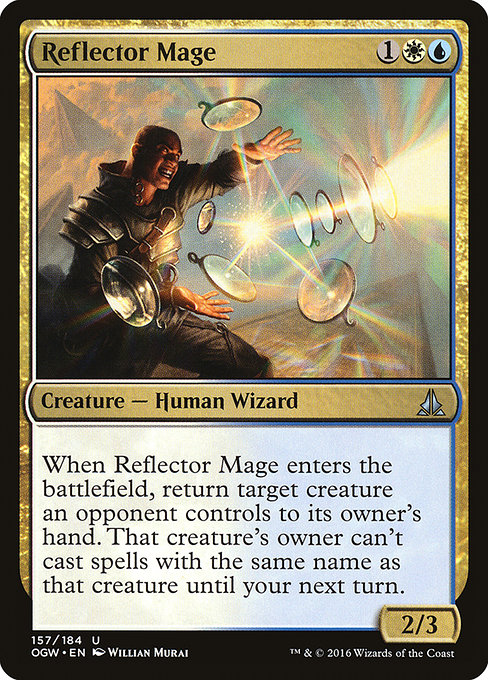
Reflector Mage
Creature tempo
Returns an opposing creature to its owner's hand and temporarily prevents that owner from casting spells with the same name. The restriction follows the owner, even if another player controlled the creature.

Talisman of Progress
Mana development
Can make colorless mana without damage or white or blue while dealing one damage to you. It can tap as soon as it resolves.

Azorius Signet
Mana fixing
Requires one mana to activate and makes white plus blue. Include the input cost when planning an early turn.
A counterspell package is not a removal package
Dovin's Veto is attractive because it can protect a key turn from many opposing instants and sorceries or stop a troublesome noncreature engine. Its uncounterable clause does not broaden its target range. A creature-based win attempt may require another answer, and an activated ability is not a spell at all. Counterspell is broader against spells but needs two blue mana. Arcane Denial is easier on colored requirements but can give the opposing player cards.
Do not choose every counter by efficiency in isolation. Ask which spells your deck must stop and when it needs to stop them. A creature-heavy commander may want a small protection package and more white removal. A control list might need broader counters because it has to stop both creatures and noncreatures. If several opponents can threaten important plays, holding one answer does not make the entire table safe.
White gives you strong options after something resolves. Swords to Plowshares exiles a creature for one white mana, while Generous Gift can destroy any permanent at a higher cost and supplies a token. These cards complement counters because they cover a permanent that slipped through while you were tapped out. Use the Interaction Checker to look for a list that has many counters but almost no way to handle an existing enchantment, artifact, or commander.
Draw on the turns your deck can afford
Blue offers immediate draw, repeated engines, and inexpensive selection. Fact or Fiction lets an opponent divide the top five cards into two piles and gives you one pile. It also places the other pile into the graveyard, which can matter for recursion. It does not draw five chosen cards. Its instant speed can suit a deck that wants to hold up an answer and spend unused mana before its next turn.
Rhystic Study depends on opponents casting spells and declining its payment. Mystic Remora focuses on noncreature spells and has cumulative upkeep. Both can be powerful, but their output is conditional and their timing differs. In a game dominated by creature casting, Remora may offer fewer opportunities. In a list that needs every early mana for its commander, continuing to pay upkeep can delay the main plan.
Creature-based draw can be better for blink or token builds. Mulldrifter draws on entering, and its evoke cost changes the sequence by creating a sacrifice trigger. Welcoming Vampire rewards qualifying small creatures but only once each turn. Tocasia's Welcome checks mana value instead of power. Choose an engine your deck reliably triggers, then retain enough immediate access to recover when opponents remove that engine or sweep the board.
Build a mana base for the actual colored costs
Azorius lacks green land-ramp staples, so many lists use artifacts for acceleration. Arcane Signet provides a commander-identity color. Talisman of Progress can immediately produce one mana, with one damage to you from its colored mode. Azorius Signet needs a separate mana input before producing two. A hand containing Signet and one untapped land cannot cast the Signet and then activate it without another resource just because the card eventually produces two mana.
Count early white and early blue requirements separately. Swords needs one white. Counterspell needs two blue. Supreme Verdict needs white, white, and blue in addition to one generic mana. A mana base that comfortably casts the commander may still fail to cast its support spells on the turn they matter. Colorless utility lands should earn their place against those requirements, particularly in a list with several double-pip cards.
Prairie Stream has basic land types and can be found by an appropriate search effect, but it checks for two or more basic lands to enter untapped. Adarkar Wastes can make either color at a life cost or colorless without that payment. Glacial Fortress checks for a Plains or Island. These lands solve different sequencing problems. Inspect actual opening lines with the Mana Base Calculator instead of dividing all land slots equally by color and assuming the work is done.
Blink staples need both targets and a finish
Soulherder can repeatedly exile and return another creature you control at your end step. It rewards useful entry abilities, but it does not activate whenever you need protection. Ephemerate is a cheap instant blink effect and can rebound after being cast from hand. Blinking a creature makes it a new object: counters do not carry over, attached Equipment falls off, and a token does not return after leaving the battlefield.
A blink deck needs worthwhile targets, not merely many blink spells. Mulldrifter provides card access, Reflector Mage supplies tempo, and Archaeomancer can return an instant or sorcery from the graveyard to hand. Each asks for a different mana investment. If you repeatedly blink a small creature that no longer affects the game, another enabler will not solve the problem. Add a target or a finish rather than doubling the number of ways to repeat a weak effect.
Brago, King Eternal requires combat damage to a player before its blink trigger. Evasion and protection matter because a board full of entry abilities does nothing for Brago if it never connects. Do not assume a generic blink package works identically with every commander. Some commanders trigger on casting, some on entering, and some on combat. A staple should reinforce the actual trigger rather than just share the word blink in a deck description.
Artifacts, flyers, and tokens need different engines
An Azorius artifact list can exploit the mana rocks it already wants, but should still ask whether a card counts artifacts, casts artifacts, or cares about artifacts entering. Those are different events. Thoughtcast becomes cheaper through affinity for artifacts, while Emry, Lurker of the Loch offers a way to cast a targeted artifact card from your graveyard during the turn its ability resolves. Neither automatically supplies a complete recursion loop.
A flying-creature deck may prefer to spend early mana on evasive pressure and use cheap interaction to protect that pressure. Reconnaissance Mission draws when your creatures deal combat damage to a player. Several creatures connecting can produce several triggers, but a creature that is blocked does not qualify merely because it attacked. If your deck rarely attacks successfully, a combat-draw enchantment is not a reliable general-purpose draw engine.
A token deck can use an anthem, a draw engine for small creatures, or a protection spell to preserve a wide board. Anointed Procession doubles tokens you would create, but it supplies no tokens by itself. In a list that lacks producers, another producer is usually more useful than an extra multiplier. Compare the role that is actually missing. Azorius can support several proactive plans without giving every plan the same set of expensive enchantments.
Choose wipes around what you want to preserve
Supreme Verdict can resolve through ordinary counterspells because it cannot be countered, but it still destroys rather than exiles. An indestructible creature survives destruction. Farewell offers selected exile modes, potentially including artifacts, creatures, enchantments, and graveyards. Those modes affect your resources too. A blink deck that relies on graveyard recovery and artifact mana can lose much more than its creatures if it selects every mode.
Austere Command lets you choose two modes and sometimes preserve a useful portion of your own board. The relevant creature split uses mana value, not power or toughness. Choose the modes while casting the spell, using the board you see then to guide the choice. Opponents can respond before it resolves, so the later board may differ. Flexibility is useful because it creates choices, not because it guarantees a one-sided result every time.
Think about recovery before adding a third or fourth reset. Sun Titan can return a permanent card with mana value three or less, and Sevinne's Reclamation can recover a similar range with different timing. Neither can return every large creature or an arbitrary instant. If your deck repeatedly wipes away its draw engines and has no useful follow-up, the missing card may be recovery or draw rather than a more expensive sweeper.
Turn control into a clear endgame
Azorius often produces games where it can answer threats for several turns but lacks a way to finish. That is a deckbuilding problem. A blink engine can create a dominant board, but recurring one small value creature is not automatically a win. A flying army needs enough power and a route through blockers. An artifact engine needs a payoff or a repeatable line whose resource requirements you have actually checked.
Approach of the Second Sun offers a specific alternate-win route. The winning condition checks that the second Approach was cast from your hand and that you had cast another spell named Approach earlier that game. The first resolution puts it into your library and gains life instead. Casting a copy once is not a shortcut around reading the condition. Card access and protection can support the route, but they take slots away from other plans.
Avoid adding a disruptive lock merely because it is available in the colors. Repeatedly denying opponents actions can change the experience of a casual game even if the deck has no fast combo. Explain whether the deck is trying to win through combat, a compact line, an alternate condition, or a prolonged control plan. Clear expectations help you select a finish that fits the group and gives the answers a purpose.
Make cuts that improve an ordinary turn
| Current bottleneck | Useful comparison | What changes |
|---|---|---|
| Three-mana counter competes with commander setup | Cancel to Dovin's Veto | Lower cost, but creature spells are no longer targets |
| Several blink spells, few useful targets | A redundant blink effect to Mulldrifter | More card access, less instant protection |
| Wipes keep erasing your own army | One reset to a suitable protection spell | You need a board and the correct protection type |
| Too many large draw spells | A redundant expensive refill to Fact or Fiction | Smaller potential ceiling, earlier instant-speed access |
These are hypothetical comparisons, not claims about a stock decklist. Make the swap only if the identified problem exists. Keep a copy of the original list and note what the new card is meant to do. A lower cost may matter more than the most powerful text, particularly when you want to deploy a threat and hold up interaction in the same turn. Budget for the mana base and basic role coverage before chasing every premium engine.
Frequently asked questions about Azorius staples
Build your deck
Create a free Deckcipher account to save this Commander list and compare each change with the connected tools.
FAQ
Are white-blue staples only useful for control?
No. The same cheap answers can support flying creatures, tokens, Equipment, artifacts, or blink. The commander decides which resource engine and payoff fit. A proactive Azorius deck can use a smaller counter package to protect pressure rather than planning to answer every spell for the entire table.
Does Dovin's Veto counter a commander?
It can counter a commander spell if that spell is noncreature. It cannot target a creature spell merely because that creature is a commander. The spell's types determine whether Veto is a legal answer. Use broader interaction if creature commanders are the primary problem.
Does Supreme Verdict remove indestructible creatures?
No. It destroys creatures and cannot itself be countered, but indestructible still prevents destruction. A different answer, such as creature exile or a suitable toughness reduction from another source, is needed for that specific problem. Do not confuse resolving reliably with bypassing every defense.
Should every Azorius deck include Soulherder?
No. Soulherder needs other creatures worth blinking, and its blink happens through an end-step trigger. It can be excellent in a deck built around entry abilities and weak in a creature-light control or artifact list. Add it for repeated value you can identify in the actual list.
Is Azorius Signet the same as Talisman of Progress?
No. The Signet needs one mana to activate and produces white plus blue. The Talisman taps directly for one mana, while dealing one damage to you for colored mana. Both can help development, but they create different first-turn and second-turn sequences and interact differently with an almost-empty mana pool.
What is the most common Azorius deckbuilding trap?
Adding more answers than the deck can use while leaving too little draw, development, or finishing power. Review the whole turn pattern. If you can survive for a long time but never turn the corner, another counterspell may be less useful than a compatible engine or a clear finish.
Build an Azorius list with a reason to keep mana open
Build your deck around one proactive plan, then add the white and blue cards that keep it working. Create a free account to save that version and compare the curve, mana, and interaction in the connected tools. Track whether each change helps an ordinary turn, a recovery turn, or a finishing turn. That distinction keeps a white-blue staple package useful without letting it replace the character of the deck.
When reviewing an opening hand, mark which land casts the first white spell and which sequence leaves blue available afterward. A hand with three lands can still stumble if two enter tapped or the third makes only colorless mana. Keep a counterspell only when the rest of the hand has a plan; the ability to stop one spell does not replace developing your own resources.